Edinburgh in one day: the castle at opening, the Royal Mile end to end, Calton Hill last
Last updated 4 August 2026
Overview
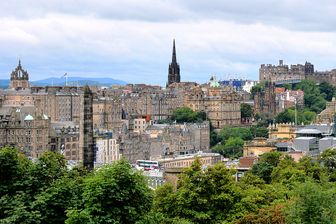
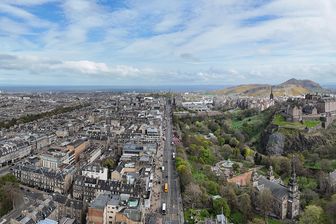
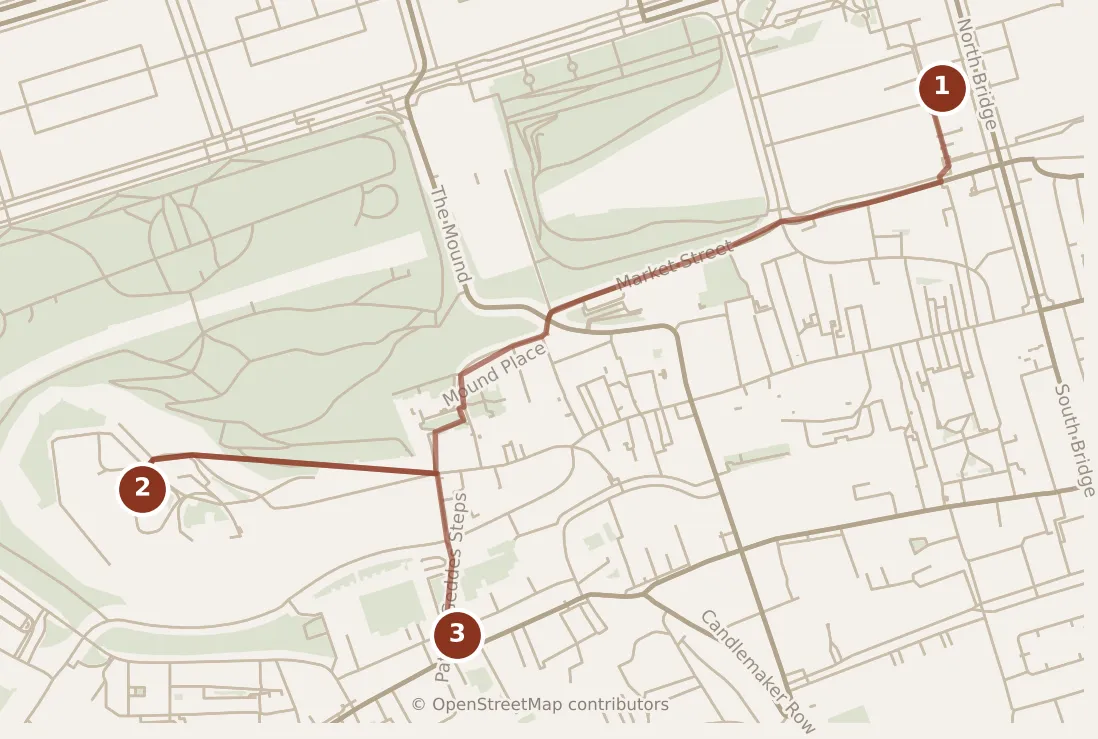
Edinburgh’s one-day problem is vertical rather than horizontal. The walking below comes to about five kilometres in total, which is nothing, and almost none of it is flat. The Old Town runs along the spine of a rock from the castle at the high end down to the palace at the low one, and this day simply walks that spine from top to bottom, drops off it once for lunch, and climbs one small hill at the finish. It uses no bus, tram or train between stops, and the ground it covers twice is the top of the Mile — walked west to the castle in the morning and east again on the way down — plus the hundred metres where it comes back up onto the ridge after lunch, at almost exactly the point where it left.
What a single day costs you is the second hill and the museum. Arthur’s Seat, the extinct volcano behind the palace, is an hour and a half of going up and coming down before you have looked at anything, and the view from it includes Calton Hill; Calton Hill is a quarter of an hour of climbing, and the view from it includes Arthur’s Seat. With one day, take the small one. The National Museum of Scotland is the harder loss — it is free, it was Scotland’s most visited attraction in 2025, and it sits five minutes off this route — but it wants half a day, and the half day it would take is the castle’s morning. If the weather has decided the question for you, there is a note on the swap in the last section.
You also enter exactly one great ticketed interior, and it is the castle. This city has a royal residence at each end of the same street, and going into both is how a day here turns into queueing at gates.
The one hour this day rests on is that castle’s. It admitted nobody before half past nine in 2026, and everything below is counted forward from the gate opening — so take the hour from the castle’s own opening-times page, which is where it is published, and count forward from whatever it says. Three dates break this day outright rather than shift it: the castle is shut on 25 and 26 December, and on 1 January it opens late. From the gate to the top of Calton Hill comes to about five and a half hours with the walking between. That figure is the stops and the legs between them and nothing else: in particular it does not include the wait to get in at the esplanade, which at over two million visitors a year is the one queue on this route long enough to cost you a later stop.
The count matters because the last stop wants the light going. The sun sets in Edinburgh anywhere from about a quarter to four in the middle of December to just after ten at midsummer — a swing of six and a half hours across the year, which is wider than most visitors expect and is the reason a single sunset time would be useless to you. Take your own month’s hour and work back from it. In the dark half of the year, five and a half hours from that opening puts you on the hill with roughly half an hour of daylight in hand and no slack at all; from spring to autumn the sun will still be hours off when you arrive — seven of them at midsummer — and the right move is to go up anyway rather than wait for it.
If you are between trains rather than staying, this is an easy city for it. The day starts at Waverley, which has a left-luggage counter, and ends eleven minutes’ walk from the same station, so the bag is left once and collected at the end. That is worth doing rather than being brave about: the castle is a climb up a rock and then more climbing inside the walls, and the last stop is a short steep hill, and those are the two places on this route where a case would ruin an hour.
The day
- Morning
- 1Edinburgh Waverley
- 2Edinburgh Castle
- Victoria Street — in the prose, not on the map
- 3Grassmarket
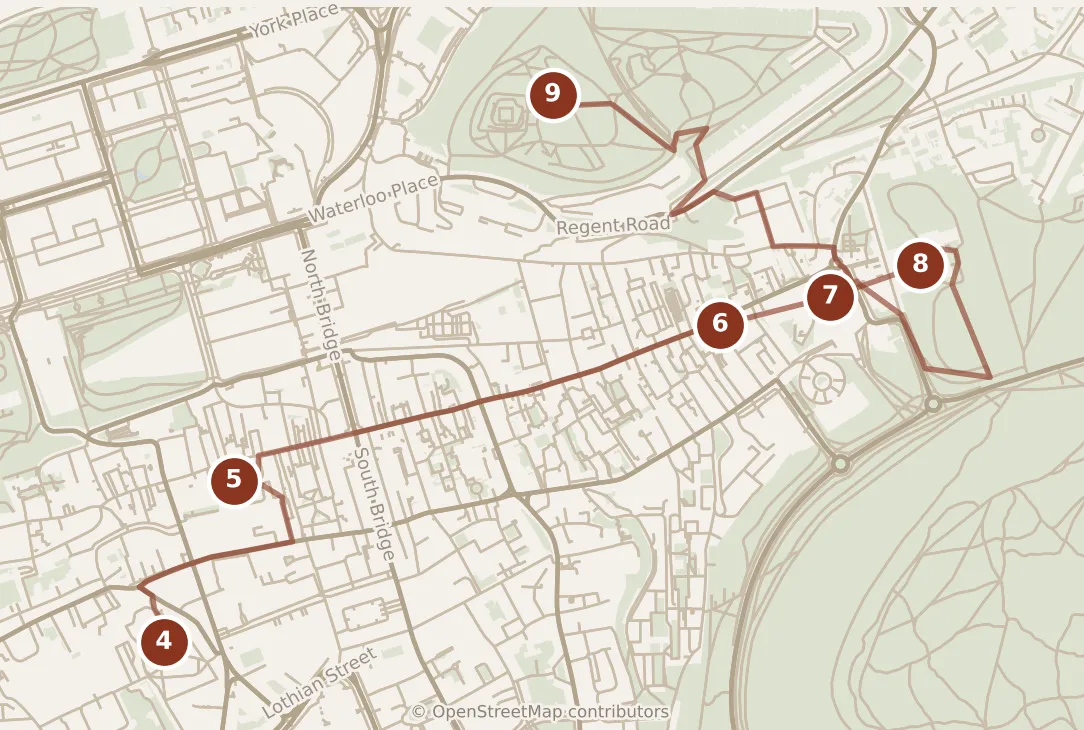
- Afternoon and evening
- 4Greyfriars Kirkyard
- 5St Giles' Cathedral
- 6The Canongate
- 7Scottish Parliament Building
- 8Palace of Holyroodhouse
- 9Calton Hill
Morning
Start at Edinburgh Waverley, which sits in the valley between the Old Town and the New, so every exit from it is uphill. Leave by the Market Street side and go up Cockburn Street, which curves and climbs to the Royal Mile, then turn west and keep going to the castle esplanade. Reckon on a quarter of an hour, all of it rising, and it is the steepest fifteen minutes of the day.
Edinburgh Castle is not one building but a small walled town on a volcanic plug, defended since the Iron Age, and you climb inside it as well as up to it. Two things in it exist nowhere else. The first is the Crown Room, which holds the Honours of Scotland — crown, sceptre and sword of state, walled up and forgotten after the union of the parliaments until Walter Scott had the chest opened in 1818. Note what is no longer beside them: the Stone of Destiny left in 2024 for a new museum in Perth, so if that is what you came up here for, it is now a different day out in a different town. The second is St Margaret’s Chapel, a single small room of the early twelfth century and the oldest building in the city, which you can cross in a few paces and which most people walk past. Outside it stands Mons Meg, a siege bombard delivered to the castle in 1457 and far too heavy ever to have been much use in a field. Everything else up here — the Scottish National War Memorial, the regimental museums, the vaults and the prisons — is good and is effectively a second visit. Give the castle two hours.
Local tip. Go to the Crown Room and St Margaret’s Chapel first and treat everything else up here as optional. If your slot ran late, or the queue at the esplanade ate the start of your morning, see those two and leave rather than trying to recover the time later: the hour you overspend on the rock is the hour the bottom half of the Mile needs, and the castle is the only thing on this whole day you have to buy in advance.
Come back out and go down Castlehill and the Lawnmarket, and where George IV Bridge crosses, turn down Victoria Street. It curves down towards the Grassmarket in a terrace of painted shopfronts with a raised pavement running above them, and it is where every Harry Potter walking tour in the city stops, which is why it is busy in a way the streets either side of it are not. Six or seven minutes, downhill, and it deposits you in the Grassmarket.
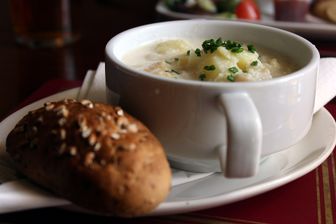
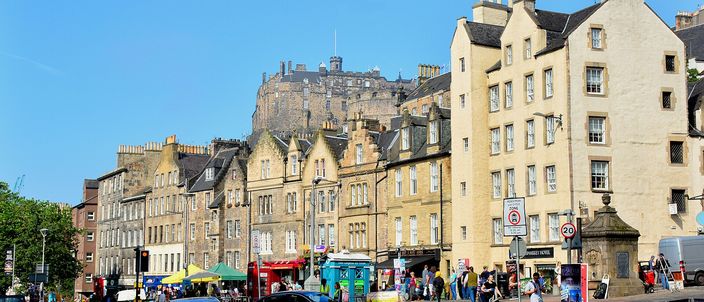
The Grassmarket is a long open square directly under the castle rock, and looking back up at the castle from it is one of the best views of the building you get all day and costs nothing. It was the city’s execution ground until 1784 and the site of the gallows is marked in the paving. It is also where lunch goes, sitting down: the city guide will tell you the Grassmarket and the Cowgate are the late-night drinking quarter, and in the middle of the day that means a square full of places with tables. Cullen skink, a thick smoked-haddock and potato soup, is the thing to order if the weather is doing what it usually does. Give lunch an hour.
Afternoon
Four minutes up Candlemaker Row is Greyfriars Kirkyard, and it is the densest twenty minutes of history on this route. The National Covenant was signed here in 1638 because a graveyard was a place of lawful public assembly; after the defeat at Bothwell Bridge in 1679 some twelve hundred prisoners were penned in a field enclosure beside the kirkyard, still called the Covenanters’ Prison — locked since about 1990, so without an arrangement made with the guides at the kirk you look into it through the gate rather than walk into it. There are two mortsafes, iron cages leased to hold a coffin down long enough to discourage the body snatchers. There is Greyfriars Bobby, the dog who is said to have kept to his master’s grave, with a headstone put up for him in 1981. And there is Thomas Riddell’s stone, which is why so many of the people here are holding phones — the same Potter trade that filled Victoria Street. Twenty minutes, and it is better in bad weather than in good.
Six minutes back up George IV Bridge brings you to St Giles’ Cathedral, in the middle of the Royal Mile. Look at the steeple before you go in: the crown of stone arches on top of the tower dates from the 1460s and is one of only two medieval crown steeples left in Scotland. In the paving outside is the Heart of Midlothian, a heart of coloured setts marking the door of the Old Tolbooth, the jail and place of execution demolished in 1817; people spit on it, for luck or for contempt depending on who is telling you. Inside, the room to find, when it is open, is the Thistle Chapel, built by Robert Lorimer between 1909 and 1911 for the Order of the Thistle: a tiny stone-vaulted space with a carved stall for each knight and more detail per square metre than the rest of the church together. John Knox preached here from 1559 and drove the Reformation from this pulpit; the kirkyard he was buried in was paved over long ago and is now the car park in Parliament Square behind, with a small marker set into it. Half an hour.
Now walk the rest of the Mile, east down the High Street and into the Canongate. It is about seventeen minutes if you do not stop, and you will stop, so give it half an hour: the closes open off both sides in a rhythm, the crowd thins with every hundred metres, and by the Canongate the street has become a quiet row of seventeenth- and eighteenth-century fronts with a parish church, Canongate Kirk of 1691, standing back from it in its own yard. This is the one stretch of the day that is a walk rather than a stop, and it is where the Royal Mile stops being a row of shopfronts and turns back into a street people live on.
At the bottom, the Scottish Parliament Building. Enric Miralles designed it, died in 2000 before it was finished, and it opened in October 2004 more than three years late and at £414 million against a first estimate of £10 to £40 million — then won the Stirling Prize in 2005, which tells you how completely the argument about it split. It is free to walk into — through a security check at the visitor entrance, which takes a few minutes rather than the queue people brace for — and worth half an hour: the public gallery above the debating chamber, the Garden Lobby under its leaf-shaped rooflights, and outside the strange bay windows bulging off the members’ offices, which are contemplation spaces, a seat and a shelf apiece, and the wall of Scottish stone carved with quotations that faces the Canongate. It keeps office hours and shuts one day a week — see the last section, because that closure is the one thing that reshuffles this day.
Three minutes on is the Palace of Holyroodhouse, and the plan is to look at it from the gates rather than go in. The front is a symmetrical seventeenth-century composition with one tower that plainly does not match the rest: that tower is the older one, and Mary, Queen of Scots’ chambers were inside it — the rooms where Rizzio was stabbed to death in front of her in 1566. Behind the palace is the roofless shell of Holyrood Abbey, founded in 1128 by David I, and both of those are inside the ticket rather than outside it. What is outside it, and starts at the gates, is Holyrood Park: Salisbury Crags rise straight out of the end of the street and Arthur’s Seat is behind them. Standing here is the moment you understand what you traded for the rest of the day. Fifteen minutes.
Evening
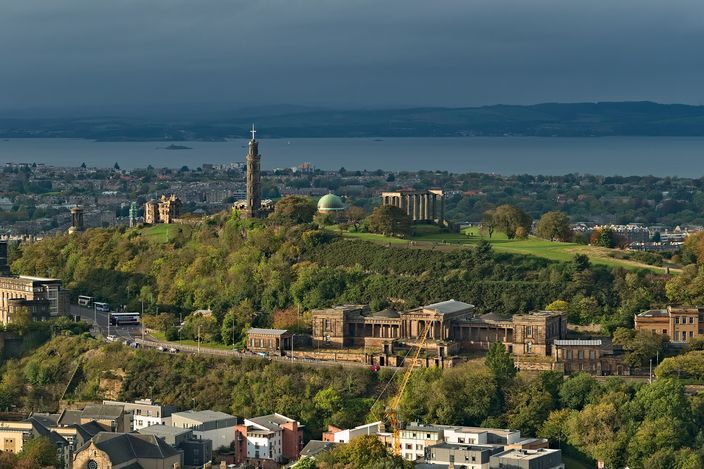
From the palace, climb to Calton Hill: about a quarter of an hour, short and steep, more at the end of a long day, and the only real effort since the walk up from the station. The hill is open ground with no gate and no ticket, and it holds the strangest collection of buildings in the city. The National Monument of Scotland was begun in 1826 as a full-size Parthenon commemorating the Scottish dead of the Napoleonic wars, ran out of money in 1829 with twelve columns standing, and has been left exactly so ever since. The Nelson Monument next to it is a stone telescope stood on end, built between 1807 and 1816, with a white ball on a mast at the top: the ball was installed in 1853 so that ships down in Leith could set their chronometers by watching it drop, and in 1861 the castle began firing a gun at the same moment so they could hear the time when fog hid the ball. The ball is still up on its mast and the gun is still fired from the castle. Off to the side is the little circular colonnade of the Dugald Stewart Monument, which turns up in the foreground of a great many photographs of this city, and behind that the domes of the City Observatory.
The view is why you climbed. West along Princes Street the whole Old Town ridge lies side-on with the castle at the end of it, which is the angle from which the shape of this city makes sense; south-east are the crags and Arthur’s Seat; north, past the grid of the New Town, the Firth of Forth and the Fife coast beyond it. Give it half an hour, longer if the light is doing anything. In midwinter you will be up here in the dark or nearly, and that is not a consolation prize: the castle is lit at night and reads better from here than it does in daylight.
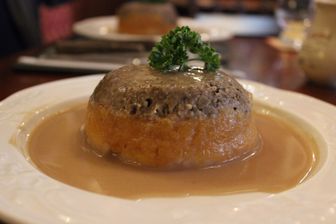
Dinner goes after the hill rather than before it, because the light is the one thing on this day you cannot move. Come down the western end onto Waterloo Place and keep going west to where it meets Princes Street; the top of Leith Walk is a few minutes north of that junction, and the streets running north from it are where dinner is, ten minutes from the hill and ten from the station. Haggis with neeps and tatties is what to have, and it is a better dish than its reputation abroad suggests. Waverley is eleven minutes downhill from the top of the hill if you are going straight for a train.
Practicalities
The only thing on this route that has to be bought before you travel is the castle ticket. It is sold as a timed slot, the adult ticket was in the twenty-to-twenty-five-pound range in 2026, and this day depends on holding an early one — turning up to buy at the gate is how the two hours above become three. Nothing else here is booked in advance, and the parliament, the graveyard, the square and the hill are free. The cathedral is not ticketed either, but it runs on donations and asks a suggested one at the door. Between the first stop and the last this itinerary needs no transport ticket at all, because it is entirely on foot; how you get in from the airport, and what a bus or tram fare costs, is in the city guide.
Sunday is the day that bends this route, and it touches exactly two stops. The parliament does not open to visitors on a Sunday at all, and the cathedral gives its morning to worship and opens to visitors only in the afternoon — which the order above clears, since it reaches the cathedral well into the afternoon. Note which way that cuts: a slow castle is no threat to it, and the only way to arrive at a shut door is to hurry the morning. Those two are the only stops on this day with a weekly closure; everything else here is a street, a square, a graveyard or a hill and does not care what day it is. So check the pair on their own visitor pages, where each publishes its hours, before you fix the order, and if your one day is a Sunday, do not hurry the front of it: castle at opening as written, straight down Victoria Street, the full hour of lunch in the Grassmarket, Greyfriars next, and the cathedral after that, by which time the afternoon is well under way. The route still runs the same way round. Give the parliament’s half hour to walking twenty minutes into Holyrood Park and back out.
If you would rather have the palace than the castle, that swap works but it is a substitution and not an addition, and the thing to check first is its last admission — it is earlier than people expect, and it decides whether the palace can sit where the parliament sits above or has to be brought forward to the middle of the afternoon. Two other things are worth knowing before you build a day around it: it closes to visitors for about a week in early summer when the King is in residence, and the abbey ruin behind it is inside the same ticket, which is most of the reason to go in.
The museum swap is the other one people want. The National Museum of Scotland is on Chambers Street, four minutes from Greyfriars, it costs nothing, and it holds the Grand Gallery, Dolly the cloned sheep and eleven of the Lewis chessmen. It is also half a day. Do not try to graft it on: take it instead of the castle interior, start there when it opens, look at the castle from the Grassmarket rather than from inside, and pick the day up from lunch exactly as written. That is the swap to make if it is raining hard, and it is the better day in bad weather.
In August the middle of this route changes character. The stretch of the Mile from the cathedral down to the Canongate becomes a performance venue during the Fringe, so the walk that takes seventeen minutes in March takes as long as you let it, and the castle esplanade is occupied by the seating for the tattoo. Neither ruins the day, but the count above stops applying, and you cannot buy the time back at the front because the castle opens when it opens: in festival month, plan to drop either the parliament or the graveyard rather than to hurry the Mile.
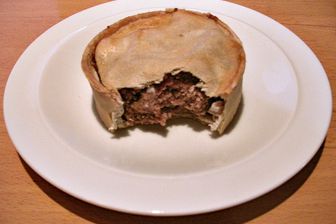
Finally, the bag, if you have one. Waverley has a left-luggage counter — check what time it shuts before you leave anything in it, because the shape of this day assumes you collect the bag at the end — and this day is a loop that returns to within eleven minutes of it, so there is no version of this route that rewards carrying a case. The castle is the stop that makes that concrete — a climb to the gate and then cobbled slopes inside the walls — and Calton Hill at the end is the other. If you are between trains with no intention of queueing at a luggage counter, the honest cut is the castle: up Cockburn Street from the station as in the morning, then the Mile from the cathedral down, the parliament, the palace gates and the hill, and, if you pass somewhere selling one, eat a scotch pie standing up on the way. That is about three hours from the station and back to it, it is nearly all outdoors, and it ends eleven minutes from your platform. What it does not spare you is the climb: the fifteen minutes up from the station and the short steep hill at the end are both still in it, and with a case they are the price of not queueing at the counter.