Salzburg travel guide: where to stay, when to go, getting around
Last updated 16 July 2026
Overview
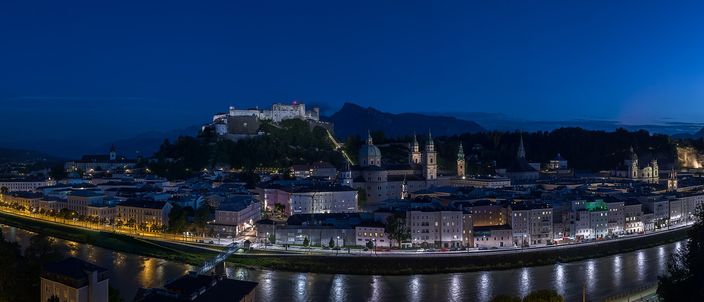
Salzburg is a small baroque city wedged between the Alps and the German border, built around the fast green Salzach river and dominated by the fortress on its rock. It is compact, wealthy, and heavily geared toward visitors: this is Mozart’s birthplace, the backdrop for The Sound of Music, and the home of one of Europe’s biggest classical music festivals. All of that means the centre is beautiful and busy in roughly equal measure, and prices sit well above the Austrian average.
The thing to understand before booking is the river. The old town (Altstadt) sits on the left bank beneath the fortress; the Neustadt, with the Mirabell gardens, sits on the right. Both are central, both are walkable, and a handful of footbridges link them in minutes — so your choice of bank is about character and price, not distance. Salzburg also rains a lot: its Alpine position makes it one of the wetter cities in Austria, and a grey, drizzly week is entirely normal outside high summer.
Where to stay
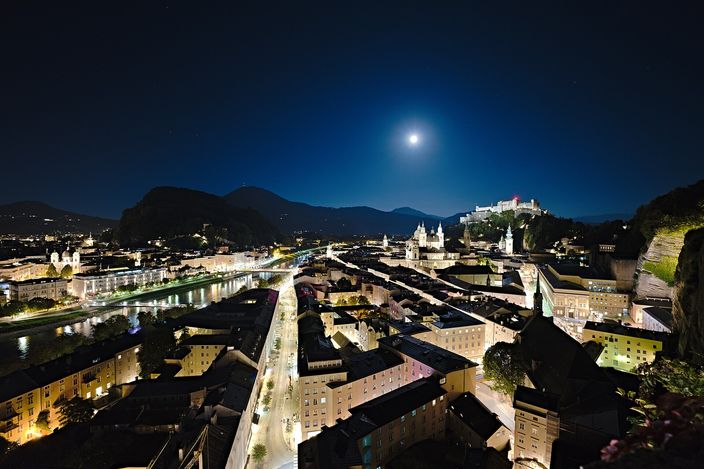
The historic centre is small enough to cross on foot in twenty minutes, and the two banks are stitched together by pedestrian bridges, the busiest being the Makartsteg. So you are not really choosing by logistics — everything inside the centre is close to everything else. You are choosing between the postcard old town, the slightly more liveable right bank, the practical strip near the station, and a quieter residential base.
Altstadt (left bank, under the fortress)
The baroque core: Getreidegasse with its wrought-iron shop signs, the cathedral and Residenz squares, Mozart’s birthplace, and the funicular up to Hohensalzburg. Stay here if it is your first visit and you want to walk out of the door into the middle of it all, on foot and under cover when it rains. The trade-offs are real: this is the most expensive part of the city, the narrow lanes fill with tour groups by mid-morning, and during the summer festival both prices and crowds climb sharply. Best for a short first stay where walking distance to the sights matters more than anything else.
Neustadt (right bank — Mirabell, Linzergasse)
Across the river, around the Mirabell palace and gardens and the shopping street of Linzergasse, the right bank is still thoroughly central but feels more like a working town — everyday shops, more mid-range hotels, a bit more room to breathe. Stay here if you want the old town two minutes over a bridge without paying old-town rates, or if you are travelling as a family and want a base near the gardens. The trade-off is that it is less uniformly pretty than the left bank, and the streets nearest the station end can feel more functional than charming.
Around Salzburg Hauptbahnhof
The main station sits north of the Neustadt, about a fifteen-minute walk or a short bus ride from the centre. This is the practical, cheaper base: good if you are arriving late, leaving early, or using Salzburg for day trips to Munich, Vienna or the lakes. The trade-off is charm and a bit of distance — the immediate area is ordinary railway-district territory, and you will walk or ride to reach anything you came to see.
Mülln and the western slopes
West of the old town, tucked under the Mönchsberg below its own church, Mülln is a quiet, residential pocket that is still within walking distance of the centre and home to the large monastery beer hall the locals go to. Stay here for calm, for a longer stay, or if you would rather sleep somewhere ordinary and walk in. The trade-off is that there is little on the doorstep at night, and you are committing to that walk (or a bus) every time you want the centre.
When to go
Late spring (May–June) and September are the most comfortable times: mild, greener, and outside the peak crush. The single biggest thing to plan around is the Salzburg Festival, which runs from late July through the end of August — it fills the city with an international classical-music crowd, and hotel prices and availability across the whole centre are dictated by it. Come for it deliberately and book far ahead, or avoid those weeks entirely; there is no cheap middle.
Summer is warm but genuinely wet — bring rain gear whatever the forecast — and it is also the season for the Salzkammergut lakes on day trips. December brings Advent and Christmas markets to the squares, cold and often snowy, and a second smaller peak in visitors. January to March is quiet and cold, good for pairing the city with skiing in the surrounding mountains, but many days are grey.
Getting there & around
The airport sits only a few kilometres west of the centre, and a city bus runs in to the Hauptbahnhof and the old-town fringe in around twenty minutes; a taxi is quick but not worth it for the distance unless you have luggage and bad weather. Salzburg is a genuine rail crossroads: fast trains reach Munich in about an hour and a half and Vienna in around two and a half hours, with Innsbruck and the Salzkammergut lake towns also on direct lines. The lakes and the Bavarian side — Berchtesgaden and the Königssee — are classic half-day and full-day trips, most easily done by regional train and bus.
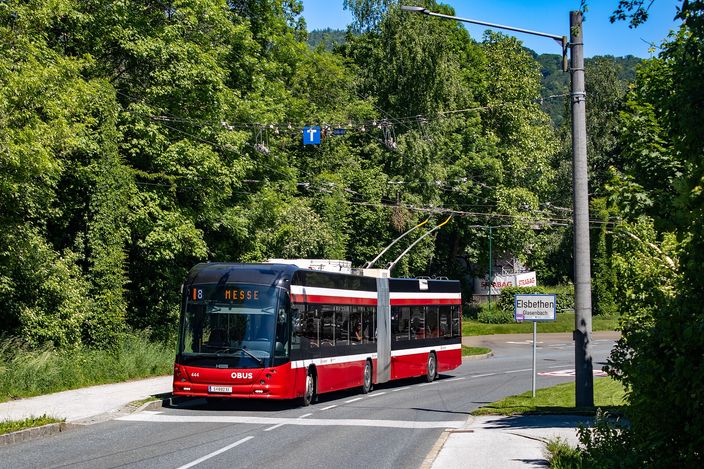
In the city, do not bother with a car: the centre is dense, largely pedestrian, and parking is expensive and awkward. The public network is built on trolleybuses — the Obus — which are frequent and cover the outer districts and the walk-averse routes; the historic core itself you do on foot. The fortress is reached by a short funicular from the old town or a stiff walk up. The Salzburg Card, a flat-fee tourist pass, bundles transport with entry to the fortress, museums and the Mozart houses, and pays off quickly if you intend to go inside more than a couple of them.
Practicalities
Salzburg is safe and easy; ordinary city sense around the station at night is all that is needed. Cards are accepted almost everywhere and cash is rarely essential. German is the language, though English is widely understood in a city this tourist-facing.
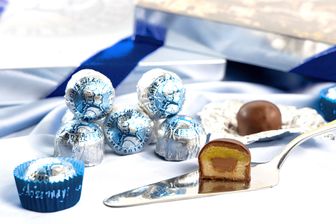
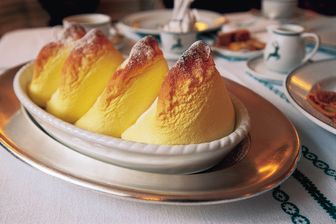
The local sweet everyone points you to is Salzburger Nockerl, a huge baked sugar-dusted soufflé meant for sharing, shaped to echo the hills around the city. Being so close to Bavaria, the savoury food leans hearty and Alpine — dumplings, pork, and the beer served by the litre in the monastery beer gardens, where in the older halls you often carry your own stein to the taps and buy food separately from stalls. Note that the famous round chocolate-and-marzipan Mozartkugel is sold everywhere in gold-and-red wrappers; the plainer, hand-made silver-and-blue version made in the city is the one worth seeking out rather than the mass-produced airport tins.
One seasonal warning worth repeating: if your dates fall in the festival weeks of late July and August, sort accommodation and any concert tickets well in advance, because the whole centre books out and walk-up options thin to almost nothing.