Flat white in Melbourne: what it is, what to order, what to avoid
Last updated 20 July 2026
Overview
The flat white is not Melbourne’s invention and it is worth being straight about that. It is a shared drink of Australia and New Zealand, both of which claim to have made it first in the 1980s, and the argument across the Tasman has never been settled and probably never will be. What is not in dispute is that it spread from that corner of the world, that it is the default coffee order across this country, and that Melbourne is where the drink stopped being a habit and became a civic craft.
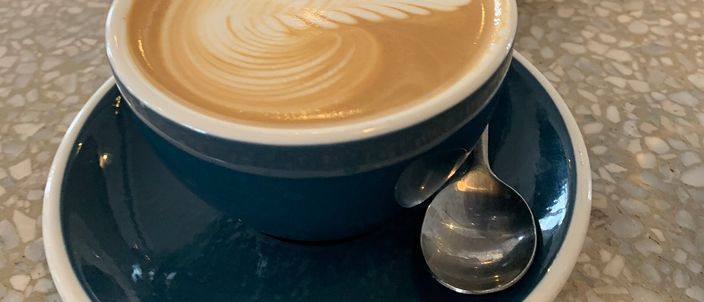
Physically, a flat white is a shot of espresso with steamed milk poured through it, finished with a thin layer of microfoam — milk textured until it is glossy and paint-like rather than frothy. The whole thing sits in a small cup, usually around 150 to 200 millilitres. That size is the point of it. The coffee is not drowned: the ratio of espresso to milk is high, so you taste the shot the whole way down, and the foam is a skin rather than a head.
That is what separates it from its neighbours. A latte is larger and milkier, traditionally served in a glass; a cappuccino has a thick, dry cap of foam and often a dusting of chocolate. A flat white is the one that keeps the coffee in charge. In a city that pulls its shots carefully, that is exactly why it is the drink most Melburnians reach for without thinking.
What to order
The plain order is two words — “flat white” — and it comes one size, so nobody will ask you to choose small, medium or large. That absence is itself a signal: a café that offers a flat white in three sizes is not really making the drink, it is making a milky coffee and letting you pick the volume.
The vocabulary that actually matters here:
- magic — the genuinely local drink, and the one thing on this list that is Melbourne’s own. It is a double ristretto (two short, concentrated shots) with steamed milk in a small cup, roughly 140 to 160 millilitres — stronger and smaller than a standard flat white. Order a magic and you are ordering the way the coffee obsessives here drink. Not every café makes it, and the ones that do tend to be the serious ones.
- piccolo — a single shot, usually a ristretto, with just a splash of milk, served in a small glass. The move when you want the espresso barely softened rather than a full milk drink.
- long black and short black — an espresso poured over hot water, and a plain espresso. The city guide covers these; they are the black-coffee counterparts to the milk drinks above.
- the strength — you can ask for it made on a single or double shot, and you can ask which coffee: many cafés run a house blend and a rotating single origin, and they will tell you what is on if you ask which is brighter or which is heavier.
One thing not to bother asking for is extra-hot milk. Milk scalded past roughly sixty-five degrees turns thin and slightly bitter and buries the coffee, which is the opposite of the drink’s whole purpose, and a good barista may gently talk you out of it.
What to avoid
The failure here is rarely a burnt shot; it is a café dressed as a specialist that is really a volume operation. A few honest tells.
Foam is the giveaway. If your flat white arrives with a thick, stiff head you could stand a spoon in, you have been handed a small cappuccino. The correct surface is flat and shining, with at most a couple of millimetres of microfoam, and it should hold a clean disc or a poured leaf rather than a mound.
A default paper cup for a drink you are having in is the second sign. Where coffee is taken seriously the sit-in flat white comes in ceramic unless you say otherwise, because the cup changes how it drinks; being given takeaway board without being asked says the room is built for turnover, not for the coffee.
Be wary, too, of the enormous “flat white” — a bucket of milk with a shot lost somewhere in it. Scale is not generosity here; it is the drink misunderstood. And a wall of flavoured syrups by the till, while not a crime, is a fair clue that the espresso is not the thing the place is proud of.
None of this requires you to be a snob about it. The point is only that Melbourne sets a real standard, so the gap between a considered flat white and a careless one is wider here than it is in most cities, and the signs above are how you read which you are about to get.
Practicalities
A flat white runs to roughly $4.50 to $6, with the specialist cafés — single-origin shots, their own roast — sitting at the top of that and occasionally a little above. A price much below the range usually means a chain or a petrol-station machine rather than a bargain; a price well above it is buying the roastery’s reputation, which may or may not be worth it to you.
It is drunk all day, but the two anchors are the morning coffee and brunch, the latter close to a local institution, and a good café will be at its busiest and its sharpest across the mid-morning. If you want a quiet table and a barista with time to talk about the beans, the lull after the brunch rush and before lunch is the window.
Cafés here run cashless as a matter of course, so a card or a phone is all you need, and many counters no longer keep a till float at all. The one wrinkle to expect is a weekend or public-holiday surcharge, a small percentage added to the bill on those days; it is standard, it is legal and it should be posted at the counter, so it is not a scam even when it is a mild annoyance. Order at the counter or the table depending on the room, drink it while the milk is still warm and the crema intact, and — this being the one place that genuinely obsesses over it — trust the house to have an opinion about how it is made.