Melbourne: where to stay, when to go, and how to get around
Last updated 16 July 2026
Overview
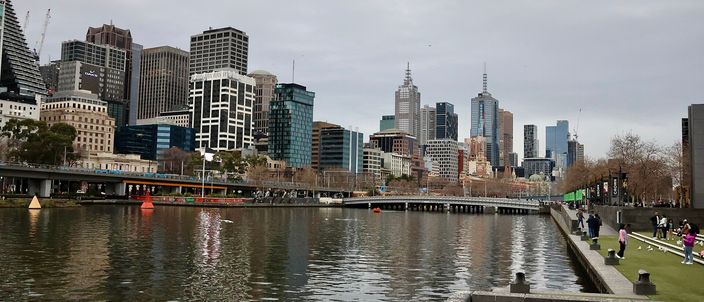
Melbourne is a flat, sprawling city built on a grid beside the Yarra River, a few kilometres up from the vast, calm expanse of Port Phillip Bay. The compact CBD — locals just call it “the city” — is easy to walk, but the parts of Melbourne worth your time are spread across a ring of inner suburbs, and getting between them is what the famous tram network is for. This is a city organised around eating, drinking coffee and following sport, not around monuments; there is no single must-see square, and the pleasure is in the neighbourhoods. Come knowing that, and knowing that the weather will not cooperate, and you’ll read the place correctly. It is also expensive — accommodation, eating out and drinks all cost more than most of Europe — and much of what makes it good is invisible to a visitor who never leaves the CBD.
Where to stay
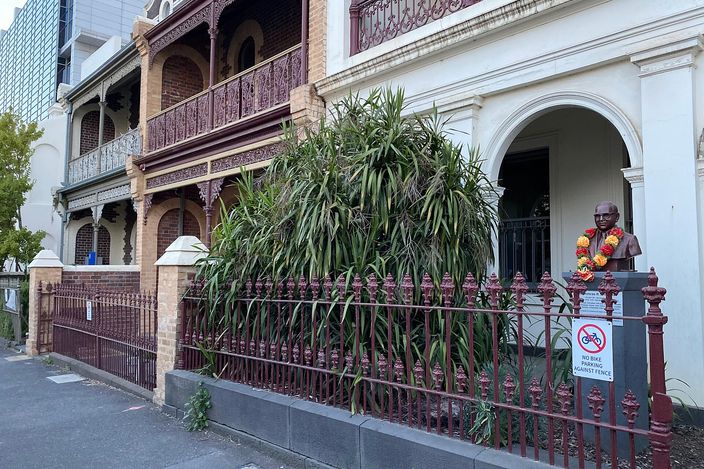

The decision here is genuinely about which suburb, not just which street, because Melbourne’s character lives outside the grid and the areas differ sharply in mood. Everything below is within about 20 minutes of the centre by tram or train. The CBD has a free tram zone, so staying inside it means never paying for a tram; step outside it and you’ll want a Myki card.
The CBD (the grid)
The rectangle between the Yarra and the main train stations, threaded with laneways full of coffee, bars and street art. Stay here on a first visit or a short trip: you’re walking distance to Flinders Street Station, Federation Square, the free tram zone and Chinatown, and trams to everywhere else leave from your door. The trade-off is that the CBD empties of locals in the evening in parts, some blocks near the top end feel corporate and dead after dark, and you pay central prices for rooms that are often small towers rather than anything with character.
Southbank & the river
Directly across the Yarra from the CBD, a strip of high-rise hotels and apartments along the promenade near the arts precinct and the casino. Convenient and close, with good river walks and the concert halls and galleries on your doorstep. Stay here if you’re in town for a show or want bay-adjacent glass-tower comfort. The trade-off: it’s a slightly sterile, built-for-tourists stretch with little neighbourhood life, and the casino end pulls a rowdier crowd at weekends.
Fitzroy & Collingwood
Immediately northeast of the city, this is inner Melbourne’s most concentrated dose of what the city is known for: Gertrude and Brunswick Streets, live music, vintage shops, tattoo parlours, terrace houses and some of the best eating and drinking in the country. Stay here if you want to feel the actual texture of the place and don’t mind being a tram ride from the sights. The trade-off is noise — these streets stay up late — and it has gentrified into being pricey, with pockets that still feel scruffy.
Carlton
North of the CBD, home to the university and to Lygon Street, the historic centre of Melbourne’s Italian community, plus Carlton Gardens and the Royal Exhibition Building. It’s leafier and calmer than Fitzroy, good for a quieter base that’s still close in and walkable to the museum. The trade-off is that the tourist end of Lygon Street trades on old reputation with aggressive touts, and outside the university terms it can feel sleepy.
St Kilda
On the bay, southeast of the centre and about 20 minutes by tram down St Kilda Road. Beach, the palm-lined esplanade, Acland Street cake shops, a faded-seaside-resort character that’s half charming, half rough. Stay here if you want to be near the water and a swim, and want a break from the inner-north density. The trade-off is distance from the good eating suburbs, a nightlife-and-backpacker edge that can get seedy after dark, and a long tram in when you want the city.
Richmond & Cremorne
East of the CBD, a former working-class suburb now mixing warehouses, pubs, the MCG within walking distance, and Victoria Street’s Vietnamese restaurants. Practical if you’re here for sport — the ground and the tennis are close — or want good cheap Asian food and lower rents than Fitzroy. The trade-off: it’s patchy, some stretches are traffic-heavy arterial roads, and it lacks a single walkable heart.
When to go
Melbourne’s weather is genuinely unpredictable — the local cliché about four seasons in one day is earned, and you should pack layers and a jacket whatever the forecast says. Autumn (March–May) and spring (September–November) are the most reliable: mild, clear spells, and the calendar full. Summer (December–February) is warm to very hot, with occasional days spiking past 40°C on a hot northerly wind, then dropping 15 degrees when the cool change comes through in an afternoon. Winter (June–August) is cold, grey and wet rather than freezing, and cheaper, but this is football weather and the city moves indoors.
Time your visit around the sport if that’s your thing: the Australian Open tennis fills January, the AFL (Australian rules football) season runs autumn to spring with the MCG packed on winter weekends, and the Spring Racing Carnival peaks with the Melbourne Cup in early November, effectively a public holiday. These weeks push accommodation prices up and book out the good rooms.
Getting there & around

The airport is northwest of the city and, notably for a city this size, has no train line — the standard options are the express airport bus to Southern Cross Station or a taxi/rideshare, which takes 30–45 minutes depending on traffic on the Tullamarine Freeway and costs a lot more. Southern Cross is also the terminus for V/Line regional trains and interstate services.
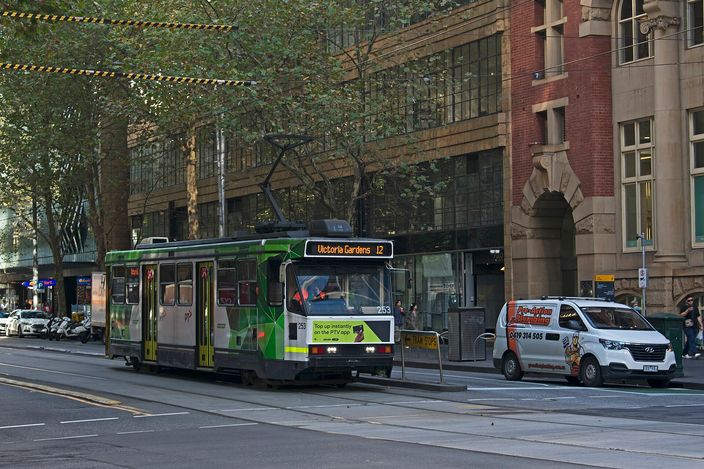
In the city, the tram network is the thing — one of the largest in the world, and the free tram zone covers the CBD and Docklands, so short central hops cost nothing. Beyond the zone, buy and top up a Myki card (there is no cash fare and no paper ticket; you tap on). Suburban Metro trains radiate from the City Loop and are the fast way to cover distance, including out to the bay and the outer suburbs. Don’t bother with a car in the inner city — parking is expensive and scarce, and the trams complicate driving with the infamous hook turn, where at some CBD intersections you turn right from the left lane. Cycling is good on the flat, with a growing network of lanes and the Capital City Trail along the river.
Day trips are best by car or tour: the Great Ocean Road and its coastal cliffs, the wineries of the Yarra Valley and the Mornington Peninsula, and the Dandenong Ranges are all within a couple of hours.
Practicalities
Melbourne is safe and easy; ordinary care around the nightlife strips and the station late at night covers it. Cards are accepted everywhere — many places are effectively cashless — and contactless payment is the norm.
The city runs on coffee, and this is not marketing: espresso-based drinks are a serious local craft, a flat white is the default order, and a “long black” and a “short black” mean an Americano and an espresso. Brunch is close to a civic institution, best done in Fitzroy, Carlton or the northern suburbs, and cafés are where locals meet by day. For dinner, Melbourne’s strength is its migrant food: Victoria Street in Richmond for Vietnamese, Lygon Street in Carlton for old-school Italian, Chinatown on Little Bourke Street in the CBD, and Sydney Road in Brunswick for Middle Eastern and Turkish. Many good bars hide up unmarked laneways and in basements with no street presence — finding them is part of how the city works.
A few practical notes: tipping is not expected, though rounding up for good service is common; tap water is safe and served free; the sun is genuinely fierce in summer, so sunscreen is sensible even on cool bright days. Public holidays and the Sunday of a long weekend can mean a surcharge added to café and restaurant bills.