Dim sim in Melbourne: what it is, what to order, what to avoid
Last updated 20 July 2026
Overview
A dim sim is not dim sum, and the gap between the two names is the whole story. Dim sum is the Cantonese tradition of small steamed and fried plates eaten with tea; a dim sim is a single chunky dumpling, roughly the size of a golf ball or larger, made and eaten in Melbourne as everyday takeaway food. It is Chinese in ancestry and Australian in fact, and it belongs to this city in a way few dishes belong anywhere.
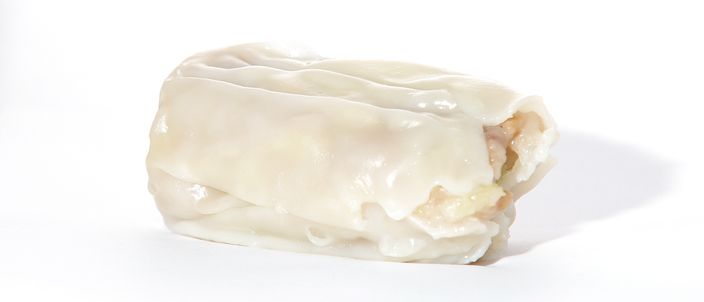
The thing itself is a coarse filling of minced pork or beef with cabbage, sometimes a little water chestnut, wrapped in a thick wheat-flour skin and either steamed until soft or deep- fried until the wrapper blisters and crackles. It is bigger, doughier and blunter than the delicate siu mai it descends from — less a folded parcel than a fistful. That bluntness is the point: it was built to be cheap, filling and sold one at a time from a hot counter, not to be admired.
Its origin is better documented than most street-food stories, though still worth stating carefully. The dim sim in its Melbourne form is commonly credited to a local cook, William Chen Wing Young, who is said to have scaled up and adapted the Cantonese dumpling for Australian tastes and mass production in the 1940s. Take that as the received account rather than a settled fact: the broad shape of it — a Melbourne Chinese kitchen reinventing siu mai as a bigger, hardier snack in the mid-twentieth century — is sound, the precise credit less certain. What is not in doubt is where the dim sim became a fixture, which is here, in the fish-and-chip shops, milk bars and footy-ground kiosks of this city.
What to order
There is really only one question at the counter, and a local will be asked it back: steamed or fried? This is the decision that matters, because it produces two genuinely different things.
The steamed dim sim is soft and slippery, the wrapper pale and yielding, the filling loose and juicy. It is the older, plainer form and the one closest to its dumpling roots. The fried dim sim — often called a fried dimmy — is the same object dropped into hot oil, so the skin goes hard, bubbled and crisp while the inside stays hot and wet. Many Melburnians are quietly partisan about which is correct; neither is wrong.
The vocabulary to have ready:
- dimmy (plural dimmies) — the near-universal local nickname. Ordering “a couple of dimmies” is ordinary speech, not an affectation.
- soy — a dim sim is eaten with a splash of soy sauce, either poured over or used as a dip. At a fish-and-chip shop it comes in a little sachet or a squeeze bottle. That is the whole condiment tradition; there is no need for anything else.
- South Melbourne dim sim — a distinct, larger, prawn-and-pork market style that some stalls make fresh. If a place is known for a bigger, plumper, more refined version, this is usually what is meant. It is a step up from the freezer-stocked shop default.
You buy them singly. One is a snack, two or three a light meal, and they are as likely to be eaten standing on a footpath as sitting down.
What to avoid
The failure mode of a dim sim is not a bad recipe; it is time. These things are best within minutes of being cooked and turn sad quickly, so the enemy is the one that has been sitting.
The classic warning sign is a bamboo steamer or a warming tray of pale dim sims that have clearly been held for hours — grey, sweating, the wrappers gone gummy and split. This is common at petrol-station counters and tired food-court windows, where turnover is slow and the dumplings are reheated from frozen and then left. A fried one that has gone soft and greasy, its crackle collapsed back to a chew, has had the same problem.
Be wary, too, of the giant novelty dim sim sold mainly as a photograph — an oversized one is not a better one, just more of the same industrial filling. The dim sim’s virtue is that it is small, hot and cheap; scale is a gimmick.
There is no shame in the frozen, mass-made dim sim — it is most of what the city eats and it is honestly fine. What to avoid is the frozen one treated carelessly: cooked once, held warm all afternoon, sold to whoever walks past. The tell is simple. Ask when the fried ones were last dropped; a shop that turns them over will answer without hesitating, and a batch going into the oil as you order is worth the short wait.
Practicalities
A dim sim costs very little — roughly $2 to $4 each from a fish-and-chip shop or takeaway, a touch more for a large fresh market one. If you are being charged noticeably above that, you are either buying the premium South Melbourne style, which earns it, or paying a sit- down restaurant markup for what is fundamentally a counter snack.
It has no set mealtime, which is the honest version of “eaten any time”: it is lunch, it is an after-school feed, it is footy food, and above all it is late-night food, sold well after the kitchens that do proper dinners have closed. The fresh-fried batches tend to land around the busy trade — lunchtime and the evening rush — so those are the hours to catch one at its best rather than reheated.
How you buy it is part of the character. The natural home of the dim sim is the fish-and- chip shop, the suburban milk bar and the sports-ground kiosk, not the white-tablecloth restaurant, and it is ordered at a counter and handed over in paper or a small box. Melbourne runs largely cashless and these small shops are no exception now, though a handful of old- school takeaways still prefer cash or set a card minimum, so a few coins save an awkward moment. Order it, splash the soy, and eat it hot — a dim sim ten minutes cold is a lesser thing than a dim sim straight off the heat.