Bucharest: where to stay, when to go and how to get around
Last updated 16 July 2026
Overview
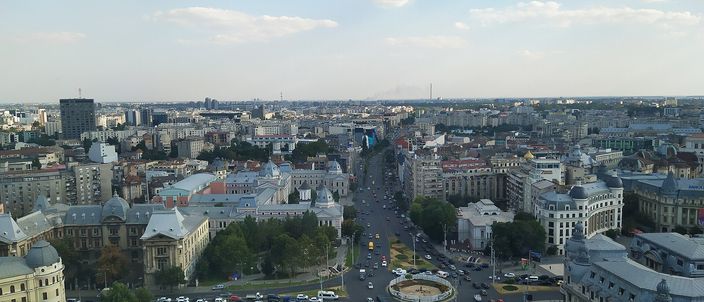
Bucharest is a sprawling, contradictory capital that does not tidy itself up for visitors, and the sooner you accept that the more you’ll enjoy it. Belle Époque villas and French-inspired boulevards — the “Little Paris” the city liked to call itself before the war — sit next to vast communist housing blocks and the megalomaniac boulevards Ceaușescu bulldozed through the old town in the 1980s, terminating at the Palace of the Parliament, one of the heaviest buildings on earth and impossible to ignore. The centre is greener than its reputation suggests, with real parks and lakes, and the food and drink are cheap by Western European standards. The downsides are honest ones: traffic is heavy and aggressive, pavements are uneven, and the city is big and low-rise, so distances add up and the sightseeing is spread thin rather than concentrated in one photogenic core.
Where to stay
Bucharest is far larger and more spread out than its handful of tourist sights implies, so unlike a compact old town, where you base yourself genuinely changes your trip. The useful spine is the M2 metro line, which runs north–south through Piața Unirii, Universitate and Piața Victoriei; stay within walking distance of it and the city opens up. The historic centre and the grand boulevards sit in the middle; the money and the best parks are to the north. Almost everything a first-time visitor wants is central or reachable on one metro line.
Old Town (Lipscani)
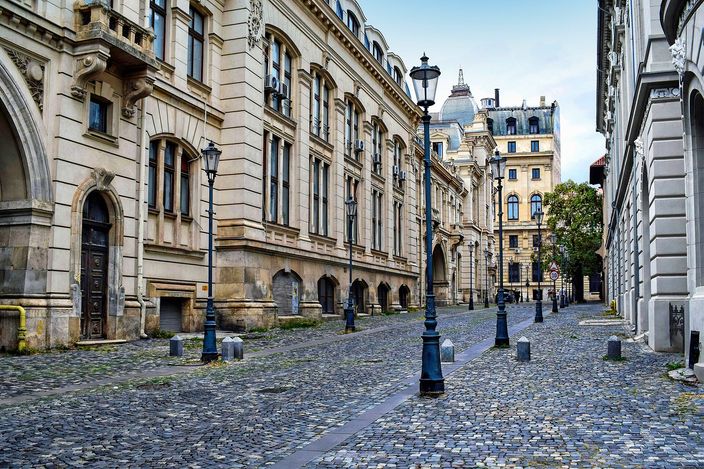
The compact grid of pedestrian streets between Piața Unirii and Calea Victoriei is the restored medieval-and-19th-century core, and it is where the city concentrates its bars, terraces and restaurants. Stay here if you want to step out of the door into the thick of it and walk to most of the central sights. The trade-off is blunt: this is Bucharest’s loudest nightlife zone, heavy on stag parties and thumping clubs at weekends, and a room over the wrong street means no sleep before 3am. Pick a courtyard-facing room, or stay one street back.
Universitate, Calea Victoriei and Magheru
The band of central boulevards just north of the Old Town — around Piața Universității and running up the long shopping axis of Bulevardul Magheru — is the practical, well-connected heart of the city. Calea Victoriei, the elegant old street lined with the Athenaeum, palaces and museums, runs through it. Stay here if you want to be central and on the metro but sleep more easily than in Lipscani, with cafés and shops on the doorstep. The trade-off is that the boulevards are traffic-heavy and can feel impersonal, and a few blocks are more transactional than charming.
Cotroceni
A leafy, low-rise residential district west of the centre, near the botanical garden, the university medical faculties and the presidential palace, with some of the city’s best-preserved interwar villas. Stay here if you want calm, tree-lined streets and a sense of how well-off Bucharest actually lives. The trade-off is distance: it is a genuine neighbourhood rather than a tourist base, quieter at night, and you’ll rely on the metro or trams to reach the centre and the north.
Dorobanți, Floreasca and Primăverii
North of Piața Victoriei, this is affluent Bucharest — embassies, designer shops, some of the better dining, and easy reach of Herăstrău park and its lake (officially King Michael I Park), the big green space where the city walks and rows at weekends. Stay here for quiet, greenery and good restaurants in a smart part of town. The trade-off is that you’re away from the historic sights, so you commute in on the metro, and it is the priciest slice of the city.
Gara de Nord
The area around the main railway station, northwest of the centre. It is the practical choice if you’re arriving late or leaving early by train, and it sits on the M1 metro. Beyond that there is little reason to stay: the immediate streets are drab and feel rough after dark, and the walk to anything worth seeing is long enough that you’ll take the metro anyway.
When to go
Late spring (May–June) and early autumn (September–October) are the best windows: warm, walkable and green, with the parks and terraces in use. Summer is genuinely hot — Bucharest sits on a flat plain and July and August regularly hit the mid-30s Celsius, with little breeze — and many residents who can leave do, so the city feels emptier and some restaurants keep shorter hours. Winter is cold, grey and can turn properly snowy; it’s quiet and cheap, and the run-up to Christmas brings markets to the central squares, but daylight is short and the weather is not made for wandering. Shoulder seasons win clearly here.
Getting there & around
Most visitors do not land at the small Băneasa field but at the larger Henri Coandă airport at Otopeni (OTP), further north of the city. From there the cheapest route in is the express bus 783, which runs to Piața Unirii in the centre; there is also a rail link from the airport to Gara de Nord. Taxis are cheap but the airport rank has a long history of overcharging — book through one of the ride-hailing apps, which everyone here uses, or order a metered cab from the official terminal machine rather than accepting a driver who approaches you.
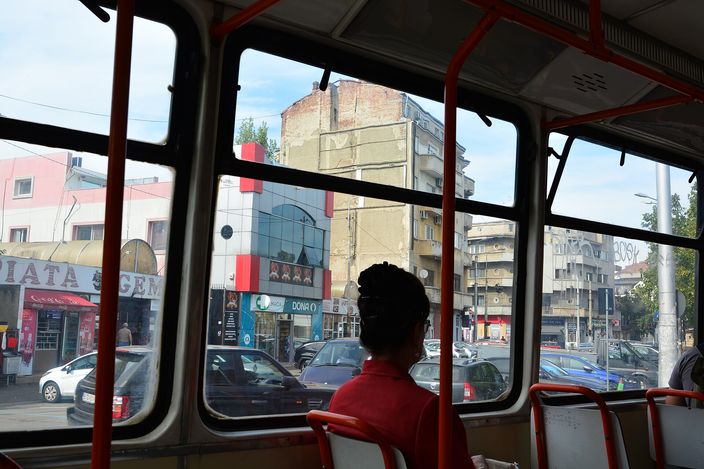
In the city, the metro (Metrorex) is fast, cheap and the sane way to cover distance; buy a rechargeable card and tap in. Surface transport — buses, trams and trolleybuses run by STB — fills the gaps but crawls in traffic. Don’t drive: parking is a free-for-all, the traffic is relentless, and you won’t need a car for anything central. Ride-hailing apps are inexpensive and the default for short hops the metro doesn’t cover. Gara de Nord is the main rail hub, though Romanian trains are slow; for day trips, the mountain towns of the Prahova Valley and the palace at Sinaia are the realistic rail options, while Transylvania is a long haul best broken over a night.
Practicalities
Bucharest is broadly safe; the real hazards are petty rather than violent — taxi overcharging, occasional pickpocketing in crowds and on busy transport, and the physical one of badly maintained pavements and open manholes, so watch your feet at night. Cards are accepted almost everywhere and contactless is standard; the currency is the Romanian leu, not the euro, so don’t assume euro cash will be taken. ATMs are everywhere, but decline the machine’s own currency-conversion offer.
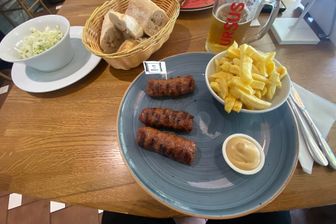
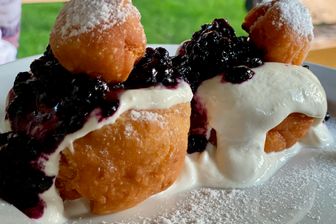
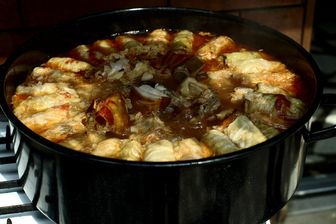
On food, the dishes to seek out are all hearty and cheap: mici (also called mititei), skinless grilled minced-meat rolls eaten with mustard and best from a smoky terrace in summer; sarmale, cabbage rolls stuffed with pork and rice, usually served with mămăligă (polenta) and sour cream; and ciorbă, a sour soup that comes in many versions and is the thing to order when it’s cold. Finish with papanași, warm fried dough rounds topped with sour cream and sour-cherry jam — one portion easily feeds two. Tap water is safe to drink. English is widely spoken by younger people and in the centre; a bună ziua (good day) on arrival and mulțumesc (thank you) go a long way.
.jpg)
