Tokyo in a week: seven districts, seven days, and one train ride each morning

Last updated 3 August 2026
Overview
Tokyo has no center, and a week is the length at which that stops being a warning and starts being the plan. What it means in practice is simpler than the city guide’s argument about where to sleep: the hubs on the loop line are genuinely far apart, half an hour underground is an ordinary way to get from one good neighborhood to another, and a week spent chasing a list across the map is a week spent on trains. You will remember the trains.
So this is one district a day. Every day below starts at a station and is on foot from there until the evening — you go under in the morning and again at night, and the hours in between are walkable apart from three short legs, named where they come. That is what makes seven days here restful instead of punishing, and it also means the week does not care where you sleep. Anywhere on the loop, or a few minutes from it, serves all seven days equally.
The order is deliberate rather than alphabetical. The old quarter on the river comes first, because it is the Tokyo most people already have a picture of, and spending it on day one turns it from an obligation into a reference point for everything after. Then the formal center, then the young west, which is the other picture. The museums land mid-week, when your legs are still good and the novelty has worn off enough to let you look at things slowly. Shinjuku, the loudest day, comes after them rather than before. The last two days are the quiet ones on purpose: the east bank of the river, where the city keeps its Edo history, and then the small-town Tokyo half an hour west of everything, where nothing is scheduled beyond the one ticket this week asks you to buy in advance.
This week never leaves the city, and that is a decision rather than an omission. Kamakura, Nikkō and Hakone are each a day trip from here and each of them is good. But every one of them costs a district, and after seven days you will not have finished Tokyo — there are whole quarters below that this article leaves out to keep the days honest. They are what an eighth day is for.
Three closing days shape the week, and two other things can move it. The palace gardens on day two shut on Mondays and Fridays; the big museum on day four shuts on Mondays; the garden on day five shuts on Mondays too, outside blossom and chrysanthemum season. Japanese museums close on Monday as a rule, so if one of your seven is a Monday, spend it on day one, which is the only day here with no Monday closing in it. Only one thing in the week has to be bought before you arrive, and it is on the last day; and if your week falls inside a sumo tournament, day six becomes a fixed point too.
Almost everything here is free. The paid stops are the three gardens, the two Edo museums and the small museum on day three, most of them cheap; the museum on day four and the tower deck on day one, which are not; and the ticket on day seven. None of them is compulsory.
Day one

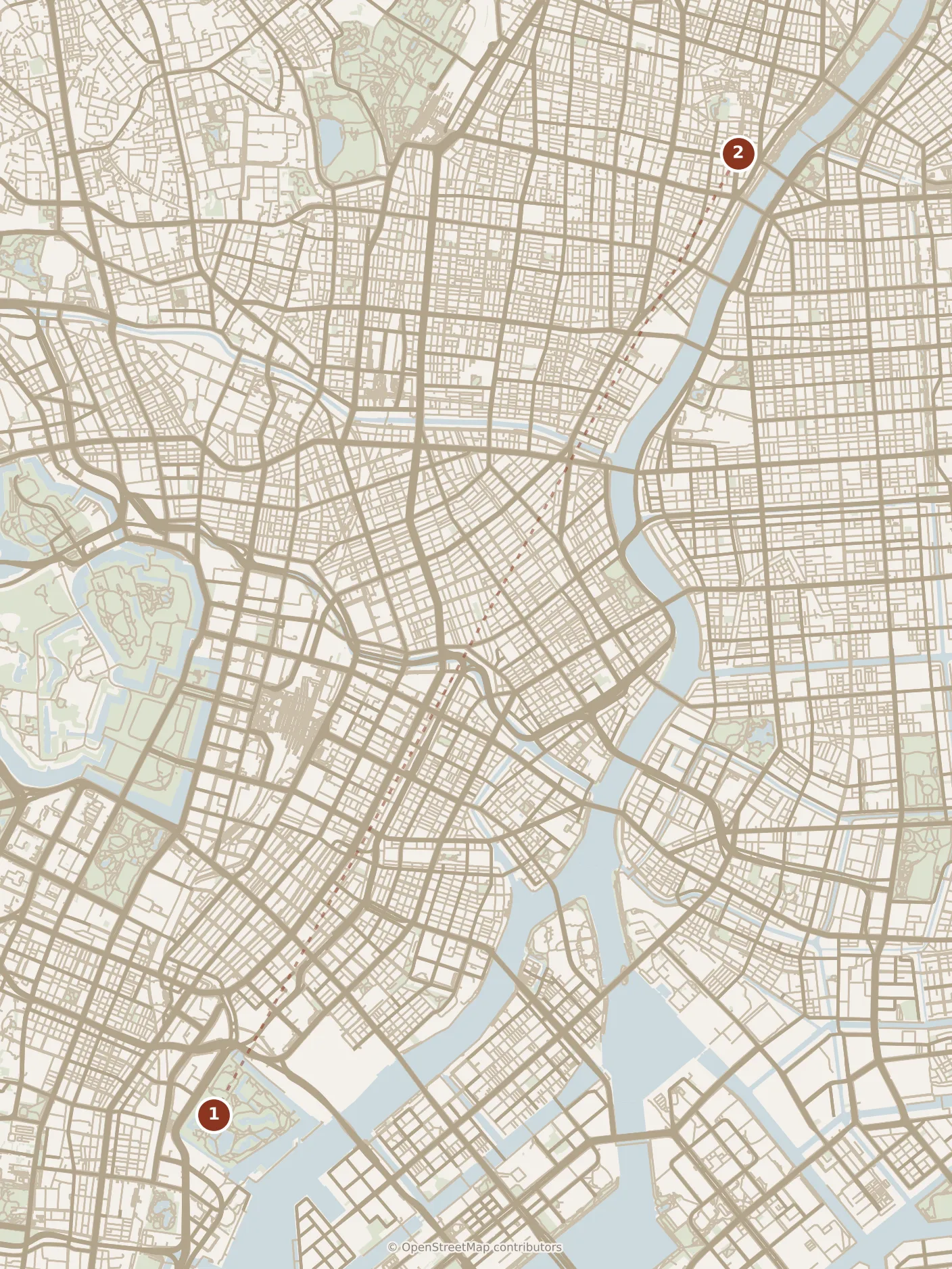
The ride on to stop 2, by boat, not on foot.
- Day one · stop 1
- Tsukiji Outer Market — in the prose, not on the map
- 1Hamarikyū Gardens
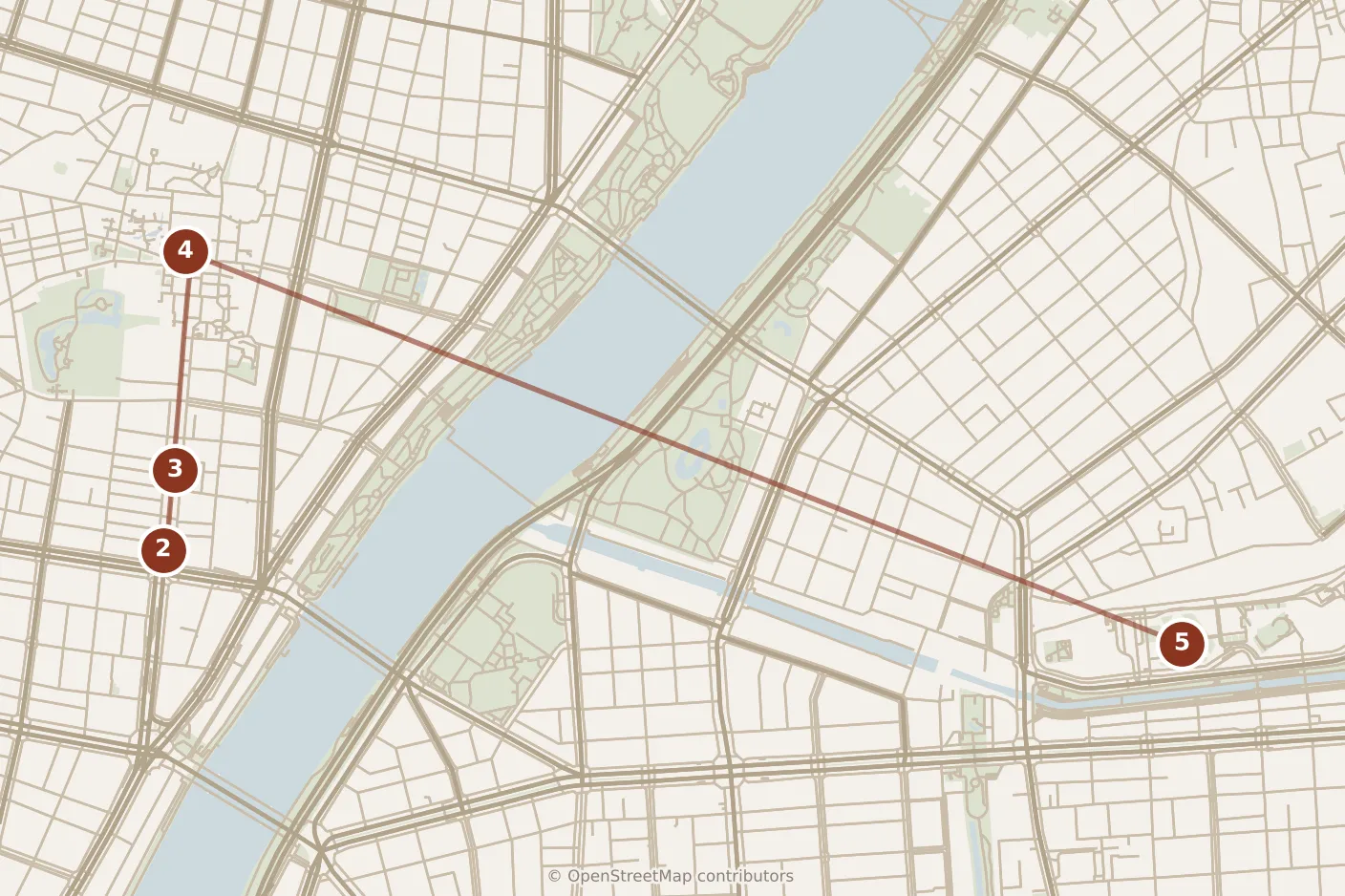
- Day one · stops 2–5
- 2Kaminarimon
- 3Nakamise Street
- 4Sensō-ji
- 5Tokyo Skytree
The oldest part of the city, reached the way it was meant to be reached, which is up the river. Start early — if you have come from Europe or the Americas the jet lag wakes you before dawn for the first few days, and this is the one morning that is worth spending.
Begin at Tsukiji Outer Market. The wholesale fish market that made the name moved out to Toyosu years ago; what stayed behind is the street of retail stalls, knife shops and standing counters that grew up to serve it, and it is busier than the ghost story suggests. Walk the lanes rather than sitting down: dried fish, knives forged for one job each, ceramics, tamagoyaki sold hot on a stick, and a dozen counters where breakfast is eaten standing at the shopfront. An hour is plenty. The market runs on the old wholesale calendar rather than on shop hours, and the closing days are published a year ahead and are not the same every week — check the date before you fix which morning you come, because on a closed day you will find shutters.
Ten minutes’ walk south-west is Hamarikyū Gardens, and the change of register is abrupt: office towers on three sides and, inside the wall, a shōgun’s duck-hunting park. The land was reclaimed from the bay in 1654 and the family kept it as a villa and falconry ground. The pond is not ornamental water but seawater, still filled from Tokyo Bay through a sluice, so its level moves with the tide and the fish in it are sea fish. At the center, on an island reached by two bridges, there is a teahouse where you sit on the mats with matcha and a sweet and look back at the towers. Give it an hour and take the tea; it is the best twenty minutes of the morning.
The garden has its own pier, inside the walls, and the river boat leaves from it — about thirty-five minutes upstream to Asakusa, under a dozen bridges each painted a different color.
Local tip. Buy the garden ticket and the boat ticket in one go and leave through the pier rather than back out to the street, which is what most people do without knowing there is a choice. If the boat’s times do not suit your morning, the metro covers the same ground in twenty minutes and the garden is worth the visit either way — but the river is the reason to do this day in this order.
Asakusa begins at Kaminarimon, the outer gate, and its lantern, which is nearly four meters tall and weighs something like seven hundred kilograms. Behind it Nakamise Street runs about two hundred and fifty meters to the inner gate with some seventy shops down both sides, selling crackers, fans and folded paper. It is a souvenir arcade and it has been the commercial approach to the temple for centuries, so the commerce is not a modern intrusion. Push through it to Hōzōmon, which is twenty-two meters high, and then to Sensō-ji itself, the oldest temple in Tokyo — founded, by its own account, in 628, around a statue of Kannon pulled out of the river by two fishermen.
Here is the thing worth knowing before you look: almost nothing you can see is old. The main hall was destroyed in the firebombing of 10 March 1945 and rebuilt between 1951 and 1958; the pagoda went up again in 1973; the outer gate dates from 1960. What has survived is not the timber but the practice — the incense you wave over yourself, the paper fortunes, the line at the offering box — and once you stop looking for age you can see that the crowd is the monument. Ninety minutes, and go at either end of the day rather than the middle.
Finish across the river at Tokyo Skytree, twenty minutes east on foot. At 634 meters it is the tallest tower in the world, with decks at 350 and 450 meters. Take the lower one and skip the upper: the extra hundred meters buys you a longer line and a smaller city, and from 350 you can still pick out the temple you came through earlier. The stops above run to about four and a half hours, so from a before-dawn start you reach the tower with the light still a long way off — spend the slack back at the temple, which is what its “either end of the day” is for. Go up for sunset, when the gray flatness of the day view turns into the thing Tokyo is actually famous for, which is being enormous after dark.
Day two

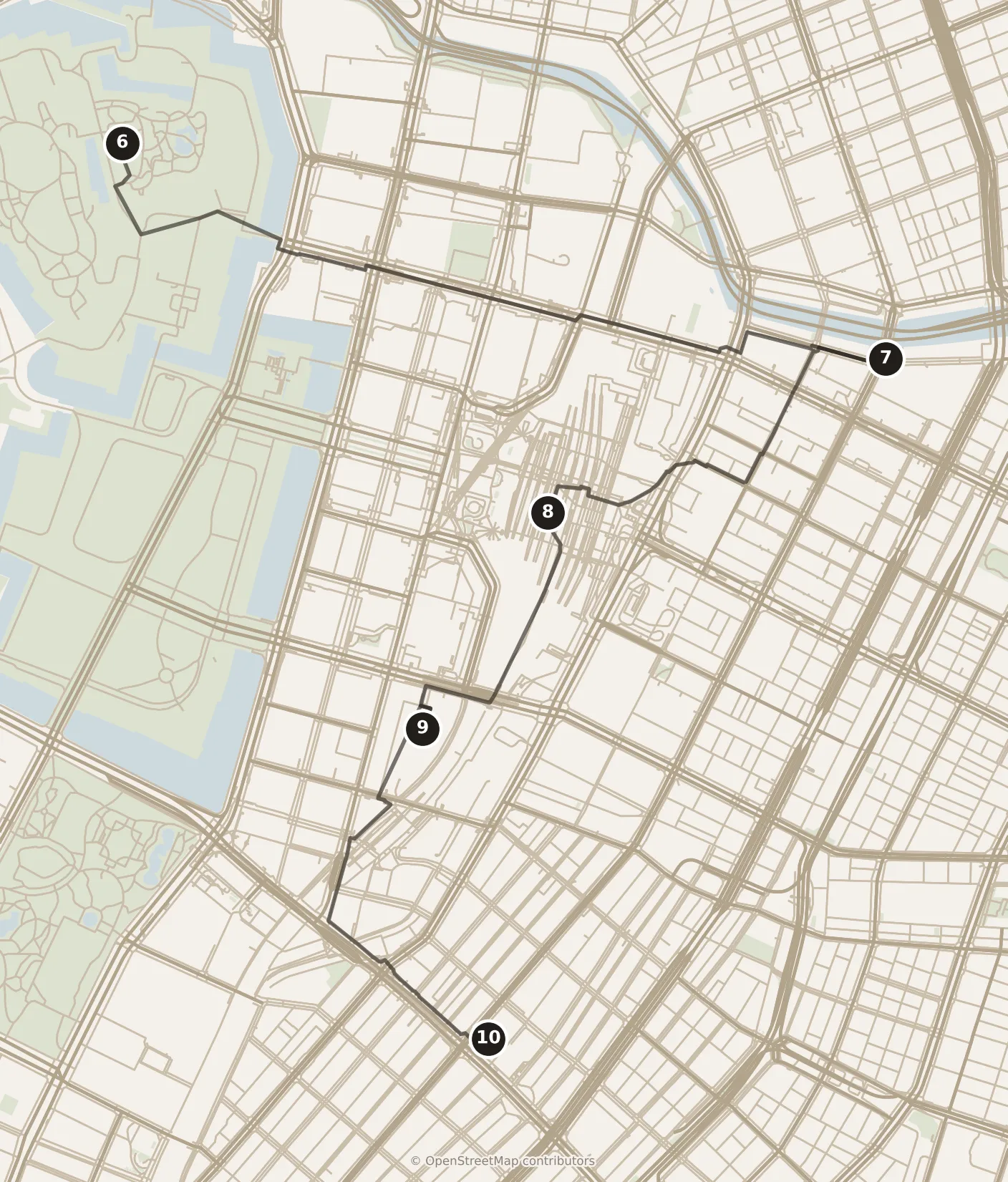
- Day two
- 6Imperial Palace East Gardens
- 7Nihonbashi
- 8Tokyo Station
- 9Tokyo International Forum
- 10Ginza
The formal center, walked north to south. It is the shortest day on your feet and the densest in history, and it is the one day of the week with a hard constraint: the palace gardens close on Mondays and Fridays.
Start at the Imperial Palace East Gardens, which are free and need nothing booked. This is the inner keep of Edo castle, and the point of coming is that you can walk up onto the stone base of the great tower — an enormous plinth of fitted granite with a flight of steps and absolutely nothing on top. The tower burned in the seventeenth century and was never rebuilt, so what you climb is a foundation with a view of office blocks, which tells you more about the shift from Edo to Tokyo than any museum caption. Below it are two surviving guardhouses of the old defenses, and behind them a compact stroll garden with a pond and an iris bed. Ninety minutes. The palace grounds proper are a different proposition — a reserved guided tour, Tuesdays to Saturdays — and you do not need it; the gardens are the half that lets you walk.
Leave by the east side and walk twenty minutes to Nihonbashi. The bridge dates from 1911, stone on a steel frame, with bronze lions and a small marker set into the road surface: this is the point from which every road distance in Japan is measured, so a sign anywhere in the country saying how far Tokyo is means how far this bridge is. It is also the most apologized-for structure in the city, because an elevated expressway was thrown across it just before the 1964 Olympics and has sat six meters above the parapet ever since. That is now being undone — the expressway is being moved underground, a project whose target is the 2040s. Which makes this the before picture, and worth four minutes of your attention rather than none.
Ten minutes south is Tokyo Station, and it is the red-brick Marunouchi front you have come for rather than the platforms. It opened in 1914, lost its domes and its third story to firebombing in May 1945, was patched back as a flat two-story building for the next sixty years, and was finally restored to its original height and its two domes in 2012. Go inside the north or south dome and look straight up: relief eagles, and the twelve animals of the zodiac set around the rim, eight of them in the plasterwork and the rest accounted for elsewhere. It costs nothing and takes ten minutes.
Five minutes further is the Tokyo International Forum, a glass hall shaped like the hull of a ship turned upside down, ribbed in steel, with walkways strung along the inside at height. Walk in, go up one level, look down the length of it. It is free, it is empty most afternoons, and it is the best piece of modern architecture on this day’s route.
End in Ginza, ten minutes south, in the late afternoon. The pleasure of it is the grid — wide straight blocks laid out after a fire in the 1870s, the only part of central Tokyo that reads like a planned city — and the fact that on weekend afternoons the main avenue closes to cars altogether and people walk down the middle of it. If you want to eat rather than shop, the thing to do is go down: the big department stores keep their food halls in the basement, floor after floor of it, and they are cheaper, better and far more interesting than the restaurants at street level.
Day three

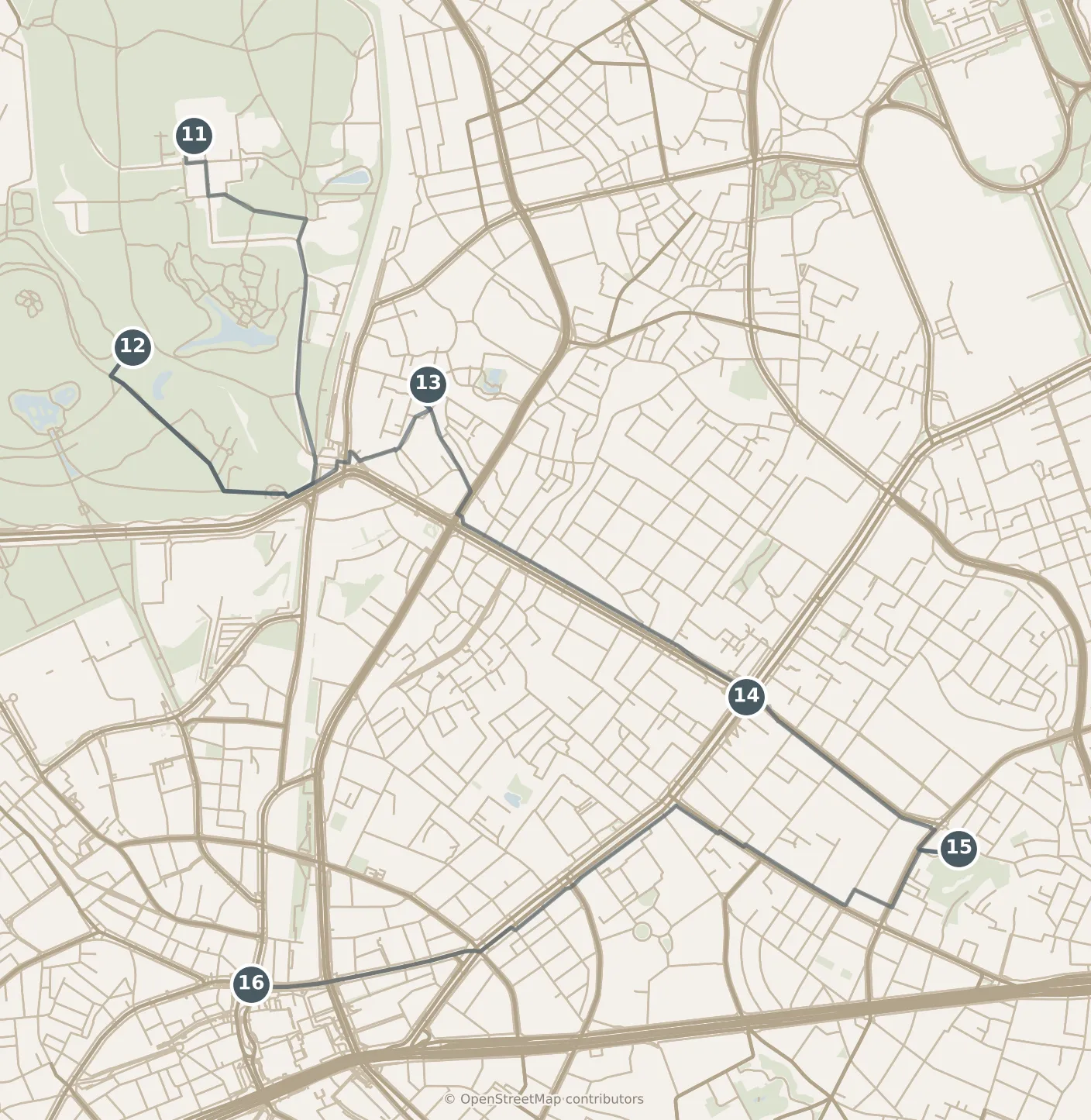
- Day three
- 11Meiji Jingū
- 12Yoyogi Park
- 13Takeshita Street
- 14Omotesandō
- 15Nezu Museum
- 16Shibuya scramble crossing
The west, and the two Tokyos that sit four hundred meters apart: a forest with a shrine in it, and the loudest shopping street in the country. This is the longest day on foot after day five, and all of it is downhill from the shrine to the crossing.
The crossing is the end of it and wants to be dark, so the day runs backwards from whenever the light goes. Everything above it comes to about five hours walking pace, which puts the start after an early lunch in winter and mid-afternoon in June — Tokyo’s sunset moves by three hours between them, and it is the one thing worth looking up before you set out.
Come up at Harajuku and go straight into Meiji Jingū. The approach is a broad gravel path under a cypress torii, and the walk in takes a quarter of an hour, which is deliberate. The shrine was dedicated in 1920 to the emperor Meiji and his empress, and the forest around it is entirely artificial: a hundred and twenty thousand trees of three hundred and sixty-five species, donated by people from every part of the country and planted to grow into something that would look like natural woodland within a century. It has. The buildings themselves were destroyed in the air raids and finished again in 1958, so as at the temple yesterday the age is in the idea rather than the wood. An hour and a half including the walk in and out. Wash your hands at the basin before the inner court; everybody does, and nobody minds if you copy them badly.
Yoyogi Park shares the same approach, so it costs you nothing to add: through the gate, over the bridge and you are in open lawn instead of forest. It is where Tokyo goes to do things in public — drum circles, dog walkers, people rehearsing. Half an hour, or an hour on a Sunday, when the performers turn up.
Back past the station is Takeshita Street, four hundred meters of teenage Tokyo: crêpe stands, cheap accessories, photo booths, and a density of people that has to be experienced rather than described. Ten minutes is a complete visit and there is no shame in that. Walk out the far end, turn right, and you are on Omotesandō, which is the correction — a wide avenue lined with zelkova trees and flagship shops by serious architects. Read it the way you would read cast iron: above the ground floor, where the buildings are doing the work.
At the far end is the Nezu Museum, and it is the surprise of the day. Kengo Kuma’s building gives you a long, dark, bamboo-lined walk in from the street, and inside are seven thousand-odd objects of Japanese and Chinese art, a few of them designated national treasures. But the reason to come is behind: a wooded garden that falls away down a hillside with ponds, stone lanterns and teahouses in it, which nobody expects to find at the end of a luxury shopping street. Give the galleries forty minutes and the garden as long as it holds you.
Then walk fifteen minutes downhill to the Shibuya scramble crossing, and arrive after dark because the lights are half of it. Up to three thousand people cross on a single green, and the green comes round every couple of minutes; on a weekday something like a quarter of a million people use it. Watch it from above first — the station’s raised walkways and the upper floors of the buildings on the north side all look straight down on it — and then go and cross it twice, which takes five minutes and is the point. The statue of Hachikō, the dog who kept meeting a train that was not coming, is on the near side, permanently surrounded, and is the city’s standard meeting place.
Day four

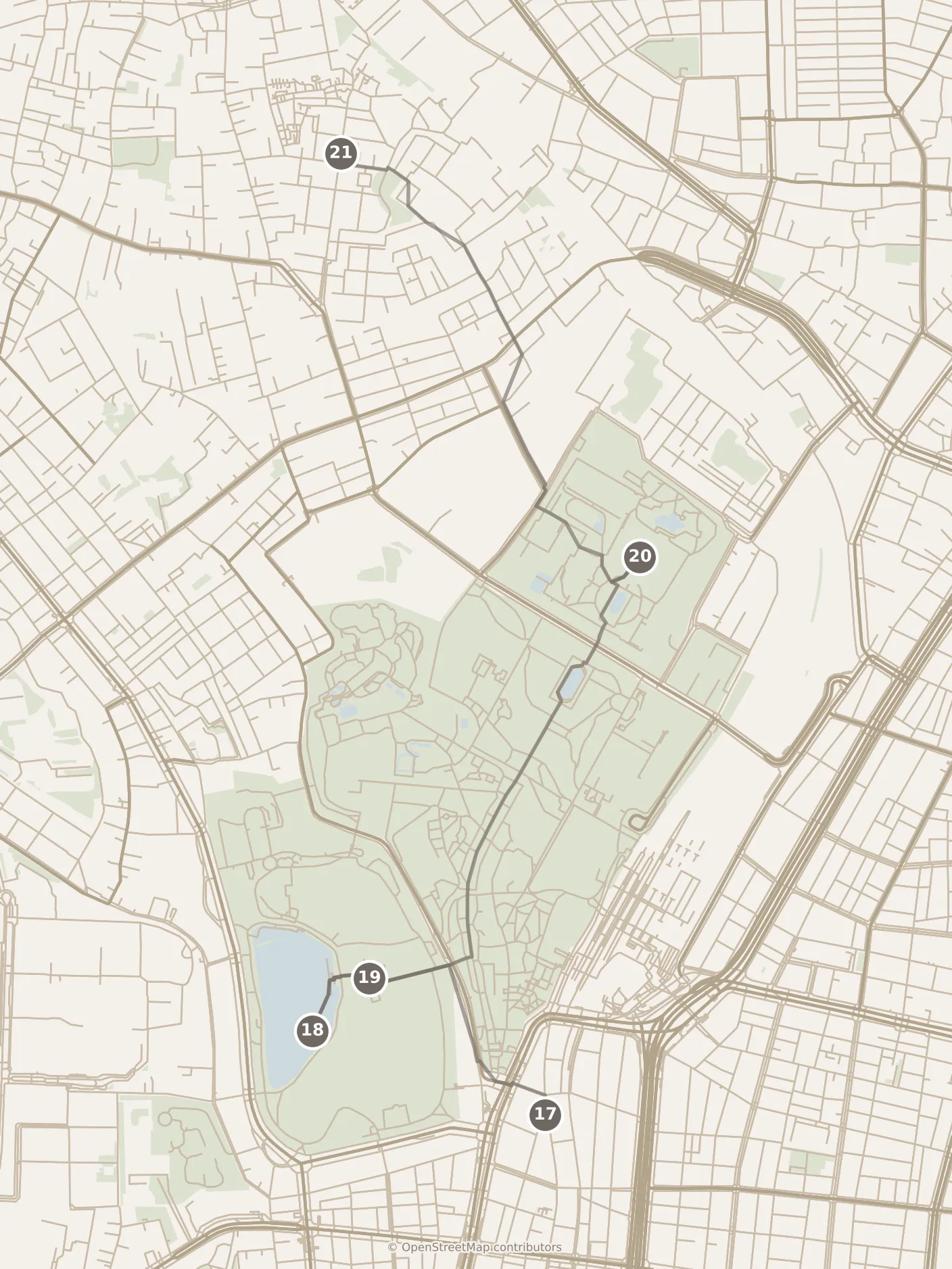
- Day four
- 17Ameya-Yokochō
- 18Shinobazu Pond
- 19Ueno Park
- 20Tokyo National Museum
- 21Yanaka Cemetery
- Yanaka Ginza — in the prose, not on the map
The museum day, and then the antidote to it. Ueno in the morning, and a neighborhood in the afternoon that shows what the rest of the city looked like before it was rebuilt.
Start below the station at Ameya-Yokochō, a market of more than two hundred and fifty stalls running along and underneath the Yamanote viaduct. It grew out of the years just after the war, when the trade here was American surplus goods and cheap candy, and the name still carries both stories. Now it is dried fish and fresh fish, spices, sneakers, fruit sold by the piece and standing counters wedged under the girders where people are drinking at eleven in the morning. Forty minutes, and it is best walked south to north so that it delivers you to the park.
Ueno Park opened in 1873 and is among the first public parks in Japan, laid out on the grounds of Kan’ei-ji, the temple complex that stood here until most of it was destroyed in the fighting of 1868. Two buildings survived and are still standing: a five-story pagoda of 1639 and a small Kannon hall of 1631 on a terrace above the water. Enter from the south and take Shinobazu Pond first — a wide shallow lake covered in lotus through the summer, with an octagonal shrine to Benzaiten on an island in the middle of it and pedal boats going round. Then walk north through the park itself, which has some eight hundred cherry trees and is the most visited city park in the country, with more than ten million people a year through it. It is not tranquil and it is not trying to be.
At the top of the park is the Tokyo National Museum, founded in 1872 and far too large to see. It is not one building but five, and the mistake everybody makes is to start at the first one and grind through until they stop enjoying it.
Local tip. Choose two buildings before you go through the gate and let the others go. The Honkan, which is Japanese art from prehistory to the nineteenth century, is the one to keep; the second is a real choice between the Tōyōkan, for the rest of Asia, and the gallery of Hōryū-ji treasures, which is a quiet dark room of seventh-century gilt bronze and is over in half an hour. Two buildings is two and a half hours and a good afternoon; five is an endurance test you will not remember.
Then walk twenty minutes north-west into Yanaka, and go in through Yanaka Cemetery, which sounds grim and is not: it is a grid of avenues under cherry trees where people walk their dogs and take shortcuts, and it is a public park in everything but name. Beyond it is one of the few parts of Tokyo where the old shitamachi atmosphere genuinely survives — low wooden houses, temples every third corner, some seventy small owner-run shops, cats. Finish down the staircase into Yanaka Ginza, a short shopping street of about seventy meters that sells croquettes, pickles, senbei and dried flowers to people who live there. Come in the late afternoon: the street runs west, and the staircase at the top of it is where everybody stands to watch the sun go down the length of it.
Day five

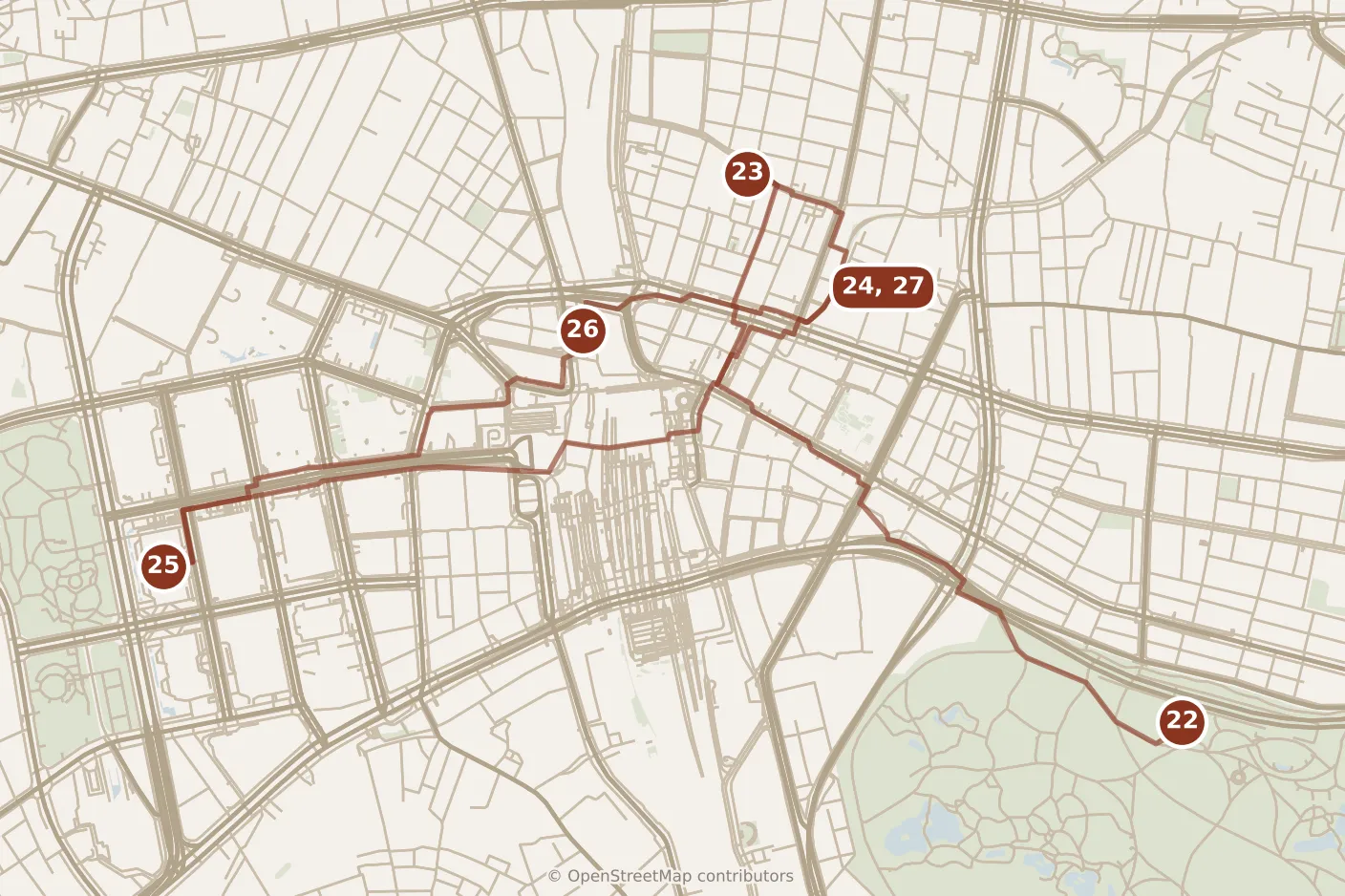
- Day five
- 22Shinjuku Gyoen
- 23Kabukichō
- 24Hanazono Shrine
- 25Tokyo Metropolitan Government Building
- 26Omoide Yokochō
- 27Golden Gai
Shinjuku, all of it, and this is the loud day. It is also the day with the most walking, and it runs east, then west, then east again, which is deliberate: the garden in the morning, the alleys in the afternoon, the towers at dusk, and the drinking after that.
The deck is what the day is built around and it does not wait: it wants the hour before sunset. Everything above it comes to about four hours including the walking, so count back from the light rather than from a clock — the same sunset that governs day three governs this one, and it is three hours earlier in December than in June.
Start at Shinjuku Gyoen and give it two hours. It is fifty-eight hectares and, unusually, three gardens at once: a French formal parterre and an English landscape park at the north end, and a Japanese stroll garden with ponds, bridges and a teahouse at the south. Twenty thousand trees, about fifteen hundred of them cherries, and a greenhouse from the 1950s holding something over seventeen hundred species. It closes on Mondays, except through blossom season in spring and chrysanthemum season in early November, when it opens every day. Enter at the south and leave at the north-east, which puts you at the station.
Then the station itself, which you should look at rather than merely pass through: three and a half million people a day, the busiest railway station in the world, five different operators, more than thirty platforms and well over two hundred exits. The practical instruction is not to fight it. Do not try to cross Shinjuku underground on your first attempt — surface, walk the street, and go back down at the exit you actually want.
North of the tracks is Kabukichō, which by daylight is an ordinary grid of restaurant signs and cinemas with the arch at the end of it, and is worth a quarter of an hour to see what it looks like with the lights off. Wedged in beside it is Hanazono Shrine, vermilion and small and completely surrounded by towers, with a row of red lanterns and a flea market in the grounds on many Sundays. Ten minutes, and it is the only quiet in a square mile.
Cross west to the Tokyo Metropolitan Government Building for the end of the afternoon. It has two observation decks, one in each tower, both on the forty-fifth floor at two hundred and two meters, and both free — no ticket, no booking, a bag check and an elevator. The two decks open on alternating days, so do not fix which tower you are going up; ask at the first floor when you arrive. Come an hour before sunset and stay through it. On a clear day in winter Mount Fuji sits on the western horizon, which is the one view in Tokyo that people actually gasp at.
Come back down and east to Omoide Yokochō, a lane of about a dozen tiny counters beside the tracks where the smoke from the grills goes straight into the street. Seats are six to a counter, you eat standing or on a stool, and the whole point is that it is what the west side of the station looked like before the towers. Then Golden Gai, ten minutes further east: more than two hundred bars in six alleys on less than a hectare, buildings a couple of meters wide, some rooms holding five people at a squeeze. It survived the boom that flattened everything around it. Walk it first and drink second, and know the rule before you push a door: many of these rooms take only regulars introduced by another regular, and many are delighted to see you. The ones that want passing trade generally say so on the door; where nothing says so, assume it is somebody’s living room and keep walking.
Day six

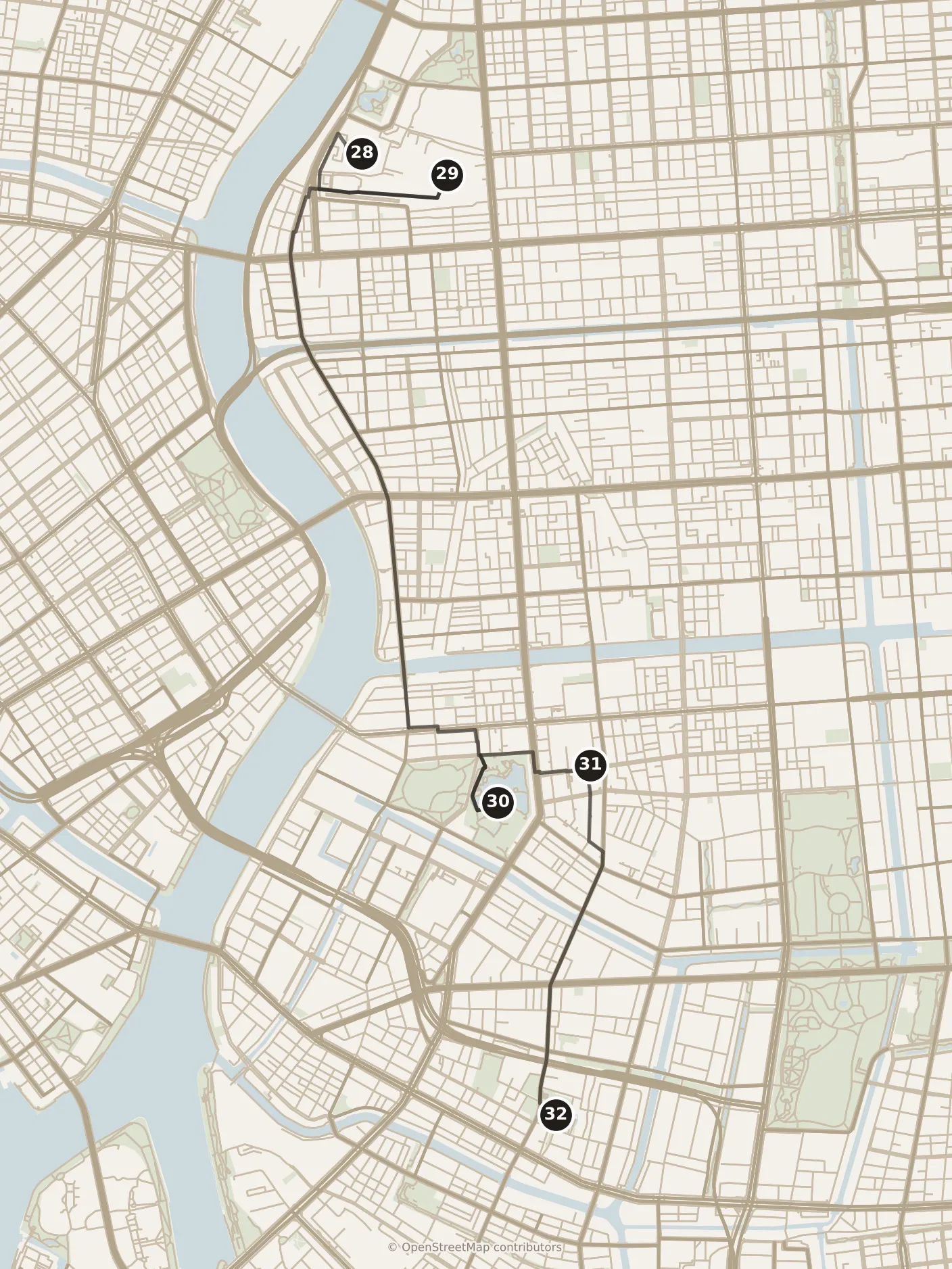
- Day six · stops 28–32
- 28Ryōgoku Kokugikan
- 29Edo-Tokyo Museum
- 30Kiyosumi Garden
- 31Fukagawa Edo Museum
- 32Tomioka Hachiman Shrine
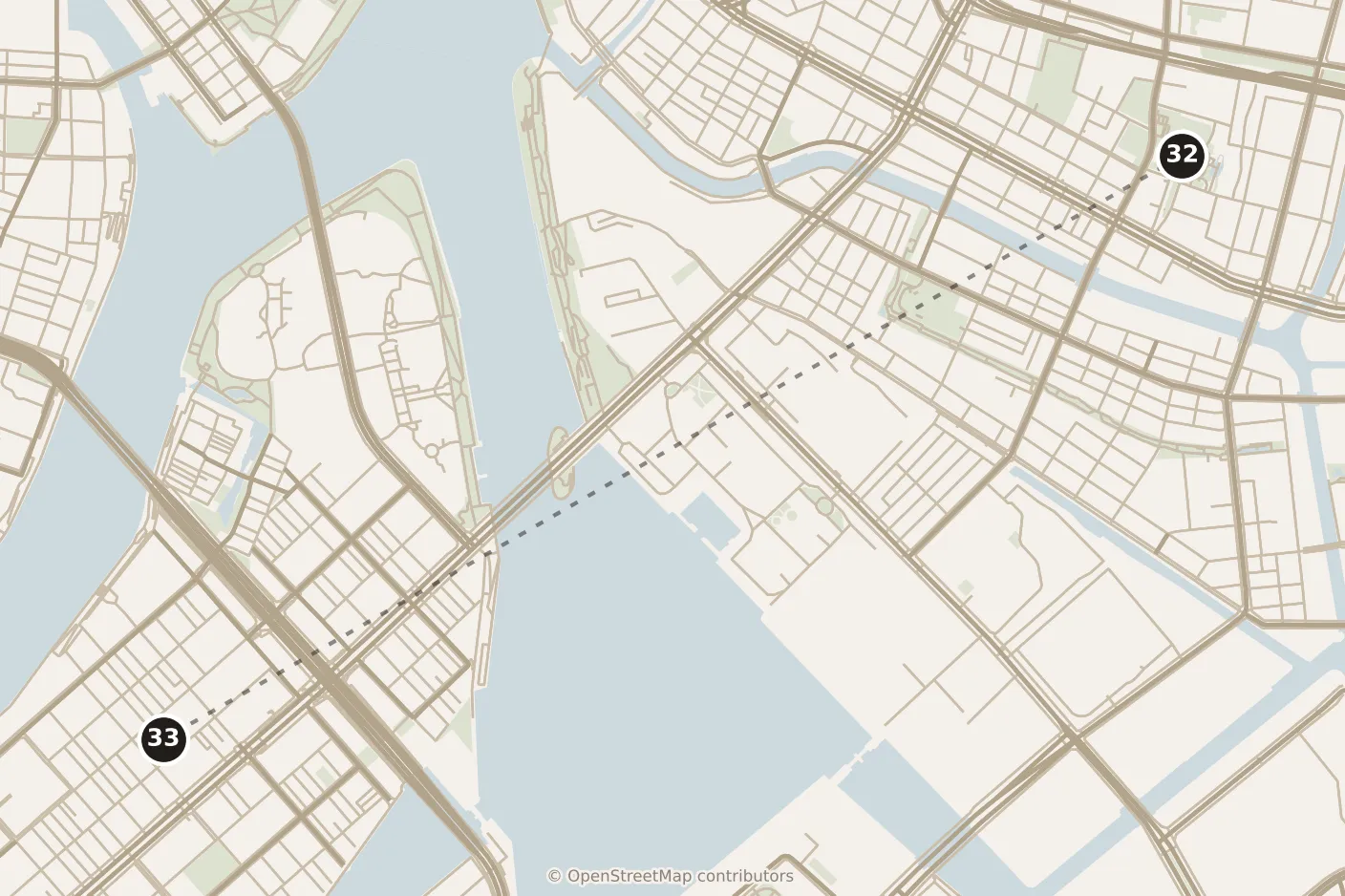
The leg out of the center: from stop 32 by metro, not on foot.
- Day six · stop 33
- 33Tsukishima
The east bank of the river, and the quietest day of the seven. It is where the city keeps its own history, and it ends at a table with a hot plate set into it.
Start at Ryōgoku Kokugikan, the sumo hall, which is the only building in the country set up for the sport all year round. Three of the six annual tournaments are held here — January, May and September, fifteen days each — and if your week falls inside one of them, this is the day to fix first and build the rest around, because a tournament day is six hours and displaces everything else. Outside those months the hall keeps a small sumo museum, and the neighborhood around it is full of training stables and the places that feed them the enormous one-pot stew wrestlers live on, which is served here to anyone.
Next door is the Edo-Tokyo Museum, in a building raised on four legs that looks like a spacecraft and is impossible to miss. It shut in April 2022 for a four-year refit and reopened in March 2026, which means what is on the floor now is newer than any account of it, including this one. What the museum has always done is build at full scale rather than fill cases — you walk through reconstructions rather than past them — and that approach is why it is worth two hours even sight unseen.
Walk twenty-five minutes south to Kiyosumi Garden, which is small, perfect and almost empty. It was made between 1878 and 1885 by Iwasaki Yatarō, the shipping magnate, who used his own steamships to bring fifty-five large stones here from every part of Japan. The design conceit is the isowatari: two runs of flat stepping stones set just above the water across inlets of the pond, so that instead of walking round the garden and looking at it, you walk out into it at the level of the carp. There is a teahouse on the water. Forty-five minutes and you will want longer.
Five minutes away is the Fukagawa Edo Museum, which is one large dark hall containing a full-size street of about 1840 — eleven buildings, houses you can go inside, shops, a theater, a boathouse and a fire tower — with the lighting cycling slowly from dawn through dusk and back while you are in it, and the sounds changing with it. It is an hour, it is cheap, and it does something no display case can.
Ten minutes further south is Tomioka Hachiman Shrine, founded in 1627, and this is where sumo actually began: professional wrestling as a public, ticketed thing started in these grounds in 1684, and new grand champions still perform their ring-entering ceremony here rather than at the hall you started the day in. A stone monument put up in 1900 carries the names of every one of them, and it is still being added to. Free, half an hour, and it closes the circle of the day.
Finish at Tsukishima, one stop away on the Ōedo line, which is a reclaimed island with a single long street of counters down the middle of it. What you eat is monjayaki, and it belongs to this city rather than to any other: a very loose savory batter poured onto the hot plate in front of you, worked into a shape with two spatulas, left to catch, and then scraped up in small crisp pieces with a metal spatula the size of a teaspoon and eaten straight off the iron. It is untidy, it is not photogenic, and it is the correct end to a day spent looking at old Tokyo.
Day seven

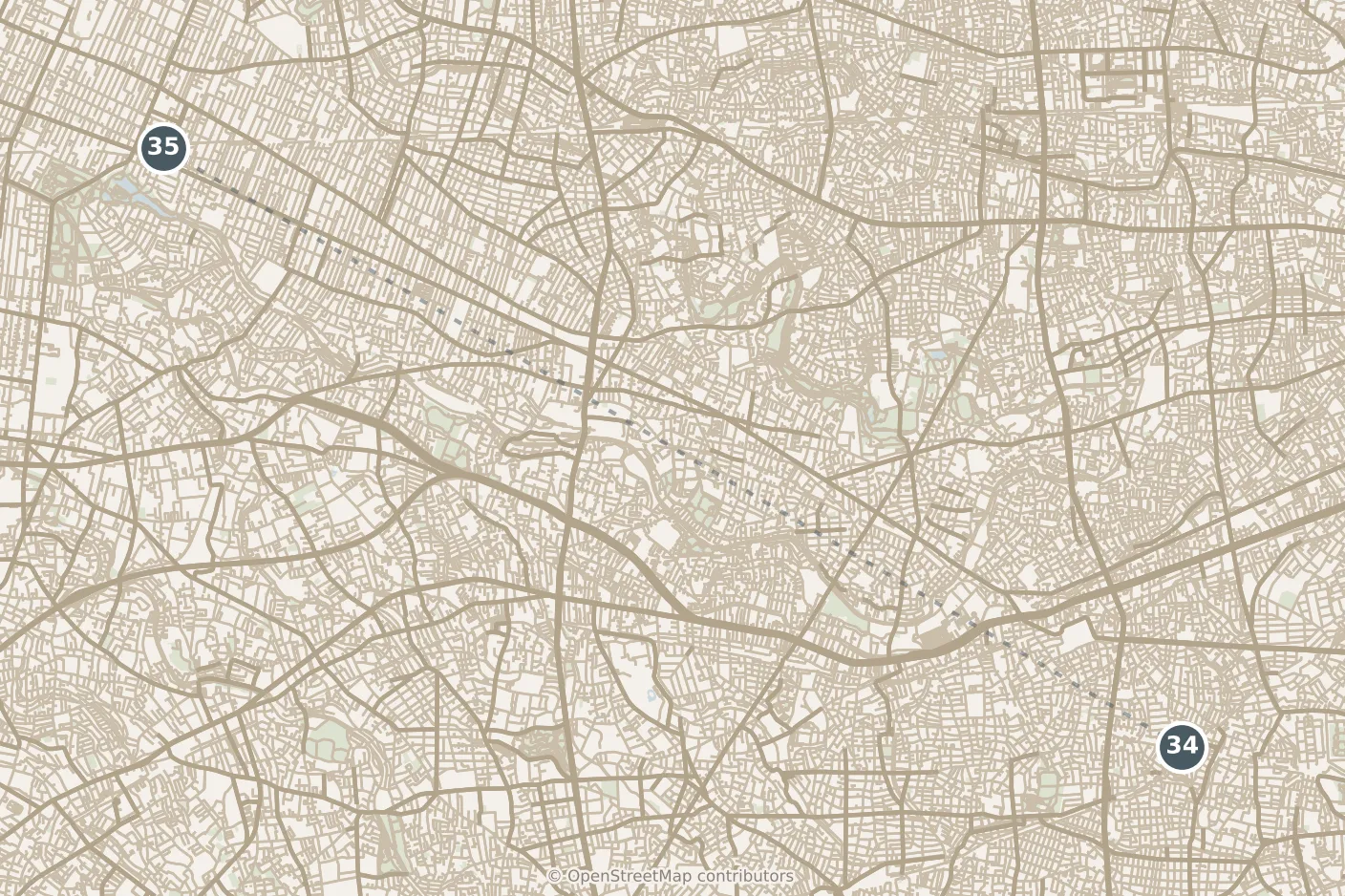
The ride on to stop 35, by train, not on foot.
- Day seven · stop 34
- 34Shimokitazawa
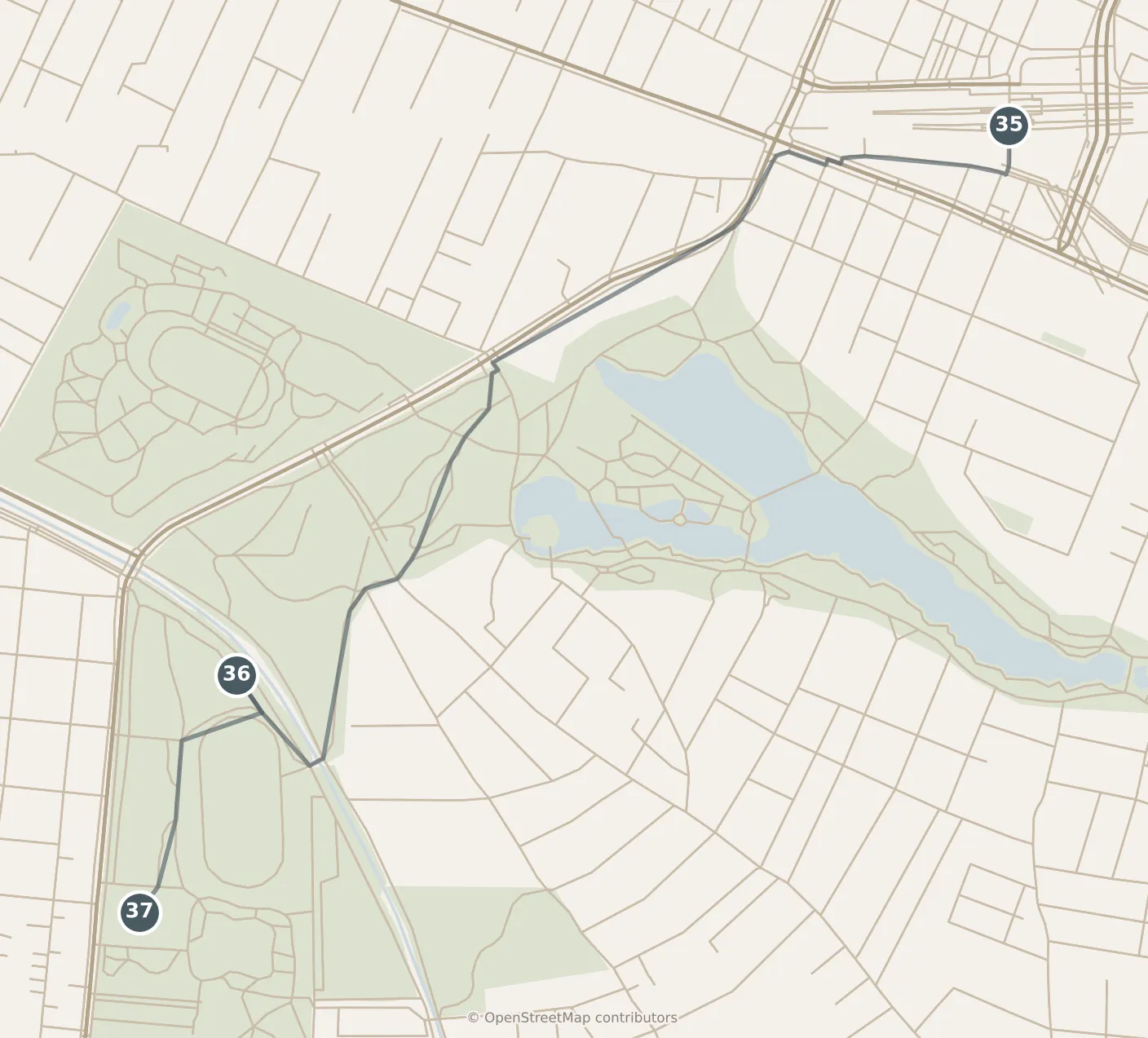
- Day seven · stops 35–37
- 35Kichijōji
- 36Inokashira Park
- 37Ghibli Museum
- Harmonica Yokochō — in the prose, not on the map
The last day, half an hour west of the loop, where Tokyo stops being a metropolis and turns into a series of small towns. Nothing here is a sight, and there is one thing you must have booked weeks ago or not at all.
Start at Shimokitazawa, fifteen minutes out on the Inokashira line. It is a couple of square kilometers of narrow lanes with no through traffic, and its density of second-hand clothes shops, tiny theaters, live music rooms and coffee is not matched anywhere else in the city. There is no route through it and you should not look for one; the correct instruction is to lose the main street within ten minutes and stay lost for an hour and a half. One thing to notice while you wander: the railway used to run through the middle of this neighborhood at ground level, cutting it in two, and it was put underground in 2013. The strip of land it left has been filling in with shops and gardens ever since, so what you are walking across is a seam being stitched shut in real time, and you can see exactly where it runs.
Then fifteen minutes further out to Kichijōji, and straight down through the park. Inokashira Park opened in 1917 around a spring-fed pond that is one of the sources of the Kanda River — which used to be Edo’s drinking water, and which is the reason this park exists at all. There are rowing boats and swan pedaloes on the water, a shrine to Benzaiten on a promontory, a small zoo, and in early spring the cherry trees lean out far enough over the pond that the boats go through the petals. Walk the length of it south-west, which takes about twenty minutes.
At the far end, in Mitaka, is the Ghibli Museum, and this is the booking. Tickets are sold only in advance, for a named date and a named entry time, and they are gone long before the date arrives. It is deliberately small — a building of odd staircases, stained glass and a rooftop garden, made to be wandered rather than worked through, with almost nothing labeled and no route marked. Two hours. If you have not got a ticket, the park itself is the day and the museum’s absence costs you nothing you can feel.
Local tip. Buy this ticket before you fix any other part of the week, and then hang day seven on whatever slot you are given rather than the other way round. Nothing else in these seven days needs booking at all, so it is the only booking that can dictate an order — and if you cannot get one, put Shimokitazawa in the afternoon instead of the morning and let the whole day be aimless, which suits it.
Walk back through the park to Kichijōji and end at Harmonica Yokochō, a dense knot of tiny stalls in the lanes on the north side of the station — a market from the years after the war that turned into a drinking quarter without ever being rebuilt. The passages are one person wide and every door opens onto six seats. It is the same idea as day five’s alleys, in a town rather than a city, and it is a better last evening than anything you could plan.
Then leave the rest of the night alone. A week is long enough to have found something you want a second go at, and the last evening is better spent going back to it than starting somewhere new at the far end of a line.
Practicalities
One thing to buy before anything else, on the way in from the airport: the rechargeable card the city guide names. Every day of this week taps through a gate with it, on the loop line, on both subway systems and on the buses, and without one you are queuing at a machine twice a day in a language you cannot read. The city guide covers which card and where; this week simply assumes you are holding one.
Three closing days decide this week. The palace gardens on day two shut on Mondays and Fridays, which is the only rule that can break a day outright. The Tokyo National Museum on day four shuts on Mondays, and so does Shinjuku Gyoen on day five, except through blossom season and chrysanthemum season when it opens daily. Japanese museums close on Monday as a general rule, so if one of your seven days is a Monday, spend it on day one — the only day here with no Monday closing in it — and be aware that the market it starts in keeps its own calendar, published a year ahead, which is not a weekly pattern you can guess. The Friday closure is the quiet one: arrive on a Thursday and day two lands straight on it, with nothing else in the plan to warn you. So the week has two rules that never change — the Monday goes to day one, and day two goes to any day that is neither a Monday nor a Friday; place those two, then the ticket and — in a tournament month — day six, and the remaining days can trade places without breaking anything; what shuffling costs is the reasoning behind the order above, not a closure.
One thing needs buying before you arrive, and only one: the museum at the end of day seven, which sells timed tickets in advance and nothing at the door. The palace tour on day two is bookable and skippable. If your week includes a sumo tournament — January, May or September — day six becomes the fixed point instead, because a tournament is most of a day.
Three legs of the whole week are not on foot. The river boat on day one, which is the reason that day runs south to north. One stop on the Ōedo line at the end of day six. And fifteen minutes from Shimokitazawa to Kichijōji on day seven. Everything else between the stops named above is walking, and no single stretch is much over a mile: the longest are the pull west across Shinjuku on day five and the walk down from the museum to the crossing on day three.
The trains stop overnight rather than running through it, which is the opposite of what several other great transit cities do and the reason the evenings above end rather than trail off. The last services are somewhere around midnight and the exact time is posted at every platform — check it once, on the line you are staying on, and then stop thinking about it. The nights that matter are day five and day seven, both of which finish in a drinking quarter where nobody will tell you it is time to go.
Two days are heavier on the legs than they look. Day three is downhill for its whole length but it is a long length, and there is no useful shortcut once you have committed to Omotesandō. Day five crosses Shinjuku twice on purpose. On both, the trick is the same one that works everywhere here: the department stores, the stations and every convenience shop have clean lavatories and cold drinks, so you never need to plan around either.


.jpg)


