Xi'an in two to three days: the old walls and a day trip to the Terracotta Army

Last updated 15 August 2026
Overview
Xi’an earns two very different days before it earns a third. The first stays entirely inside the walls: a compact rectangle, dead flat, that you can cross end to end in under an hour, built on the same grid as the eighth-century capital and easy to read on foot. The second leaves the city altogether — an hour or more out to Mount Li, where the Terracotta Army stands in the pits it was found in, forty kilometers from wherever you’re staying. If a third day exists, it earns its place inside the walls again, on the Tang-era south side of town this time, and it’s the one to drop first if you only have two.
Spring and autumn are the easy seasons here: dry, mild, without the haze that can sit over the plain in high summer. Winters are cold and gray rather than snowy; summers are hot and can be humid. Nothing on these three days needs a car — the old town is walked, and the day out to the Terracotta Army runs on public transport or a rented car either way.
One thing is worth booking before you land, not after: entry to the Terracotta Army pits is timed, and the ticket sells out on its own day in high season. Do that first, then build the rest of the trip around whichever slot you get.
Terracotta Army — not on the walking map.
Huaqing Palace — not on the walking map; you get there by taxi.
- Day two · Afternoon
- 6Huaqing Palace
Day one

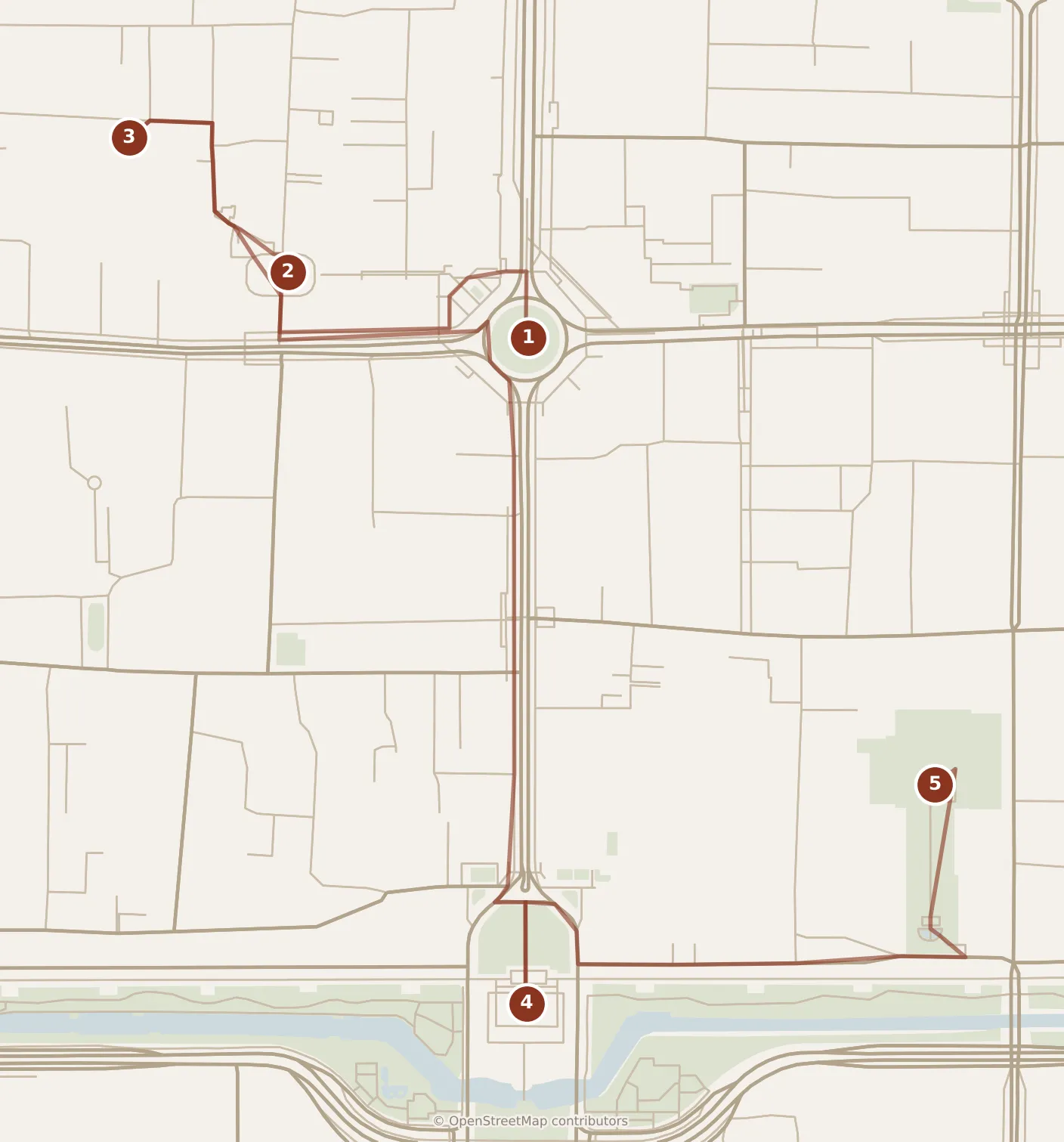
- Day one
- 1Bell Tower
- 2Drum Tower
- Muslim Quarter — in the prose, not on the map
- 3Great Mosque of Xi'an
- 4Yongningmen
- 5Forest of Steles Museum
- Shuyuanmen — in the prose, not on the map
Everything today sits inside the walls, in walking distance of the exact center of the old city — which is why it goes first, before you’ve learned to judge distance here by anything other than your feet.
Morning
Start at the Bell Tower, the literal middle of the walled city, where the four main streets meet under a Ming-era timber structure raised on a stone plinth. It’s a sound first stop wherever you’re staying inside the walls: nowhere in the old town is much more than fifteen minutes from it on foot. Climb it for the layout of the streets below before you lose that view for the rest of the day.
Four minutes’ walk north-west is the Drum Tower, the Bell Tower’s answering half — the two once marked dawn and dusk for the whole city, the bell for morning and the drum for evening, and both still stand exactly where that division put them.
Straight through the Drum Tower’s arch is Huajue Xiang, the market street that opens into the Muslim Quarter: the old Hui neighborhood, its lanes thick with food stalls from mid-morning on. This is not a place to move through quickly. Give it half an hour for the street alone before you reach the mosque at the end of it.
The Great Mosque of Xi’an is the reason to keep walking. It’s a mosque built entirely in the manner of a Chinese temple complex — courtyards, timber halls, a pagoda-shaped tower standing in for a minaret — with nothing that reads as Middle Eastern about it from outside. It’s an active place of worship as well as a sight, so dress modestly and keep to the outer courtyards if prayers are underway. Give the courtyards forty minutes; it rewards slow walking more than close reading.
Afternoon
Walk south down Nan Dajie, the avenue running straight from the Bell Tower to the wall — about twenty minutes, and the one stretch of today’s walking that isn’t wandering. At the far end is Yongningmen, the south gate, and the widest, most complete stretch of the wall itself.
Climb up and walk it. The wall rings the whole old city, close to fourteen kilometers of it, wide enough at the top for the golf carts and rented bicycles that share it with people on foot. You don’t need to cover more than a stretch either side of the gate to get what it’s for: forty minutes on foot, or a rented bicycle for longer, is enough to feel the scale of the thing without turning it into the whole afternoon.
Come down again near the gate for the Forest of Steles Museum, ten minutes’ walk east, in what used to be the city’s Confucian temple: room after room of stone slabs carved with calligraphy and classical texts going back over a thousand years, some cut deep enough to still be legible after all that time standing. An hour is enough unless calligraphy is a particular interest of yours.
Shuyuanmen, the street right outside, is the museum’s natural exit: ink, brushes, seals and rubbings taken straight from steles like the ones you’ve just seen, sold by people who still use them. Better for browsing than for buying against a schedule.
Evening
Go back up onto the wall near the gate for the last of the light — it’s lit after dark, and a short stretch of it walked lit rather than in daylight is worth the return trip on its own. Dinner is easiest in the small streets around Shuyuanmen or back toward the gate; nothing here needs booking, and today has no single hour it turns on.
Day two

Today leaves the city. The Terracotta Army sits near Mount Li, in Lintong district, about forty kilometers east of the walls — reachable by public bus from the city in something over an hour, or by rented car in under one. Say so to whoever you’re traveling with before you plan the rest of the day around it: this isn’t a morning trip you’re back from by lunch.
Morning
Go early. The site opens with the day and gets steadily busier through the morning as coach groups arrive; getting there for opening buys you the pits before the crowds do. The tourist bus is paid in cash or by scanning your phone at the conductor; it runs from the city and drops you at the site directly, no changes.
The excavation is three pits under a shared roof, found by farmers digging a well in 1974 and still being worked today. Pit One is the one to give the most time: rank on rank of life-sized soldiers standing in the formation they were buried in, over a thousand of them uncovered so far, no two faces quite alike, with more still believed to be in the ground around them. Pit Two and Pit Three are smaller and more broken — worth twenty minutes each for what they show about how the figures were made and arranged, but Pit One is the one that earns the trip. A separate hall nearby holds the bronze chariots and horses found buried near the tomb itself, roughly half the scale of the real thing and startlingly fine for it. Give the whole site two and a half hours for all of it properly; ninety minutes, taking only Pit One and the bronzes, is a fair trade if the day is short.
Afternoon
A short taxi or the local shuttle — fifteen minutes or so — covers the run to Huaqing Palace, at the foot of Mount Li itself: a bathing complex built around natural hot springs, rebuilt many times since the Tang dynasty and tied to one of that era’s best-known stories of an emperor and the court he lost over a woman. The pools themselves are mostly for looking at rather than using, set in gardens that climb a little way up the hillside behind them. Give it an hour; it’s the stop to cut first if the morning ran long, since nothing here is unique the way the pits are.
Check the current closing time before you commit to both stops in one afternoon — major sites here typically stop admitting visitors in the mid-to-late afternoon, and that window has moved before and will again. Build the rest of the day back from whichever hour you find, not from what this article assumed.
Evening
However you get back, you’ll likely be tired and a little dusty — this is a bigger day than it looks on a map. Keep the evening close to wherever you’re staying rather than adding a third stop; today has already used the walking budget.
With a third day

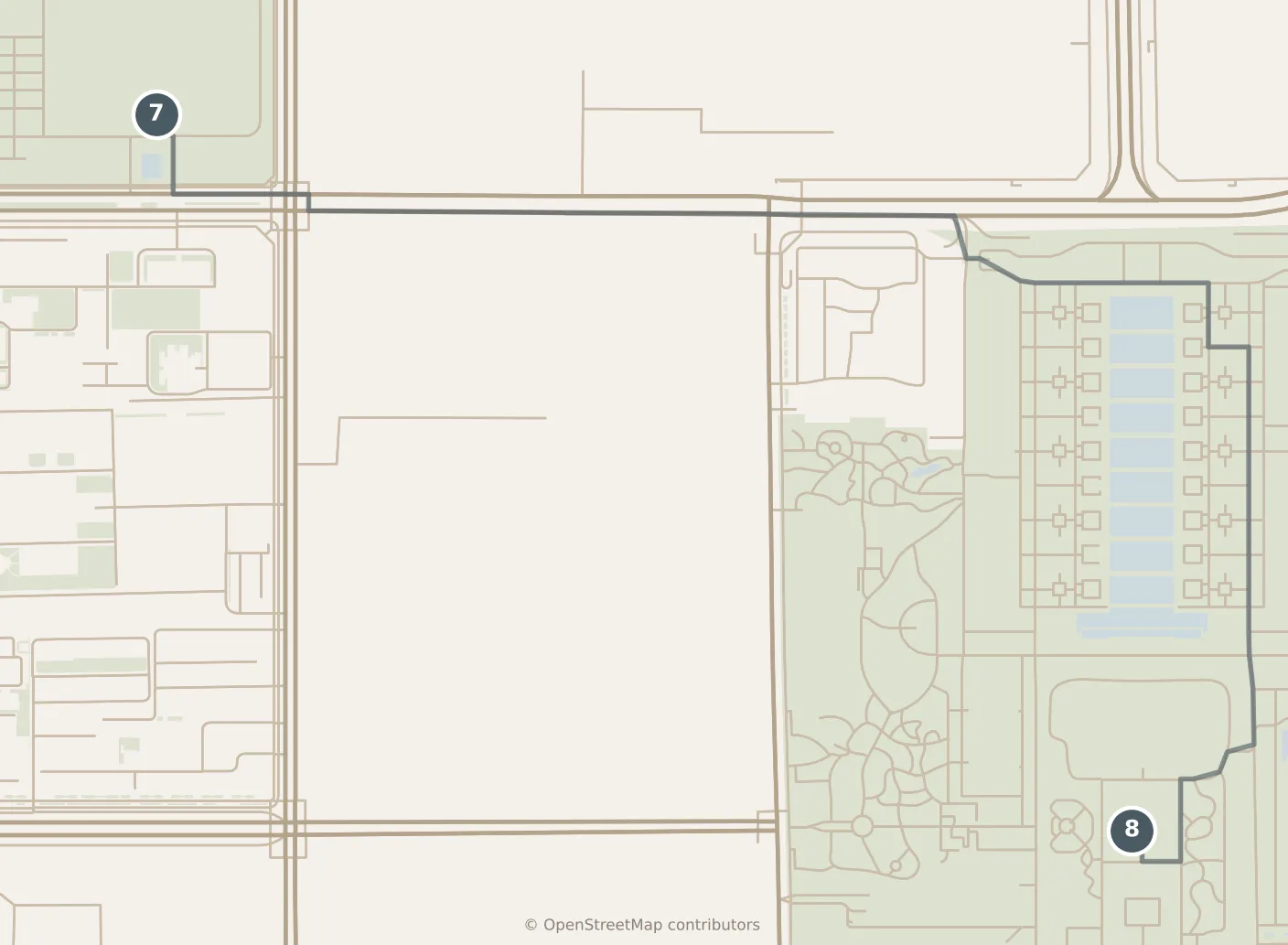
- With a third day
- 7Shaanxi History Museum
- 8Big Wild Goose Pagoda
Give a third day to the south side of the walls, where the city’s museum and its most famous pagoda stand within a few hundred meters of each other — a shorter, calmer day than either of the first two, and the first one to drop if you only have two days here.
Start at the Shaanxi History Museum, reachable by metro line 2 or line 3 to Xiaozhai and a short walk or local bus from there. It holds what was found under this province across three thousand years of it being one of the most fought-over and built-over pieces of ground in the country: bronzes from the Zhou dynasty, gold and silver from the Tang court, wall paintings lifted whole from the tombs of Tang princes. Tickets are free but timed and released online a day or so ahead; book the earliest slot you can get, since the good ones go by mid-morning. Give the museum two hours if the Tang rooms are the draw for you, three if you want the whole span of it.
A walk of fifteen minutes or so south brings you to the Big Wild Goose Pagoda, inside the grounds of Daci’en Temple: a seven-story brick tower raised in the seventh century to hold the Buddhist scriptures the monk Xuanzang carried back from years of travel in India, and one of the few structures from that period still standing in its original form rather than a later rebuilding. Climbing it is optional and the stairs are narrow; the view from the temple grounds at its foot is nearly as good and free of the line. Give the grounds an hour, longer if you climb.
The one moment this day is actually built around comes after dark, at the square in front of the pagoda: a large-scale fountain and light show that only runs once the sky is properly dark, so count backward from sunset rather than from a clock. The sun sets here anywhere from around half past five in December to not long before nine at the end of June, and the museum and pagoda between them take three to four hours, which leaves room either side of it whatever the season. Nothing about the rest of the day depends on catching it; it’s simply the one thing here that has to wait for dark to make any sense.
Practicalities
Book two things ahead of arriving, not on the day: the Terracotta Army’s timed entry, and the Shaanxi History Museum’s free but limited daily slots. The pits were in roughly the hundred-to-hundred-and-fifty-yuan range for a standard adult ticket in 2026; the museum costs nothing but the booking itself. Both are usually reserved against your passport details rather than bought at the gate.
Metro line 2 and line 3 cover the moves between the stops this article names on the third day; a Chang’an Tong card, sold and topped up at any station, covers both lines and the city buses on the same balance. Day one is entirely on foot and needs nothing bought in advance. Day two’s tourist bus is paid separately, in cash or by phone, when you board.
Nothing on these three days is reliably closed on a fixed weekday — check the Shaanxi History Museum’s current schedule before you set out on the third day regardless, since institutions of its kind sometimes keep a weekly rest day and sometimes don’t; if it turns out to be shut, the pagoda and its grounds easily fill the morning on their own.
If you only have two days, keep the walls and the Terracotta Army and drop the third entirely rather than rushing all three into two — the south side of town rewards unhurried walking exactly as much as the old town does, and there’s nothing on it worth seeing at a run.


.jpg)


