Tianjin in two or three days: the concession city, the Chinese city, and the river between them

Last updated 15 August 2026
Overview
One day in Tianjin is the concession walk and nothing else. That is the right answer for a day, and it is what a day trip out of Beijing gets. What a second day buys is not more of the same sidewalk. It buys the other city — the old Chinese town west of the foreign quarters, which a single day gives up whole — and it buys the morning, because this city’s food reputation is a breakfast reputation, and a day counted backwards from the light never reaches it.
So the two days below are divided by the river and by the century. Day one is the foreign city: the banking street, the villa avenues built for the people who worked in it, and after dark the one concession Italy governed. Day two is the Chinese one: breakfast at the old north-west corner, four hundred years of temple inside twenty minutes’ walk, and the river north of the confluence where the three waterways meet. The two days share the river and nothing else, which is unusual in a city this size and is why two days here is a real shape rather than one day stretched.
Day one is about eight hours from the bridge to the end of the Italian quarter, of which about six are from the bridge to the metro — that shorter stretch is the one the cathedral’s closing time constrains, which is why it is the figure the sum below uses. Day two is about seven from the first mouthful to the bridge it ends on. Each is held by an hour it does not control, and they are not the same kind of hour. Day one’s is a door: St Joseph Cathedral is the last stop before the metro, it was admitting visitors until half past four on weekdays in 2026, and from the Jiefang Bridge to its threshold is about five and a half hours as this day is written — so a start later than eleven on a weekday arrives at a locked church, and half past ten leaves margin. If you find the hour has moved, do the same sum from the new one; the method survives, the number will not. Day two’s is the light, at the far end, and the short version is that a day which starts with the breakfast cannot be stretched to a June dusk, and only in midwinter does it end anywhere near the light. Day two’s evening does that arithmetic where you are standing on the bridge, and writes the day round the fact rather than against it.
Both totals are time spent inside places and walking between them, and neither is the length of your day. Day one’s leaves out the ticket desk at the one paid door on it and the bag scanner at every metro entrance, which in this country costs a couple of minutes each time you go down. Day two’s leaves out the line at breakfast, and standing in that line is the point of being there.
You will be carrying a bag on the first morning or the last afternoon, and these two days are not symmetrical about that. Left luggage lives at Tianjin Railway Station, and there is none on either route itself — the other main stations have their own and a hotel will hold a bag on a checkout day, but nothing you walk past on these two days will. Allow time for getting into the station rather than assuming you can walk in off the street to the lockers. Day one begins eight minutes’ walk from that concourse and ends eighteen minutes from it, so it can be walked with the bag still in the locker and collected at the end; the one part of it that is genuinely bad with a case is the Five Great Avenues, which is an hour and a half on foot with nowhere to set anything down. Day two is the opposite: it starts at Xibeijiao, a change of line and half an hour from the station, and it ends on a bridge with no station near it. So put day one on the day you arrive or the day you leave, and never day two. With three days that rule, and the museums’ closing day, resolve into a single order, which is set out in the third-day section rather than left for you to work out.
Days one and two need nothing booked. The one booking they need is the train that brings you (the third day is a different matter, and the practical notes at the end have it): Chinese rail is fully reserved and sold against the passport, so there is no turning up, and the channel is 12306, the railway’s own site and app. The parent guide covers what buying on it involves. The fare is what decides the question this article’s reader actually has, which is whether to sleep here or commute in from Beijing: second class between Beijing South and Tianjin Railway Station has been in the fifty-to-sixty-yuan band for years and first class in the eighty-to-ninety band, each way, and 12306 shows you the fare before you commit. At that price two nights here is a lodging decision and not a transport one. And if day one is your arrival day, book a train that puts you into Tianjin Railway Station by about ten: day one’s cathedral deadline is decided weeks earlier, at this screen, and not on the morning itself.
Day one

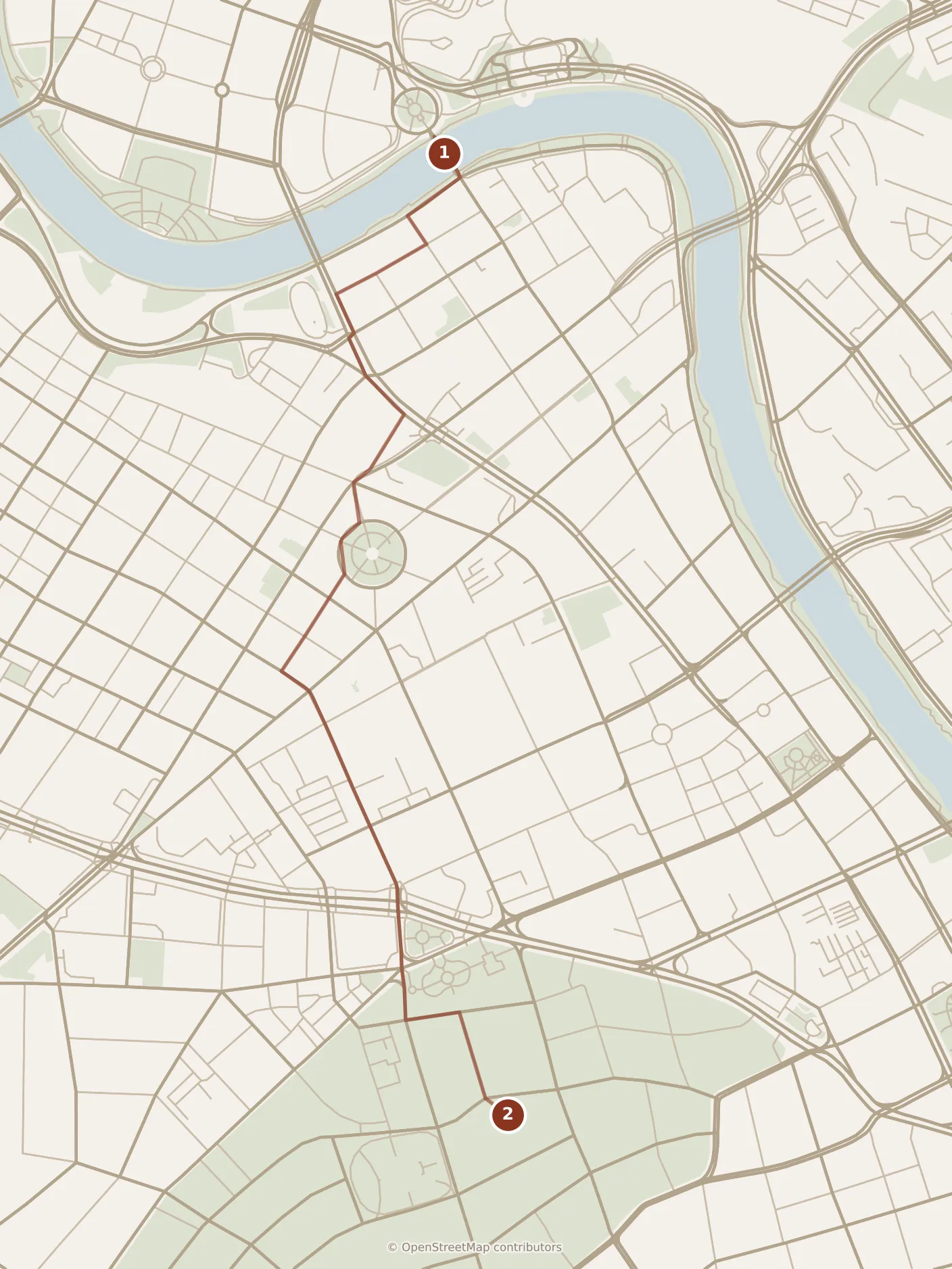
- Morning
- 1Jiefang Bridge
- Jiefang North Road — in the prose, not on the map
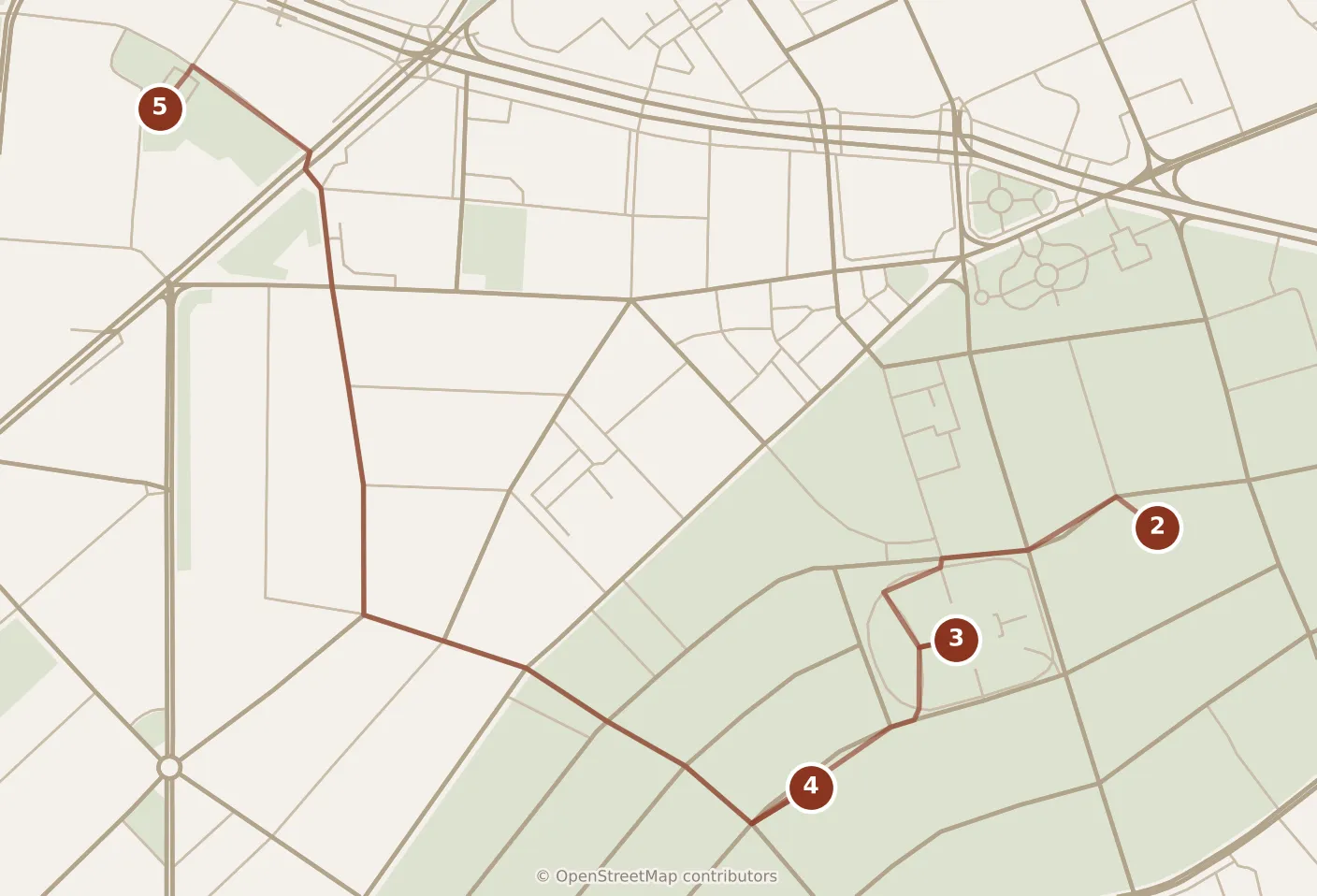
- Afternoon
- 2Prince Qing Mansion
- 3Minyuan Stadium
- 4Five Great Avenues
- 5St Joseph Cathedral
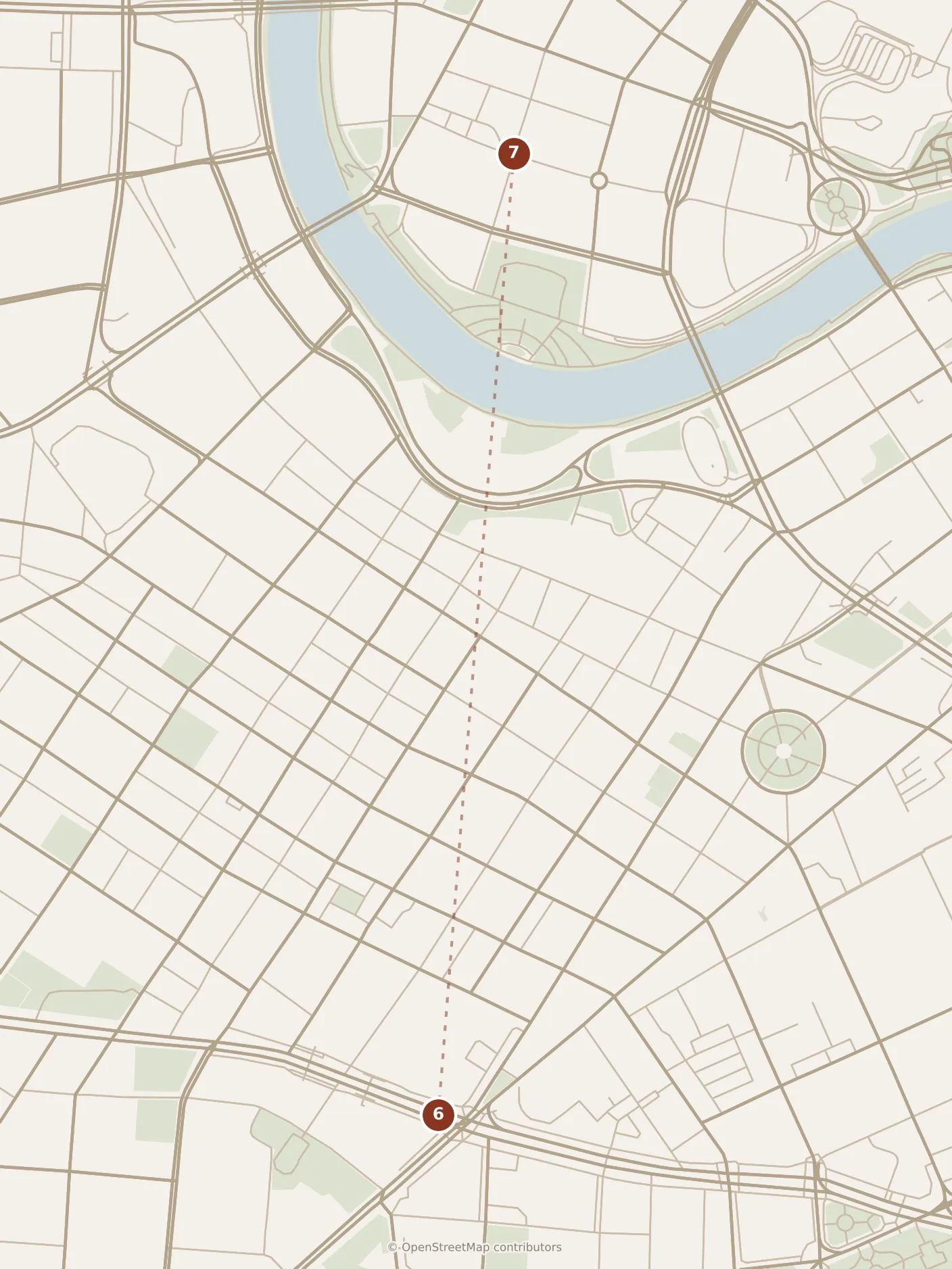
- Evening
- 6Yingkoudao station
- 7Marco Polo Square
Everything today runs in one line, from the river down to the avenues and back to the river, and you finish the evening on the opposite bank from the one you started on. Nothing is walked twice.
Morning
Start on the Jiefang Bridge, eight minutes on foot from Tianjin Railway Station. Give it ten minutes standing on rather than crossing. It is a riveted bascule span of the 1920s, and what is underneath it is the whole explanation of the city: nine foreign powers took this particular stretch of mud, after China lost two wars over the trade on it, because of what floats on it.
Off the far end runs Jiefang North Road, which was Victoria Road when the British laid it out, and which a two-day visit lets you walk in the hour it was built for. Give it three quarters of an hour, of which about twenty minutes is simply walking its kilometer away from the bridge. Two buildings carry names that explain the rest of the street: the former Hongkong and Shanghai Bank, and further along the Jardine Matheson building, the trading house that was in this port before most of the flags were. Almost nothing here is open and none of it is a museum, so what you are reading is doorways, lettering, and the width of the sidewalk — and the reason to be here before noon is that this is a working street in office hours and a stage set after them.
At the bottom of the street the concessions change hands without a sign. Twenty-five minutes south-west, through the business blocks of Xiaobailou, brings you to the eastern end of the Five Great Avenues. Lunch here, an hour, sitting down. The avenues are residential in the full sense and the eating in them is on the through-streets that carry traffic rather than spread through the grid, so the rule is simple: when you want lunch, walk out to the nearest street with buses on it and take what stands there. Do not go hunting for something better between the villas: between the villas there is nothing at all.
Afternoon
The Prince Qing Mansion, on Chongqing Road, is the one door on this day that is neither a church nor a street. It is a 1920s house built around a Chinese courtyard and dressed on the outside like a European one, which is Wudadao’s whole contradiction standing in a single building, and it has a ticket. It is also therefore the one stop today that can be shut when you reach it: check it the week before you come, and if it is closed you lose forty minutes and nothing else. Give it forty if it is open.
Five minutes west is Minyuan Stadium, the athletics ground the British concession opened in 1926 and rebuilt in 2014 as a public square. The oval and the terraces survive with shops and eating places built in beneath them, and people walk laps on the inside all day. Half an hour, and take it sitting down: it is one of the few places in this district with anywhere to sit that is not somebody’s garden wall.
Then the avenues themselves, and this is the ninety minutes the second day is for. Five parallel streets of villas and apartment blocks put up in the 1920s and 1930s for the people whose offices you read this morning; the houses carry plaques, and the plaques are the reason to slow down, because they name the bankers, generals and exiled officials who lived in them. A day trip walks one avenue and turns round. With an afternoon, walk two of them end to end — out along one and back along the next — which costs you nothing extra and doubles what you see, since you are leaving from the far corner anyway.
Local tip. Do not try to walk all five. Pick the two that lie between where you came in and where you are leaving from, and treat the other three as the reason to come back. Five avenues at the pace this afternoon can afford is a route march, and the plaques are the point of being here at all.
Twenty-two minutes north-west, at the head of the shopping street, is St Joseph Cathedral, signed and spoken of as Xikai: a heavy brick basilica with green domes, and a working parish rather than a monument. Twenty minutes. It keeps church hours and not museum ones, which is why it, and not the sunset, sets the start of this day: in December the door shuts before the light goes, which is not what you would guess. Yingkoudao station is six minutes on from it.
Evening
From Yingkoudao take Line 3 north — three stops, about ten minutes — to Tianjin Railway Station, and walk eighteen minutes west along the north bank into the former Italian concession. You can ride one stop west on Line 2 instead, to Jianguodao — the station carries the district’s name beside its own — and walk ten minutes from there; the change and the stairs eat the difference, so walk it unless it is raining.
Italy held this ground from 1901 until 1947, and it is the one concession in the country that Italy administered outright. What survives is a few short streets of low plastered houses with shutters, the old barracks — the Caserma Ermanno Carlotto, a garrison building in a quarter of villas — and Marco Polo Square in the middle of them. Come at this hour deliberately. It is a restaurant and bar quarter now, restored hard and lit, and it is one of the few parts of the concession city that is used in the evening instead of commuted out of. Give it an hour and a half, and have dinner in it: this is the one evening of the trip where what you are standing in is also where you eat. The contrast with the morning is the point of putting it last: the banks were built to look permanent and this was built to look like a small town, and the two were four hundred meters apart across one bridge.
It is also eighteen minutes from your train, which matters on a departure day and matters nowhere else.
Day two

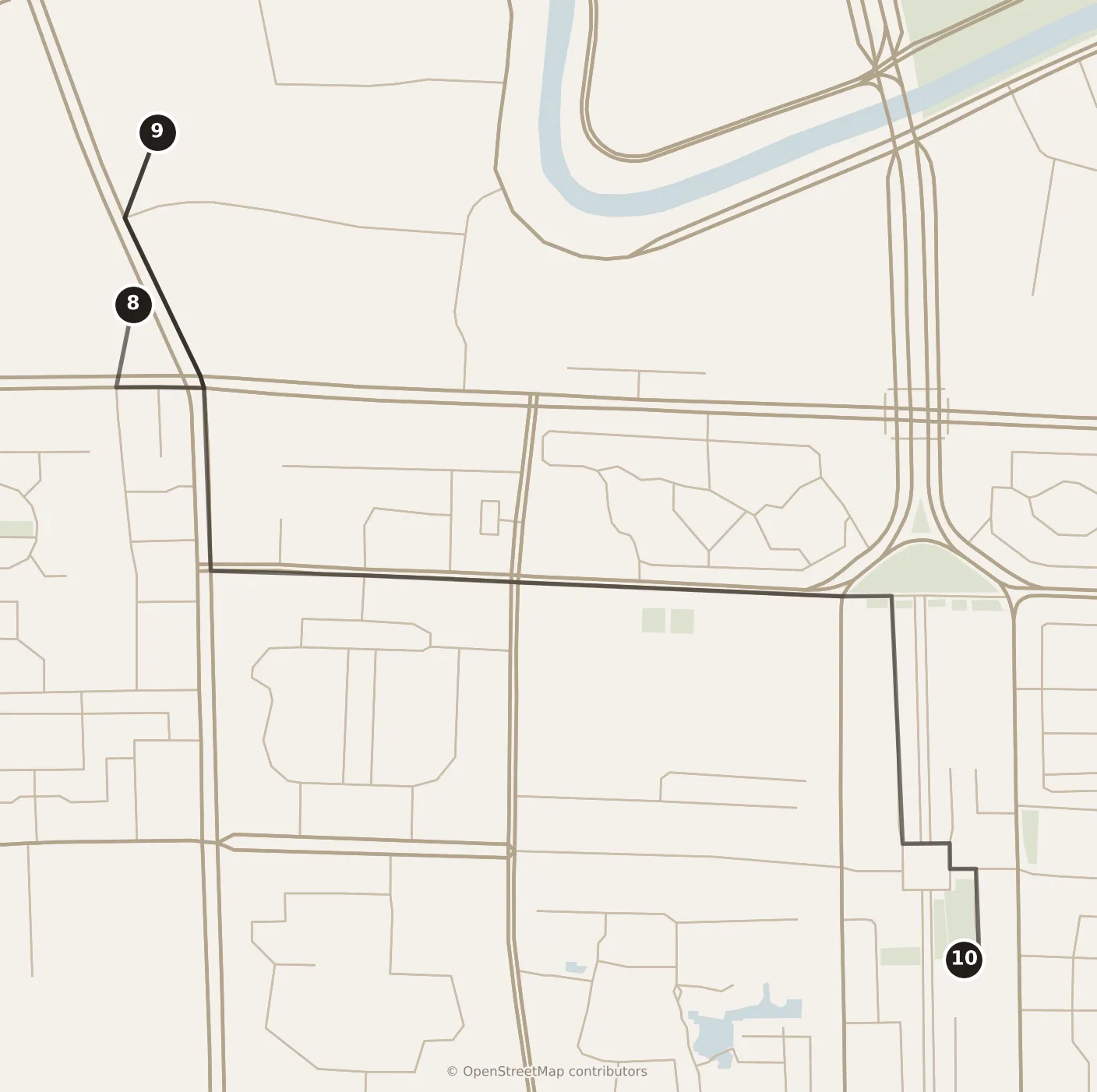
- Morning
- 8Xibeijiao station
- 9Tianjin Great Mosque
- 10Tianjin Museum of Theatre
- Afternoon and evening
- 11Tianjin Confucian Temple
- 12Ancient Culture Street
- 13Tianhou Gong
- 14Yuhuang Pavilion
- 15Wanghailou Church
- 16Temple of Great Compassion
- 17Tianjin Eye
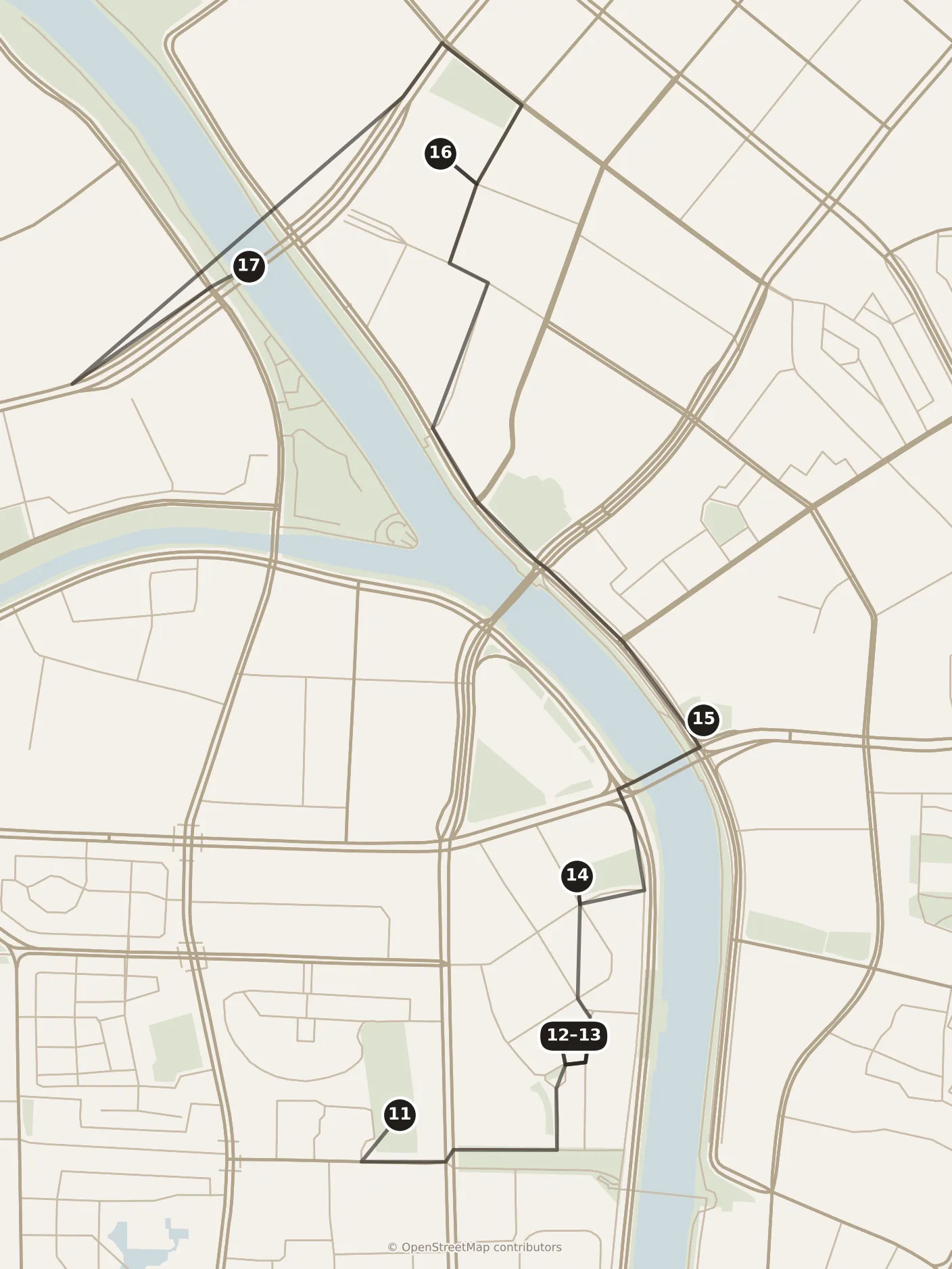
Today is the city the concessions were built beside, and it goes from its north-west corner to its northern river in one line. Nothing on it is more than twenty-five minutes from the last thing.
Morning
Be at Xibeijiao by half past eight at the latest, and earlier if you can — every sum on this day is built on the latest start that still works, not on the best one. From Tianjin Railway Station that is Line 2 west to Xinanjiao, about ten minutes, then one stop north on Line 1; from a bed in Heping it is Line 1 north from Anshandao or Yingkoudao with no change at all. This is the old city’s north-west corner and it is where the breakfast is: hot food sold to the commute in the streets around that corner, setting up before dawn and packed away by mid-morning, which is the single reason this day starts before the last one. Do not go looking for one particular row of stalls — street breakfast in Chinese cities gets moved into covered markets and shop fronts and back out again, so what you find may be stalls, a market building or a line of counters, and the thing to follow is the line rather than the form. Forty minutes. What to eat is jianbing guozi, a mung-bean crêpe folded round a fried cracker and cooked in front of you, and guobacai, strips of the same batter in a hot savory broth that is Tianjin’s and nowhere else’s. They are not the same kind of food and are not found in the same place: the crêpe is a counter item, eaten standing, and it is the one worth waiting in line for; guobacai is a bowl eaten with a spoon, it is normally had sitting down in a breakfast shop, and the long-established shops that specialize in it are where it is best rather than somewhere to walk past. So this is two stops and not one, and the forty minutes above is both of them plus the few minutes between: they are in these same streets around the corner and not necessarily beside each other, and what the figure leaves out is the line rather than the walking. If you want both unhurried, call it an hour and take the twenty minutes back out of the surplus the evening section spends on the two temples, which is where this day keeps its slack.
Four minutes away is the Tianjin Great Mosque, founded in the seventeenth century and built like a Chinese hall — no dome, no minaret, pitched roofs and a timber frame around courtyards. Fifteen minutes if you get in, and treat those as a bonus rather than a plan: this is a working congregational mosque in a working Muslim quarter and not a ticketed site, the courtyards are open to visitors when the mosque chooses and on no published schedule, and entry may be refused to a non-Muslim with nothing posted at the gate and no reason given. If you are let in, the prayer hall is for the people praying in it, so keep out of it, keep arms and legs covered, and do not come at Friday midday. If you are not, the quarter around it and the outside of the building are the stop, and it has cost you fifteen minutes and no walking at all.
Twenty-five minutes south-east brings you to the Guangdong Guild Hall of 1907, now the Tianjin Museum of Theatre and the largest and most complete Qing guild house left in the city. Fifty minutes. What is inside is a courtyard theater: a carved timber stage under a domed wooden ceiling, in a hall built without pillars so that everybody could see. It is the best interior on either of these two days. The Drum Tower stands two minutes away and is a rebuild of 2001 — walk past it, look up, and do not buy a ticket.
Afternoon
Fourteen minutes east along Dongmennei brings you to the Tianjin Confucian Temple, begun in 1436 and the largest surviving traditional building complex in Tianjin. Forty-five minutes. The thing to notice is that it is two temples side by side, the prefectural school and the county one, each with its own gate and hall — a duplication that exists because two administrations both had to have one, which tells you more about how this place was governed than any label in it.
Six minutes on is Ancient Culture Street, and be clear about what it is: a 1980s reconstruction in Qing style, selling souvenirs. Thirty minutes is enough for the street, and the crafts on it that are genuinely local are the painted clay figures and the woodblock New Year prints. Lunch here, forty-five minutes, and take it for what it is: you are eating here because the route is here and not because this is where the city eats, so buy the first decent thing you pass and do not spend the forty-five minutes hunting. Mahua — the fried dough twists sold the length of it — are a snack rather than a meal and should be bought as one.
What the street is really for stands inside it. Tianhou Gong was founded in 1326, it is the temple of Mazu, protector of sailors, and it is here because the Grand Canal boatmen were here first: the city grew round the temple rather than the other way about. Twenty-five minutes. It holds the city’s folk museum as well, so on the day of the week the museums shut you may find the halls open and the exhibition not. It is a working temple, there is incense at the door, and the rule inside is the ordinary one — walk round the halls rather than through the people using them, and where a hall is signed against photographs, it means it.
Five minutes north, Yuhuang Pavilion is a small Taoist compound looking straight out over the confluence, and its two-story timber hall is among the oldest buildings standing in Tianjin. Fifteen minutes, and go up.
Now cross to the north bank at the confluence, about ten minutes with the bridge, for Wanghailou Church. Fifteen minutes, and stand outside it for most of them. It was built in 1869 on the site of an imperial pavilion, and in 1870 a crowd inflamed by rumours that the orphanage was paying for kidnapped children burned it and killed the French consul, ten nuns and around forty Chinese converts — the largest group of the dead, and the one usually left out of the telling. It was rebuilt, burned again in 1900, and rebuilt once more in 1904. It is a plain gray building and it does not look like any of that, which is the reason to know it before you arrive rather than after.
Twenty minutes north-west through Hebei is the Temple of Great Compassion, the largest Buddhist monastery in the city, founded in the seventeenth century and still a monastery rather than a site. Forty-five minutes. What is in it is several hundred Buddhist figures collected across fifteen centuries of Chinese sculpture, and on an ordinary day it is quiet in a way nothing else today is. On the first and fifteenth of the lunar month it is not: this is the city’s main working incense temple, and those are the two days a month people come to it.
Evening
Seven minutes on, the Tianjin Eye stands in the middle of a road bridge over the river, which is what makes it worth walking to whether or not you go up: it is built into a working road bridge, which is rare, and you can look up at it from below without buying anything. Half an hour under it, with the river running away south-east towards everything you walked yesterday — and at dusk if you can arrange to be here at dusk, which is the honest problem below.
Here is the honest problem with that, because this day is anchored at both ends and outside midwinter the two anchors do not meet. Seven hours from a half past eight breakfast puts you on this bridge at about half past three, and the sun does not go down in Tianjin before about ten to five, which is the first week of December; by midsummer it is about twenty to eight. So in December you arrive an hour and a half short of the dark, in June four hours short of it. In June you cannot have that breakfast and arrive here at dusk on the same day, and the breakfast is the thing to keep, because it is what this city is actually known for and what a day trip cannot have. In the first week of December the gap is small enough that the paragraph below closes it without trying, which is the one case in the year where this day does end at the hour you would have chosen.
So spend the surplus rather than manufacturing an ending. Give the Confucian Temple and the Temple of Great Compassion an extra half hour each — both are worth more than the count above gives them — and take the wheel in whatever light that hour leaves you. From spring to autumn that is daylight, which is a perfectly good half hour and an honest one. In the first week of December it is not: the same extra hour puts you under the wheel at about half past four against a sunset of about ten to five, so the shortest days are the only ones on which this day does arrive at dusk, and it arrives there because the temples were worth the time rather than because the day was bent to reach it. If the wheel at night is genuinely what you came for, leave it out of this day altogether, eat where you are sleeping, and come back to it afterwards; that is a car in each direction and about an hour and a half, and it is worth it to very few people.
Getting away from here is the one weak point in two days. There is no metro station at the bridge, and the nearest is far enough on foot that you will not want it at the end of this, so the answer is a ride-hail, ordered inside Alipay or WeChat, which is the ordinary way to cross this city at that hour. Get the ordering working before you fly rather than on the bridge, and get it working in Alipay first: its handling of foreign visitors and foreign cards is the better established of the two, and whether either will present itself in English and take your card is not a thing to discover at dusk with no metro. That is the only time in two days the metro does not serve you, and it is worth knowing before you are standing under the wheel working it out. And dinner is wherever you are sleeping either way: there is nothing to eat at the bridge, and you are taking a car anyway.
With a third day

- With a third day
- 18Jingyuan
- 19Tianjin Museum
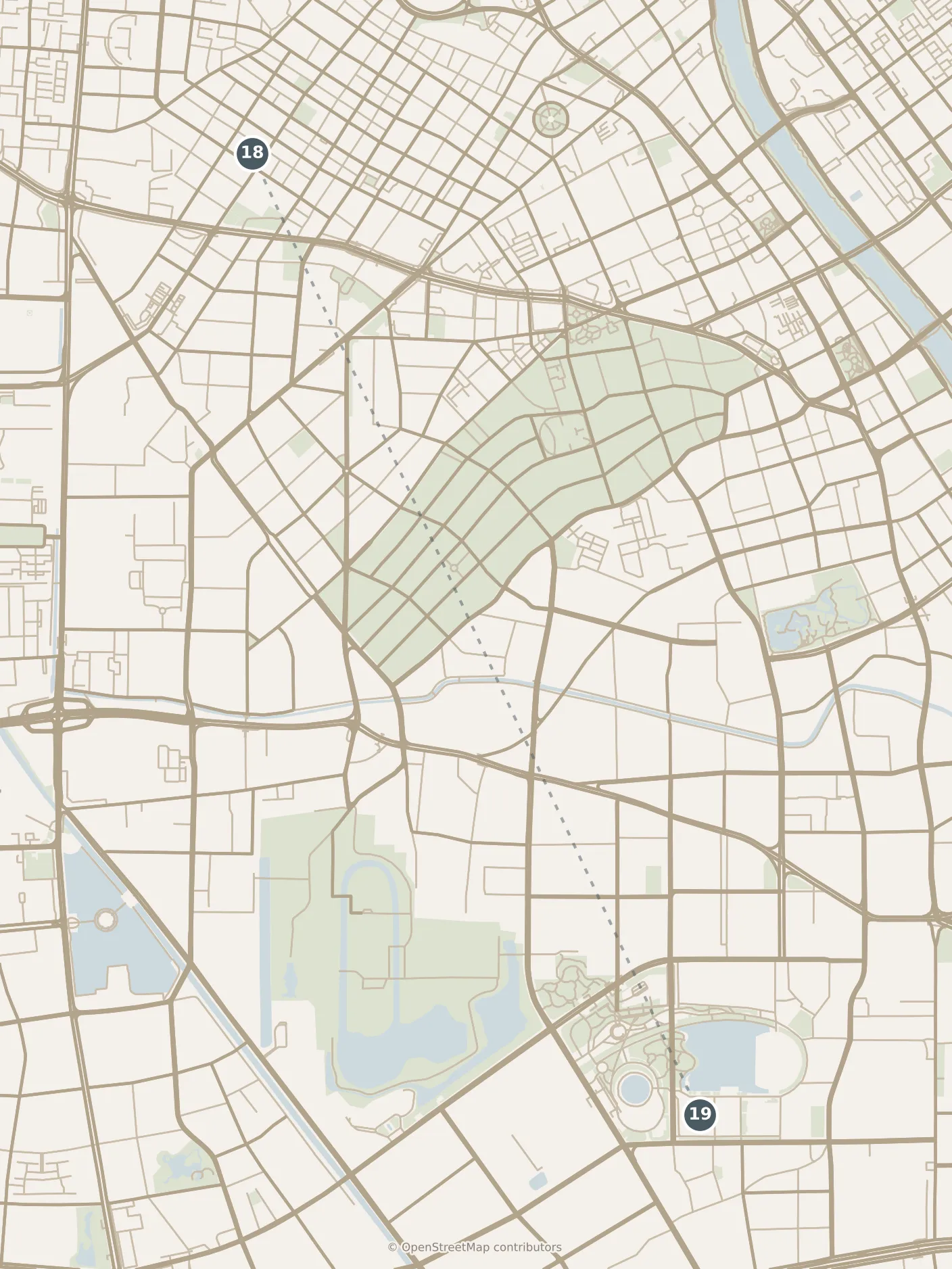
A third day here does not add a third city. It adds the doors — the interiors that days one and two walk past, because both of those days are outdoor days that would break if you started opening things. So the third day is the indoor one, and here is where it goes — this being the one place in this article where all the ordering rules meet, and the only place they can be resolved.
Two of them have already been stated apart. Day one goes on the day you arrive or the day you leave, because it is the only one of the three that works with a bag in a locker at the station. And day one goes on the museums’ closing day, because almost everything on it is a bridge, a street of facades, a public square, a district and a working church — the single exception is the Prince Qing Mansion, which is the stop this day gives up first in any case — so it is the only one of the three that survives that closure rather than being gutted by it. Both rules point the same way, and with three days the order they give is day one, then the Chinese-city day, then the indoor one: day one takes the arrival day, the Chinese-city day sits in the middle where it needs neither a locker nor a train, and the indoor day takes the departure day, which suits it because it ends at a metro station on two lines rather than on a bridge with none. If the closing day falls on your departure day rather than your arrival day, run the whole thing backwards — the indoor day first, day one last — and note that the middle does not move either way. Nothing on day one moves when you insert the third, either.
The one case that breaks it is a closing day falling squarely in the middle of your three, because day one then has to move there and something has to give. What gives is the luggage: put the indoor day first, since it starts seven minutes from a Line 1 station and is the easiest of the three to walk into with a bag already stowed, and take the Chinese-city day last, accepting that you fetch the bag before breakfast and that the ride-hail at the end of it goes to the station rather than to bed.
Morning: the two houses in the former Japanese concession where the last emperor sat out his abdication. Jingyuan is the second of them, built in 1921 and lived in by Puyi from 1929 until he left for the north-east in 1931, and its name — a quiet garden — was his own choice and his own joke, since what he was doing there was waiting. It is a walled house with a garden you can stand in, restored and open, and an hour is right. Zhang Garden, where he lived for the four years before that, is five minutes away; check whether it is open before you plan on both, and if it is not you have lost a five-minute walk. Anshandao station on Line 1 puts you seven minutes from Jingyuan’s gate, and Yingkoudao is seventeen minutes on foot if you would rather walk.
Afternoon: the Tianjin Museum, out at the cultural center in Hexi, thirteen minutes on foot from Wenhuazhongxin station on Lines 5 and 6. This is the collection the city keeps its own painting and calligraphy in, and the floor to give the most time to is the local history one, because after two days of walking through the concessions it is where the streets you walked get their explanation. Two hours, and the Natural History Museum next door is a further hour and a half if you have it — its collection began in 1914 and is one of the oldest assembled anywhere in the country, which is a stranger fact than the building suggests.
If the third day is the one thing you cannot fit, cut it and not day two. What the third day gives you is depth on what you have already seen; day two gives you a different city.
And if you have the day but no appetite for museums, do not go looking for a fourth quarter of the city, because there is not one. Spend it on what day one left behind: the three avenues the local tip told you to park, walked slowly for the plaques, and the shopping street the cathedral stands at the head of. That is more of day one rather than something new — but so is the museum day, and the only real question between them is whether you would rather have the extra depth indoors or on the sidewalk.
Practicalities
Nothing on days one and two has to be booked. The third day probably does: the big public museums here are free and are not walk-in, and the reservation is made on the museum’s own account inside WeChat, against the passport you will show at the door. Do it the day before, and check first whether yours still asks for one, because that requirement has been loosening rather than tightening.
The weekly closure is the thing that actually rearranges these three days, and it works the opposite way round to most cities. Museums in China commonly shut one day a week and it is usually Monday, but you should confirm the day for the two big ones rather than take that on trust. What matters is which of these days survives it. Day one does, almost entirely: a bridge, a street of facades, a public square, a district of streets, and a working church, plus exactly one museum — the Prince Qing Mansion, which is also the stop this itinerary gives up first when a day runs short. So the closed-day version of day one is simply the short version of day one. Day two loses two of its best stops, the Museum of Theatre and the Confucian Temple, though its temples and its church keep their own hours and are unaffected. The third day is destroyed, since it is nothing but museums. So: put day one on the closing day, put the third day anywhere else, and let day two take what is left. That is the whole rule for which day meets the closure, and it holds whichever day it turns out to be; the third-day section puts it together with the luggage rule and turns the two into the order your three days actually go in.
And the calendar here is not only a week. Two periods rearrange this trip more than any weekday does, and neither of them sits still in a Gregorian diary: the two weeks around Spring Festival, which moves between late January and late February with the lunar calendar, and the first week of October around National Day. In both, the trains from Beijing sell out days ahead, Ancient Culture Street and the temples on day two are the busiest places in the city, and over Spring Festival many small places — including, in practice, the breakfast trade this itinerary starts day two with — close for several days. Tianhou Gong has a calendar of its own as well: Mazu’s birthday falls on the twenty-third day of the third lunar month, which lands somewhere in April or May depending on the year, and on it the temple is a temple and not a museum. And both it and the Temple of Great Compassion fill up on the first and fifteenth of every lunar month, which is twenty-four days a year rather than one and is much the likeliest of these to fall on a day you have already booked. Find the lunar dates for your year before you fix anything, because none of them can be guessed from the month.
Then the season, because both of the main days are outdoor days and this article’s tightest arithmetic sits in December. This is a northern coastal city: December and January run below freezing, with a wind off the sea that makes them feel colder than the number, and the northern heating season — the middle of November to the middle of March — brings days when the air is bad enough to be worth checking before you commit to two days of walking. Neither is a reason to stay away, but both change what you carry and both make the indoor stops matter more than their minutes suggest: on day one that is Minyuan Stadium, which has shops and eating places built in under its terraces, and the cathedral; on day two the guild hall and the temple halls; and the third day is indoors from end to end, which is one more argument for keeping it.
Paying to move is two apps and no card. There is no visitor travel pass here worth buying for two or three days; the metro barriers read a QR code from Alipay or WeChat, and both also run the ride-hailing you need once at the end of day two, so the setup the parent guide describes is worth doing before you fly rather than at a machine. Single-journey tokens from the ticket machines work as well, but do not plan on paying for them in cash — machines here increasingly do not take notes. Assume the wallet for everything, the breakfast counters on day two included, and carry a little cash as the fallback rather than as the plan.
The named rides are few and worth listing, because everything else is walking. Day one uses Line 3 once, three stops from Yingkoudao to Tianjin Railway Station. Day two starts with Line 2 west from Tianjin Railway Station to Xinanjiao and one stop north on Line 1 to Xibeijiao, and ends with a ride-hail. The third day uses Line 1 to Anshandao and Lines 5 or 6 to Wenhuazhongxin. If your train from Beijing sets you down at Tianjin West rather than Tianjin Railway Station, you are one stop on Line 1 from where day two begins, at Xizhan — worth swapping the order of your days for if you arrive in the morning. If it sets you down at Tianjin South, Nanzhan is on Line 3 and runs straight to Yingkoudao, which is where day one’s walking ends and seventeen minutes on foot from where the third day’s first house stands.
On foot, day one comes to about an hour and a half of walking and day two to about the same, in both cases spread out rather than concentrated. The longest single stretch on day one is the twenty-five minutes from the foot of the bank street to the avenues, and on day two the twenty-five minutes from the mosque to the guild hall; those are the two with nothing to stop for in the middle, and the twenty-two minutes from the avenues to the cathedral is the third.
If a day is running late, the order to cut is fixed and worth knowing before you need it. On day one the Prince Qing Mansion goes first: that is forty minutes back and no walking added, because it stands between the lunch stop and Minyuan Stadium, five minutes short of it, so the route through it and the route past it are the same walk. The avenues go second, down from ninety minutes to one street walked once, which is another hour — and the two together are the hundred minutes that turn a late start into an on-time cathedral. On day two the two that go are Wanghailou Church and the Temple of Great Compassion, in that order. They are the last two stops before the bridge, so cutting them takes about an hour and a half off the end of the day rather than out of its middle, and you reach the wheel from the confluence by car in ten minutes instead of walking the better part of forty.


