Taipei in two or three days: old Taipei on foot, the museum day north, and a third out to Beitou and Tamsui

Last updated 8 August 2026
Overview
Taipei gives more to a second day than most cities its size, and the reason is geography rather than taste. The two things a visitor would most regret missing — the street-level old city in the west, and the imperial collection that came off the boats in 1949 — sit at opposite ends of the basin, nearly nine kilometers and the better part of an hour apart. One day holds one of them. Two days holds both, and neither has to be taken at a run.
So the days here divide by kind rather than by district. Day one is walked: it begins at the oldest temple foundation in the city, goes north through the quarter the Japanese administration rebuilt, and ends on the river that paid for all of it. Between the first temple and the night market it contains no metro ride at all — roughly eight kilometers and about two hours on your feet across the day, every meter of it flat. Day two is ridden: four stops up the red line to two temples that face each other across one street, two stops further and a city bus up to the museum, and under an hour of walking from beginning to end. Between them the two days take in four working temples, three of which still empty their own streets for a procession once a year.
Day one is the one with a deadline in it, and the deadline is the light: it finishes on a wharf on the Tamsui River, facing west, and on a two-day trip that is the only stop of either day whose value depends on the hour. (On a three-day trip it stops being true, and the third-day section below says what replaces it.) The sun goes down here between just after five in the second half of November and a little before seven at the end of June — an hour and three quarters between the two ends of the year, and note that the earliest sunset is a November one rather than a solstice one, so December is already getting lighter. Everything above the wharf — two temples, a herb lane, a market building, the museum quarter, the old north gate, a city god and a kilometer and a quarter of merchant street — comes to a little under seven and a half hours. Take your month’s sunset and count that back: at the November end you are starting about a quarter to ten in the morning, and at midsummer about half past eleven.
Two things that count does not contain, and one ceiling on it. It has the walking in it but not the line for lunch, and lunch is in one of the busiest pedestrian districts in Taipei at the busiest hour of its day. It has the walk to each museum door but not the twenty minutes at the ticket desk inside it. And the midsummer answer is arithmetically right and practically wrong: the two ticketed places on this day shut at five in 2026 and stop selling before that, so a half past eleven start reaches the second of them with about twenty minutes in hand and no slack for anything going slowly. Start by ten whatever the month. The surplus daylight belongs at the far end, on the river, which is the one stop that improves for having an extra hour in it — and if those closing hours have moved, the shape of the day is unchanged: the doors go in the middle, the water goes last.
Nothing on any of these days has to be booked. The one ticket that costs real money is the one at the National Palace Museum, which was in the three-hundred to four-hundred New Taiwan dollar range in 2026 and is sold at the door; the rest of both days is free or costs a few coins. One warning decides everything else, and Practicalities has it in full: day two cannot be a Monday. There is no shortened version of it.
Day one

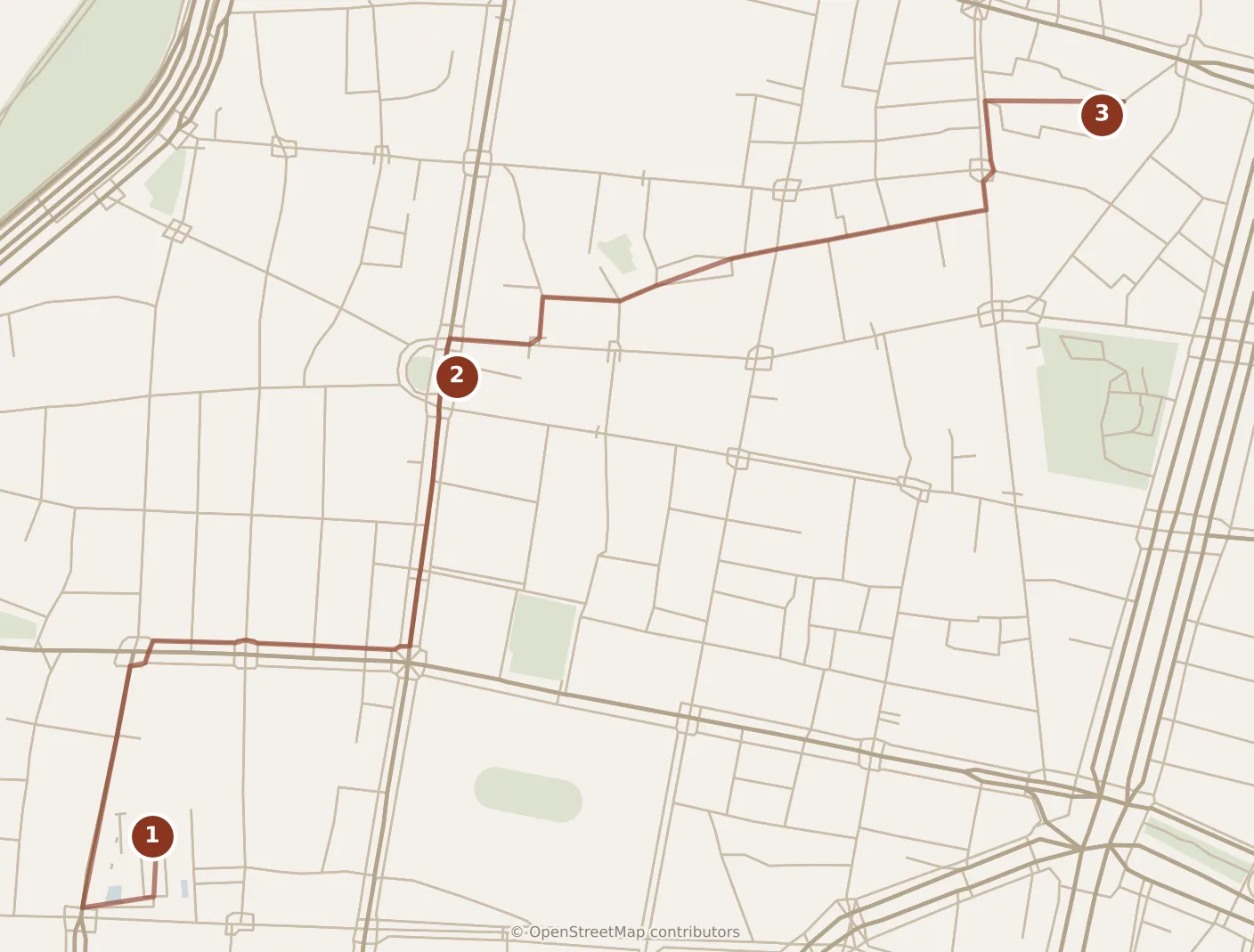
- Morning
- 1Longshan Temple
- 2Bangka Qingshan Temple
- 3Red House
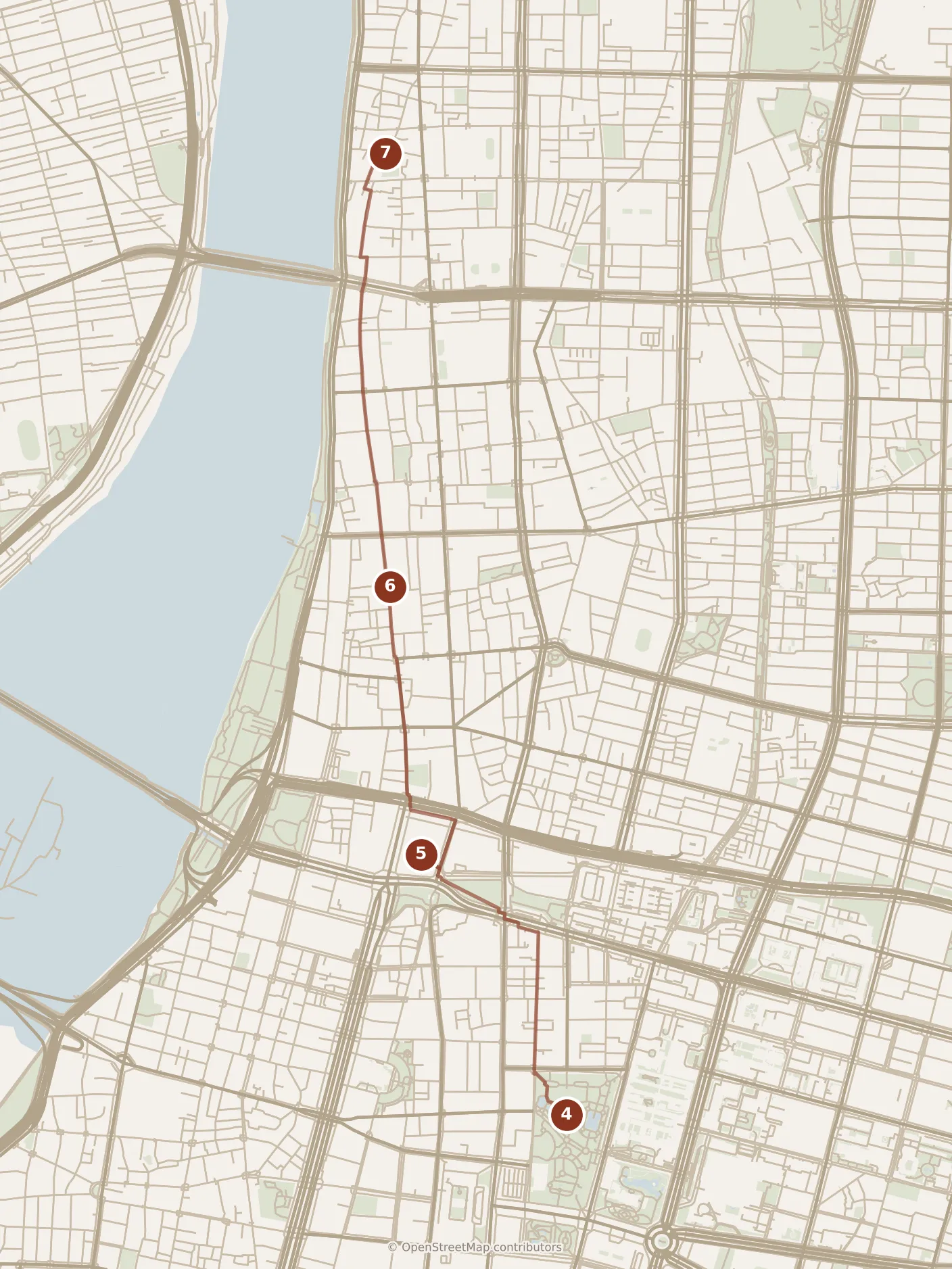
- Afternoon
- 4228 Peace Memorial Park
- 5Railway Department Park
- 6Xiahai City God Temple
- 7Dihua Street
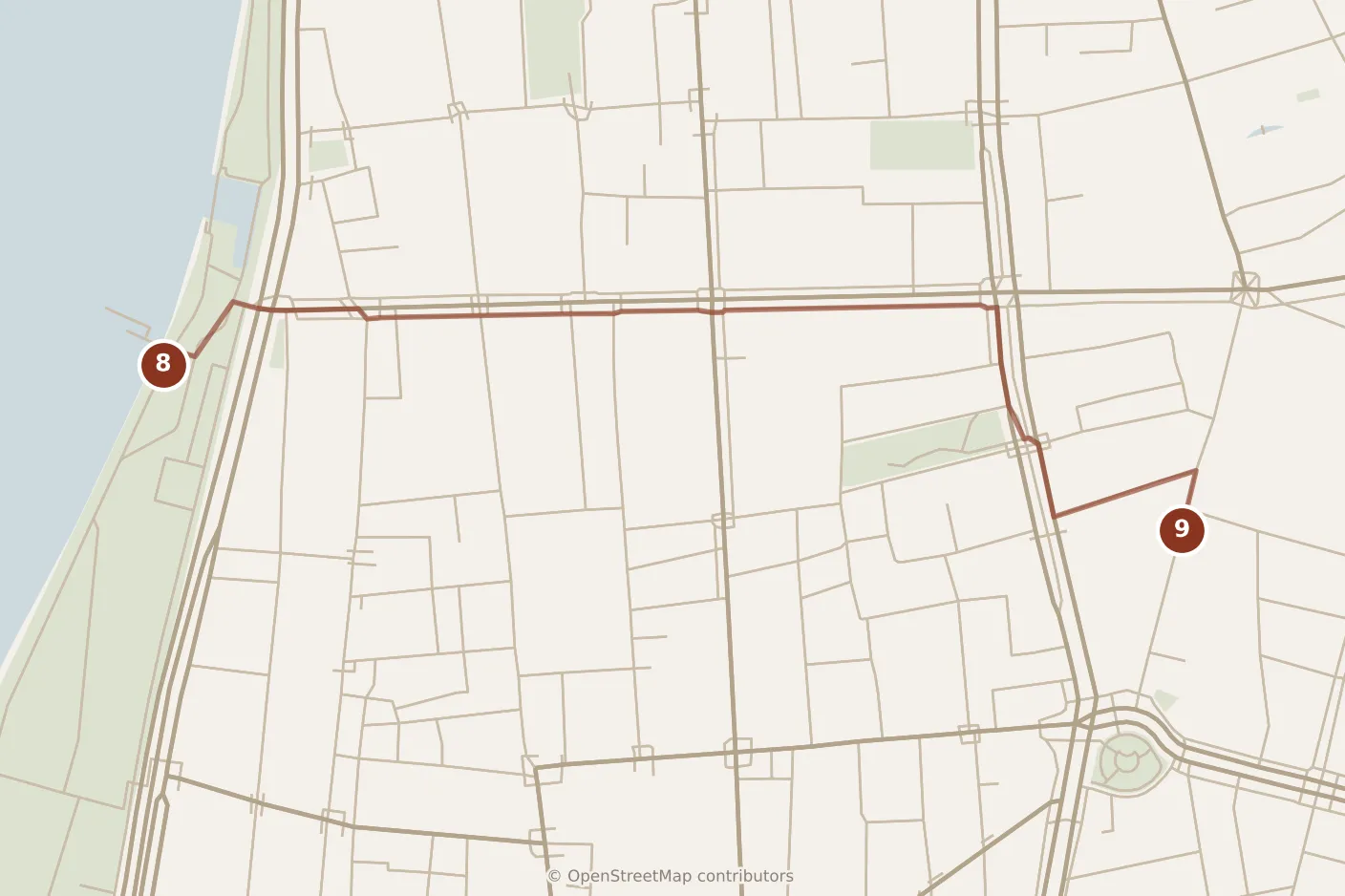
- Evening
- 8Dadaocheng Wharf
- 9Ningxia Night Market
Everything today runs along one line drawn north, roughly eight kilometers of walking end to end, and until the evening you never double back. That is the whole design: the city was built in that order, upriver from the landing, so walking it in sequence saves you having to be told what came first.
Morning
The first leg is a short one. From Taipei Main Station take the blue line two stops west to Longshan Temple — about eight minutes including the platforms, and the station is named after what you have come for. If you flew into Taoyuan, the Taoyuan Airport MRT ends beside Taipei Main Station rather than inside it: the two are joined underground and signposted the whole way, but it is a walk with a case rather than a change of platform, so allow it more minutes than the shared name suggests. If you are sleeping in Ximending you are already on the route: walk the eighteen minutes south-west and start at the temple anyway, rather than at the market building round the corner from your bed, which does not open until late morning.
Longshan Temple was founded in 1738 by settlers from Quanzhou in Fujian, and the day starts here because the city did. Half an hour is right, and spend it on two particulars rather than on the floor plan. The front hall carries a pair of cast-copper dragon columns, which the temple says are the only ones of their kind on the island — every other pair of that shape in Taiwan is stone. And this is a working temple with lines of people waiting to ask for things, not an exhibit: step over the raised timber sill in each doorway and never on it, which is one of several things everybody local does here without thinking; the temple’s own volunteers will put a visitor right about the rest.
Walk out and turn into Herb Alley, the short lane of medicinal-herb shops immediately beside the temple — bundles of dried plants sorted into open sacks, and iced herbal tea sold by the cup at the front. It is a working row of a dozen-odd shops, and fifteen minutes covers it; the tea is worth having.
Then eight minutes east along Guiyang Street to Bangka Qingshan Temple, which is the quieter of the two and the better building. Fishermen from Hui’an in Fujian founded it in the 1850s, during a plague, around a god they had carried ashore with them. It is dark, narrow, three halls deep and heavily carved, and its procession — on the streets you are standing in, on a lunar date that falls late in the year — is counted as one of the three great temple festivals of the city. Give it twenty-five minutes. It is the one stop of the morning where you can hear yourself think.
Ten minutes further east the streets change entirely and you are in Ximending. The Red House at its edge was built in 1908 by the architect Kondo Juro as the first purpose-built public market in Taiwan: an octagonal brick front, deliberately eight-sided, with a cruciform hall behind it. It keeps shop hours rather than museum hours and does not open until late morning, which is why the temples came first. Half an hour inside covers it. The low open-air bar terraces behind the building are the heart of the city’s gay nightlife. You pass them shuttered at this hour; they are an evening place, and worth coming back to as one.
Lunch is here, and forty minutes is the allowance rather than the requirement. This is a district of snack counters rather than restaurants — oyster vermicelli in a thick brown soup, fried chicken cutlets, shaved ice under fruit — and a long line here is as likely to mean a passing fashion as a good counter, so choose by what you want to eat rather than by the length of the line.
Afternoon
Sixteen minutes east along the arcades brings you to 228 Peace Memorial Park, and this is what a second day makes room for. The park is named for what began on the evening of 27 February 1947, when a Monopoly Bureau enforcement team beat a widow selling untaxed cigarettes in the merchant quarter you will reach later this afternoon, and one of them fired into the crowd that gathered. What followed killed thousands and set the terms of the next forty years of Taiwanese politics.
Two doors open off the park, and you should go through one of them, not both. The National Taiwan Museum, at the north end, is the oldest museum on the island: founded in 1908, in this neoclassical building since 1915, and put up by the colonial administration to mark the completion of the railway down the west coast. What is inside is natural history and the peoples of the island, in cases that are themselves a century old. The Taipei 228 Memorial Museum, in the middle of the park, occupies the old broadcasting bureau — the transmitter the news of the incident went out from, which is why this park and not another carries the date. Ninety minutes for the park and whichever of the two you choose, which works out at about an hour inside and half an hour under the trees.
Local tip. Take the 228 museum if this is your first time in Taiwan and the natural history one if it is not. The first explains why the second is housed in a Japanese building put up to celebrate a railway; doing both costs you the merchant street at the end of the day, which is the stop this itinerary is actually built around.
Sixteen minutes north-west, where the old walled city ended, stands the North Gate. It went up in 1884 and it is the only one of the five gates of the old walled city still in the shape the Qing built it — the others were remodelled in the 1960s into something northern and palatial they never were. An elevated highway ramp stood over it until 2016; it now sits in the open on a traffic island, which is an improvement and still an odd sight. Two minutes past it is the Railway Department Park: the colonial railway bureau’s headquarters, a half-timbered building finished in 1920, restored over most of two decades and opened to the public in 2020. Forty-five minutes for the two together.
Fifteen minutes north up Yanping North Road, through the wholesale streets, is the Xiahai City God Temple, and fifteen minutes is all it needs. It is tiny and packed to the ceiling, it is the parish temple of the district you are about to walk, and its own procession — in the fifth lunar month — is the one this quarter still shuts its shops for.
Dihua Street begins at its door and runs a kilometer and a quarter north. Walking it takes about twenty-five minutes; allow an hour and five, because the walking is not the point. This street made the money that built almost everything you have looked at since lunch: after a British merchant shipped the first crates of Formosa Oolong straight to New York in 1869, the tea trade came up this street from the wharf below it, and the shophouses are what the profits bought — plain gabled Fujian fronts at the southern end, elaborate 1920s facades in the middle, and the same dried goods, herbs, tea and cloth trade still working behind them. Every shophouse has a covered arcade in front of it, which will matter if it rains.
Evening
At the top of the street cut three minutes west to the flood levee, then follow the riverside path south for about twenty minutes to Dadaocheng Wharf, at the number five floodgate. That is the one leg of the day that goes back the way you came — one street over, on the water instead of in the streets, which is why it is worth doing rather than something to hide. This is the stop the day was built around and the reason for the count in the Overview: the far bank here is due west and the sun goes down over it, and it is one of the few wide horizons in a city otherwise walled in by mountains. There is a line of shipping containers turned into food and drink stalls along the quay, and a ferry pier. Forty-five minutes, and arrive with the light still on the water rather than after it has gone.
Then fifteen minutes east to Ningxia Night Market: short, dense, food-first, with roots in the Japanese-era traffic circle it grew up beside, and exactly the right size after a day of walking — two blocks rather than a district. Graze standing up. Oyster omelette, taro balls, gua bao, and cash, because the stalls here still prefer it. An hour is plenty. If you would rather finish on foot than on the metro, Taipei Main Station is under twenty minutes’ walk south.
Day two

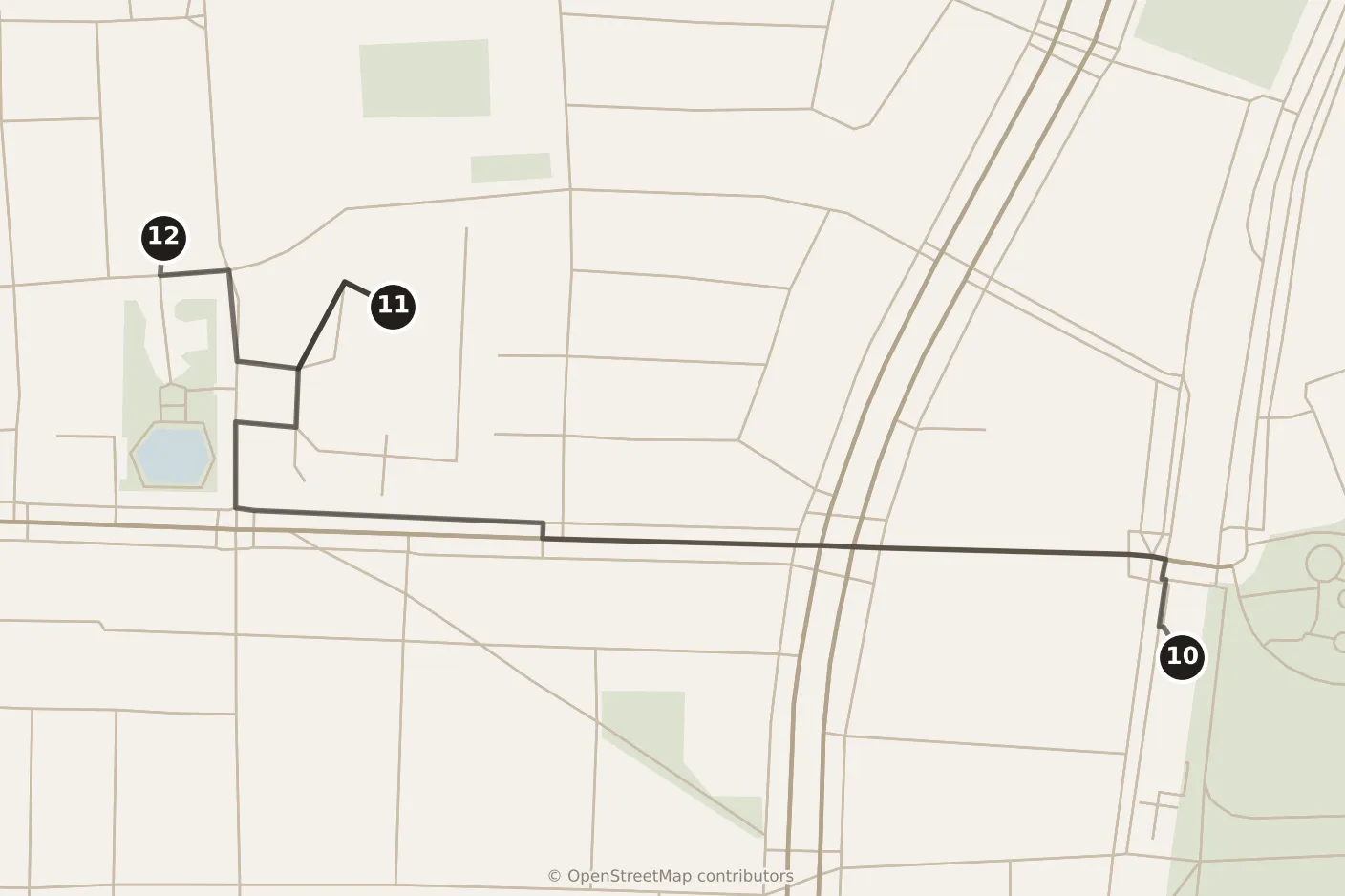
- Morning
- 10Yuanshan Station
- 11Taipei Confucius Temple
- 12Dalongdong Baoan Temple
- Afternoon
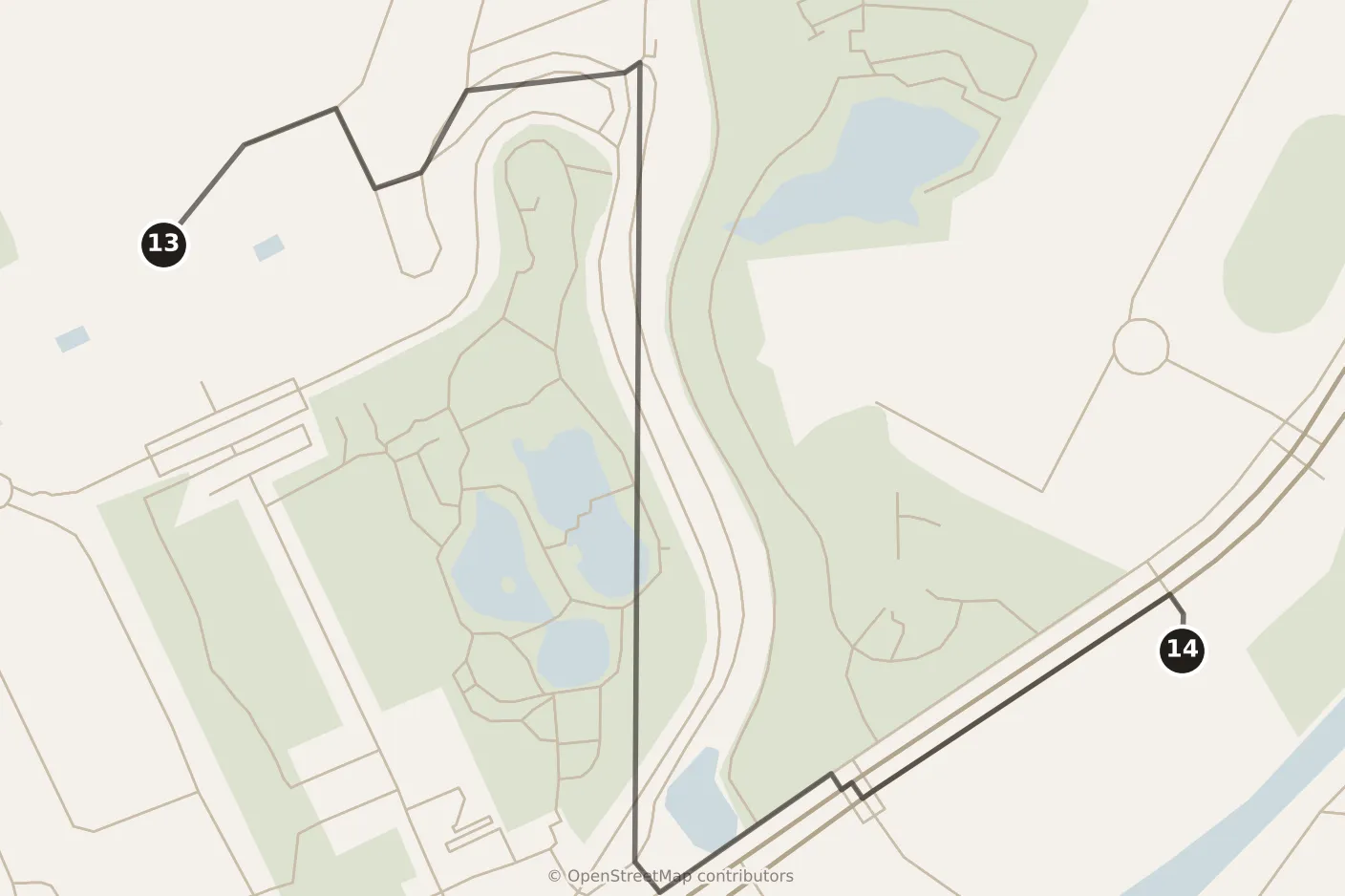
- 13National Palace Museum
- 14Shung Ye Museum of Formosan Aborigines
- Evening
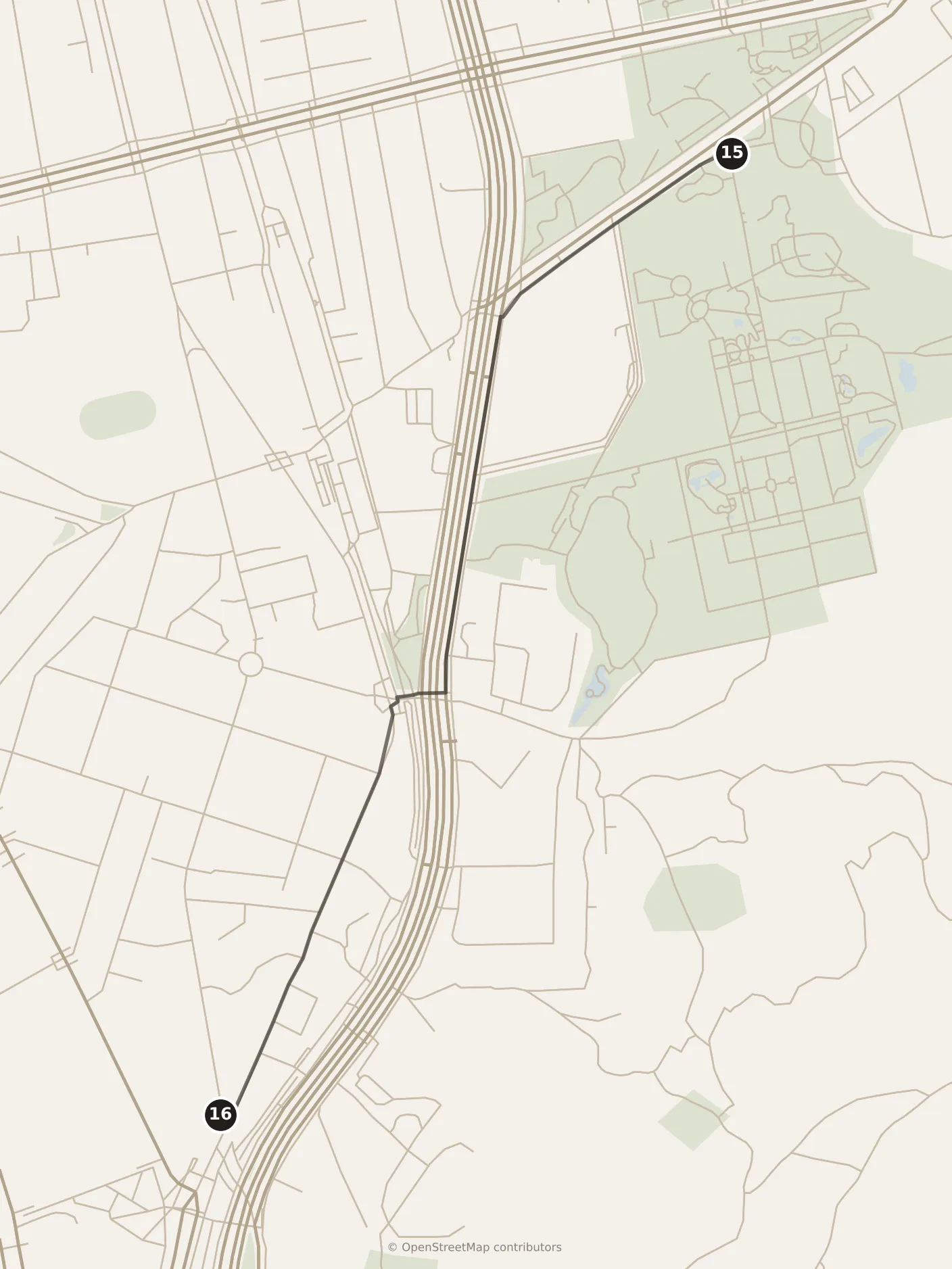
- 15Shilin Official Residence
- 16Shilin Night Market
Today is the opposite of yesterday in every way that matters: a morning of two buildings, an afternoon of one, under an hour of walking from end to end, almost all of it indoors — and it is the day that cannot be moved to a Monday.
Morning
The hinge today is a closing time rather than a light, and it belongs to the museum. The National Palace Museum ran nine to five in 2026, it deserves three and a half hours, and everything above it — the two temples, lunch, the metro and the bus — comes to about three. So be coming up the steps at Yuanshan Station by nine if you want the two smaller stops after the museum, and by ten if you want the museum alone. If that closing hour has moved, the method has not: take the new one, subtract three and a half hours plus twenty minutes of bus, and that is when you leave the temples.
Yuanshan is four stops north of Taipei Main Station on the red line. Eight minutes’ walk west brings you to Hami Street and the two buildings facing each other across it, which are the reason to come this far north for a morning.
The Taipei Confucius Temple is the quiet one, and the quietness is the point: nothing is being asked of anybody in it. There has been a Confucian temple here since 1879; the Qing one was demolished under Japanese rule and this replacement was raised in 1930 by Wang Yi-shun. It is the only Confucius temple in Taiwan finished in southern Fujian ceramic ornament, the roofs are crusted with it, and standing back far enough to read the Dacheng Hall roofline is most of what you came for. Every 28 September the birthday ceremony is held here with archaic music and a slow formal dance. Forty minutes.
Two minutes across the street, Dalongdong Baoan Temple is everything the other is not: smoky, crowded and full of people who want something. Construction began in 1804 on the site of a wooden shrine of 1742, and it belongs to the Tongan community who lost the Bangka feuds and moved upriver. Its god is a deified physician, so this is where illness is brought, and the painting and carving are extraordinary — the temple restored itself out of its own funds and took a UNESCO Asia-Pacific heritage award for the work in 2003, which is unusual for a building still in daily religious use. The Baosheng Cultural Festival runs from mid-April to mid-June and is the third of the three processions these two days collect. Fifty minutes.
Afternoon
Back to Yuanshan Station and two stops north on the red line to Shilin. Eat here — the streets around the station carry counters at midday, and the obvious order is beef noodle soup, which is the dish this city argues about — then take the R30 bus from outside the station. It runs to the museum door and takes about twenty minutes. A taxi goes up the same road, so what it buys is the wait rather than the ride — which with two or three of you can still be worth it.
The National Palace Museum holds close to seven hundred thousand objects, of which a very small fraction is on show at any moment, and three and a half hours is the recommendation. Give the first hour to the bronzes: Zhou ritual vessels, and among them the Mao Gong cauldron, which carries the longest inscription surviving on any ancient Chinese bronze. Give the second to the Song ceramics, which are the collection’s real claim and the hardest thing to see anywhere else. Spend the third on the jades and the carved curiosities. What to skip, if you are here once: the rotating painting and calligraphy galleries, which are magnificent, in Chinese, and change every few months in a way that rewards a fifth visit rather than a first.
The two objects everyone comes for — the jadeite cabbage and the meat-shaped stone — travel between this museum and its southern branch on a published rotation, and the museum’s own website carries the exhibition schedule months ahead. Read it before you come rather than after.
Local tip. Do not build the visit around the two carvings. If they are here, see them last rather than first, so that a line costs you only the end of an afternoon you have already spent well; if they are not here, you have lost two objects out of seven hundred thousand, and the bronzes and the Song ceramics — which do not travel — were the better half anyway.
Seven minutes’ walk from the entrance is the Shung Ye Museum of Formosan Aborigines, four small floors on the island’s Austronesian peoples: Amis, Paiwan, Atayal and the rest, whose number the state has revised upward more than once. Forty-five minutes. It is a deliberate counterweight to the building across the road, and putting the two in one afternoon is the argument this whole day makes.
Evening
Take the same bus back down to Shilin station. Nine minutes east on foot is the Shilin Official Residence, where the Chiang family lived. The gardens are a free public park with no ticket and longer hours than the house, and it is the gardens rather than the house that are worth an hour — roses, a chapel, glasshouses, laid out in a mixture of Chinese and European manners. In the dark half of the year skip it outright: there is nothing to see in a garden after sundown, and the hour is better given to the museum or to the market.
Then Shilin Night Market, twenty minutes on foot south. Walk it: the apparent alternative is nine minutes back to Shilin station, a one-stop ride to Jiantan and three more minutes at the far end, which comes to the same twenty and spends half of them underground. This is the big one, the sprawling one, and it is not last night again: a whole grid of streets plus an underground food hall, more crowded, more of everything, and the place to have a bubble tea while you walk. Ninety minutes, and it does not thin out until late.
With a third day

- With a third day · stops 17–18
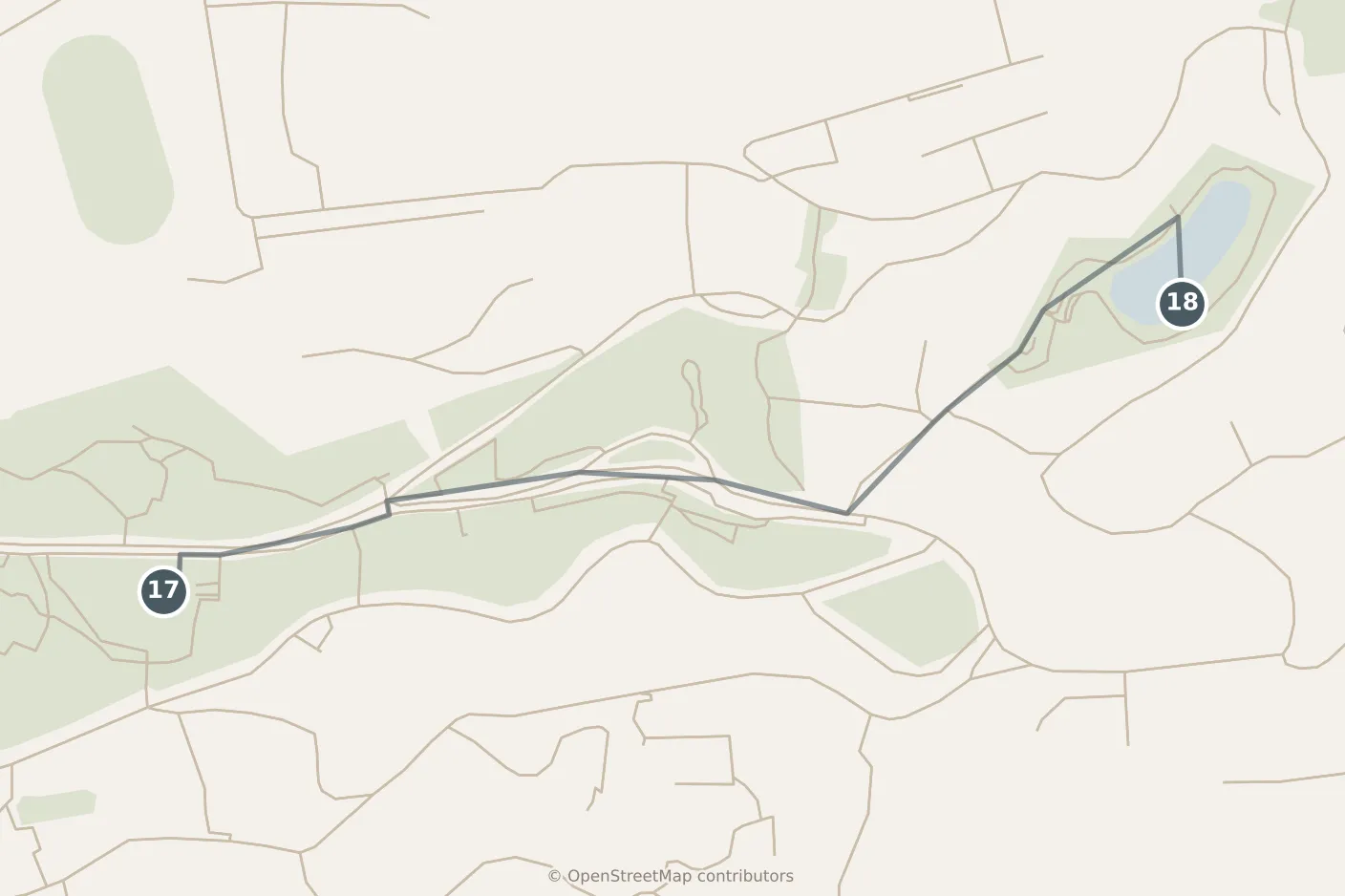
- 17Beitou Hot Spring Museum
- 18Thermal Valley
- With a third day · stops 19–20
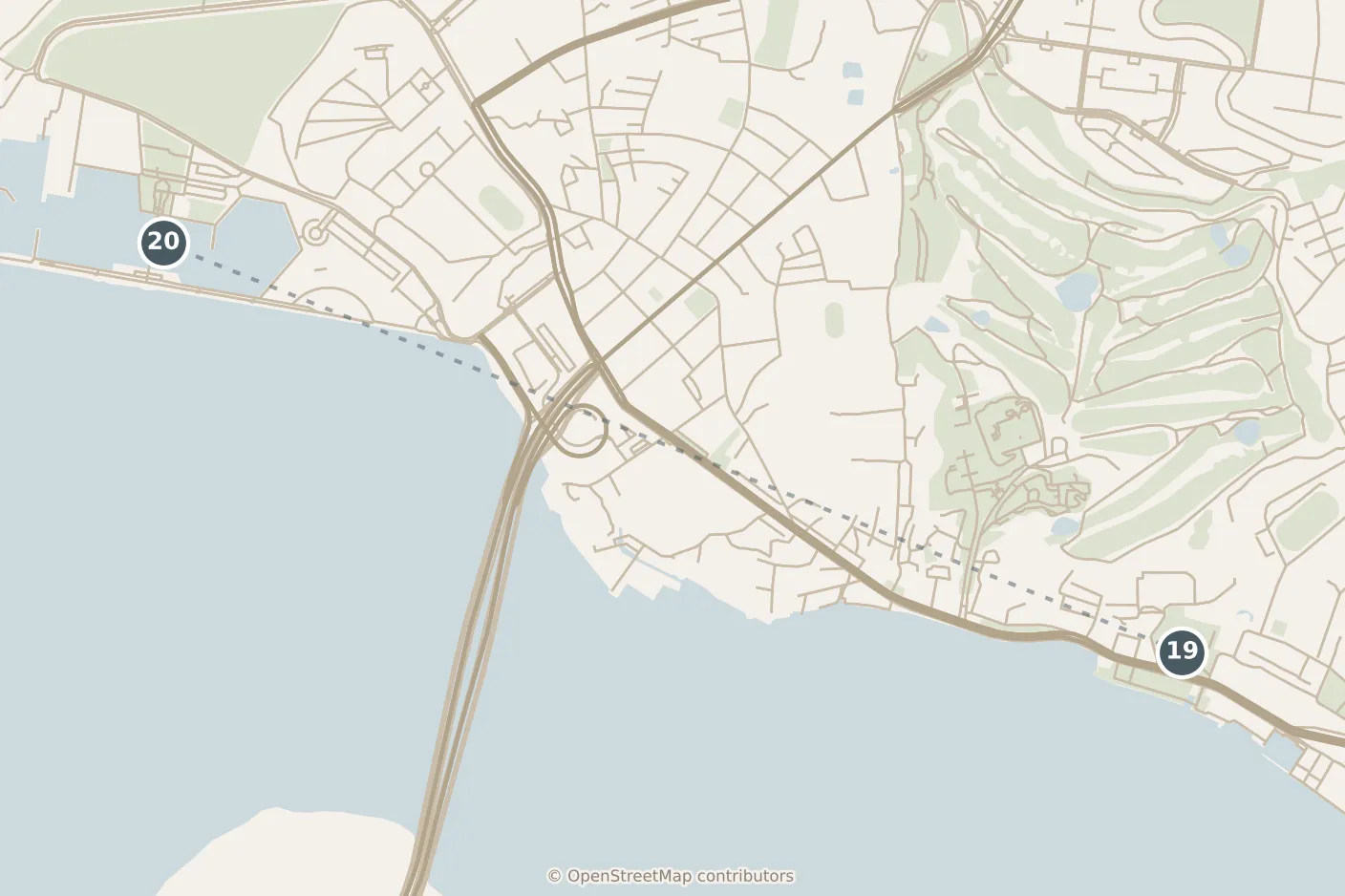
- 19Fort Santo Domingo
- 20Tamsui Fisherman's Wharf
The third day leaves the basin and goes north up the red line. It is appended rather than inserted, with one exception below, and it buys the two things the basin floor cannot match: a steaming hillside and a wider horizon.
Start at Xinbeitou, one stop on the branch shuttle from Beitou. The Beitou Hot Spring Museum was the public bathhouse the Japanese administration built in 1913, it is free, and forty-five minutes covers the tatami hall upstairs and the Roman-style bath below. The public open-air pools are in the park between the museum and the valley, and there is no bath to be had in them: the city closed them on 24 January 2025 to rebuild the place, scheduled the works to finish at the end of July 2026, and has published no reopening date of its own. Check that before you plan a day around a soak — and if they have reopened, expect fixed sessions and a costume-and-cap rule at the gate rather than a park you wander into, and add about an hour and a quarter to the count below. Ten minutes further on is Thermal Valley, a pool of steaming acidic green water walled in by trees: thirty minutes and no more, and the boardwalk round it has steps and is poor with anything heavy in your hand.
Then back down to Beitou and six stops north to Tamsui, the end of the line, which is in New Taipei rather than Taipei — about twenty-five minutes from Xinbeitou. Lunch on the old street along the water — what the street is known for is a-gei, a fried tofu pouch stuffed with noodles under a lid of fish paste, iron eggs, and fish-ball soup — then eighteen minutes uphill to Fort Santo Domingo. The Spanish built a fort on this headland in 1628, the Dutch replaced it in 1644 with the building still standing, the Hokkien name for it means the red-haired people’s fort, and the British held it as a consulate from 1868 until 1972, leaving a Victorian consular residence beside it. An hour for the compound.
Then the light. Walk the seventeen minutes back down to the ferry pier and take the boat to Tamsui Fisherman’s Wharf, about fifteen minutes downriver, where the estuary opens into the Taiwan Strait. After two days inside a basin ringed by mountains, this is the open horizon the third day is for. Counting back: Beitou comes to an hour and three quarters, the metro is twenty-five minutes, the old street and lunch an hour and a half, the fort an hour, the walk back and the boat another half hour. Call it five and a quarter hours, so you are starting at Xinbeitou just before noon in November and about half past one at midsummer. The half past one is arithmetically right and practically wrong, in the same way day one’s midsummer answer was: the fort shut at five on weekdays and six on weekends in 2026 and stopped selling tickets half an hour before that, so in the long half of the year do not count back from the sunset at all. Start when day one starts, take the fort in the early afternoon, and give the wharf the surplus — it is the one stop of the day that is better for two hours than for one. Coming back there is the same ferry, and the Red 26 bus along the shore to Tamsui station once the boats have stopped: read the last sailing off the board at the pier as you cross, because if you are staying for the light you should be planning on the bus and treating a boat back as luck.
What moves. Nothing in day two moves; it keeps its own rules wherever it lands. What changes is day one: on a three-day trip, drop Dadaocheng Wharf and give that hour to Dihua Street instead. It is the same river doing the same thing, and it does it better at the mouth than seventeen kilometers upstream. Dropping it also takes the deadline out of day one — with no wharf there is no hour to hit, the seven-and-a-half-hour count in the Overview becomes a floor rather than a schedule, and the day simply ends at Ningxia Night Market when it ends. Start by ten and stop counting.
The one reason to insert it instead. This is the only one of the three days the weather can destroy: a steaming valley in the rain is fine and a fort in the rain is fine, but an estuary at sunset is not. If the forecast offers exactly one clear evening, take this day on it and push the museum day to third. Nothing else has to change, because the museum day cares about one thing only and that thing is Monday. Do not put this day first: day one is the orientation day, and it is also the one that survives bad weather, because Dihua Street is arcaded end to end.
Practicalities
Monday. This is the fact that arranges the trip. The public museums here close on Mondays almost without exception, and no ordering of these days dodges it. Day two is lost outright — the National Palace Museum, the Shung Ye museum, the Confucius temple and the Shilin residence house are all shut, and what is left is one temple and a night market. Day one survives shortened: the Red House, the museum in the park and the Railway Department Park all close, which takes about two hours out of it. Spend that saving once, either by starting two hours later or by giving it to Dihua Street and the river at the end of it, not both — and note that a Monday has already closed the Railway Department Park, which is the day-one cut recommended below, so do not make it twice. The third day keeps Tamsui and loses its Beitou half, since the bathhouse museum and Thermal Valley both close — and there is a trap in what is left, because Fort Santo Domingo closes on the first Monday of each month. That is the same Monday problem wearing another hat rather than separate bad luck: on the first Monday of a month the third day loses Beitou and the fort both, and what survives is the old street and the boat, which still make an afternoon; on any other Monday only Beitou goes. So: never put day two on a Monday, and if one of your days has to be one, make it a shortened day one.
Rain, and where two rules collide. Day two is almost entirely indoors, so a wet day should be spent on it. But day two also cannot be a Monday, and sooner or later somebody’s wet day is their Monday. When that happens Monday wins, because a forecast can be wrong and a closed door cannot: take the shortened day one in the rain, under the Dihua Street arcades, and put day two on the next day that is not a Monday, wet or dry.
What to cut if you are short. On day one it is the Railway Department Park, forty-five minutes: the Red House has already made the Japanese-era point and made it better, and those forty-five minutes belong to Dihua Street, which is the stop that suffers most from being hurried. On day two it is the Shung Ye museum and then the Shilin Official Residence, in that order — the National Palace Museum keeps its three and a half hours whatever else goes, because the museum is the day. If three and a half hours in one building is not the trip you came for, take two rather than skipping it: the bronzes and the Song ceramics are the first two hours as written, and the jades and the curiosities are the hour to give up. On the third day, take Beitou or Tamsui but not both: Tamsui if the sky is clear, Beitou if it is not.
Tickets, cards and cash. The National Palace Museum is the only ticket on these days that costs real money, and it is walk-up. The rest are small ones: whichever museum you pick in 228 Peace Memorial Park, the Railway Department Park, the Shung Ye museum and Fort Santo Domingo all charge, and none of them charges much — the fort was eighty New Taiwan dollars in 2026, which is the order of magnitude for the set. The temples, the parks and gardens, the North Gate, Dihua Street, the wharf, both night markets, the Beitou bathhouse museum and Thermal Valley are all free. The thing this route needs that you may not have is a stored-value travel card, an EasyCard, sold at any station: three days here is a dozen or so metro legs plus the R30 bus twice, and the bus is where not having one is genuinely awkward. Both night markets and most of the herb and dried-goods trade on Dihua Street are cash.
The bag. For a trip of this length the question is not your first morning but your last, when you have checked out and still have a day to spend. Left luggage is at Taipei Main Station in two forms — the railway’s staffed baggage counter, and the metro’s coin lockers, which the metro publishes as keeping the station’s own hours — and neither operator publishes how many are free at any moment, so treat the drop as the thing that can fail. Which day you make your last matters more than that. Day one ends at Ningxia Night Market, under twenty minutes’ walk from Taipei Main Station, and every stop on it is at street level: that is the right last day for anyone with a train or a late flight. The third day is the wrong one — Tamsui is about forty minutes from Taipei Main Station on the red line and the whole point of it happens at the end of the afternoon, so a reader with something to catch either gives up the sunset or misses it. And do not carry a case into the National Palace Museum: the museum publishes what it will hold at the entrance, and that page is the one to read rather than this one.
Getting between the stops. Day one needs no transport at all between Longshan Temple and Ningxia Night Market. Day two is Taipei Main Station to Yuanshan on the red line, Yuanshan to Shilin on the same line, and the R30 bus up to the museum and back down. The third day is the red line to Beitou and the branch shuttle to Xinbeitou, back down to Beitou and north to Tamsui, then a ferry. Everything else about arriving in Taipei, paying for things and getting around is in the Taipei city guide.


