Siem Reap in two or three days: Angkor at half speed, the far temples, and the lake on a third day

Last updated 15 August 2026
Overview
One day at Angkor is a forced march, and it works. Two days is the length at which the marching stops. The difference is not chiefly the extra count of temples — it is that the middle of each day is handed back to you, and that the far half of the park becomes reachable at all. Day one takes the two things everyone comes for, Angkor Wat and the walled city inside it, and gives them about half as long again as a single day can afford, then leaves the park in the worst of the heat and comes back out at four for one temple in the last light. Day two goes north-east instead, thirty-seven kilometers out to the small pink temple that carries the finest carving at Angkor, and comes back down the outer ring that a one-day visitor never sees. Neither day is the other day’s leftovers.
You will be based in the town and you will spend almost no time in it. That is the honest shape of this trip and there is no arranging it away: the nearest temple is six kilometers north of your bed and the furthest stop on the main route is thirty-seven, so both days are built around a hired vehicle and the town is where you sleep, eat and shower.
The arithmetic of the pass is what makes the third day nearly free, so do it before you book anything. The park is managed by the APSARA National Authority; the ticket into it is the Angkor Pass, sold by Angkor Enterprise — the state body that handles the ticketing, not the park — directly, online, and from the ticket center four kilometers out of town on Road 60. In 2026 the single day was in the thirty-five-to-forty US dollar range and the three-day was in the sixty-to-sixty-five range, which means two separate single days cost you more than the three-day pass and buy you a day less. The three-day version is also not three consecutive days: the three are used inside a longer window, and how long that window is has been changed before now, so read it off the pass rather than off this page. So the third day below does not have to be the third day, and the pass does not care where you put it.
There is no fare card here and there is no line to name, and that absence is worth stating plainly rather than leaving you to discover it. No railway reaches Siem Reap, so there is no station either to arrive at or to start a day from; there is no metro, and no bus route a visitor uses. Your own first leg is therefore a road whatever you came in on: the airport lies well east of the town, National Road 6 is the only way in from it, and the better part of an hour is what that costs — worth knowing on the night before day one, which starts before five. The one card you carry is the Angkor Pass, and it is checked twice over: at booths on every road into the park, including a booth of its own on the road out to the far temple on day two, and then again on foot at the entrance of the individual temples. So it stays on your person all day and never in the vehicle. Your photograph is printed on it and it is not transferable, which is also why a pass offered to you second-hand is worth nothing. Everything else moves by tuk-tuk, hired for the whole of a day rather than by the trip, and both Grab and PassApp work in the town for the short hops — into the center for dinner, out to the evening show — which spares you negotiating a price in the dark. How the fares and the hiring generally work is the parent city guide’s subject; what this route needs is one driver booked for the whole of each day, and the day agreed the night before, because a driver who thinks he is doing a standard morning run has planned his own afternoon. Day rates move, and the figure to negotiate against is not one printed here months earlier: ask where you are staying what a full temple day and a Banteay Srei day currently cost, before you talk to a driver.
Two hours decide the shape, and they are openings rather than closings. In 2026 the park admitted nobody before five in the morning, and day one is counted forward from that: it is the only way to have Angkor Wat at dawn, which is the one thing on either day that will not wait. But Banteay Srei does not open with the park — in 2026 its gate was listed at half past seven, two and a half hours later — and that single fact sets the whole of day two, because it means there is no point at all in a second dark start. If either hour has moved, the method has not: build day one forward from the hour the park opens, and day two forward from the hour the gate at Banteay Srei opens.
Neither of those two days ends at a sunset, and that is deliberate rather than an oversight. The sun goes down here between about twenty-five to six in the middle of November and a little after half past six at the end of June — an hour of swing across a whole year, which is what this latitude gives anyone planning by it. Two of the rules this page otherwise keeps cannot both hold on day two, and it is worth saying which one gives. A day is better anchored to the light; but the last temple of day two is done by about four in the afternoon, which is a full hour and a half before the earliest sunset of the year, and the raised temples that could carry a sunset are all a drive back east from where the day finishes. Waiting for the sky out there is an hour of standing about at the end of a ten-hour day. So day two gives up the light, and day one takes it instead, spending the last usable hour inside a temple under trees. If you want the sunset anyway, the plan is in Practicalities and it is a wait rather than a cut.
Dress for the strictest thing you will meet, on every one of the three mornings, and be done with it. What passes is a sleeved top and a garment to the knee, worn from the start: a scarf draped over bare shoulders at the checkpoint is refused, so a sarong bought at the stalls answers the knees and not the other half. The rule is policed at exactly one point on this route: the stair up to the top level of Angkor Wat, where covered shoulders and knees are checked and people are turned back rather than argued with — after they have waited in line. The same stair applies an age limit, and children under twelve are not taken up. But policed is not the same as expected. These are working religious sites: Angkor Wat has never stopped being a place of Buddhist worship, and on the third day you walk into a functioning monastery hall at Bakong and a pagoda enclosure at Lolei. Keep back from anyone making an offering and do not photograph them, which is the part no guard will ask you for.
Finally, the day you leave, which is the only day the bag is a question: there is no left-luggage office anywhere on this route and no station to hold one. The airport is some fifty kilometers east of the town, and there is no quick version of that road, so the day you fly is not also a day for the lake or for Banteay Srei — pick one before you book the flight. Nor is it the day to break the third day open for: Roluos and the lake are one day and in that order, so that day goes in the middle of the trip, as the section below says, and the last one is the road east and nothing else. Anywhere else, the bag rides in the tuk-tuk at the entrance of each temple while you walk through, which covers everything except three stretches you would not want to do holding a case: the stair to the top of Angkor Wat, the eight-hundred-meter axis through Preah Khan, and the unshaded boardwalk out to Neak Pean. Do those early or drop them.
Phare, The Cambodian Circus — not on the walking map; you get there by taxi.
- Day two · Evening
- Phare, The Cambodian Circus — in the prose, not on the map
Day one

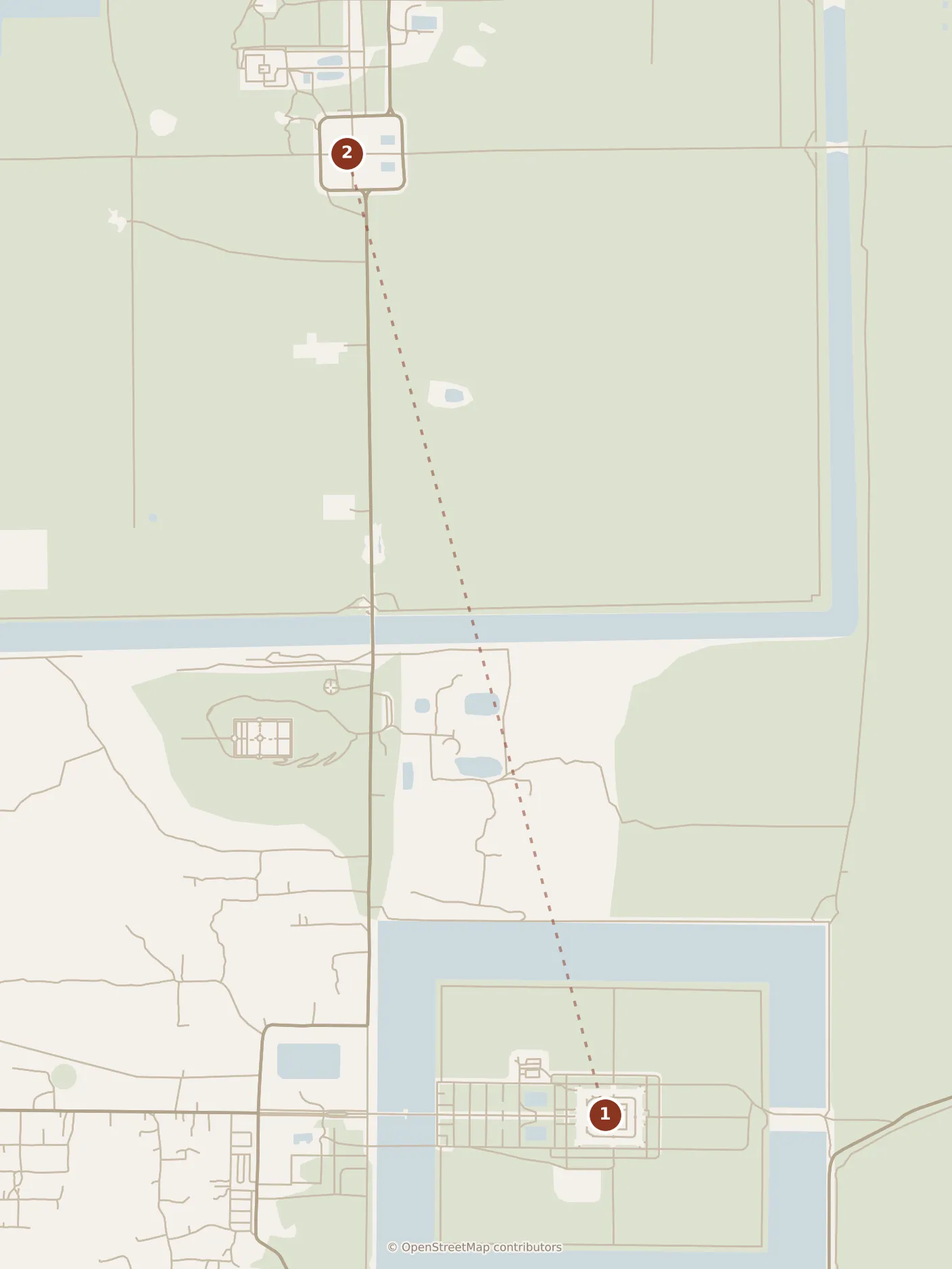
The ride on to stop 2, by taxi, not on foot.
- Morning
- 1Angkor Wat
- South Gate of Angkor Thom — in the prose, not on the map
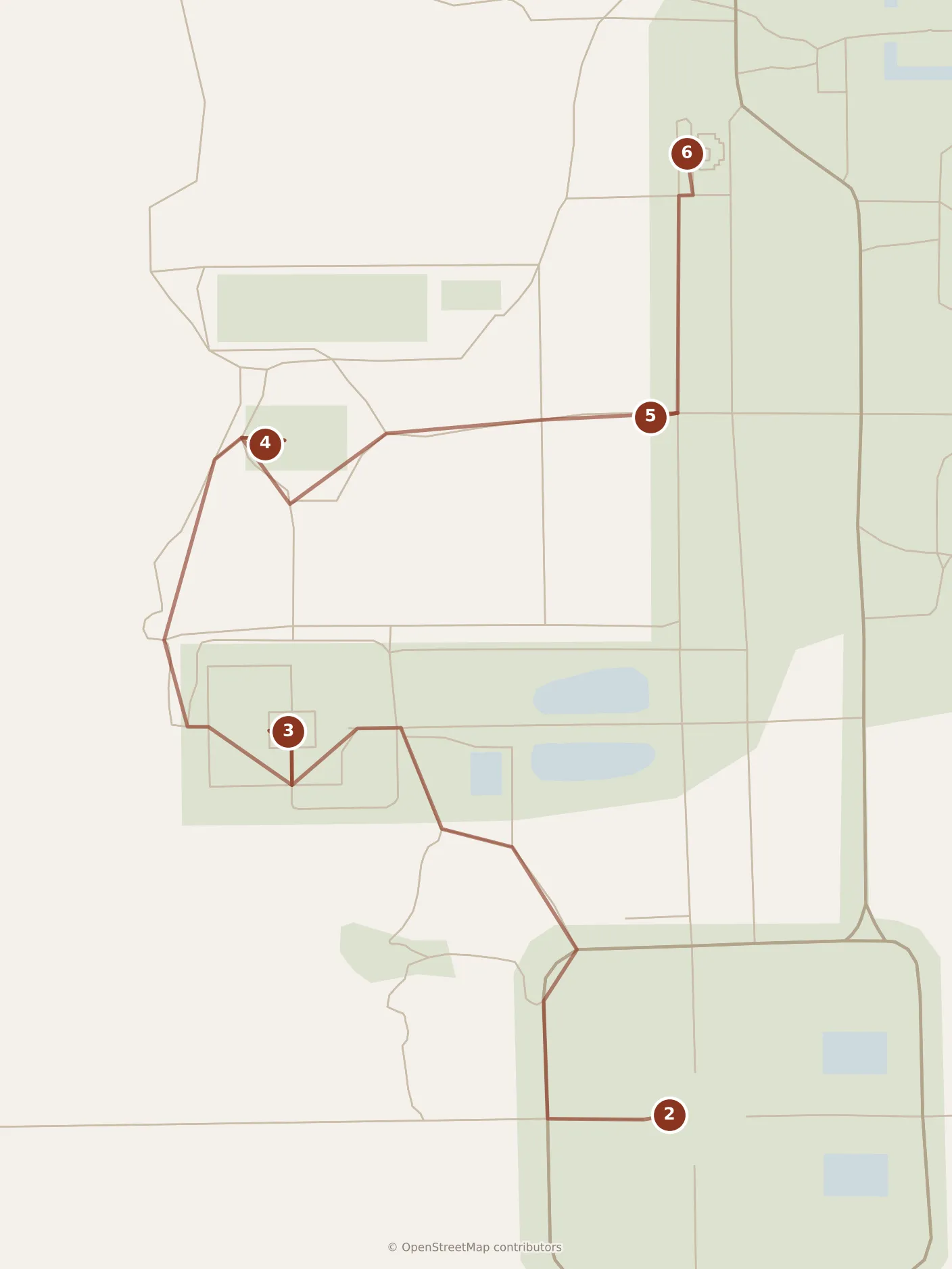
- Morning
- 2Bayon
- 3Baphuon
- 4Phimeanakas
- 5Terrace of the Elephants
- 6Terrace of the Leper King
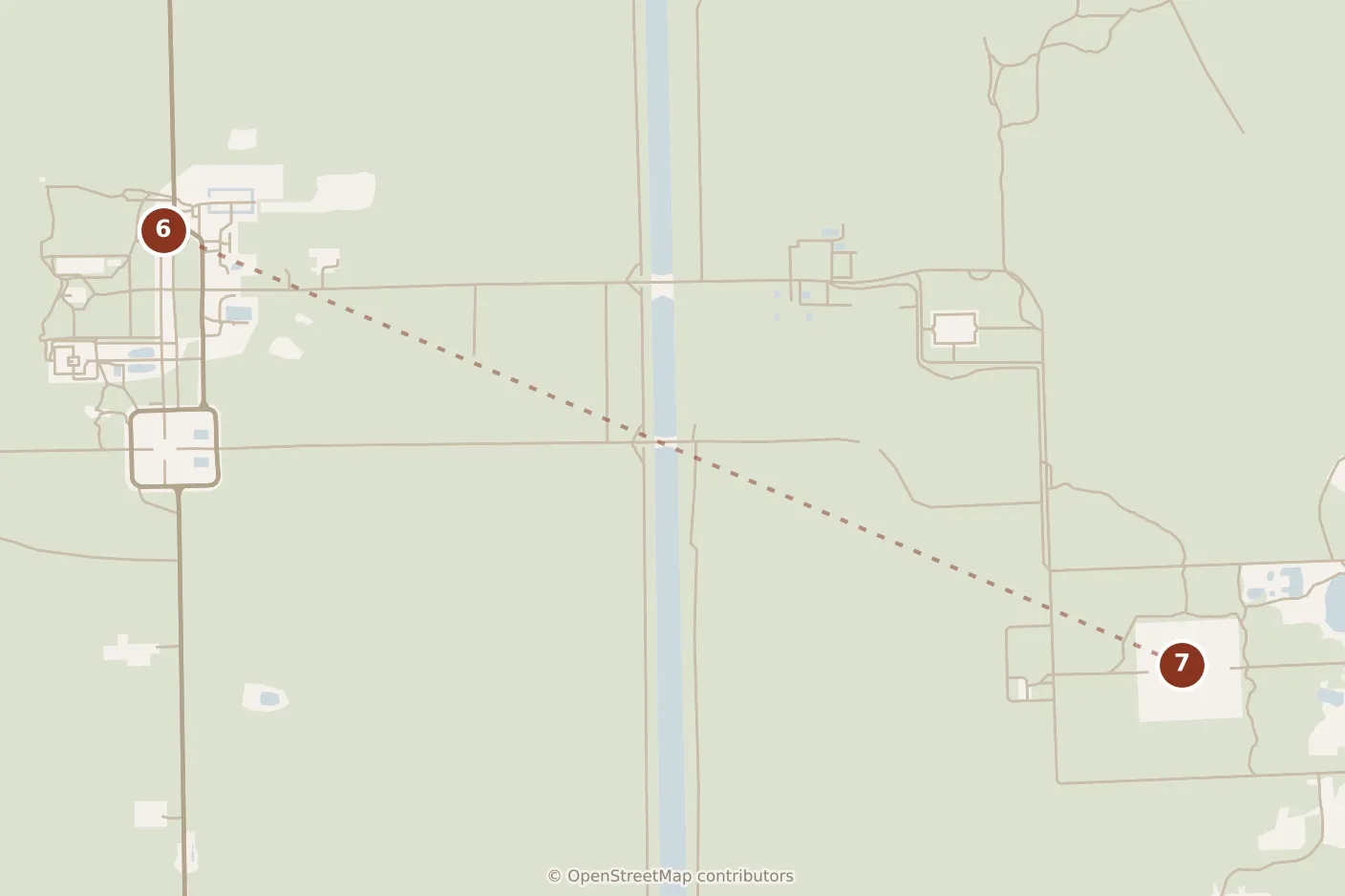
The leg out of the center: from stop 6 by taxi, not on foot.
- Afternoon
- 7Ta Prohm
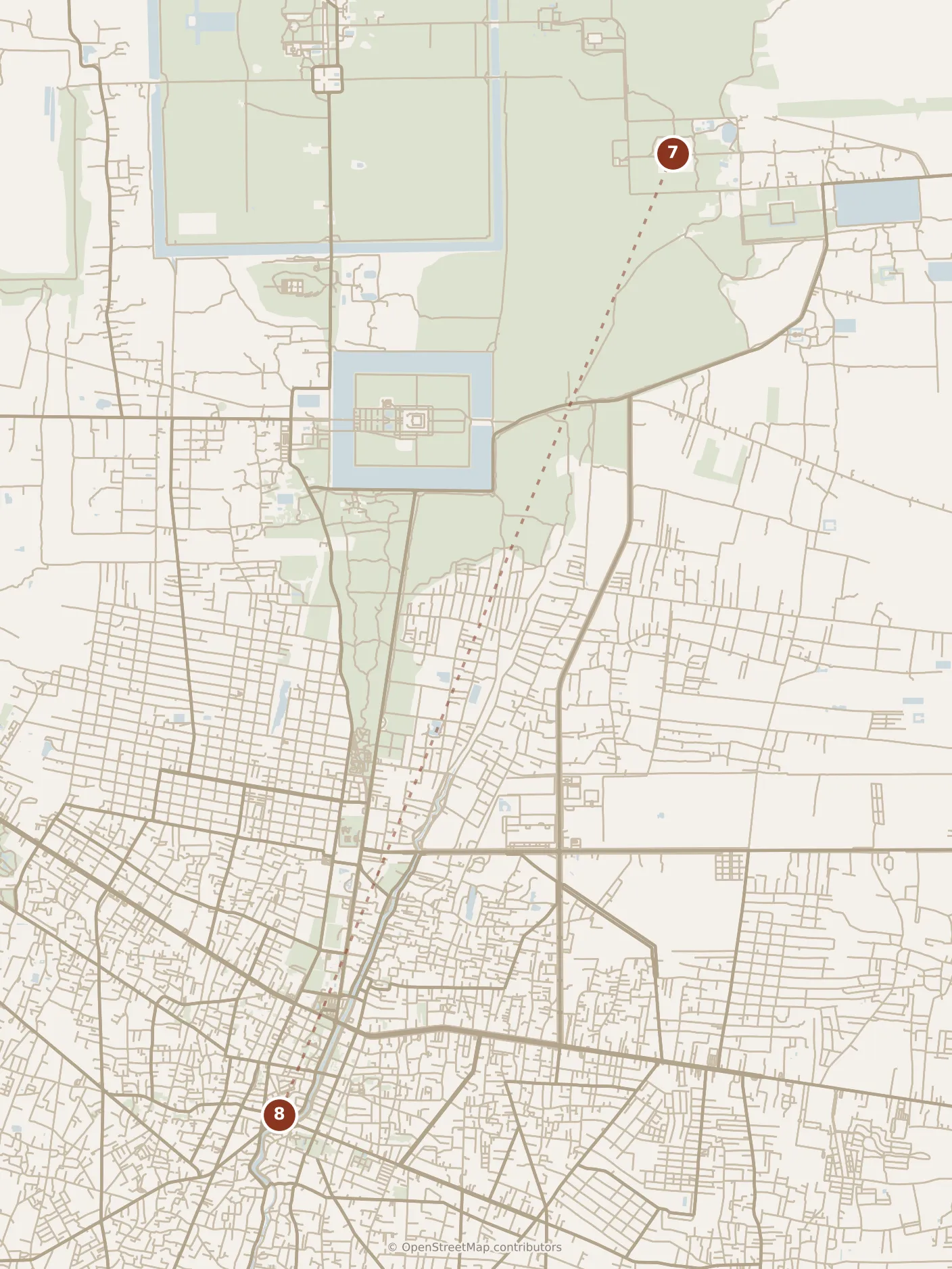
The leg out of the center: from stop 7 by taxi, not on foot.
- Evening
- 8Psar Chas
Angkor Wat and Angkor Thom in one morning is what a single day here also does. What two days change is that the morning gets about half as long again, so the great gallery is walked rather than sampled and the walled city is entered as a city rather than as one temple in the middle of it — and then the afternoon is not spent standing in forty degrees.
Counting forward from the five o’clock gate: the ride out from the town is twenty to twenty-five minutes, and the walk from where the tuk-tuk stops to the ponds in front of the towers is about eight hundred meters, done in the dark, which is twelve to fifteen minutes. So leave a little after half past four and you are in place with the sky still black. That is the only hard time in the two days. Nobody in the town is feeding you at that hour, so carry water and something bought the night before, and expect no proper meal until the lunch below. The stalls outside the temple are up long before you come out of it, but the half hour in which the dawn crowd leaves them is the half hour you want to be walking in.
Morning
Angkor Wat is worth close to four hours from the gate, and the reason to give it that rather than the two everyone gives it is that almost all of the two are spent outside. The dawn itself is half an hour and it is the crowded half hour; the temple faces west, so first light comes up behind it, and what you are watching is a silhouette. Then everyone leaves. Go in.
The outer gallery is the hour and a half this day is really for. It is a continuous covered circuit of carved wall, and it is not one work but eight — a battle from Hindu epic on one side, a royal procession on the next, a stacked register of heavens and hells below that, and so on around. Two of the eight panels were left unfinished when the temple was built and were completed some four centuries later, in the sixteenth century, in a visibly poorer hand, which you can see without being told; the join is one of the more honest things at Angkor. It is covered throughout, it is cool at that hour, and it is the only large thing here you can experience whole. Walk it in one direction and do not double back.
Above it, three galleries step up to the five towers, and the innermost, the Bakan, is where the dress and age check sits. Give the upper levels and the tower fifty minutes, and another half hour on the way out for Preah Poan — the cross-shaped gallery that Khmer pilgrims filled with Buddha images for centuries after the Hindu foundation lapsed, and which is not a closed chapter, since Angkor Wat has remained an active place of Buddhist worship throughout — and for the two libraries flanking the causeway, which almost nobody stops at. The sandstone you have been looking at came from Phnom Kulen, some forty kilometers north-east, floated down by canal; the moat around the whole thing is a hundred and ninety meters wide and five and a half kilometers round, and you cross it twice.
Local tip. The order above puts the gallery before the climb, and that is the order to keep even if you arrive to find a line already at the stair to the Bakan. If the line is still there when you come back down to it — or shut, which also happens, and not always with a reason posted at the bottom — give the climb up rather than the fifty minutes: spend them on Preah Poan and the two libraries instead and walk a second side of the gallery. Of the two, the gallery is the one that cannot be seen from anywhere else.
Two and a half kilometers north by road, ten minutes, the South Gate of Angkor Thom is where the walled city starts, and it is worth stopping at rather than driving through. Twenty minutes. The causeway over the moat carries two rows of stone figures hauling on a serpent, and above them the gate tower carries four faces the size of a room. Zhou Daguan, the Chinese envoy who spent a year here from 1296 and left the only eyewitness account of Angkor that survives, came in through one of these gates; the wall you are passing through runs three kilometers on each of its four sides.
Five minutes on, the Bayon sits at the exact center of that square, and it is given an hour and twenty-five minutes here because there are two temples inside it. The famous one is upstairs, in the towers with the faces. The other is the pair of galleries at ground level, and the outer of them is the one to walk: its southern side carries a naval battle against the Cham fought on the Tonlé Sap, with boats, oarsmen and a man going over the side to a crocodile — and packed in beneath and behind the war, the civilian registers: trade, cooking fires, a game being played on a board. Read those against Zhou Daguan, who walked these streets a century after they were cut and describes a good deal of what is on this wall. It is the one place at Angkor where a text and a carving can be held up against each other. The inner gallery is Hindu and was added later, when the temple’s Buddhist images were being defaced by the next generation of kings. The Bayon has no wall and no moat of its own, because the walled city supplies both, which is why it seems to sit in the road.
Eight minutes north-west on foot, the Baphuon is a temple mountain of the middle of the eleventh century, approached along a raised sandstone causeway on short pillars, two hundred meters of it, which is the best-looking piece of engineering in the walled city. Zhou Daguan described it as a tower of bronze, standing higher than the golden one at the center — the Bayon you have just come from. Forty-five minutes, and the climb up the far side is the point of coming.
Four minutes further north, Phimeanakas is the oldest thing on this morning’s route — begun in the third quarter of the tenth century under Rajendravarman, the best part of a hundred years before the Baphuon you have just climbed — a small stepped pyramid of laterite inside the walled enclosure that held the royal palace — the palace itself was wood and is gone, so what you are walking is an empty compound with a bathing pool and this one hard object in the middle of it. Twenty-five minutes. Zhou Daguan reported that the king slept at the top of it every night with a serpent spirit who took the form of a woman, and that if she failed to appear his death was near. It is a good place to notice how much of Angkor was made of things that rot.
Five or six minutes east brings you out on to the Terrace of the Elephants, the long wall along the old central square, and you walk its length in twenty-five minutes. The thing to look for is not on the front. Behind the northern section, an inner wall was found when the outer facing collapsed — buried for centuries and therefore far crisper than anything exposed, with a five-headed horse and its attendants still sharp. It is reached from the terrace itself and most people walk straight past the gap.
The wall runs on without a break into the Terrace of the Leper King, four minutes and fifteen more, and it works the same way in reverse: a narrow trench has been opened between the outer and inner faces so you walk down a corridor with carved kings, court women and sword-carrying attendants on both sides at arm’s length. The morning ends here. From the gate to this point is just under eight hours, of which about forty minutes is moving between things — and that count models the time inside the places and nothing else. It does not include the Bakan line, which is the largest thing it leaves out, and it does not include the heat, which is not a delay but is the reason the afternoon below is shaped as it is.
Afternoon
Half an hour back into the town, and then stop. Lunch and two hours off your feet between about half past one and half past three is not slack in this plan; from March to May it is the plan, and in the wet season it is when the storm arrives anyway. Eat properly — this is the meal to give to fish amok, the coconut curry steamed until it sets, which takes longer to arrive than anything else on the menu and is worth the wait when you have nowhere to be.
Then go back out at half past three for one temple. Ta Prohm is half an hour from the town, and it is the only stop on either day that is deliberately taken late: it stands in forest rather than in cleared ground, so the shade is real, and the coach traffic that makes it unbearable is on a schedule that thins out through the afternoon. Give it an hour and a quarter and go in at four rather than five — the park’s temples stop admitting before the sky goes dark, and the exact hour for the day you are there is the one thing on this afternoon worth looking up.
What it is: a monastery, not a temple mountain, so its plan is flat and sprawling and you navigate it rather than climb it. It was built without mortar, which is why trees rooted in the joints, and there are two different trees doing it — the pale, smooth-barked giants with roots like poured wax, and the darker strangler figs. It is being held up by the Archaeological Survey of India under a long-running agreement, and you will see the cabling, the props and the numbered blocks laid out on the ground; some of the trees have come down as they became the thing most likely to kill the building. Walk the outer galleries and the perimeter rather than joining the lines at the two or three roots everybody photographs.
Evening
Back in the town by a quarter to six, which in November is about sunset and in June leaves you the whole evening. The center is small and west of the river, and Psar Chas — the Old Market — is its middle: a low tiled hall selling fish, herbs and souvenirs in daylight, with the eating and the night market in the lanes around it after dark. Go early rather than late. One street over is Pub Street, the loudest strip in the town, and it does not improve on acquaintance; the lanes a block back from it — The Alley and the ones running off it — are quieter, carry a wider choice, and let you hear the person opposite you. Do not expect them to be cheaper, though: the price map around Psar Chas is much the same on either side of the noise. Lok lak — beef in a lime and black pepper dip — is the right thing after a day almost entirely spent upright.
Day two

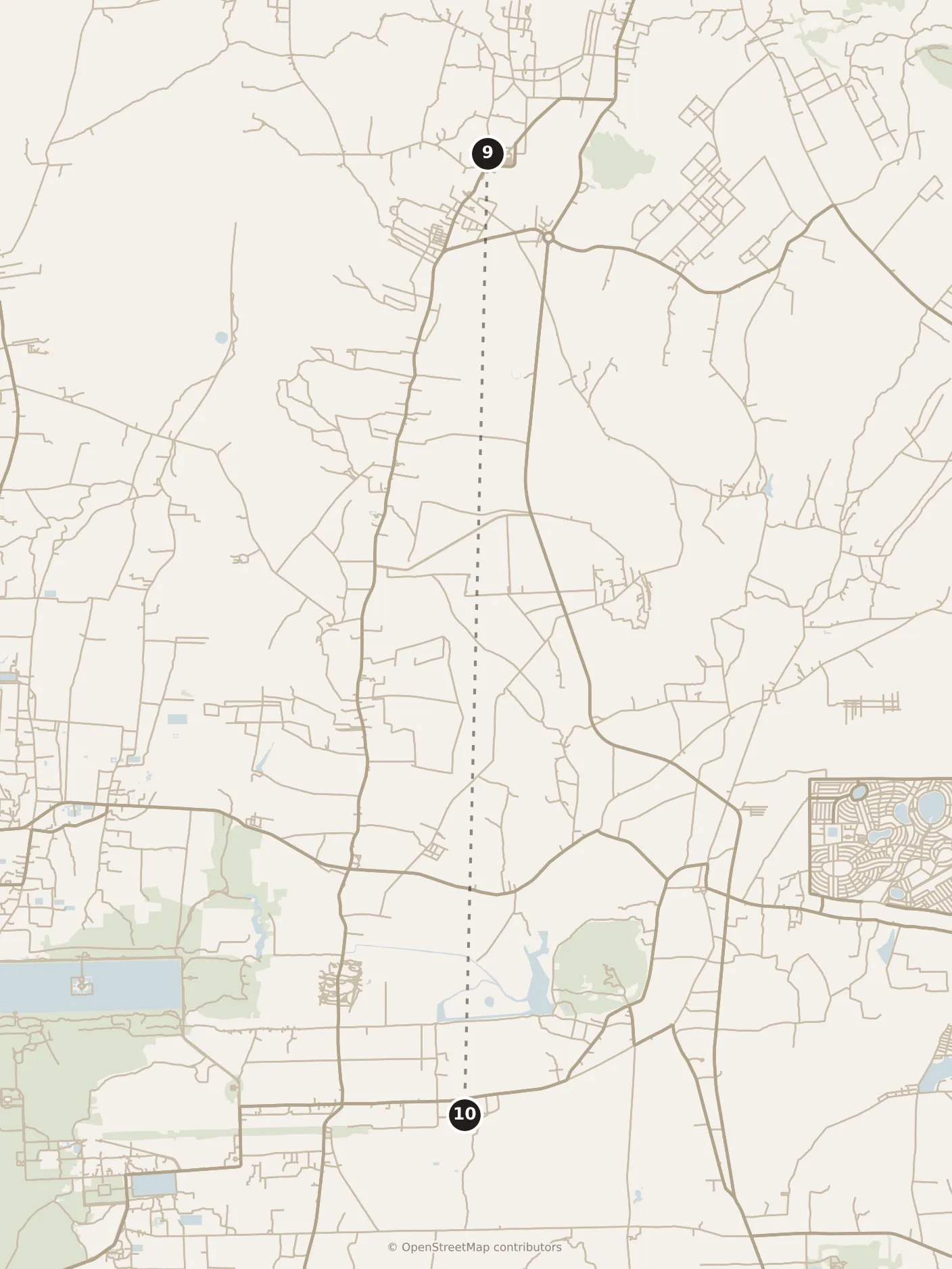
- Morning
- 9Banteay Srei
- 10Banteay Samré
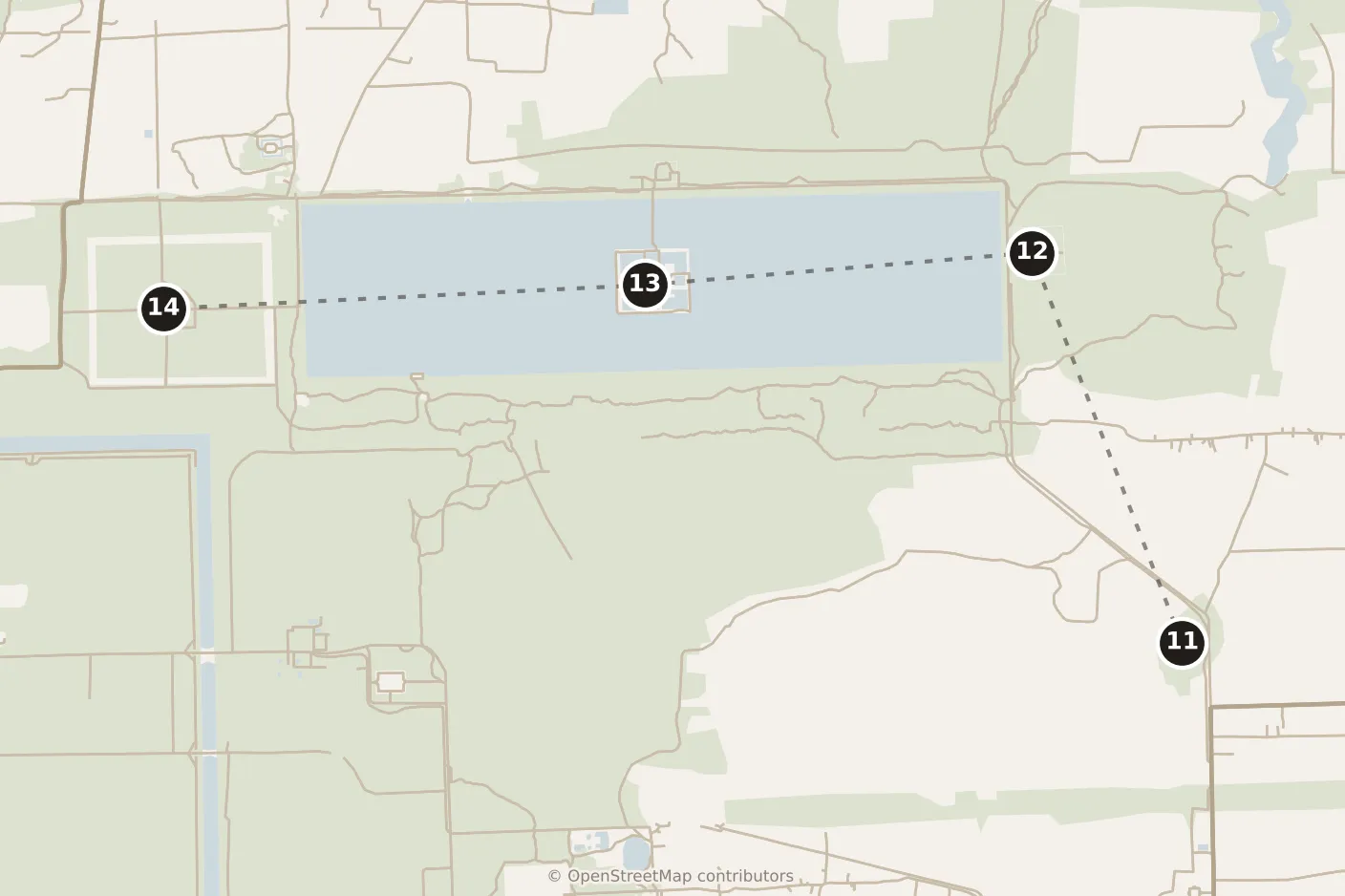
- Afternoon
- 11East Mebon
- 12Ta Som
- 13Neak Pean
- 14Preah Khan
Today is the day a single visit to Angkor cannot contain. It goes thirty-seven kilometers out to a temple most one-day itineraries tell you to give up, and comes back along the outer ring, which is where the quiet is. There are six temples and a good deal of road, and the whole thing runs on one fact: the far gate opens two and a half hours later than the park does.
So do not start in the dark. Have breakfast — this is the morning for num banh chok, the fermented rice-noodle bowl the town eats standing up, a morning dish sold from stalls around the market and gone by mid-morning, and the one meal a day-trip to Angkor never gets. Take it if the stalls are up as you pass; if they are not, eat where you slept, because six o’clock is the hour that matters and no bowl is worth the empty first hour at the far gate. Then count: the drive out is an hour and a quarter in a tuk-tuk, so leaving town a little after six puts you at the gate as it opens, and the first hour there is the empty one. The coaches come up from the town later in the morning, and Banteay Srei is small enough that thirty people fill it.
Morning
Banteay Srei is not a royal foundation and it does not look like one. It was consecrated in 967 by Yajnavaraha, a Brahmin who taught Jayavarman V, and dedicated to Shiva — and it is tiny, deliberately so: the doorways come to about chest height and the towers are the size of garden sheds. What that miniature scale bought is depth. It is built of a hard rose-pink sandstone that takes carving the way boxwood does, and the result is the most intricate stonework in the country, cut so deep that the figures stand almost free of the wall, and almost entirely intact. Give it an hour and a quarter, most of it on the pediments over the three central towers and the two libraries, which carry complete scenes from Hindu epic rather than decoration.
It is also the place where André Malraux, twenty-two and not yet a novelist, prised four carved figures off the wall in 1923 with the intention of selling them, and was arrested at the river. He wrote the episode into a novel afterwards. The temple was the first at Angkor to be restored by putting the fallen stones back where they came from, which is why it reads as a building rather than a heap.
Forty minutes back down the road, Banteay Samré is the deliberate contrast and the stop that most people skip. It is the best part of two centuries younger, built in the style of Angkor Wat and at a fraction of its size, and it has something no other temple here does: a laterite basin inside the enclosure wall, so the inner courtyard was an island with the sanctuary standing in water. It was rebuilt in the 1930s and 1940s by Maurice Glaize, stone by numbered stone, which is why the walls stand to full height and the galleries still have roofs — and because it sits four kilometers off the circuit road, you will often have it to yourself. Fifty minutes.
Afternoon
Fifteen minutes west, the East Mebon is a temple you now reach by road that was built to be reached only by boat. It stood on an artificial island in the middle of a reservoir seven kilometers long; the reservoir has been dry for centuries and is farmland, so the landing stages open on to fields and the whole building is stranded on a low mound in the middle of nothing. It was dedicated in 953 by Rajendravarman, and the thing to walk round for is the corners: monolithic stone elephants, about two meters tall, one at each corner of the two lower terraces, carved in the round and mostly still there. Forty-five minutes.
Ten minutes north, Ta Som takes forty. It is a single-gallery temple of the late twelfth century, small enough to walk through in ten minutes, and you go for its far end: the eastern gate tower has a strangler fig grown clean over the top of it, roots down all four faces, and unlike the celebrated trees earlier in this trip you can generally stand in front of it alone. Go all the way through and out the back — the gate is on the side you would not naturally reach.
Ten minutes on, Neak Pean is the strangest thing at Angkor and takes forty-five minutes, of which a good part is the boardwalk: the temple sits on an island in a reservoir and you reach it by a raised walkway some three hundred and fifty meters long, in full sun, with no shade at either end. What is at the far end is a square pool with four smaller pools at the corners, each fed through a carved spout — a human head, a lion, a horse, an elephant — and in the middle an island with a shrine, ringed by two stone serpents whose tails knot together at the back. It was built as a model of Anavatapta, the Himalayan lake whose four rivers were held to cure whoever bathed in them, and it was a hospital in intent. Beside it in the water stands the horse Balaha, a form of Avalokiteshvara, rescuing drowning merchants. Whether you see any of it reflected depends entirely on the season, and in the dry months you will be walking over grass.
Then lunch, an hour and a quarter, at the stalls that sit outside every large temple here — this is the middle of the day and the point is to be sitting down for it, not to eat well.
Ten minutes west, Preah Khan closes the day and wants an hour and forty. It is enormous: a monastery and university founded in 1191 by Jayavarman VII on the site of a battle against the Cham, its foundation stele recording nearly a hundred thousand people attached to its service. The way to see it is to walk the long east–west axis right through, gate to gate, about eight hundred meters of doorway after doorway diminishing in front of you, and then come back. Two things are worth going out of your way for: the hall of dancers near the east entrance, its lintels carved with rows of them, and — off the axis to the north-east — a two-story building on round columns that exists nowhere else in Khmer architecture and which nobody can explain. The World Monuments Fund has held it deliberately half-cleared since 1991, so it is the one big temple where you can still see what the whole park looked like when it was found.
Half an hour back into town from there, arriving around half past four. From leaving the town to getting back is ten hours and twenty minutes, of which a little over three are on the road and seven are inside places or sitting down eating. That count models the time spent in the places and nothing else. What it leaves out is the road itself: an hour and a quarter each way to Banteay Srei in an open tuk-tuk is dust in the dry season and weather in the wet, and it is more tiring than any of the temples.
Evening
Getting back at half past four is the second thing this day buys, and the gap is the point: between November and midsummer that is between one and two hours of daylight left, which is enough to wash the road off and — if the show starts late enough, which is the thing to check — eat before it rather than after. Use it, because the day has put dust on you.
Phare, The Cambodian Circus is the one thing in the town worth booking rather than wandering into: a Cambodian company performing acrobatics, live music and Cambodian stories under a big top on the southern ring road, about ten minutes from the center by tuk-tuk, grown out of an arts school founded in Battambang for young people who had come out of the refugee camps. It sells its own tickets, online and at its box office at the tent, and it fills up in the dry season — book it on the day you arrive rather than on the night you want it, and take the start time off its own site while you are there, because that is what decides whether dinner comes before or after. If it is sold out, the honest replacement is not another show: it is the quieter east bank across the river, ten minutes on foot from Psar Chas, where the eating is slower and nobody calls you in off the street.
With a third day

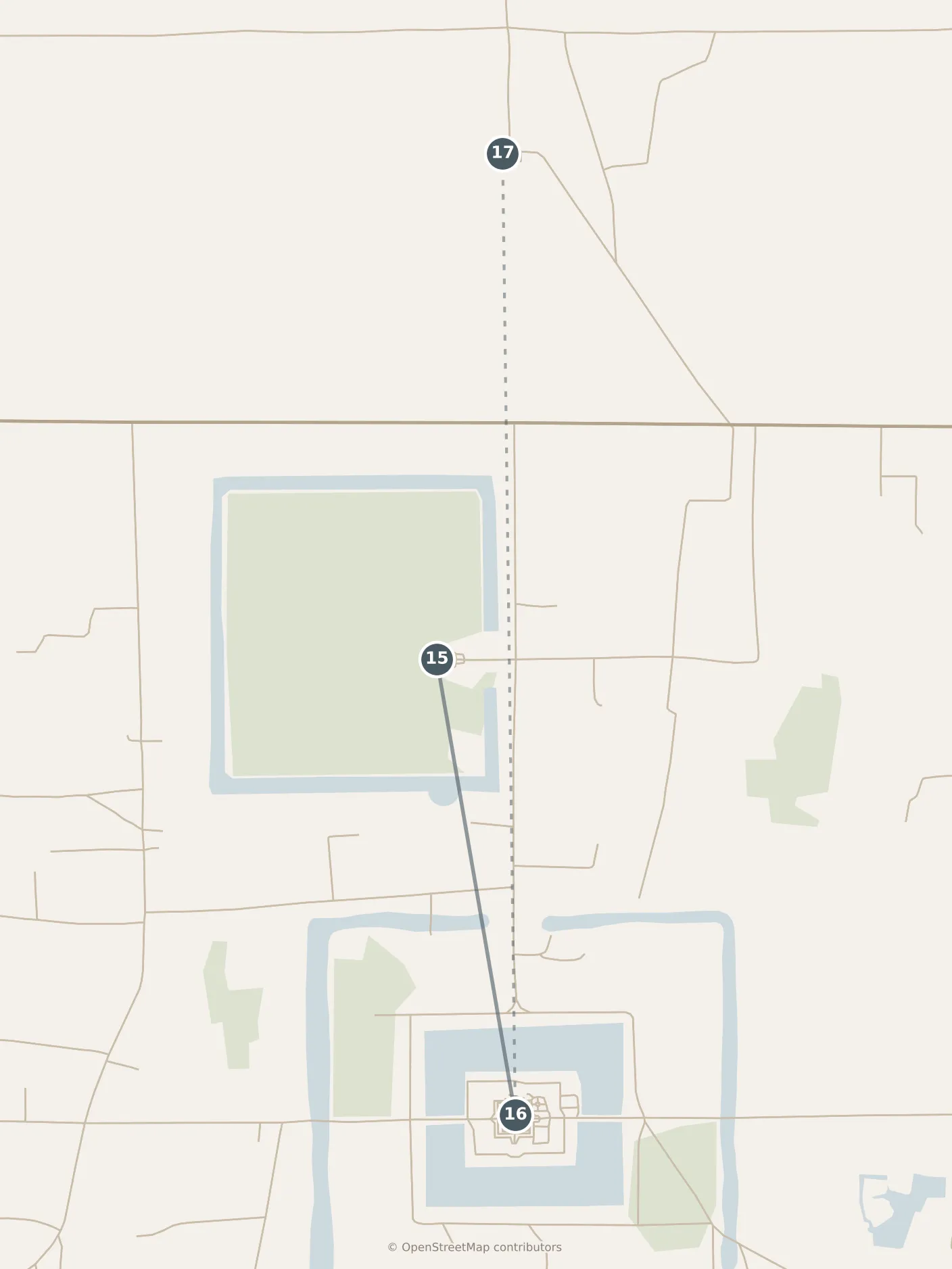
- With a third day · stops 15–17
- 15Preah Ko
- 16Bakong
- 17Lolei
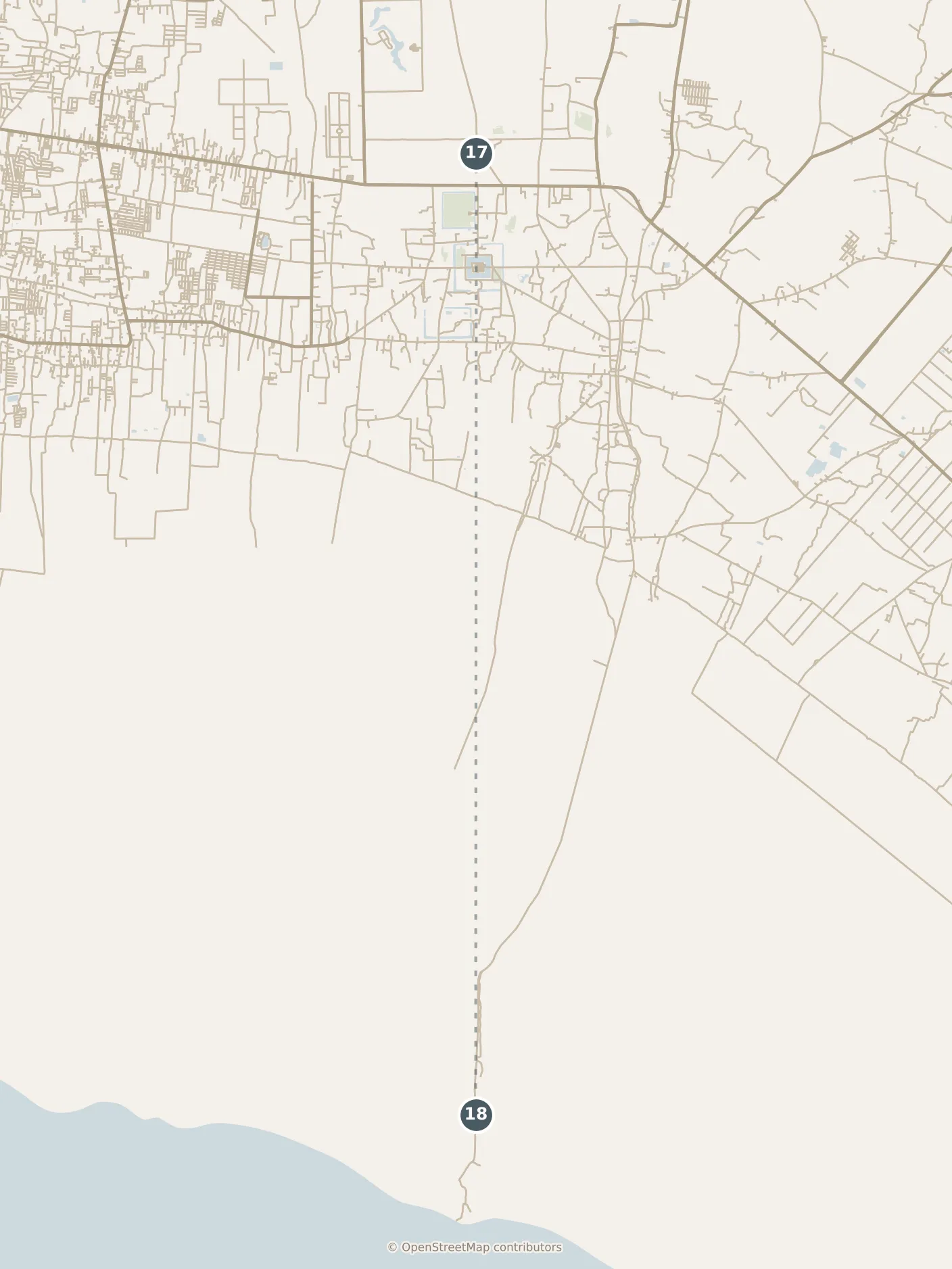
The leg out of the center: from stop 17 by taxi, not on foot.
- With a third day · stop 18
- 18Kampong Phluk
Put the third day in the middle, not at the end. Nothing inside days one and two moves if you do — each is a closed loop that starts and finishes in the town — and three things are gained. The two early starts stop being consecutive, which matters more than it sounds after a half past four departure. The long drive out to Banteay Srei stops landing on a tired body, and that drive is the part of day two that punishes fatigue. And the day you fly out stays free, which it cannot be if the lake is on it. The pass allows this without any argument: the three days are used inside a longer window, so a rest day between them costs nothing at all.
The one practical consequence is the vehicle. Agree all three days with one driver as three days, not as three separate hires — the third day below is a different and longer road from the other two, out east and then south, and it is the one a driver quoting a standard temple rate has not priced.
What the third day is for is the two things days one and two cannot give you: the century before Angkor, and the water the whole civilization was built on.
Leave at half past seven — no earlier, because nothing here opens at five and the light does not matter this morning — and drive thirty minutes east on National Road 6 to the group at Roluos, thirteen kilometers out. This was Hariharalaya, the capital before Angkor existed, and everything in it predates the oldest thing on days one and two by sixty years or more. It is inside the pass, so it costs nothing extra.
Preah Ko, forty minutes, is six brick towers standing on a single low terrace, built in 879 for the king’s ancestors, with three stone Nandi bulls kneeling in front of them facing in. What survives is the plaster carving on the brick and the sandstone lintels, and they are the best early work in the country — this is where the vocabulary that ends at Angkor Wat starts. Then walk, rather than ride: it is under a kilometer south to Bakong on a flat lane through village and paddy, about seventeen minutes, and the walk is half the reason to come out here.
Bakong, an hour, is the first sandstone temple mountain the Khmer built, finished in 881, and it is the prototype of everything after it — five stepping terraces inside a broad moat, elephants at the corners of the lower ones, a single tower on top. Standing on it, Angkor Wat two centuries later stops looking like an invention. A working monastery occupies part of the enclosure, so keep to the paths past it, take your shoes off if you go into the modern hall, and if you are a woman do not hand anything directly to a monk — pass it to a layman or set it down. That is ordinary courtesy here rather than an obscure rule, and it applies again at the last stop of the morning.
Five minutes by road, Lolei takes twenty-five: four brick towers on what used to be an island in a reservoir, now high and dry in the grounds of a working pagoda with a school in it. Its doorframes carry long inscriptions in Sanskrit, among the best preserved anywhere in the country. It is the least impressive of the three and the most alive.
Back in the town by eleven. The morning is three and a half hours door to door, of which just over two are inside the temples. The three and a half hours that follow are rest, and deliberately: what comes next is four hours of road and boat with no shade on any of it. If you would rather spend them, they are the only unhurried block in three days, and the Angkor National Museum is the one indoor thing this itinerary names.
Then the afternoon, and this is the half that is timed to the light. The Kampong Phluk stilt villages sit on the floodplain of the Tonlé Sap, some thirty kilometers out by road, an hour each way; the houses stand on legs six to ten meters high, which look absurd in March and exactly right in October, and the boat runs out from the village through a flooded forest to open water. Two hours on the water is the right amount. Count backwards from your month’s sunset — an hour out, two hours on the boat, an hour back — so leave the town three hours before it goes down, which is about half past two in November and about half past three at midsummer, and you finish on the last of the light with the birds coming in.
Three honest things about it. The boat is arranged at the village rather than booked in advance, and it is a separate ticket from the Angkor Pass, which does not cover the lake at all. It is charged per person and in cash on top of the vehicle — twenty-five US dollars a head in 2026 — and it is the charge a driver quoting for the afternoon most often leaves out, so agree who is paying for what before you leave the town rather than an hour out on the floodplain. And the water decides whether this is worth doing: from about February to June the lake retreats, the channel out from the village silts up and the boats may not run from there at all, so the season, not the day, is what to check. Of the three villages sold from the town, this is the middle one. Chong Kneas is the nearest and the one to avoid, being a short ride through a line of other boats; Kampong Khleang is furthest, largest and the better of the three if you are willing to give the whole day to it and drop Roluos.
Local tip. Do the temples in the morning and the water in the afternoon, never the other way round. The boat is the only stop on this day whose hour is set by the light, and everything else here will take whatever time is left over. Reversing them puts you at Roluos in the last hour of a day you have already spent on a boat, which is when the brick stops being interesting.
If the lake is out of season, the third day still works and it changes shape rather than disappearing: give the whole day to Roluos in the morning and Beng Mealea in the afternoon, an unrestored twelfth-century temple collapsed into forest some sixty-five kilometers east, which is about two and a half hours of driving for two hours on site and is worth it precisely because nothing has been put back. It is covered by the Angkor Pass, but it does need a car rather than a tuk-tuk — that is a long way to sit in the open.
The other dry-season substitute is much closer and does not belong on this day at all. Kbal Spean is upstream of Banteay Srei, a riverbed carved with hundreds of lingas and lying under running water, and it is a hot uphill walk of a kilometer and a half each way that shuts earlier in the day than anything else in the park. So it wants a morning, and the only morning it can have is day two’s. Concretely: go straight on from Banteay Srei rather than turning back, twenty-five minutes further north, allow two hours there including the walk, and be leaving by about eleven. Paying for it means dropping both Banteay Samré and the East Mebon, and even then it adds the better part of an hour to day two and puts you back in the town nearer half past five than half past four — so the evening show either moves or does not get booked.
Practicalities
Buy the Angkor Pass before day one, not on the morning of it. Angkor Enterprise sells it online and at the ticket center on Road 60; buying it there at five in the morning means a detour in the dark before the day has started, and it is the commonest way the first hour of this itinerary is lost. Buy it the afternoon before instead, and note the mechanism that makes that free: a pass issued late in the day admits you to the park that same evening without counting as one of its days. Your photograph is taken for it, so it is yours and nobody else’s. Buy the three-day version. It is cheaper than two single days, its three days need not be consecutive, and it covers Roluos on the third day as well as everything in the park.
That is the only thing on this itinerary that must be bought ahead of time. Every temple on all three days is walk-up on the pass, and so is the lake boat, which is arranged at the village on the afternoon you turn up and is a separate ticket the pass does not cover. One thing is not compulsory and should still be booked early because it sells out: the circus on the second evening, through its own box office or its own site, ideally on the day you arrive.
The calendar that governs this trip is not a week. Nothing on days one or two closes on a weekday, because archaeological sites do not, so the day of the week you arrive is very nearly irrelevant — which is unusual enough to be worth saying, since it is the first thing most people check. What actually rearranges a trip here are three things, and not one of them is a weekday — two of them do not sit cleanly on the Gregorian calendar at all:
- The water. Everything about the third day, and a good deal about Neak Pean and the moats on the other two, depends on the level of the Tonlé Sap, which peaks late in and just after the wet season and bottoms out in the spring. This is a season, not a date.
- Khmer New Year, three days in the middle of April, called Choul Chnam Thmey. It is reckoned on the Khmer calendar, so the exact days move by one or two and are worth looking up rather than assuming; the season it falls in never moves. The park fills with Cambodian families, the town is fully booked and expensive, and it lands in the hottest weeks of the year. It is also the one week when Angkor is a Cambodian festival rather than a foreign attraction, which is a reason to come as much as a reason to avoid.
- Pchum Ben, fifteen days in September or October, of which the last three are public holidays. It also moves. The temples stay open; what changes is that the town’s own pagodas are full from before dawn and a good deal in the center closes for two or three days. The third day is the exception, and it is worth knowing which way round: Bakong and Lolei are working pagodas as well as archaeological sites, so that is the one morning of this itinerary that walks into a ceremony rather than past one. Go — but keep to the paths, stay out of the halls while offerings are being made, and photograph nobody.
Look up those two festivals for your year before you book, and look up nothing at all about weekdays. The single exception is the one indoor stop this article names: the Angkor National Museum, on Charles de Gaulle Road about a kilometer and a half north of Psar Chas, is privately run and is therefore the only thing here that could keep a closing day of its own — check that one thing before you make it the answer to a wet afternoon.
Cutting, which is the thing you are more likely to need than adding. If day one runs late, three stops go and they go in this order: the Terrace of the Leper King first, because the same wall continues and you have already walked its front; then Phimeanakas, which is a ruined platform in an empty compound; then the Baphuon. Together those three are close to an hour and three-quarters of the morning. Those minutes stay in the morning — they buy a longer Angkor Wat or an earlier escape from the heat, and they cannot be given to Ta Prohm, whose four o’clock start is fixed by the light and by the gates. Do not cut the Bayon under any circumstances; it is the second reason the day exists.
If day two runs late, cut Banteay Samré. It is the least famous stop, it is four kilometers off the ring, and dropping it releases fifty minutes that go straight into Preah Khan, which is the one temple on that day large enough to absorb them. After that, Ta Som. Do not cut Banteay Srei, which is the entire reason for driving thirty-seven kilometers, and do not cut Preah Khan.
Rain, if you are here between June and October. It arrives as one heavy fall in the afternoon rather than as a wet day, and it lands squarely on day one’s four o’clock temple. Ta Prohm is genuinely better in it, being the only stop under trees — but the sandstone and the laterite go slick and there are unrailed steps, so add half an hour and take the outer galleries rather than the interior scrambles. If it is coming down hard enough that you would rather not, the replacement is the Angkor National Museum above: indoors, air-conditioned, in the town rather than twelve kilometers out of it, and worth an hour and a half — so the swap hands you back the hour on the road and all of the walking. That leaves Ta Prohm unvisited, and the place it goes is the end of day two, fifteen minutes south-east of Preah Khan on the way home: it costs Preah Khan nothing, and it returns you to the town at dusk rather than at teatime, which is the hour and a quarter you were going to spend washing the dust off before the circus. It buys a shorter Ta Prohm than day one’s, though. You are through the gate around twenty past four and the park’s temples stop admitting well before the sky goes dark, so take an hour, the outer galleries, and not the interior scrambles.
If you want a sunset on day two after all, here is what it actually costs. It is not a cut, it is a wait, which is why the itinerary above does not do it. Stay at Preah Khan for the full hour and forty, then drive twenty minutes east along the ring road to Pre Rup — a tenth-century brick temple whose three steep tiers are the only raised viewpoint anywhere near the day’s route — and you will arrive between an hour and a good two hours before the sun goes down, depending on the month, with nothing to do in the meantime and no shade on the top tier. Check the gate hour for Pre Rup for the year you are traveling before you commit the drive, because that hour is the whole idea: several of the park’s temples stop admitting earlier than the sky goes dark, and arriving to a closed gate after twenty minutes of driving is the worst version of this. Phnom Bakheng, which is what the town sells for sunset, is the same wait with a hill climb and a crowd on it. The alternative that costs nothing is to take the sunset on day one instead, from the tuk-tuk on the way back from Ta Prohm, which in November is happening anyway.
Moving between the stops this article names. Days one and two are done in a hired tuk-tuk from first thing to last, agreed the night before with the route named — including the five o’clock start on day one and the Banteay Srei road on day two, which is longer than a driver expects. Within the walled city on day one you are on foot: the Bayon to the Baphuon is eight minutes, the Baphuon to Phimeanakas four, Phimeanakas to the Terrace of the Elephants five or six, and the two terraces run into each other. That is a one-way walk of about a kilometer and a half, so before you get out at the Bayon agree with the driver that he collects you at the far end, by the Terrace of the Leper King, and not where he dropped you: among a parking lot of near-identical tuk-tuks, sorting that out afterwards is how the hottest end of a morning loses twenty minutes. Nothing else on either day is walked between stops. The two long stretches on your own legs are inside places rather than between them — the axis at Preah Khan, and the boardwalk out to Neak Pean, which is the one that catches people out because it is three hundred and fifty meters of full sun each way with no shade at either end.


.jpg)
.jpg)
.jpg)
