Salvador in one day: the Pelourinho in the morning, Barra for the light

Last updated 4 August 2026
Overview
Salvador does not behave like a compact old town, and one day here is a choice between two places rather than a tour of ten. The historic core sits on the bluff of the Cidade Alta and holds almost everything that is four hundred years old; Barra sits five kilometers away on the point where the Baía de Todos os Santos meets the Atlantic, and holds the water and the evening. This day gives the morning to the first and the second half to the second, and crosses between the two exactly once, by car, because that crossing is not a walk and is not on the metrô.
What a single day costs you is the coast: Rio Vermelho and its evening stalls, the beaches past Barra, the pilgrimage church out on the Itapagipe peninsula. Give any of them an hour and you have bought it with the morning, which is the part of this city no photograph replaces.
One subtraction has been made for you, and it is a large one. The Igreja de São Francisco — the gold interior that every account of Salvador is built around — has been shut since February 2025, when part of the nave ceiling came down during visiting hours and killed a visitor. The restoration is a long one and has been discussed in terms of years rather than months. Check what has reopened before you travel, and then plan the day so that the answer does not change it: the morning below works either way, and the church is a bonus if it is back rather than a hole if it is not.
The day is anchored at the far end, by the light. The sun goes down here between about a quarter past five in late May and a little after six in January, and that is the entire year’s swing — under an hour, which is what sitting thirteen degrees from the equator buys you, and why one sentence covers every month. Everything above the beach comes to about six hours of looking, eating and walking, and the beach itself wants another hour and a half before the light goes: seven and a half in all. Count that back from your month’s sunset and you get a start between about a quarter to ten in May and half past ten in January — later than the doors open, and the gap is the point. Begin at nine instead and you are carrying an hour of slack, which on this particular route you will spend.
That sum measures the time you spend inside the places and nothing else. The thing it does not measure here is the car: four kilometers of coast road between the lower city and Barra, whose length is decided by the traffic rather than by the distance, and the late afternoon is when it decides badly. If your day falls in May, when the light goes earliest, the beach is the part that shortens.
The left-luggage offices in this city are at the airport and the bus station, neither of them anywhere near this route, and the shape of the day matters more than that anyway: it starts in the upper city and ends five kilometers away on a seafront, so it never comes back to where it began. The last two stops are a beach and an open point above the sea, and a bag rules the first of them out: you cannot leave one on the sand at Porto da Barra while you swim, and the hour and a half in the water is what the afternoon is for. Carrying one, cut the swim and spend the hour and a half you get back in the upper city instead — the museum and the three churches absorb it easily — then make the crossing late, walk the seafront to the point, and stand on the seawall with the bag at your feet, which is the one of the two stops it does not spoil. The morning is unaffected: nothing above asks you to put anything down. And in a city where the city guide’s advice about carrying little is simply the local norm, the bag is also what makes you the visible one.
The day

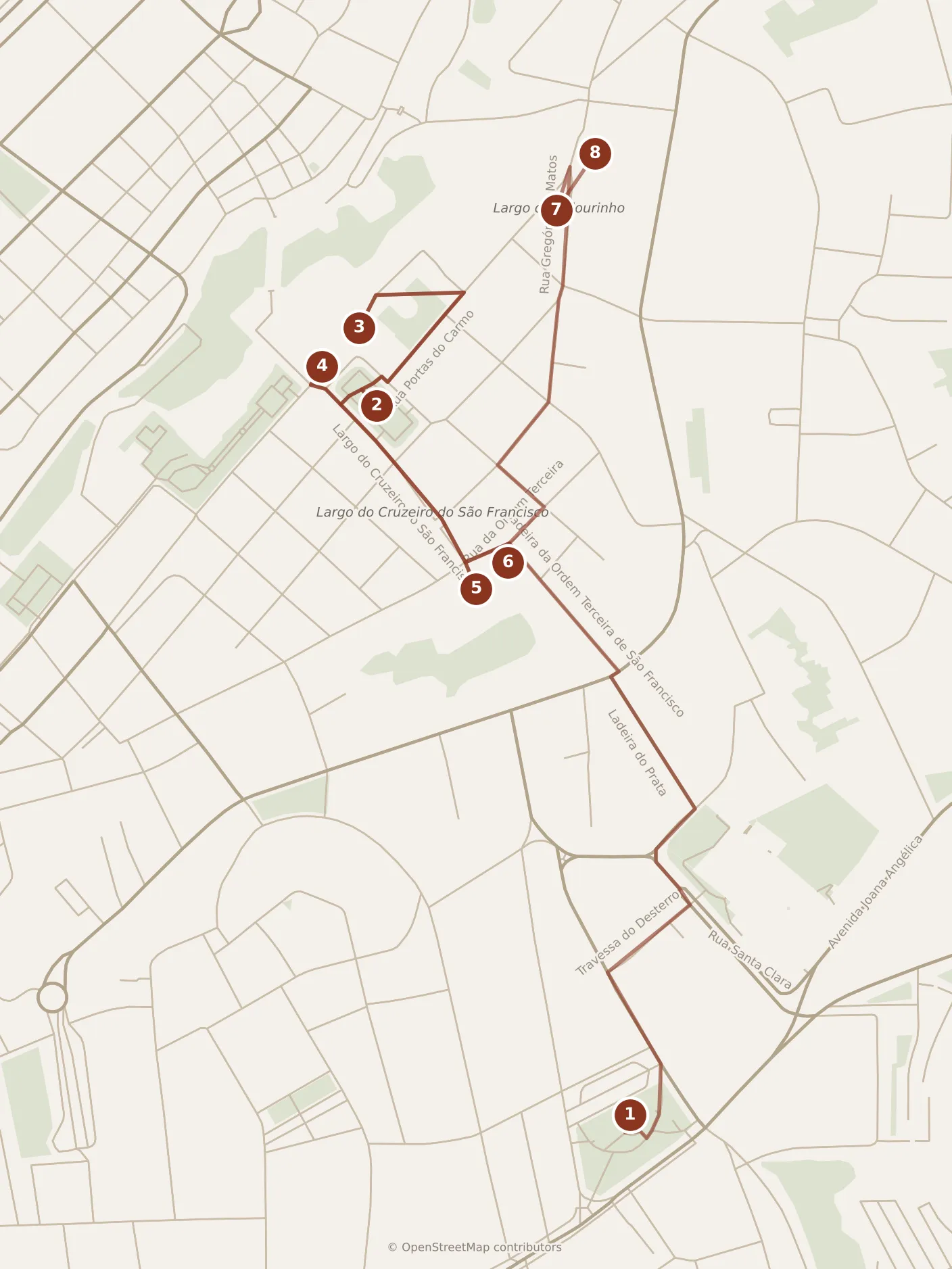
- Morning
- 1Campo da Pólvora
- 2Terreiro de Jesus
- 3Museu Afro-Brasileiro
- 4Catedral Basílica de Salvador
- 5Igreja de São Francisco
- 6Igreja da Ordem Terceira de São Francisco
- 7Largo do Pelourinho
- 8Igreja de Nossa Senhora do Rosário dos Pretos
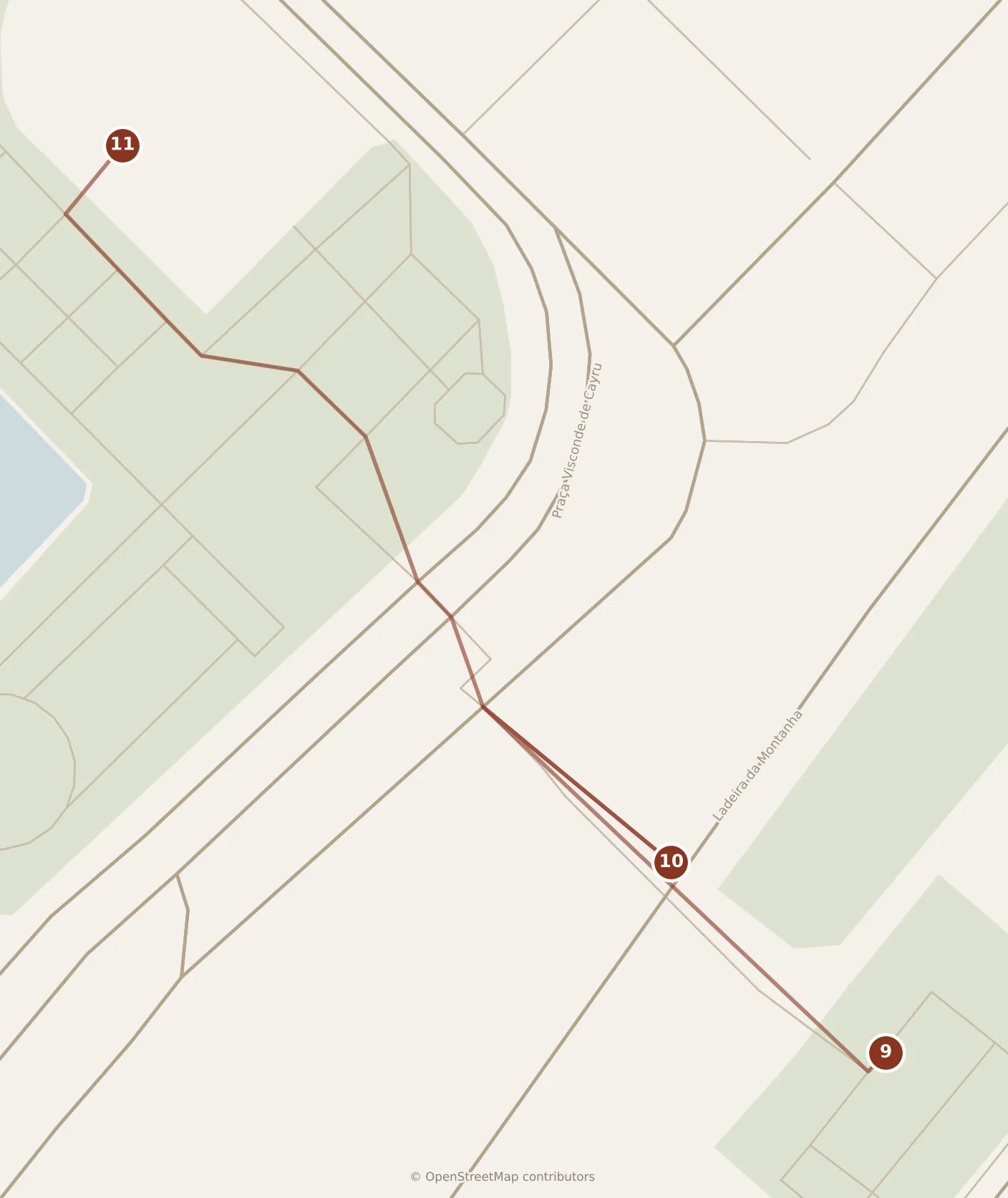
- Afternoon
- 9Praça Tomé de Souza
- 10Elevador Lacerda
- 11Mercado Modelo
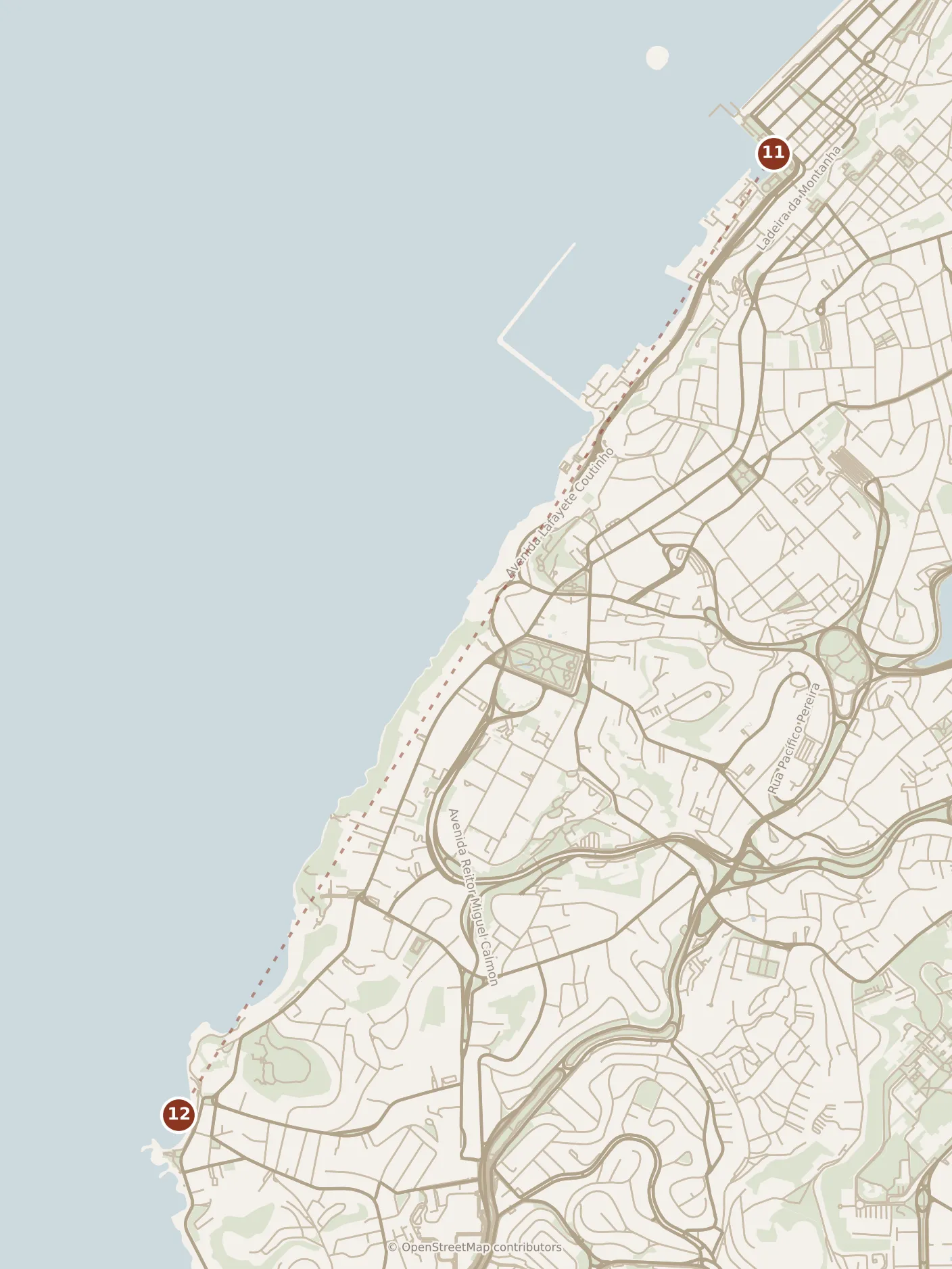
The leg out of the center: from stop 11 by taxi, not on foot.
- Afternoon
- 12Porto da Barra
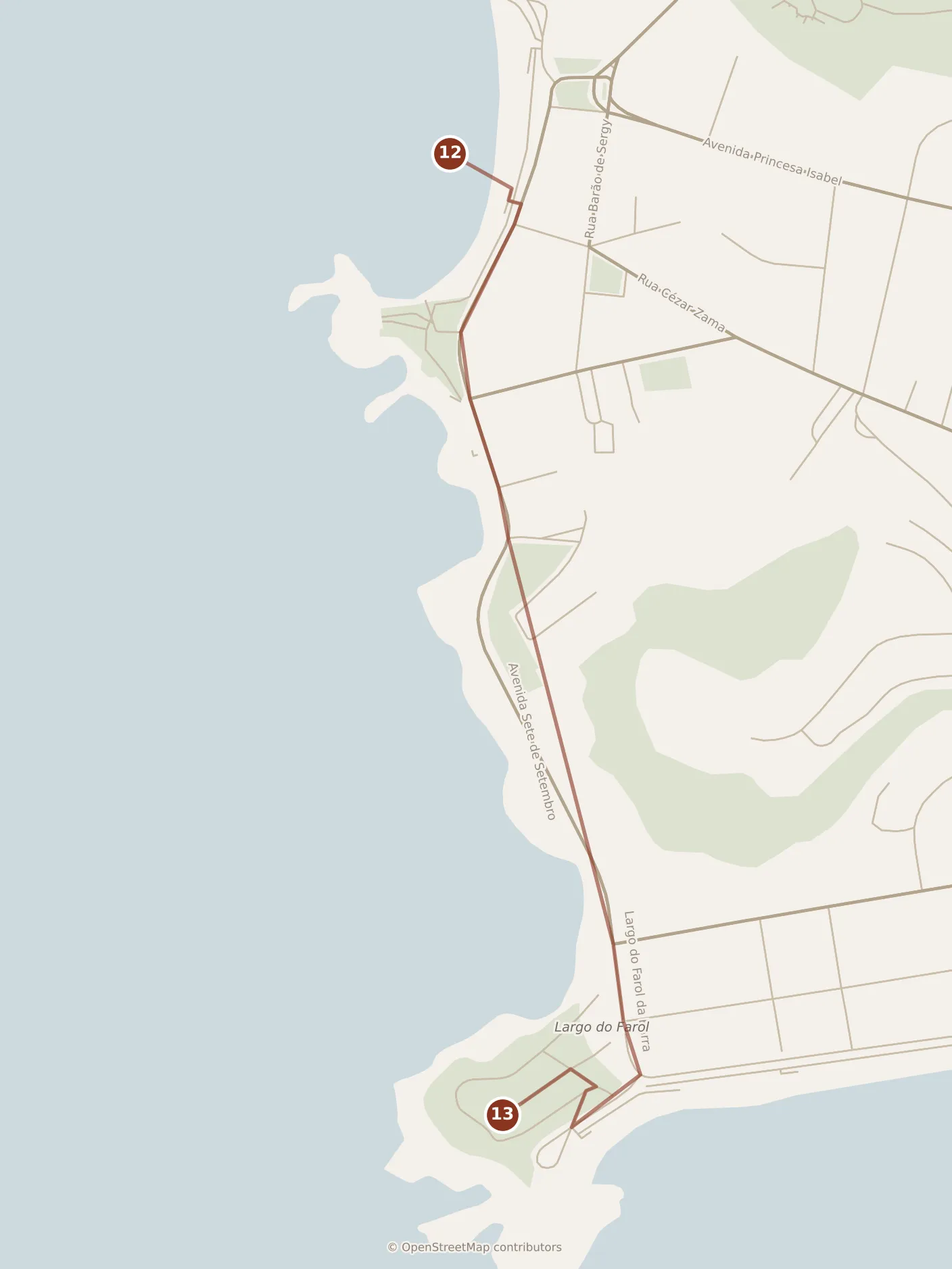
- Evening
- 13Farol da Barra
Morning
The metrô does not serve the historic center, but it comes close: Line 1 ends at Lapa and the stop before it is Campo da Pólvora, from which it is thirteen minutes on foot north into the old town. It is the one walk in this day that most people replace with an app car, and there is no shame in it.
The three interiors the morning is counted from — the museum on the square, the cathedral and the friars’ church — admitted no one before nine in 2026, so nine is the earliest this day can begin, and the count in the overview is built on starting there rather than at the later hour it strictly needs. The cathedral is the exception to watch: it opened later on a Monday, and later still on a Sunday, and on those two days the morning is built back from its door instead of from nine. If you find any of these has moved, build the morning back from the new hour and the rest of the day slides with it.
Start on Terreiro de Jesus, the paved square that three church fronts look onto at once. On its north side, in the long building that was the country’s first medical faculty, is the Museu Afro-Brasileiro. Give it an hour, and give most of that hour to one room: twenty-seven cedar panels carved by Carybé, one for each of the orixás of Bahian Candomblé, cut deep and hung together so that the whole religion is in front of you at once. The ethnographic cases are good and they are not what you came for; if you are short, walk them at a pace and go back to the panels.
The Catedral Basílica de Salvador is a minute away across the same square, and it is worth half an hour. It was the Jesuit college’s church — begun in 1657, consecrated in 1672 — and it is faced inside and out with pale limestone quarried in Portugal and shipped across expressly for the building, which is why it looks like nothing else around it. Thirteen altars in gilded carving, a sacristy tiled to head height, and set in the floor the tomb slab of Mem de Sá, who governed the colony from here.
Five minutes south-east is the Largo do Cruzeiro de São Francisco, where the closed Igreja de São Francisco stands behind its hoardings and the Igreja da Ordem Terceira de São Francisco stands beside it, open. Give it forty-five minutes. Its front is the reason: a wall of carved sedimentary stone crowded with saints, angels, crowns and scrollwork, in a Spanish idiom that has no sibling in Brazil. It spent the nineteenth century under plaster because the taste had changed, and it was found again in 1932 by an electrician who hit it with a hammer while fitting lights. Inside, the two rooms to see are the order’s meeting room and the chamber of dressed saints in their neoclassical niches.
Local tip. The square and the carved front cost nothing and are the photograph. What has a ticket is the interior of the Ordem Terceira church — and with the gold church next door shut, that ticket is the one worth buying, because it is now the only friars’ interior on this street a visitor can walk into.
Six minutes north brings you to the Largo do Pelourinho, the sloping cobbled square of pastel façades the city is photographed from, and at its foot the Igreja de Nossa Senhora do Rosário dos Pretos, built over decades by a brotherhood of enslaved and freed Africans who were not admitted to the churches above. Forty minutes covers both. It is the right last thing of the morning because it answers the first: the panels explain what survived, and this explains where it had to survive.
Afternoon
Eat before you go down. The upper city is where the lunch is, and the Bahian dish to have sitting down is moqueca; acarajé is an afternoon and evening thing rather than a sit-down lunch.
Twelve minutes south-west across Praça da Sé is Praça Tomé de Souza, the government square, and the reason to stand on it is the parapet at its far edge: the whole bay opens below you, container cranes and ferry wakes and the low green hills on the other side. Fifteen minutes.
The Elevador Lacerda goes down from the same parapet. It is public transport rather than a viewpoint — thirty seconds, and a line that moves — and it has been the way between the two cities since 1873, when its first tower was the tallest passenger elevator anywhere at sixty-three meters. The art-deco shaft you actually ride dates from 1930 and stands seventy-two.
It lands on Praça Cairu, and three minutes along the quay is the Mercado Modelo, the customs house of 1861 that has held a craft market since 1971. Twenty minutes is enough and the shopping is not the point: two hundred and sixty-odd stalls sell largely the same things, and what is worth the walk in is the building itself and the working waterfront outside it, where the bay ferries load. The sellers work hard and a polite no is understood.
Then the single crossing of the day. An app car from the market to Porto da Barra takes the coast road round the foot of the bluff — four kilometers, and the leg the count in the overview deliberately does not cover. Porto da Barra is the bay-side beach rather than the ocean one: it faces west into sheltered water, the swimming is calm, and it is small enough that it fills. An hour and a half here, in the water and then out of it, is the right amount with the light still high.
Evening
Fifteen minutes south along the seafront, past the ocean-facing sand, the promenade ends at the point and the Farol da Barra — a squat white lighthouse inside a low fort, at the exact corner where the bay stops and the open Atlantic begins. The light was first shown here in 1698 and the navy calls it the oldest in the Americas. This is the stop the day was built around: the sun sets into the mouth of the bay in front of it, the seawall fills up well before it does, and the walk along from the beach is the last thing you do with the light still up.
There is a small naval museum in the fort, the Museu Náutico da Bahia, and it keeps daytime hours rather than evening ones. It is a real trade rather than an extra: if you want it, it comes out of the hour and a half on the sand, not out of the sunset.
Getting away afterwards is a car, because Barra has no metrô. The buses along the coastal corridor run until about midnight, so the car is the comfortable answer rather than the only one. For a flight, an app car straight to the airport is the simple answer; if you would rather ride, it is a car to Lapa, Line 1 to Acesso Norte, then Line 2 to its terminus at Aeroporto, where a free shuttle covers the last stretch to the terminal.
Practicalities
Nothing on this day is booked in advance, which is unusual enough to say plainly. The four paid interiors — the museum, the cathedral, the Ordem Terceira church and the Rosário dos Pretos — were walk-up tickets in the five-to-ten-real range each in 2026, bought at the door, and the museum took cash and nothing else; everything else on the route is a square, a street, an elevator or a beach. The one thing this route needs that the city guide will not have told you is a working way to pay for a single car ride: the crossing to Barra is not walkable and not on the metrô, and it is the whole of this day’s transport. For how the metrô and the app cars work in general, the city guide has it.
The museum on Terreiro de Jesus is the one stop here that keeps university hours rather than tourist hours, and it is the stop most likely to be shut on your particular day — check that one thing before you set out. If it is closed, the morning is still three churches and three squares, and the carved front of the Ordem Terceira carries it; but the Carybé panels are the best interior in the historic center while São Francisco is out, so it is worth arranging your day around rather than hoping.
A Sunday changes the shape twice over. The churches give their mornings to mass and open to visitors late, so the nine o’clock start above does not hold and the whole count shifts with it; and the market by the quay keeps a shorter Sunday. Barra on a Sunday is busier and better for it, so the loss is the morning and not the evening. The church at the foot of the Largo do Pelourinho is the other one to check: it keeps a short Saturday, and a Saturday afternoon can find it shut.
If you have arrived by ship, the route reads the same but hinges the other way: the passenger terminal is about ten minutes on foot from the Mercado Modelo, so take the Elevador Lacerda up first thing, walk the morning as written, and come back down to the quay in the afternoon. Whether you then go on to Barra depends on your sailing time, and the drive back is the same coast road, in the direction the traffic is worst.
Everything in the historic center is within twelve minutes of the last thing, and most of it within five. The three long legs are all at the edges: thirteen minutes in from Campo da Pólvora at the start, the four-kilometer car ride at the end of the afternoon, and the fifteen minutes along the seafront to the Farol da Barra, which is the longest walk on the whole route. If the car ride is going to be slow, it is the beach that pays for it, not the light.


