Nice in two or three days: the old town, Cimiez, and a third day out along the coast to Villefranche

Last updated 5 October 2026
Overview
Nice is a two-day city that rewards being taken in the right order. The old town, the hill above it and the port beside it sit within a kilometer of each other, so the first day is one walk with a market at the start of it. The second day climbs to Cimiez, the residential hill north of the center where both of the city’s great painters are remembered, and comes back down to the sea for the long walk west along the front. A third day is best spent out of the city, ten minutes along the coast by train at Villefranche-sur-Mer — which is why the title says so.
Everything here is done on foot, with a tram ride at each end of day one if you want them, and one bus or one long downhill walk on day two. Nothing on the route needs booking ahead; what the days do need is the right weekday, and the market is the one that decides it.
The market on Cours Saleya, which day one is built around, is a food and flower market on every morning except Monday. On a Monday the same street fills with antiques and second-hand dealers instead, which is a different and perfectly good morning, but not the one described below. If your first day would fall on a Monday, swap the days — day two will take any weekday the museums allow, and Practicalities says how to check that.
Day one

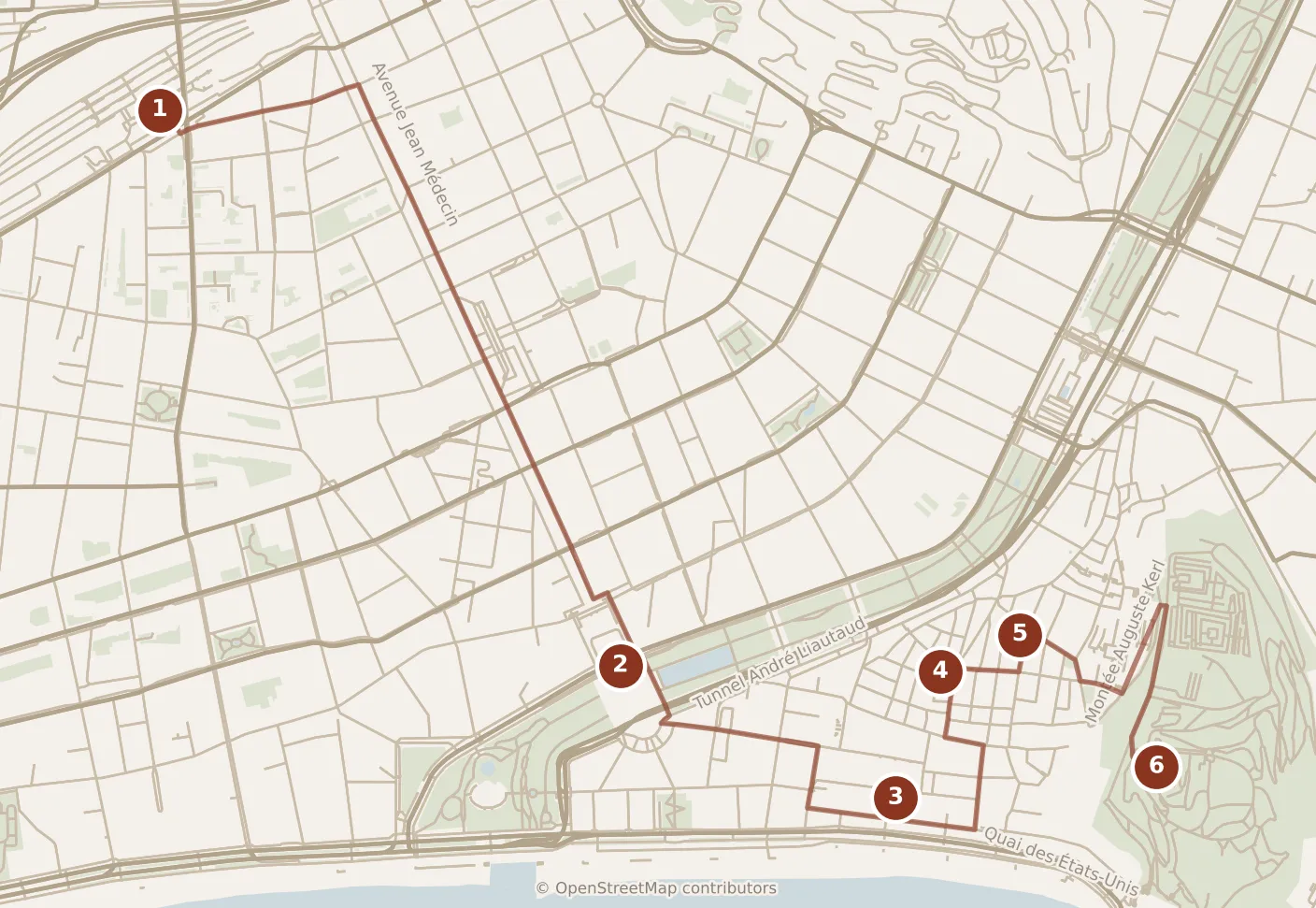
- Morning and afternoon
- 1Nice-Ville station
- 2Place Masséna
- 3Cours Saleya
- Place Charles-Félix — in the prose, not on the map
- 4Cathédrale Sainte-Réparate
- 5Palais Lascaris
- 6Castle Hill
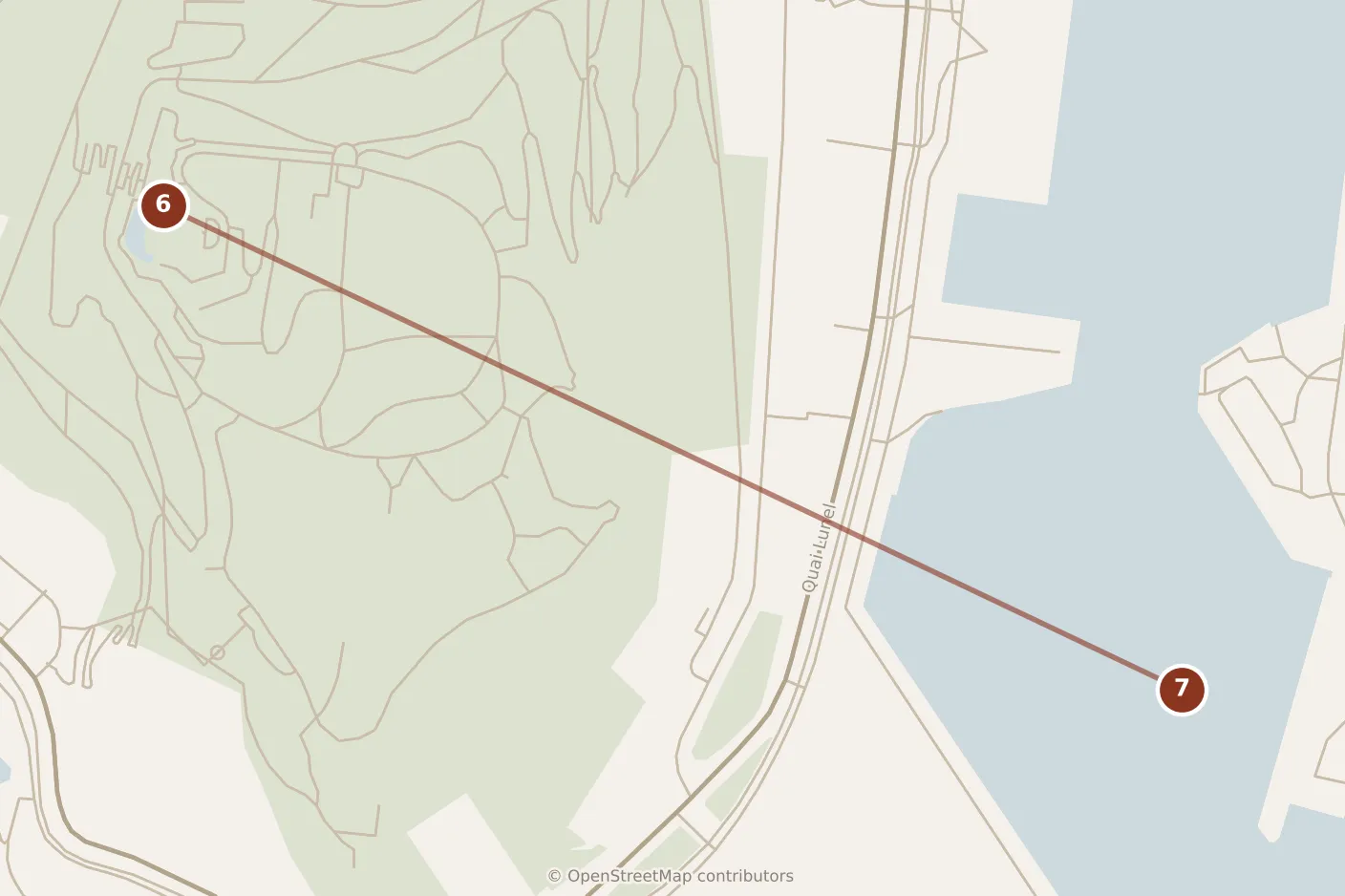
- Evening
- 7Port Lympia
Everything today is in the eastern half of the center, within a few minutes of the market, and the order follows the morning: the market first because it is only a market in the morning, the old town while it is cool, the hill after lunch, and the port for the evening.
Morning
From Nice-Ville station, the city’s main railway station, walk straight down Avenue Jean-Médecin to Place Masséna — about twenty-two minutes, flat and impossible to miss. If you would rather ride, tram line 1 runs down the same avenue from the Gare Thiers stop, a few minutes’ walk from the station, to the Masséna stop, two stops on. If you have come straight from the airport, tram line 2 runs from both terminals into the center; get off at Jean Médecin and either change to line 1 for one stop or walk the last ten minutes south. Either way, the fare is a Lignes d’Azur ticket from the machine at the stop, and the parent guide covers the rest of how the network is paid for.
Place Masséna is the hinge of the city: red-ochre arcades on two sides, a black-and-white paved floor, and the gardens of the covered river running off it. Give it ten minutes and go south-east into the old town; Cours Saleya is ten minutes on foot.
This is the stop the morning is built around, and the one moment today that does not wait. The food stalls set out early and pack up by early afternoon, and the flower stalls thin out after them, so work backwards: the market wants three-quarters of an hour, the walk from the station half an hour with the square, so reaching the station area by nine or a little after gives you the market at its fullest. Walk the length of it — flowers at one end, fruit, vegetables, olives and herbs along the rest — and eat the first socca of the trip standing up, the chickpea pancake baked on a wide, shallow metal tray and torn into pieces with black pepper.
At the east end of the market, Place Charles-Félix closes the street, and the tall yellow building across it is where Henri Matisse lived through the 1920s and 1930s, painting the light off this square from his windows. There is nothing to visit; give it a look, and remember it tomorrow.
Then into the lanes of Vieux Nice, five minutes north, to Place Rossetti and the Cathédrale Sainte-Réparate, a baroque church with a dome of glazed colored tiles. Twenty minutes inside is enough. Two minutes further along Rue Droite, the Palais Lascaris is a seventeenth-century aristocratic house with a painted staircase, frescoed ceilings and a collection of musical instruments — give it an hour, and give most of it to the staircase and the ceremonial rooms rather than to every case of instruments.
Lunch is in the old town: pissaladière, the onion tart with anchovies and black olives, or a pan bagnat if you would rather carry it up the hill.
Afternoon
Castle Hill — the Colline du Château — rises directly above the old town, and there is no castle on it: it was demolished in 1706 on the orders of Louis XIV, and what replaced it is a public park. From the lanes behind Palais Lascaris the stairs climb to the top in about ten minutes by the map, longer in practice because it is steps all the way. If climbing is not for today, there is an elevator from the seafront at the end of the Quai des États-Unis, beside the Tour Bellanda, which takes you most of the way up.
Give the hill an hour and a half. From the top you see the whole Baie des Anges curving west to the airport, and the port on the other side, and this is the view that explains the city’s shape in one look. There is an artificial waterfall from the nineteenth century and, on the northern slope, the old cemetery with its elaborate marble tombs, which is worth twenty minutes of the hour and a half.
Evening
Come down the eastern side of the hill to Port Lympia, eight minutes on foot from the top, plus the stairs. The port is an eighteenth-century basin lined with ochre and red façades, fishing boats at one end and ferries at the other, and it is quieter than the old town in the evening. Give it an hour on foot round the quays, then eat in the streets just behind it.
The day’s durations add up to about seven hours from Place Masséna to the port — the time spent at each stop plus the walks between them. That count does not include the climb itself, which is slower than its distance, or the market crowd at its densest, which can halve your pace along Cours Saleya. To get back, tram line 2 runs from the Port Lympia stop to Jean Médecin, where you change to line 1 for the station.
Local tip. If the day is running short, it is the Palais Lascaris that goes, not the hill: the view from Castle Hill is the thing the whole first day is building towards, and the old town lanes on the way up give you most of what the palace’s street can.
Day two

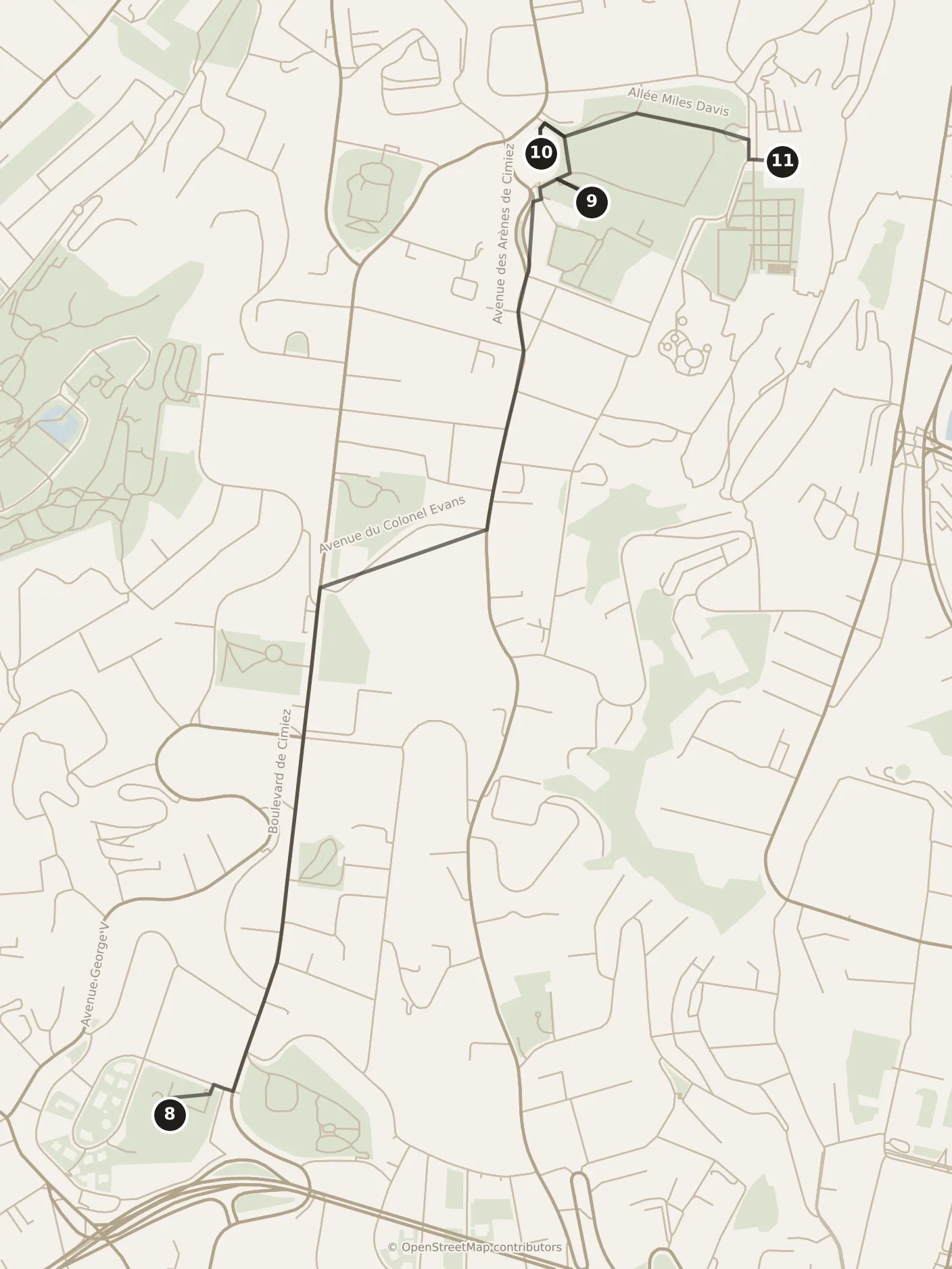
- Morning
- 8Musée national Marc Chagall
- 9Musée Matisse
- 10Arènes de Cimiez
- 11Monastère de Cimiez
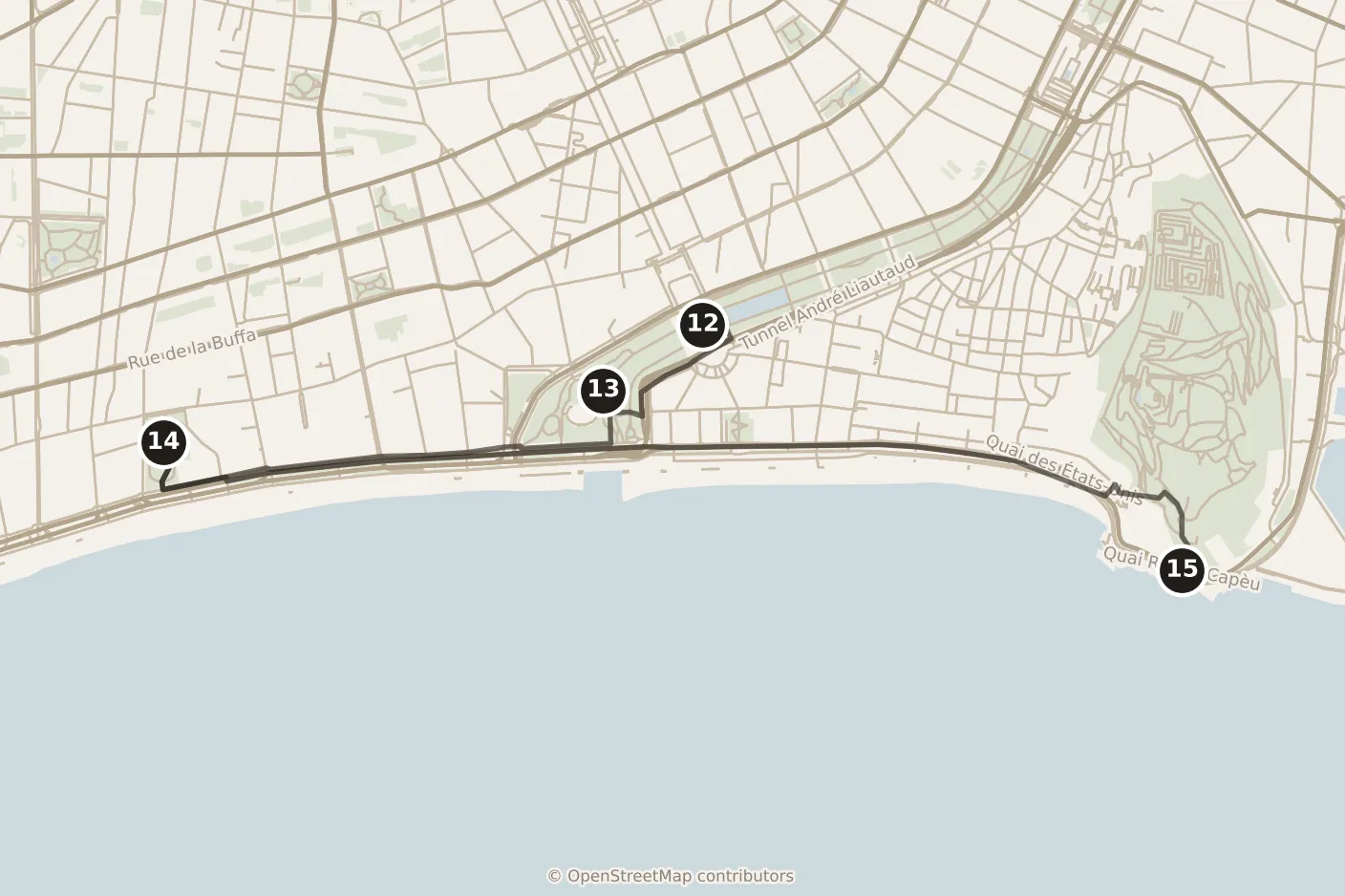
- Afternoon and evening
- 12Promenade du Paillon
- 13Jardin Albert Ier
- Promenade des Anglais — in the prose, not on the map
- 14Villa Masséna
- 15Rauba Capeù
Today climbs first and descends second: the museums of Cimiez in the morning, while your legs and the day are both fresh, then down to the sea for a long walk west and back along the front. The day has no hour it has to hit until the evening; the reason to start early is the climb, not a deadline.
Morning
From Nice-Ville station, the Musée national Marc Chagall is about fifteen minutes on foot, north-east and slightly uphill. The building was made for one cycle: the Message Biblique, seventeen large canvases from the Old Testament and the Song of Songs, which Chagall gave to the state and which hang in rooms built around them. There is also a small concert hall with his stained-glass windows, and a mosaic of Elijah reflected in a pool outside. Give it an hour and a half; it is a museum you see whole, and the Song of Songs rooms are the ones to keep for last.
From there it is a steady uphill walk along Boulevard de Cimiez to the top of the hill, about twenty-six minutes. The Musée Matisse is a red seventeenth-century villa standing in an olive grove. It holds work from every period of his life, including the large paper cut-outs of his last years and studies for the chapel he designed at Vence — the museum that answers what the windows over Place Charles-Félix began yesterday. Give it an hour and a quarter.
The Arènes de Cimiez are in the same park: the remains of the Roman town of Cemenelum, a small amphitheatre and the walls of the baths. Walk round them for twenty minutes; you do not need the separate archaeology museum unless the period is yours.
Seven minutes east, the Monastère de Cimiez is a Franciscan monastery with a terraced garden that looks down over the whole city to the sea. Beside it is the cemetery where Matisse and Raoul Dufy are buried; Matisse’s grave is signposted from the gate. Half an hour covers the garden, the church and the cemetery.
The morning comes to about five hours including the walks. Then come down: buses run down Boulevard de Cimiez to the center, or the walk is about fifty minutes, downhill all the way, to the gardens off Place Masséna.
Afternoon
The Promenade du Paillon runs along the line of the covered river, through the gardens beside Place Masséna — a park opened in 2013, with a shallow water mirror set with jets that children run through. It is where to sit for a while after a morning on foot, and where to eat a pan bagnat, the salade niçoise in a round loaf.
Then south-west through the Jardin Albert Ier, eight minutes, to the sea and the Promenade des Anglais, the seafront walk that runs west along the bay. It takes its name from the English winter residents who paid for the first path along the shore in the nineteenth century. Walk west on it, seventeen minutes, to the Villa Masséna, a Belle Époque villa built at the turn of the twentieth century and now the museum of the city’s history: the rooms are a winter resort’s idea of itself, and give them an hour. The garden in front, between the villa and the sea, is free.
If you would rather swim, the beaches along this stretch are pebble, not sand, and steep where they meet the water; shoes you can wear in the sea make the difference.
Evening
This is the one part of the day that waits for anything: the walk back east along the front, which wants the last of the light over the bay behind you. Sunset here runs from about five in December to a little after nine in late June; check your date and work backwards: the walk from Villa Masséna to the end of Cours Saleya is about half an hour along the sea, and Rauba Capeù, the point at the far end where the seafront turns under the cliff of Castle Hill, is twelve minutes further. Leave the villa about forty minutes before sunset and you are at the point as it goes down.
Dinner is back in Vieux Nice, two minutes from the point. The old town after dark is a different place from the one you crossed yesterday morning, and the market street is lined with tables instead of stalls.
Local tip. If the days fall so that you reach Cimiez on a Tuesday, when both museums are shut, still climb the hill: the monastery garden and the arena cost nothing, and they are half of what the morning is for.
With a third day
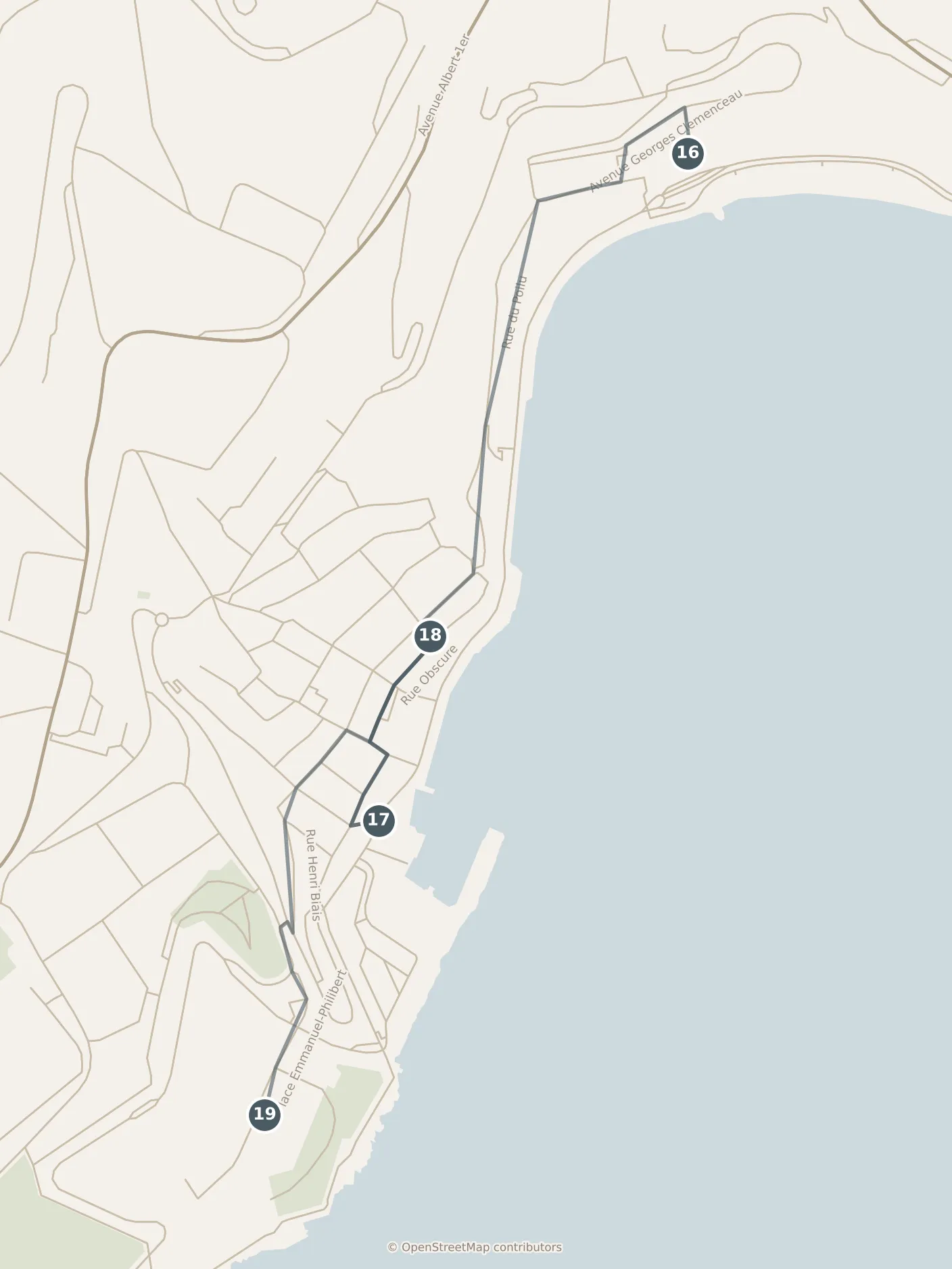
- With a third day
- 16Villefranche-sur-Mer station
- 17Chapelle Saint-Pierre
- 18Rue Obscure
- 19Citadelle Saint-Elme
Give the third day to Villefranche-sur-Mer, and give it the morning. It is a small town on a deep natural harbor on the next bay east, and it is ten minutes away by train.
From Nice-Ville station, take a TER regional train on the coastal line towards Monaco and Ventimiglia; Villefranche-sur-Mer is the second stop, after Nice-Riquier. The ticket is bought from the machines in the station or in the SNCF Connect app. The station sits on the hillside directly above the water, so the whole town is downhill from it, and the walk to the harbor front is about five minutes.
On the quay, the Chapelle Saint-Pierre is a small fishermen’s chapel that Jean Cocteau painted in the 1950s, walls and ceiling, with scenes of the life of Peter and of the fishermen of this harbor. It is a single room and it takes a quarter of an hour, and it is the reason most people come; it keeps hours of its own, so check them before you build the morning on it.
Behind the quay, up the steps, the Rue Obscure is a street that runs under the houses for the length of a block — a covered medieval passage, dark even at midday, which once served as a shelter. Two minutes from its end, the Citadelle Saint-Elme is the sixteenth-century fortress that guarded the harbor; it now houses the town hall and small collections in its courtyards, and the ramparts are where to walk for the view back across the bay to Cap Ferrat. Give it three-quarters of an hour.
That is the morning, about three hours including the train. The afternoon is the one to keep slow: the long beach of the bay runs below the station, and swimming there is a better use of it than a second town. Or go back to Nice early, and give the afternoon to whichever of the two days was cut short — the hill on day one or the villa on day two.
If it rains, the trip loses most of its point, which is the water and the view of it; swap the third day for the half-day that suffered, and keep Villefranche for a clear morning.
Practicalities
Nothing on this route needs to be booked before you arrive. The museums sell tickets at the door, and the parks, the market, the hill, the monastery garden and the seafront are free.
What needs checking is the weekly closures, and here they are simple: all four museums on this route — the Musée Matisse, the Palais Lascaris, the Villa Masséna and the Musée national Marc Chagall — close on Tuesdays, and the Chagall also closes for a break at lunchtime. So day two must not be a Tuesday, and on a Tuesday day one the Palais Lascaris is shut: spend its hour longer on Castle Hill. Holiday closures are published by the city and by the Chagall museum.
The Cours Saleya rule is the one fixed point: day one wants a morning that is not a Monday. Day two takes any day but Tuesday, and the third day takes any day at all. The arrival that breaks the plan as written is a Sunday evening, which puts day one on the Monday; swap the first two days and it works.
Everything is walkable, and the long stretches are named above: twenty-six minutes uphill to the Matisse, fifty downhill back to the center if you skip the bus, and half an hour along the front in the evening. The transport passes and fares are in the parent guide.


