Nanjing in 2-3 Days: Tombs, Walls and the Old Quarter

Last updated 15 August 2026
Overview
Nanjing rewards two full days easily, and a third if you have it. The old quarter south of the center and the tombs on Purple Mountain to the east are different in kind — one is streets and gates you can walk between, the other is forest paths and stone avenues that ask for a bus between stops — so the two make natural halves of a trip rather than a list to work through in any order.
One thing decides the order below. Day two is built around Nanjing Museum, which keeps an unusual week: on Mondays it opens for the morning only, nine to noon, against full days the rest of the week. A Monday museum day therefore buys you three hours, not a day — if yours would fall on one, spend that day on Purple Mountain instead (none of the tombs or the temple there keep a weekly closure) and do the old quarter on whichever day is left. Nothing else here depends on the order.
Summers are long and famously oppressive; Nanjing is one of the cities nicknamed for the heat, and July and August are worth avoiding if you can choose. Spring and autumn are milder, and they’re when the walking below is actually comfortable, particularly the climbing on day two.
1912 Block — not on the walking map.
- Day one · Evening
- 1912 Block — in the prose, not on the map
Nanjing Massacre Memorial Hall — not on the walking map.
- With a third day
- 10Nanjing Massacre Memorial Hall
Day one

- Morning
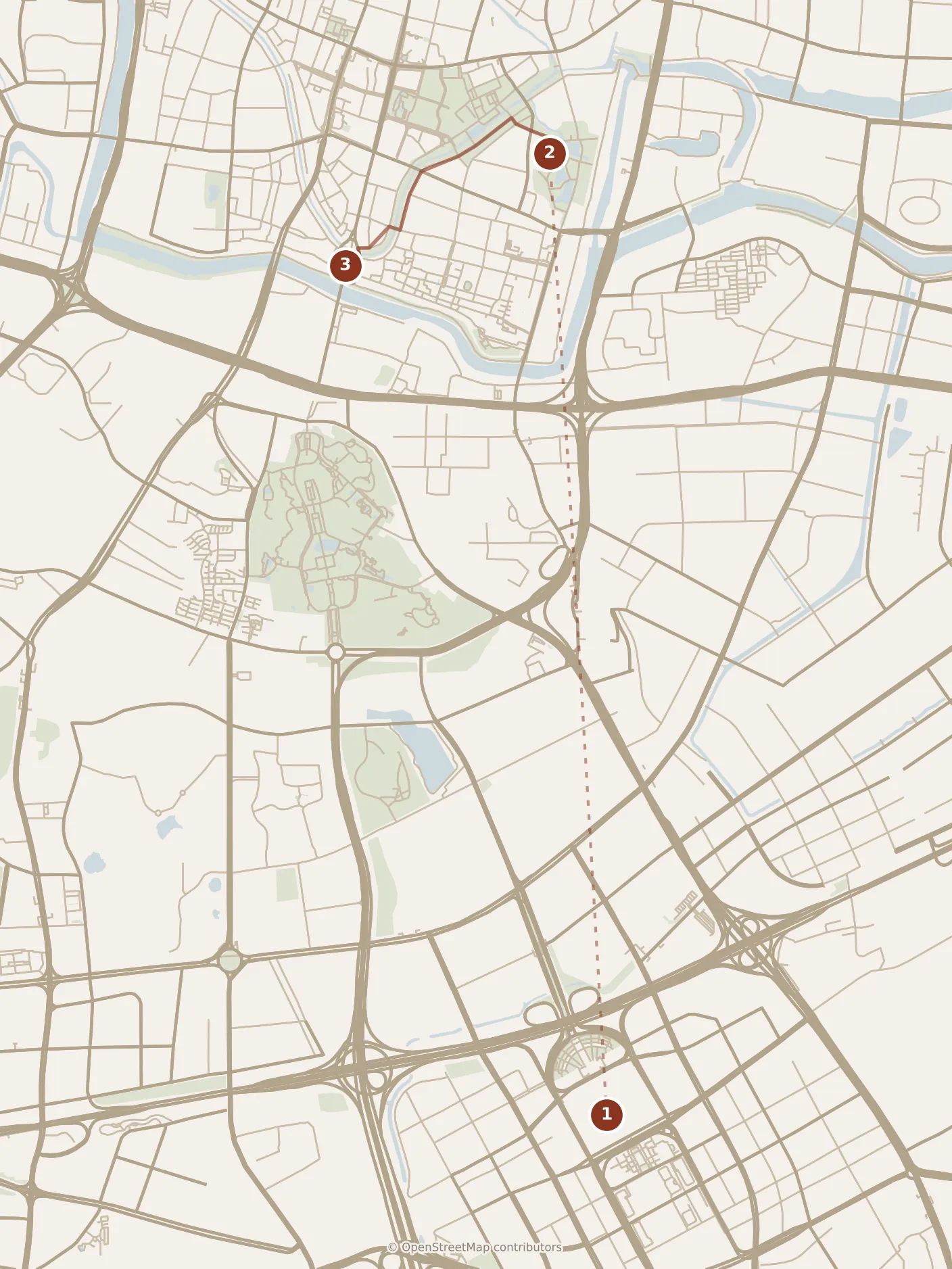
- 1Nanjing South Railway Station
- 2Confucius Temple
- 3Zhonghua Gate
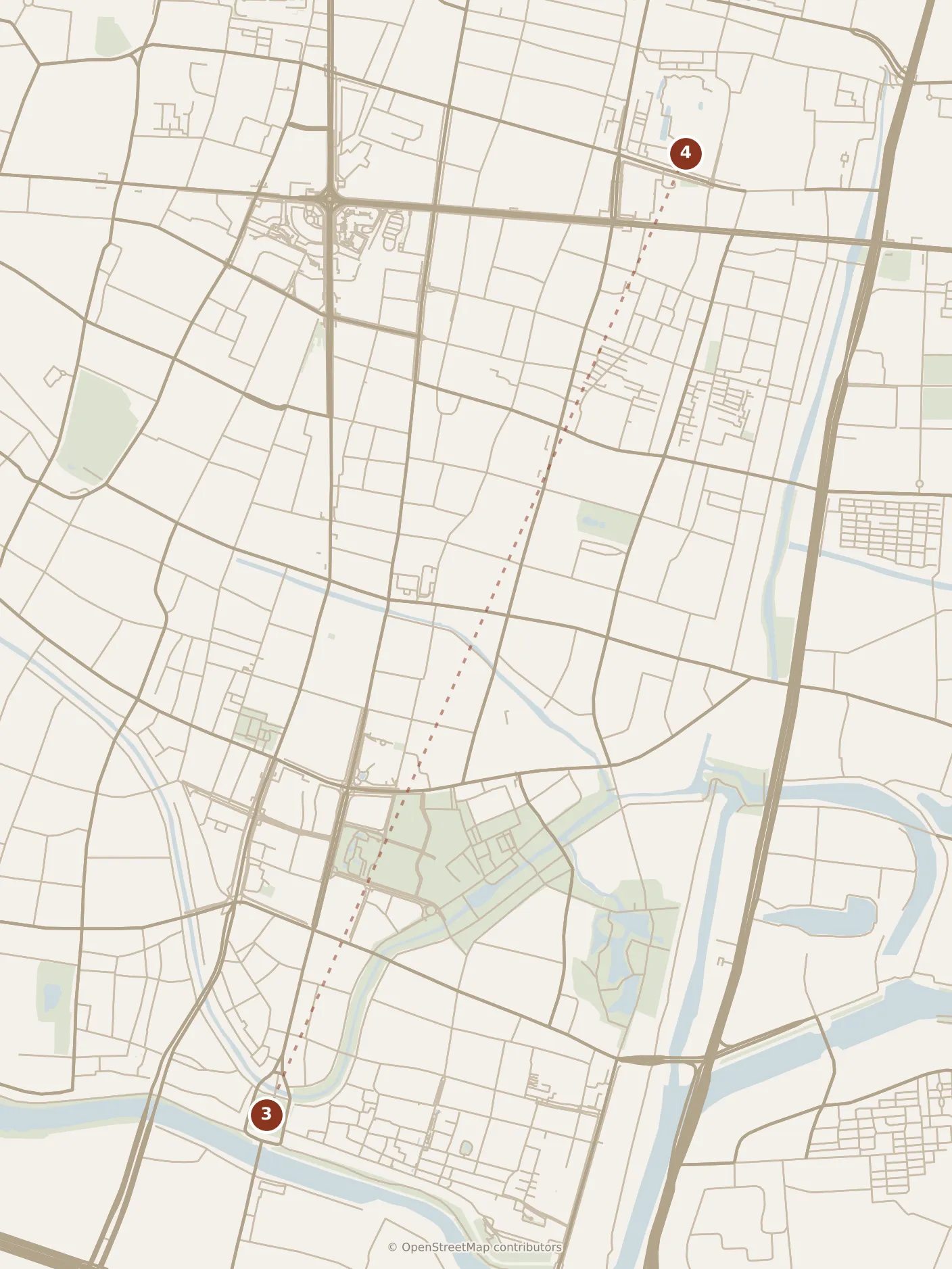
The leg out of the center: from stop 3 by metro, not on foot.
- Afternoon
- 4Presidential Palace
Everything today sits within the old walled city, in two clusters close enough to link on foot, with the busier of the two — government and nightlife — kept for the afternoon and evening.
Morning
From Nanjing South Railway Station, the metro (Line 1 covers this stretch) puts you in the old quarter in well under half an hour; get off near Confucius Temple and walk the last few minutes. Payment on the metro and the buses here is by QR code rather than a physical card: scan through Alipay or WeChat’s own transit function, and every ride for the rest of the trip works the same way — worth setting up before you leave the station.
The temple itself is a modest, much-rebuilt hall; what the area is actually for is the lanes behind it and the river they run along, Qinhuai River, lined with old shopfronts and the closest thing Nanjing has to a historic waterfront. Give the temple twenty minutes and the lanes another forty — this is somewhere to walk slowly rather than see quickly. Eat here rather than later: these lanes are where duck blood and vermicelli soup is a lunch rather than a snack, and it travels badly to anywhere fancier.
About twenty minutes’ walk south, Zhonghua Gate is the reason to leave the lanes at all: the most elaborate of the old city’s surviving gates, a fortress in its own right rather than a doorway, with barrel-vaulted chambers built into the walls either side that could hide troops out of sight until the gate itself was breached. Climb onto the ramparts for the view along the wall in both directions, and give the whole thing the better part of an hour.
Local tip. The vaulted chambers inside the gate are the reason to come, not the ramparts on top. If you only have twenty minutes, spend them in the vaults.
Afternoon
The metro carries you north to Presidential Palace, a large walled compound that changed hands with the country’s governments: a Ming prince’s residence first, then the palace of the Taiping Heavenly Kingdom, a Qing viceroy’s offices, and finally the seat of the Republic of China’s government from 1912 until the middle of the century. Halls, offices and a garden run back from the street in sequence, largely furnished as they were left, and the range of what the same walls have housed is the point more than any single room. Give it an hour and a half.
Evening
1912 Block, the restored block of the same era just north of the palace, is where the compound’s evening life carries on outside its walls — Republican-era façades now fronting bars and restaurants, loud enough after dark that you won’t need directions to it, only to leave the palace grounds and walk toward the noise.
Day two

- Morning
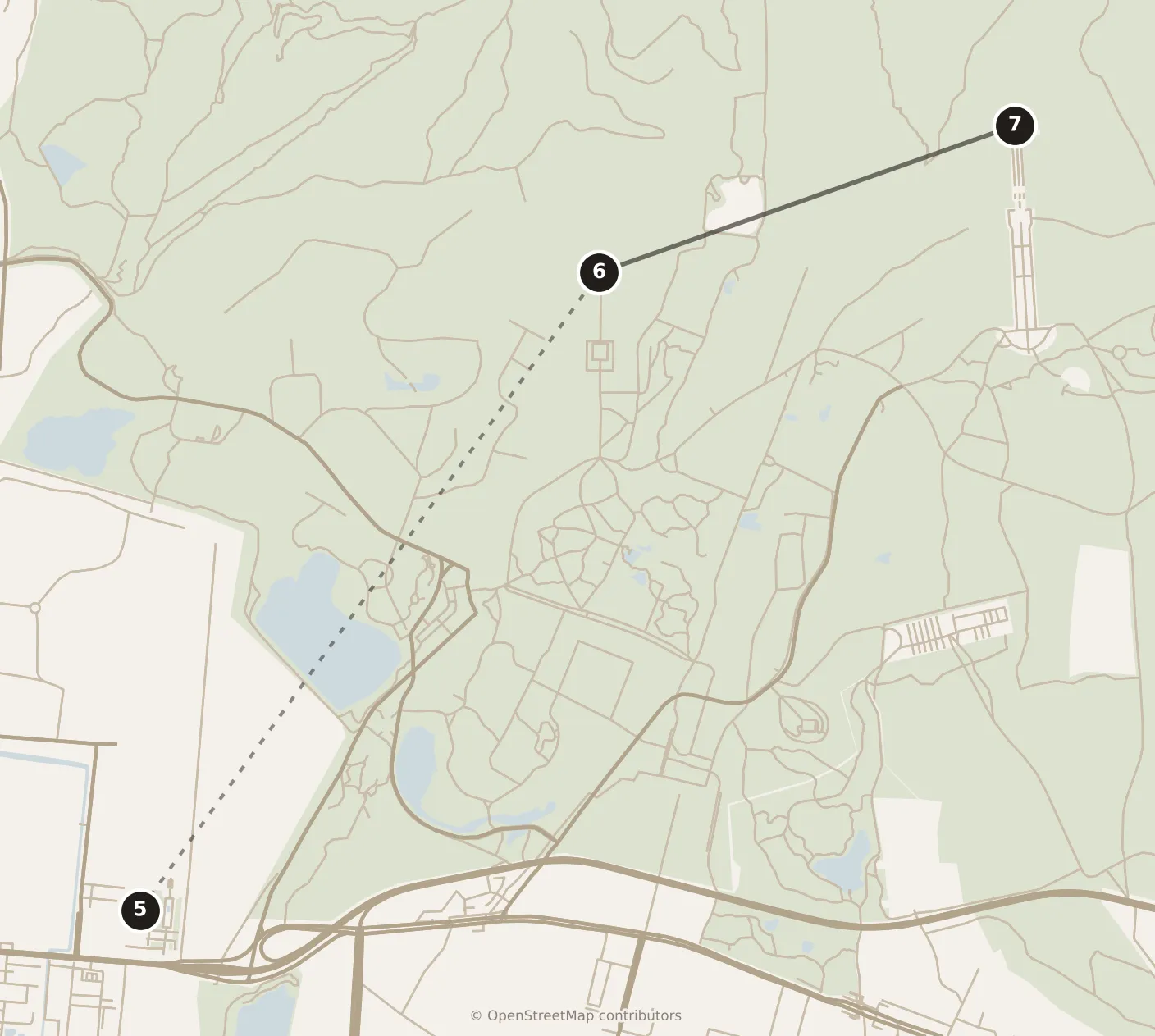
- 5Nanjing Museum
- 6Ming Xiaoling Mausoleum
- 7Sun Yat-sen Mausoleum
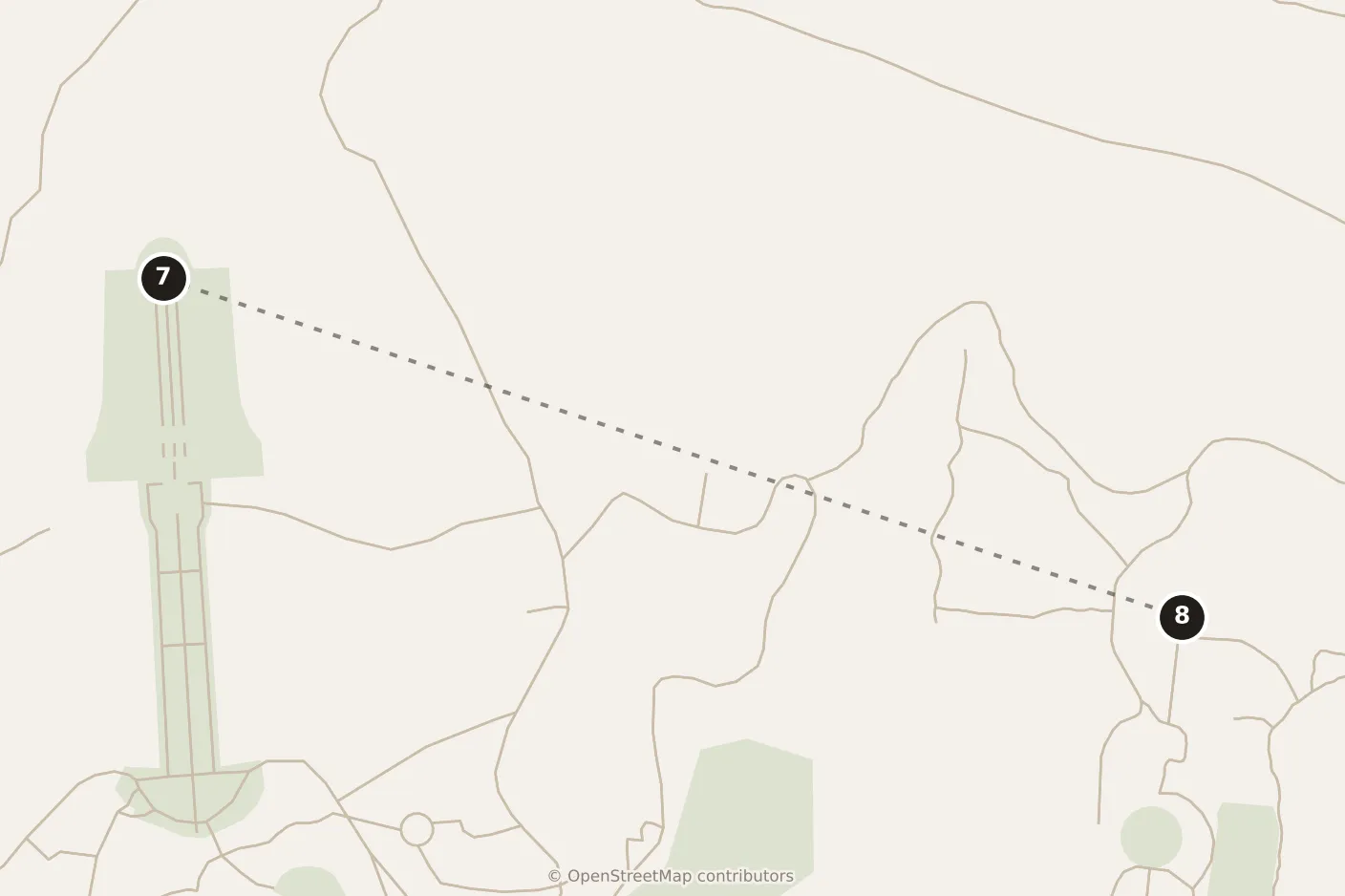
The leg out of the center: from stop 7 by bus, not on foot.
- Afternoon
- 8Linggu Temple
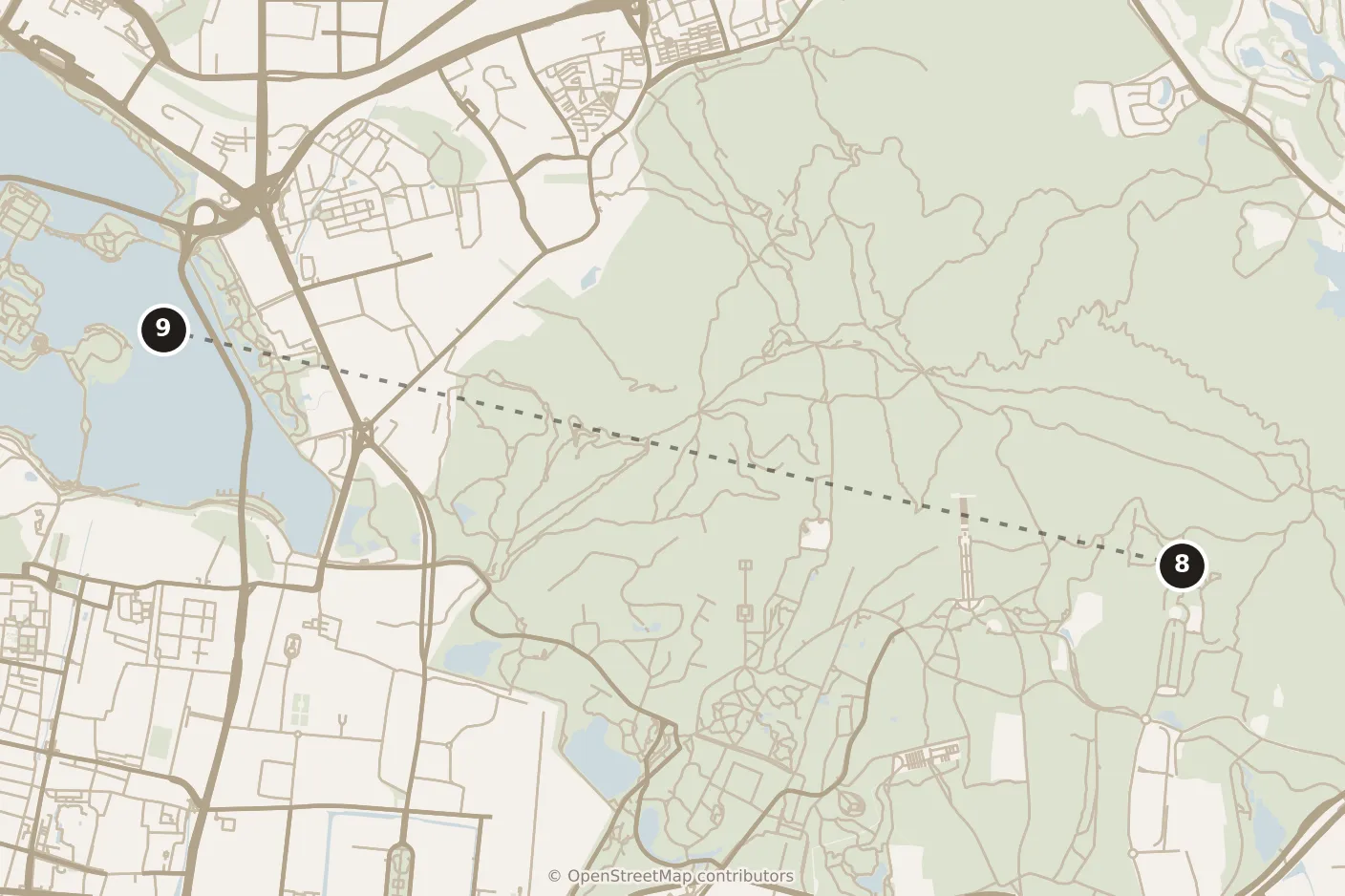
The leg out of the center: from stop 8 by bus, not on foot.
- Evening
- 9Xuanwu Lake
- Hunan Road — in the prose, not on the map
Purple Mountain, Zijinshan to give it its Chinese name, holds most of today, and the cluster stays coherent by moving steadily east and uphill rather than backtracking: the museum at the mountain’s western foot, then the two tombs together, then the temple further along the same slope.
Morning
Nanjing Museum is one of the largest in the country, and the wing worth the most time is the Republican street built indoors at full scale — shopfronts, a cinema front, a tram, walked rather than viewed from behind glass. Give it at least two hours if the rest of the museum interests you at all; the street alone is worth forty minutes on its own.
A short bus ride east brings you into the park proper and to Ming Xiaoling Mausoleum, the tomb of the dynasty’s founder, Zhu Yuanzhang. The approach is the thing to see: the Sacred Way, an avenue of paired stone elephants, camels and mythical beasts twice life size, leading through pine woods to the tomb mound itself, which you don’t enter — the point is the walk in, not the chamber at the end. Give it three quarters of an hour.
It’s about twenty minutes on foot from there to Sun Yat-sen Mausoleum, the republic’s founding figure, buried facing the city he helped bring into being. The approach here is a long stone stairway up the slope, built so that looking down from any platform you see only more platforms, never the steps themselves, and looking up from the bottom you see only steps. It is a longer climb than it looks from below; give it the better part of an hour including the way down.
Local tip. If the morning is tight, the Republican street inside the museum and the Sacred Way at Ming Xiaoling are the two things on this stretch worth protecting; the tomb mound and chamber at the top of each site are the parts safe to skip without missing what makes either place worth the detour.
Afternoon
A short bus ride further east, Linggu Temple closes the mountain’s south side. Its Beamless Hall is a Ming-dynasty brick building raised without a single wooden beam — unusual enough in Chinese religious architecture to be the reason it survived centuries that timber halls around it didn’t. Behind it, a nine-story pagoda from the 1930s commemorates soldiers of the campaigns that founded the republic; the climb to the top is optional and the stairwell is narrow, but the view over the forest is the payoff. Give the temple and the pagoda together an hour and a half if you climb, an hour if you don’t.
If the day is running long or the weather turns, this is the stop to drop rather than the tombs: head straight from Sun Yat-sen Mausoleum back down to the bus and pick up the evening as written. You lose the pagoda and the hall, not the mountain.
Evening
The bus back down connects to the metro for a short ride to Xuanwu Lake, which sits inside the old walls against their northern stretch, close by the older of the city’s two railway stations. It’s somewhere to walk rather than to do anything at — causeways strung between small islands, the wall visible above the water on one side. Give it forty-five minutes along the near shore as the light goes.
From the lake, it’s a short metro ride to Hunan Road, a food street loud with stalls and small restaurants rather than lanes of shopfronts, and the place to eat salted duck, the dish Nanjing is actually known for rather than the one visitors expect.
With a third day

Give the third day, or at least its morning, to Nanjing Massacre Memorial Hall, built on one of the sites where mass killings took place after the city fell to Japanese forces in December 1937. The exhibition documents the event in detail — photographs, survivor testimony, the historical record assembled methodically rather than presented as spectacle — and it is not a sightseeing stop in the ordinary sense. It asks for the same restraint you’d bring to any war memorial or cemetery: no loud conversation, no posed photographs, particularly at the excavated grave sites kept in situ under glass floors partway through the hall, where the remains are still visible as they were found. Give it at least two hours, and don’t try to compress the documentary galleries to save time for the afternoon — there is more here than fits in an hour, and hurrying it defeats the reason to come at all.
Entry is free, as it is at most major memorial and museum sites in China, but a timed reservation made online in advance is required, with passport details — this is standard capacity control at sites like this now, not particular to the memorial, but it does mean you cannot simply arrive at the gate. Book the slot a few days ahead of the morning you plan to go, not on the day itself — and not for a Monday, when the hall is closed.
What you do with the rest of the day is genuinely open, and the honest advice is not to force a fourth stop onto it after a morning like that. The old quarter from day one bears a second, slower pass better than anywhere else on this itinerary: the lanes behind Confucius Temple reward wandering without an agenda in a way neither of the first two days had time for, and it’s the one part of the trip that asks nothing of you but to walk. If you’d rather sit than walk, the teahouses along the same lanes are the obvious alternative, and nobody will think less of a trip that ends there. Either way, this is a lighter day by design — the memorial earns the rest of it.
Practicalities
Book one thing before day three: the Nanjing Massacre Memorial Hall’s free timed-entry reservation, made online with a passport, a few days ahead rather than the morning of. The other ticketed stops — the palace, the gate, the museum — each sell through their own listing on Alipay or WeChat; a day or so ahead is enough, and the form wants your passport number.
Nanjing Museum, on day two, keeps its unusual Monday: mornings only, nine to noon, against full days the rest of the week; if your second day would land on one, do Purple Mountain’s tombs and temple first — none of them keep a weekly closure — and see the museum on the day that’s left. The old quarter and the palace on day one don’t depend on the day of the week.
Every ride on the metro and the buses used across these days is paid the same way, by scanning a QR code through Alipay or WeChat rather than a physical card, and it’s worth having one of the two set up before you start day one.
The distances above are real: the old quarter’s two morning stops are a twenty-minute walk apart, and Purple Mountain’s are linked by short bus rides rather than long ones. The only real distance is between the old quarter and the mountain themselves, which the metro and a change of bus cover in under an hour each way.


.jpg)
