Nanjing in a day: palace, examination hall and the Ming wall by lantern light

Last updated 15 August 2026
Overview
Nanjing was capital of a unified China more than once, and the version worth a single day is the newest of them: the Republic that replaced the empire in 1912, laid on top of a walled Ming capital that came six centuries before it. A day here is not compact the way a smaller old town is — this was a national capital, and its set pieces sit a real metro ride apart rather than a short walk. So the discipline is not subtraction within one square, it is choosing one thread and following it rather than three.
This route follows that Republican and late-imperial thread: the palace that housed the government of 1912, the hall where the empire tested its civil servants, and the stretch of the Ming wall built to keep an army out. It leaves out the rest of Nanjing entirely — Purple Mountain’s tombs, including the Sun Yat-sen Mausoleum, Xuanwu Lake, the Nanjing Massacre Memorial Hall — not because any of them matters less, but because reaching any one of them costs the whole cluster below, and a day split between two ends of the city sees less of either half.
It also suits a reader between trains rather than one with a hotel room. Both of the city’s main stations sit on the same north–south metro line as everything on this route, so wherever your train comes in, the first leg and the last are the same line.
Qinhuai River — not on the walking map.
- Evening
- Qinhuai River — in the prose, not on the map
The day

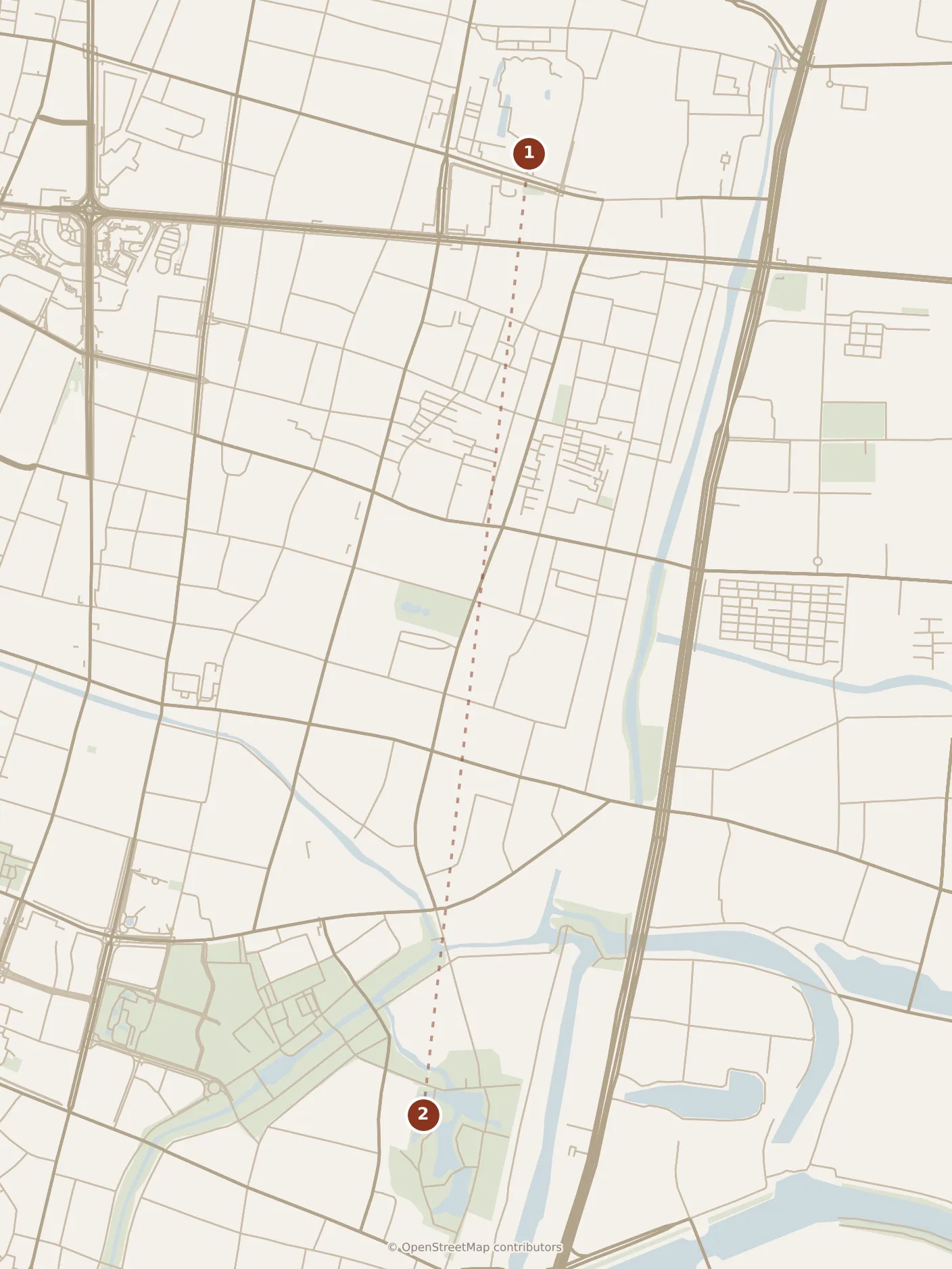
The ride on to stop 2, by metro, not on foot.
- Morning
- 1Presidential Palace
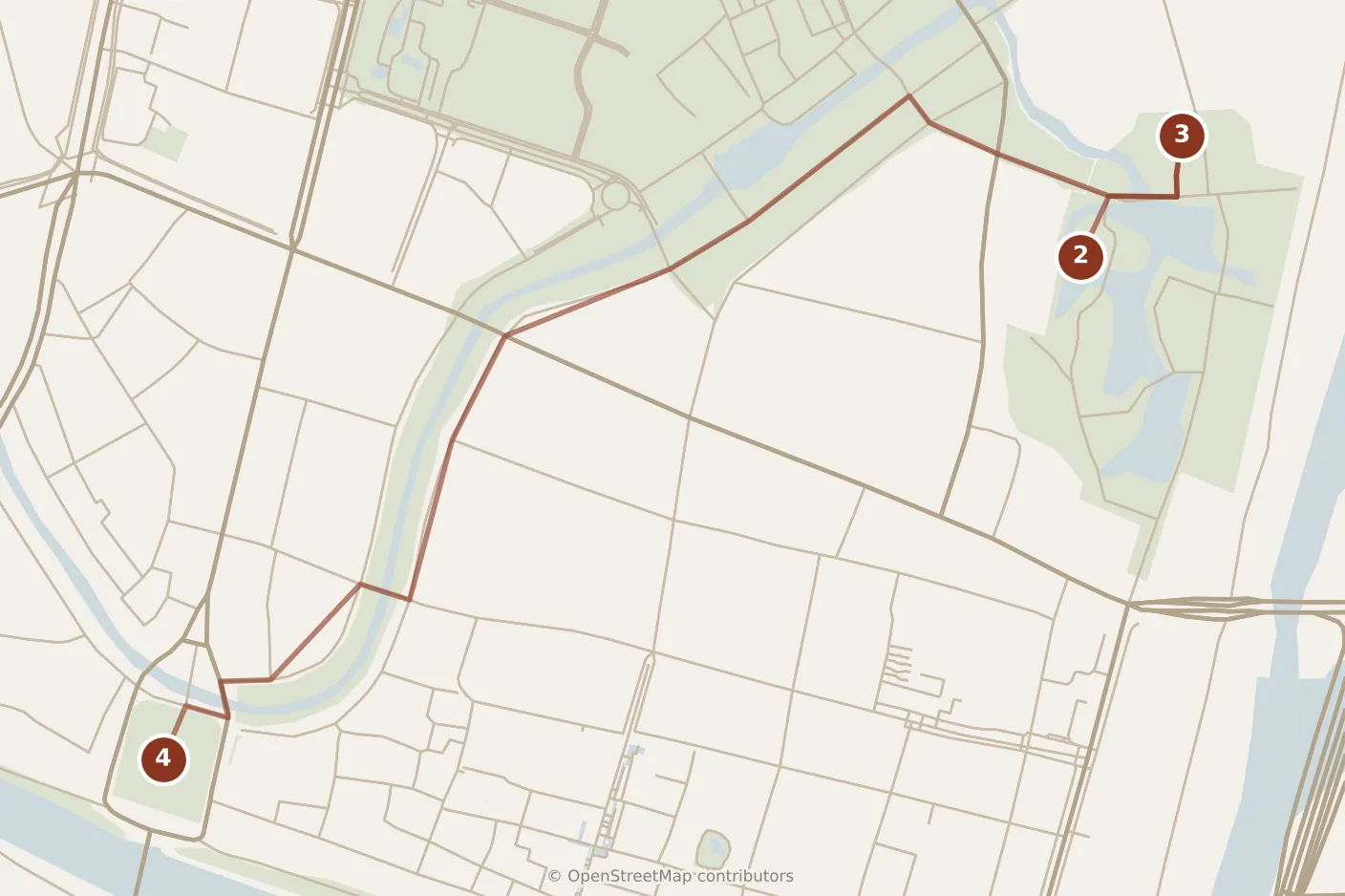
- Afternoon
- 2Confucius Temple
- 3Jiangnan Examination Hall
- 4Zhonghua Gate
Morning
Whichever station your train uses — Nanjing South Railway Station to the south-west of the center, or Nanjing Railway Station itself, on the old city’s northern edge — get on Line 1 and ride it to Xinjiekou, the interchange at the center of town. Change there onto Line 2 and go one stop to Daxinggong: this is the Presidential Palace, and it is where the day starts properly.
The compound was the seat of China’s Republican government from 1912, and it reads as two buildings pretending to be one: offices and meeting halls built for a modern government, set inside the older Chinese courtyard architecture the site already had. Sun Yat-sen’s provisional government worked out of it in its first weeks, and the desks and reception rooms from that period are the reason to come, rather than a general sense of the place. It is a large complex, big enough to swallow a morning if you let it — the wings tied to 1912 and the years just after are the ones that matter; a hall of general administrative history further back in the grounds is the one to skip if the morning is running long.
Give it an hour and a half, more if the courtyards are quiet and you want to sit in one.
If the day is shorter than a full one, this is the stop to give up first: it is the only piece of today north of the center, and the only one that costs a second metro leg each way. Drop it and the day becomes an afternoon and evening in one district — examination hall, wall, river — reachable directly from either station on Line 1, with no detour through Xinjiekou at all.
Afternoon
Retrace the trip to Xinjiekou and pick up Line 1 again, heading south, towards Zhonghuamen — the wall gate the station is named for. Today’s second cluster actually starts before you reach it, in the streets a few minutes’ walk north of the station, around the Confucius Temple.
The temple itself has been rebuilt more than once; what is worth the visit is less the building than the district around it, the old examination-and-pleasure quarter still laid out along the Qinhuai River it takes its name from. A few minutes further into the same streets is the Jiangnan Examination Hall — a purpose-built maze of thousands of brick cells, each barely wide enough to sit in, where candidates for the imperial civil service were locked in alone for days at a time to write. It was the largest such hall in the empire, and walking the surviving rows of cells explains the exam system better than any caption could. Give it three-quarters of an hour.
Local tip. The temple courtyard and the riverside street cost nothing to walk; it is the examination hall and the wall itself that are ticketed. If the afternoon is short, the paid half is the one to keep — the free half is also the one you will walk back through on the way to the river in the evening.
From there it is the longest stretch of the day on foot, the better part of twenty minutes, south to Zhonghua Gate itself: not a single gate but four in a row, with vaulted brick chambers either side built to hide a garrison rather than decorate an entrance, so an attacker who broke the first gate found three more waiting. Climb up onto the wall walk if your legs are willing — the view is the low roofs of the old city on one side and the modern skyline on the other, and it is the clearest sense you will get all day of where the walled city actually ends.
Evening
Walk back the same twenty minutes into the streets by the Qinhuai River rather than pressing on anywhere new. The point of returning is that the river reads completely differently after dark, when the lanterns along the banks and the lit eaves of the temple buildings sit reflected in the water and the pleasure-boats that were empty at lunchtime are running. There is no fixed hour this depends on; the district simply is not the same place before dark as after, so the shape of the evening is to arrive back at the water with time to spend rather than to rush it. This is also where to eat: the lanes back from the river are where Nanjing’s own saltwater duck is sold plain-sliced at food stalls throughout the district, and it is the one dish worth going out of your way for here.
Walking the bank both ways is enough; a short boat ride covers the same stretch of water for anyone who would rather sit than walk after a full day on foot.
If you are catching a train tonight, Zhonghuamen station is where the afternoon already brought you, back on Line 1 for either main station — allow the same journey in reverse that brought you here this morning.
Practicalities
Everything on this route now needs a same-day or advance reservation rather than a ticket bought at the gate: the Presidential Palace, the examination hall and the wall gate are each booked through their own listing on Alipay or WeChat, usually a day or so ahead is enough, and the booking form asks for a passport number rather than the Chinese ID number it defaults to — have it ready before you are standing at the gate. Each of the three tickets was priced in the tens of yuan in 2026, not the hundreds. The metro works the same way: open Alipay’s transit code, or WeChat’s, and scan it at the gate rather than buying a paper ticket, though the machines still sell one if you would rather.
Of today’s three ticketed stops, the Presidential Palace is the one with a fixed weekly closure — Mondays — while the examination hall and the wall gate generally keep daily hours. Check each of the three the week before anyway: the smaller listings are the first to change, and the examination hall is the less forgiving of a wasted walk. If one is shut, the wall walk and the river easily absorb the hour it would have taken.
If you are between trains, both of Nanjing’s main stations keep a left-luggage counter, generally near the main ticket hall rather than out by a side exit — leave the bag there before you get on Line 1, because nothing on this route is worth carrying it through, especially the wall’s steps and the examination hall’s narrow rows of cells. The day as written starts and ends on the same line you left the bag on, so collecting it again is simply the first leg reversed, not a detour of its own.


_Paifang_in_front_of_Jiangnan_Examination_Hall.jpg)