Lima in two to three days: the historic center, the clifftop coast, and a third day of museums

Last updated 15 August 2026
Overview
Lima is not a city you cross on foot; it is a coastal sprawl of some ten million people, and the two or three days below move between three separate pieces of it — the colonial center, the clifftop coast, and, if you have a third day, the museums and small pyramids scattered through the quieter inland suburbs. You will walk a great deal inside each day and take a taxi or a ride-hailing app between them; nothing here is one continuous route you can do end to end on foot.
The climate shapes the trip more than the calendar does. Lima sits on a coastal desert and rarely sees rain at all, but for roughly half the year — April or May through November, in the southern-hemisphere sense — a gray marine mist called the garúa sits low over the city and the sun can stay hidden for days at a stretch. December to April is the reliably bright, warm stretch, and also the busiest on the coast. Whichever season you land in, the sun goes down over the Pacific from a little before six in the southern winter to close to seven at the height of summer around the new year — worth knowing before either evening below, both of which are built around being on the coast as it happens.
Center and coast also carry a different kind of caution. The historic center is busy and well policed by day and thins out fast after dark; walking between its sights after dinner is not the plan here, and a taxi for the return is the ordinary choice rather than a nervous one. The coastal districts keep their evenings lively and are built for an evening on foot.
Day one

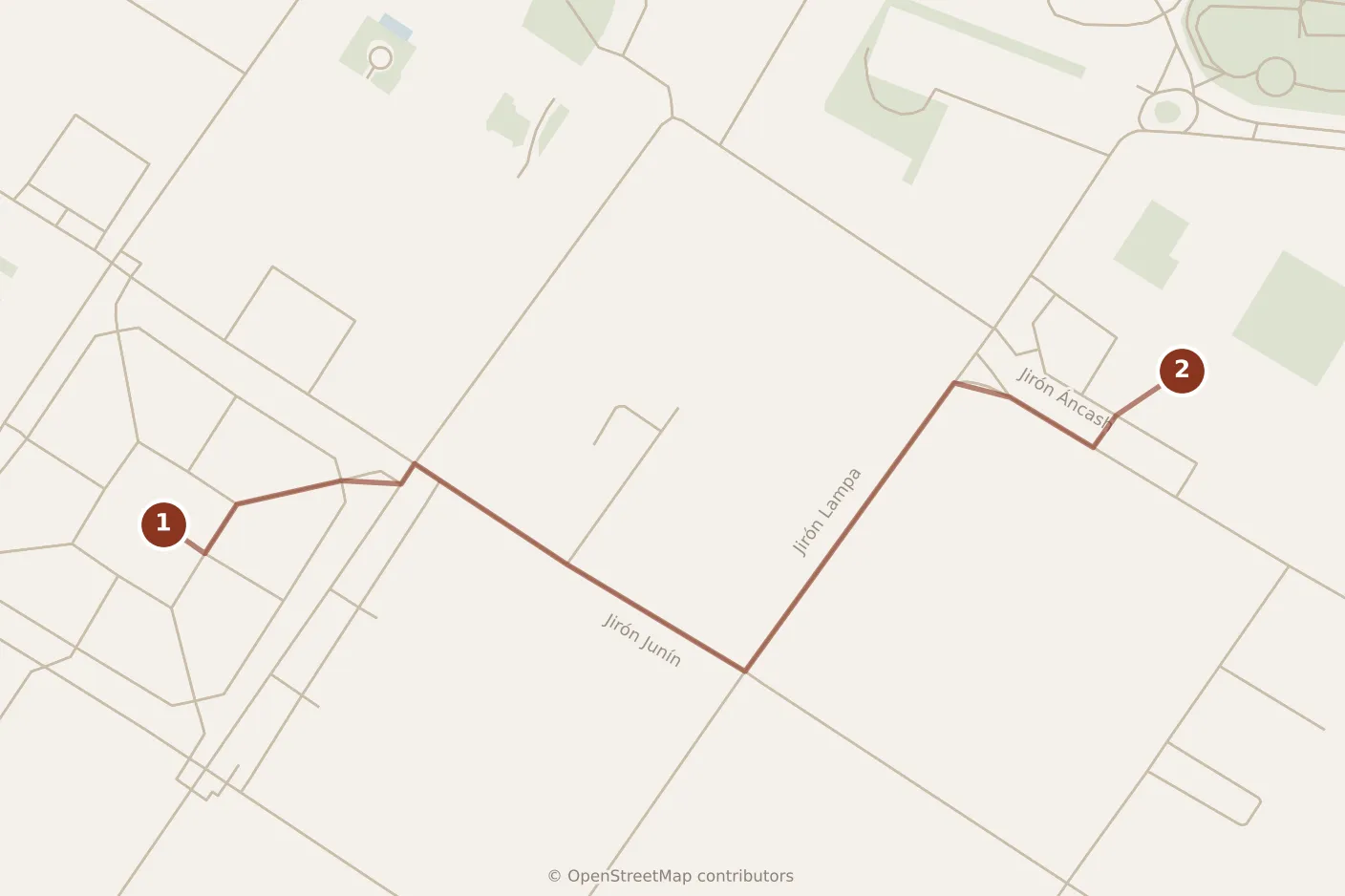
- Morning
- 1Plaza Mayor
- 2Convento de San Francisco
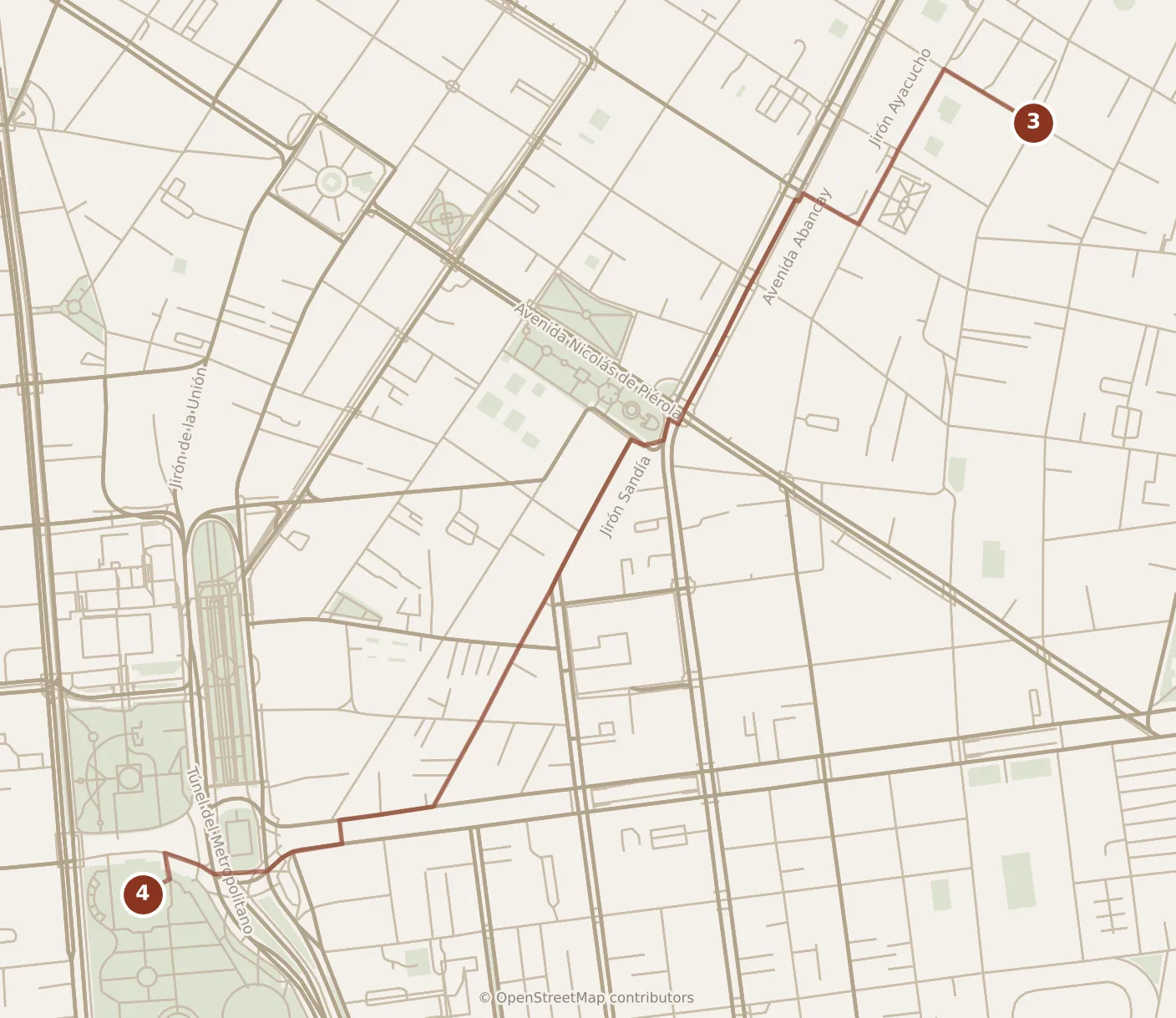
- Afternoon
- 3Barrio Chino
- 4Museo de Arte de Lima
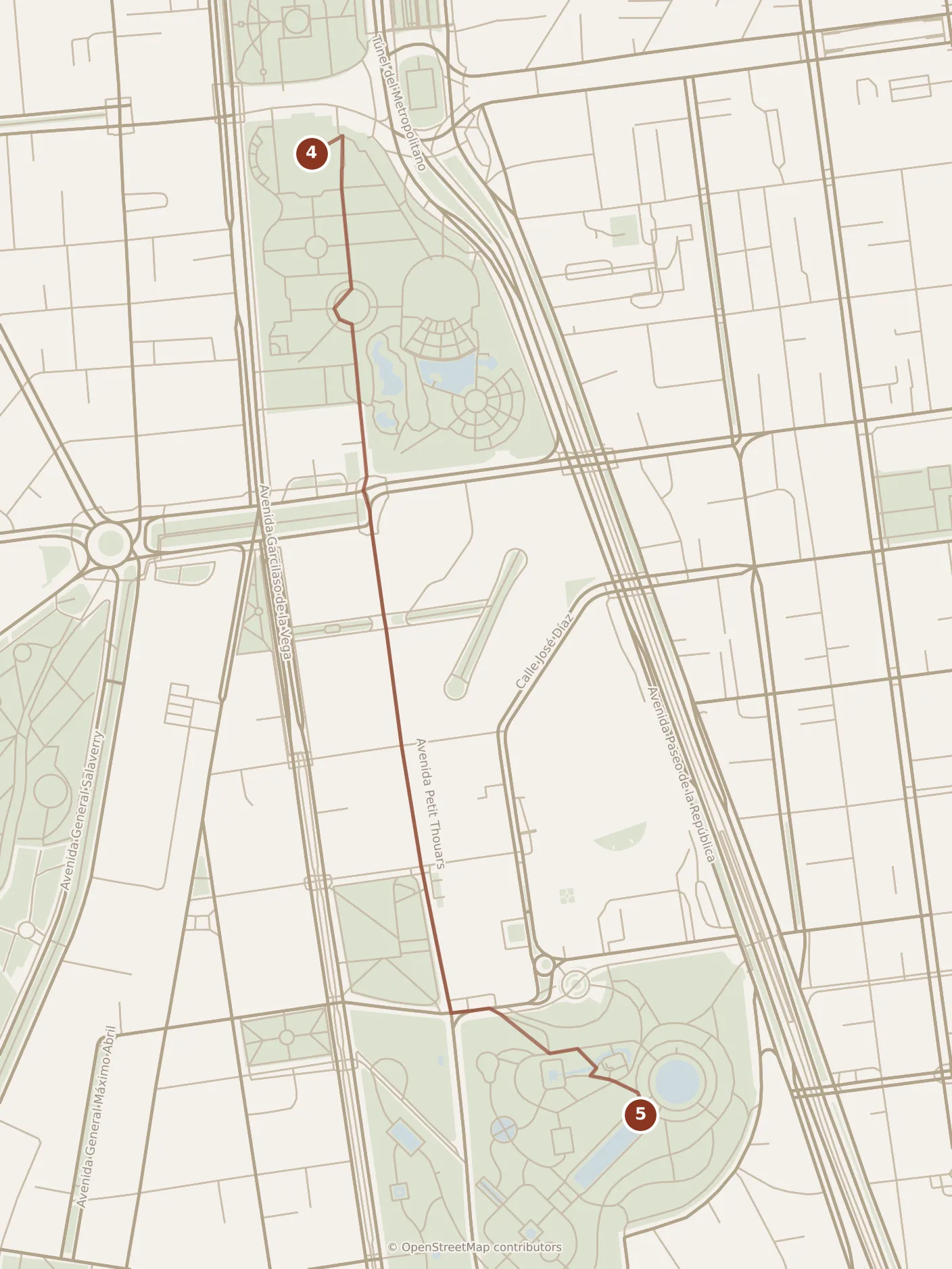
- Evening
- 5Circuito Mágico del Agua
Landing at Jorge Chávez means landing in Callao, on the coast north-west of the center, and the first leg of the trip is the ride in: figure on twenty minutes to the historic center outside rush hour and closer to three-quarters of an hour inside it. Airport Express Lima runs a direct bus from the terminal if you would rather not deal with a taxi rank on no sleep; otherwise Uber and Cabify both operate normally from the arrivals hall.
Morning
Start in Plaza Mayor, the square the city was founded around in the sixteenth century and still the seat of both church and state: the cathedral holds one side, the government palace faces it across the square. The cathedral’s dim, cool naves are worth ten minutes on their own, but the real reason to come inside is the choir stalls, carved wood running the length of the nave, some of the finest colonial woodwork on the continent. If your morning happens to bring you back this way toward midday, the ceremonial changing of the guard outside the palace draws a crowd worth joining, though the walk below does not depend on catching it.
Two minutes south-east, the Convento de San Francisco is the morning’s real stop: a working Franciscan monastery with a library of tens of thousands of volumes upstairs and, below the church, catacombs where an estimated tens of thousands of colonial-era residents of the city were buried in crypts and ossuaries before the city’s cemetery opened in the early nineteenth century. The guided tour is the only way in, runs continuously through the day, and takes about forty-five minutes; the bones stacked by type rather than by body is the detail that stays with people.
Afternoon
Walk south down Jirón de la Unión, the center’s pedestrian spine, past Plaza San Martín, to Barrio Chino, a dozen blocks of Cantonese-founded Lima built up over more than a century of Chinese immigration into Peru. Calle Capón is its spine and the place to eat: chifa, the fused cooking this neighborhood invented, is best had here sitting down at lunch rather than picked up later, and this is the one meal on these three days worth planning around rather than around a museum.
From there it is another twenty minutes on foot, or a short taxi if the afternoon is getting away from you, to Parque de la Exposición and the Museo de Arte de Lima. MALI’s collection runs from pre-Columbian ceramics and textiles through four centuries of colonial and republican painting to twentieth-century Peruvian art in one building, and two hours covers the ground without exhausting you. Give the pre-Columbian rooms the larger share: the textiles in particular do not travel or photograph well, and this is where you actually see them.
Evening
The park MALI sits in adjoins Parque de la Reserva, home to the Circuito Mágico del Agua, a set of thirteen illuminated fountains that do nothing by daylight and become the reason for the evening once it is properly dark — so once your month’s sunset hour, above, has passed and the light has actually gone, that is when to walk over rather than straight from the museum. Some of the fountains are walk-through, so a change of clothes for later is worth having if you mean to try one. Take a taxi back to your hotel from here rather than walking any distance through the center after dark; it is a short fare and the ordinary way to end the day.
Day two

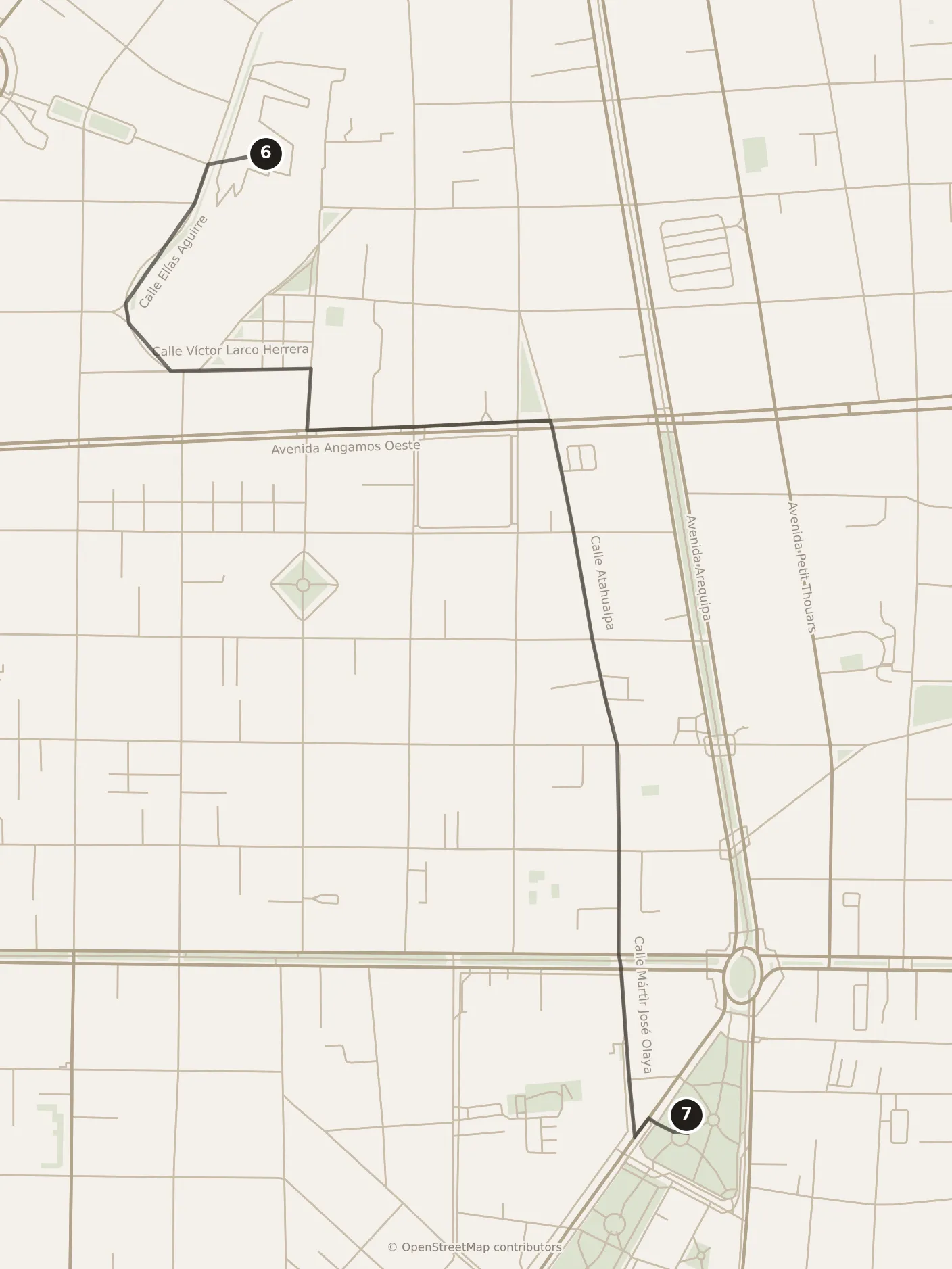
- Morning
- 6Huaca Pucllana
- 7Parque Kennedy
- Afternoon
- Parque del Amor — in the prose, not on the map
- 8Larcomar
- Evening
- 9Puente de los Suspiros
- 10Bajada de Baños
Morning
Start at Huaca Pucllana, an adobe and clay pyramid built by the Lima culture around the middle of the first millennium, standing incongruously in the middle of residential Miraflores. Entry is by guided tour only, tours run every thirty to forty-five minutes through the day, and an hour covers it properly — walk-up works on an ordinary day, and booking online spares the wait if you can, since the slots do fill in the high season.
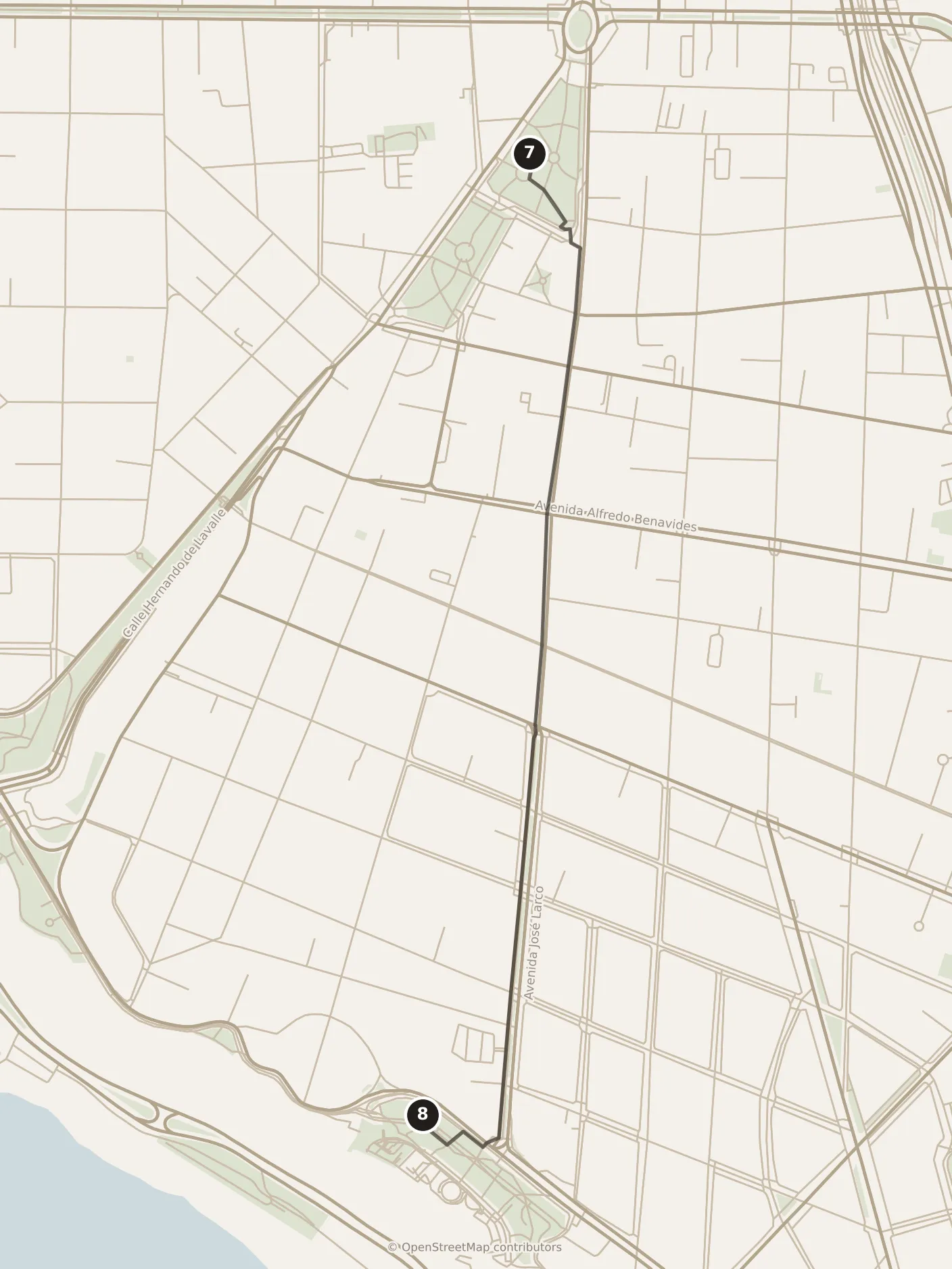
From there it is about fifteen minutes on foot to Parque Kennedy, Miraflores’ central square and the closest thing the district has to a living room: an artisan market most evenings, secondhand booksellers, and a resident colony of stray cats the neighborhood has more or less adopted. It is a pass-through rather than a destination, worth ten minutes rather than an hour.
Afternoon
Head west, another fifteen minutes, to the clifftop itself and Parque del Amor, a small park on the edge of the cliff built around El Beso, a large sculpture of an embracing couple, with mosaic benches running along the rail. This is the start of the malecón, the paved clifftop path that runs the length of Miraflores and on into Barranco, and it is worth walking rather than passing through: paragliders launch from the cliffs just north of here on days with wind, and the ocean is directly below the whole way.
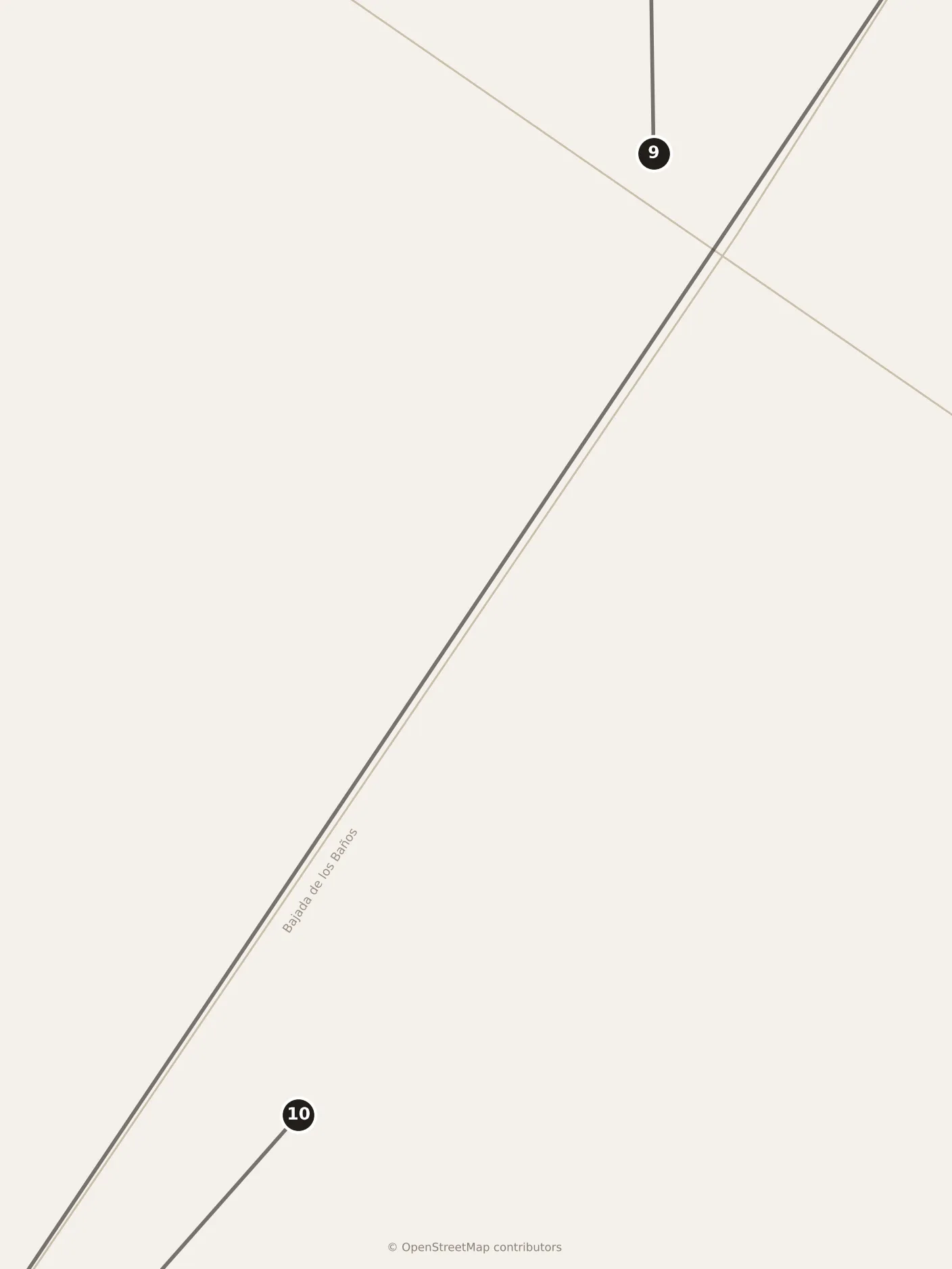
Larcomar, the shopping center built into the cliff face itself a few minutes north, is worth a look even if you buy nothing: most of it is below street level, cut into the rock, with the Pacific visible through the back wall of nearly every level. It is the practical stop of the afternoon too — cash machines, phone shops, a supermarket, anything you forgot to pack.
From Larcomar the malecón continues south the whole way to Barranco, roughly forty minutes on foot with the sea on your right the entire time and nowhere it doubles back on itself; a taxi covers the same distance in under ten minutes if the walk is not what you want today.
Evening
Barranco is Lima’s old bathing resort turned bohemian district, and the reason to be here at the end of the walk rather than earlier is the Puente de los Suspiros, a small wooden footbridge over a ravine that was once the path down to the sea — cross it toward the ocean side and the same view that gave it its name, the water framed at the end of the ravine, is what you came for, and it is genuinely better once the light is going than at midday. The sun goes down over that same water from a little before six in the southern winter to close to seven around the new year, and the bridge and the streets around it are worth timing for it rather than arriving once it is already dark.
Below the bridge, the Bajada de Baños drops down through the ravine itself in a run of steps and street art to what used to be the beach access; it takes ten minutes down and considerably longer back up, and is worth doing before dinner rather than after. The grid of streets around the bridge is where Barranco’s evening actually happens — bars and live music start filling from early evening and keep going, in a district built for exactly that rather than for sightseeing.
Local tip. The Puente de los Suspiros crossing is free and takes two minutes; the Bajada de Baños below it is the free half of the evening, and it is the one that photographs. Save any paid gallery or show in Barranco for another visit if the day is already full — the ravine and the streets around it are the whole reason to be here tonight.
With a third day

- With a third day
- 11Museo Larco
- 12El Olivar
- 13Huaca Huallamarca
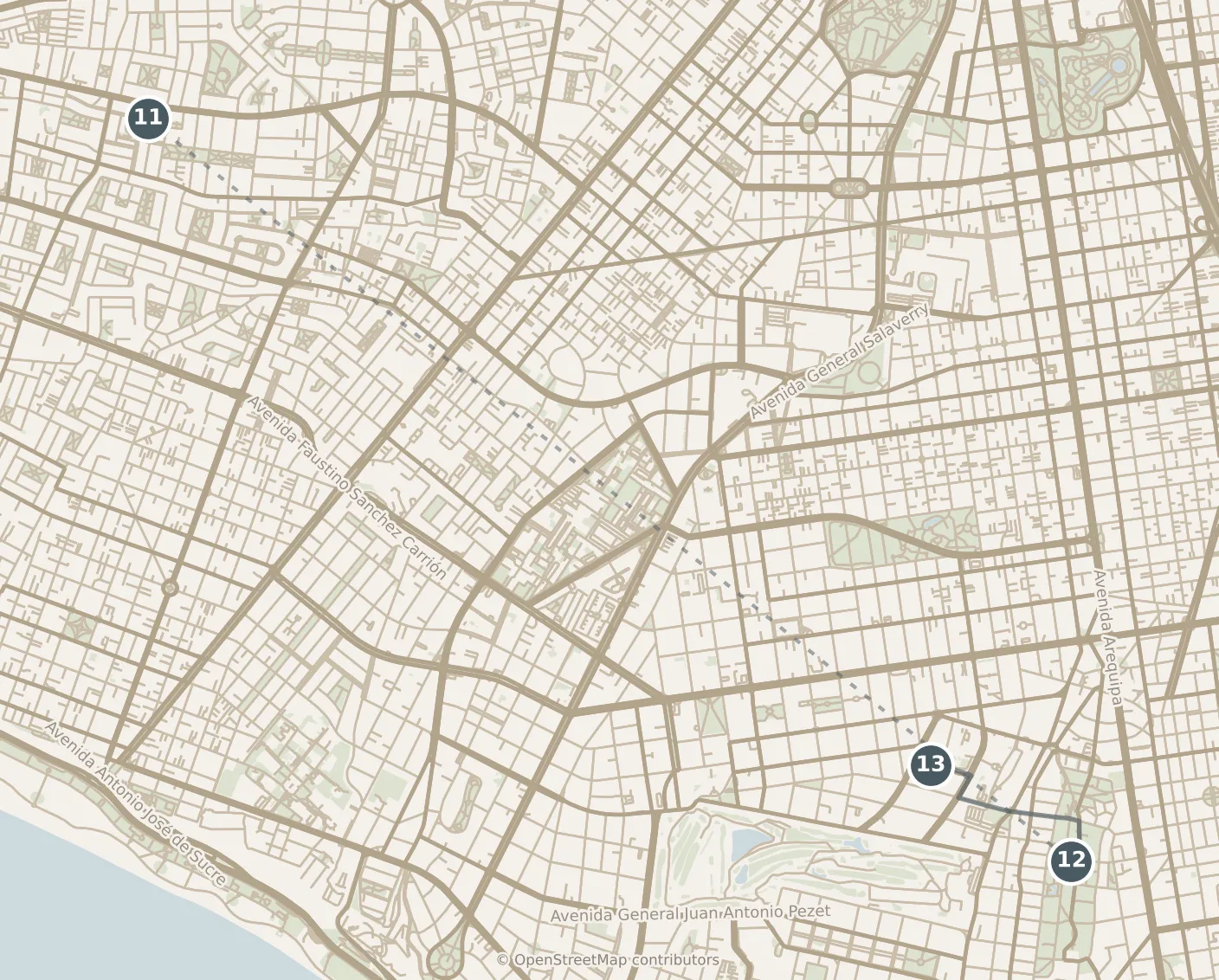
Give the third day to Pueblo Libre and San Isidro — inland, quieter, and the one day of the three built around what is inside a building rather than what is outside one.
Start at the Museo Larco, a twenty-minute taxi ride from Miraflores through Pueblo Libre. It holds one of the largest private collections of pre-Columbian art anywhere, arranged by culture across a colonial-era house and its gardens, and the two rooms that make the ticket worth it are the gold and silver gallery and the storage rooms at the back, floor-to-ceiling shelves of tens of thousands of ceramic vessels that most museums would keep behind glass in a handful of cases. Give it two hours if you take the storerooms seriously, ninety minutes if you do not. It is one of the few museums in the city that opens every day of the year, which makes it the one stop on these three days you can plan around nothing at all.
From there it is another short taxi, ten to fifteen minutes, to El Olivar in San Isidro, a genuine olive grove planted by the Spanish in the sixteenth century and now a public park in the middle of the city’s business district — several hundred trees, some of them centuries old, and the closest thing in Lima to actual shade and quiet. Give it half an hour as a walk rather than a destination.
Ten minutes on foot from the park’s northern edge, Huaca Huallamarca is a small, restored adobe pyramid standing on an ordinary San Isidro street between apartment blocks, older than Huaca Pucllana and considerably smaller — you can see the whole thing in twenty minutes, and the contrast with the office towers around it is most of the point.
That leaves an afternoon, and the honest alternative is a full day out rather than a half: Pachacamac, a pre-Inca pilgrimage site on the coast south of the city in the Lurín valley, built up over roughly a thousand years by successive cultures before the Inca annexed it and added a temple and a house for the chosen women. It is genuinely worth the trip, but it is not an afternoon add-on — reckon on the better part of an hour each way by taxi outside rush hour, more inside it, plus real time on-site, so it replaces the whole third day above rather than extending it. Choose one or the other before you leave the hotel that morning; trying to do both is how the day gets away from you.
Practicalities
Nothing on these three days needs booking weeks out, but two things are worth arranging the day before rather than turning up cold: the Convento de San Francisco’s catacombs tour, which runs continuously but can have lines in the middle of the day, and Huaca Pucllana’s guided entry — tour-only, walk-up on ordinary days, but its online slots do fill in high season, so book then. Everything else — the cathedral, MALI, the Circuito Mágico del Agua, Museo Larco, Huaca Huallamarca — is walk-up.
MALI keeps a weekly closure like most museums in the city; check which day before you commit an afternoon to it, and if it falls on yours the same slot works just as well spent among Barrio Chino’s lanes or the squares along Jirón de la Unión, both of which you have already found on the same walk. Museo Larco is the exception worth remembering — it opens every day of the year.
Order the days by geography rather than by any rule about hours: the colonial center first, since none of what is in it depends on the coast being nearby, then the clifftop districts, whose appeal is genuinely better once you are staying near them. Doing it the other way round means one extra crossing of the city for no reason.
Moving between the center and the coast is by taxi or ride-hailing app rather than on foot or by bus — Uber and Cabify both work normally throughout the city and are the ordinary way locals get between these same districts. Reckon on twenty minutes to the better part of an hour for that one crossing, depending on the time of day; Lima’s traffic is genuinely unpredictable and the difference between the two ends of that range is real. Within each day’s district, everything above is walkable as written, and the longest single stretch on foot is the malecón between Larcomar and Barranco, at about forty minutes.


