Kolkata in two or three days: the company city, the Bengali north, and the south if you have a third

Last updated 4 August 2026
Overview
Kolkata is two cities laid over one map, and a single day only reaches the first of them. Along the river there is the company town: a grid of offices and porticoes around a square with a tank in the middle, built by men who were running a trading business and then found themselves running a country. Three kilometers north of that, in lanes too narrow for the traffic to enter, is the Bengali city — potters who build gods out of river mud, a poet’s house, a mosque with room for ten thousand, and a street where the second-hand books go on for the better part of a kilometer. The two are twenty minutes apart on the metro and about a century apart in temperament, and the second day is exactly what buys you the second one.
So this is not one day stretched. Day one runs down the river, through the colonial core, and ends in the marble at the south end of the Maidan. Day two starts at the top of the Blue Line and works south through the old north, which is the part of the city that nothing in the center prepares you for. Neither day crosses town sideways, because crossing this town sideways by road is what eats days in it — the metro runs north to south under the central spine and it is the only fast thing here, so both days are built along it rather than across it.
One fact about the light governs both. The sun goes down in Kolkata between about ten to five and about half past six: the earliest sunsets fall in the second half of November rather than at midwinter, the latest at the end of June, and the whole yearly swing is barely an hour and a half. There is no long evening here in any month. The country keeps one clock, set to a meridian a long way west of this city, so the light both arrives and leaves noticeably earlier by that clock than it does further inland — an afternoon that feels as though it has hours in it has fewer than you think, and in winter the day is finished at five.
Each day below carries its own count. Read them for what they are: they add up the time this article recommends giving each place and they model nothing else — not the line for the ferry, not the ticket windows at the Victoria Memorial, where the gardens and the galleries have been sold separately since a court ordered a garden fee in 2004, and above all not the traffic on any leg you hand to a taxi. A leg that takes fifteen minutes at seven in the morning takes forty at six in the evening, and no arithmetic in an article can tell you which one you are about to get.
Getting here and getting started. Most arrivals are at Howrah, across the river, or at Sealdah on the eastern side of the center, and the two are on opposite sides of the city, so it is worth knowing which one your train uses. From Howrah the fast way in is the Green Line — Howrah station has its own metro station beneath the terminus, and it is two stops under the river to Esplanade, which is the middle of everything below. From Sealdah the same Green Line runs west to Esplanade in one stop. From the airport it is a taxi, and the parent city guide handles that. Day one’s own first leg then goes the other way: from anywhere central, a taxi north up Strand Road to the foot of Howrah Bridge, which is fifteen to twenty minutes at that hour and forty at any other, because the one hour a day this road is empty is the hour the day starts in.
Day one

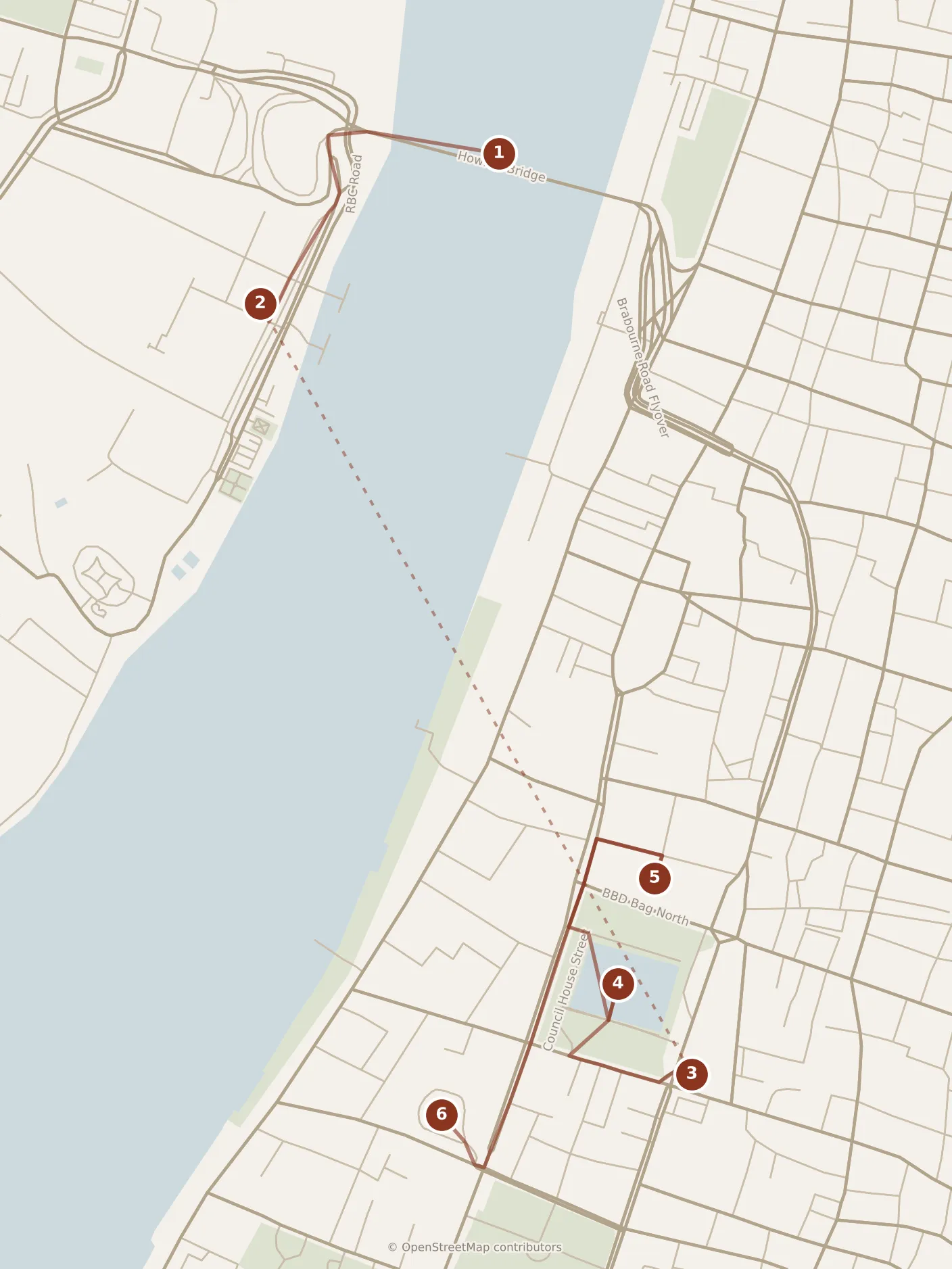
- Morning
- Mullick Ghat — in the prose, not on the map
- 1Howrah Bridge
- 2Howrah station
- 3Currency Building
- 4BBD Bagh
- 5Writers' Building
- 6St John's Church
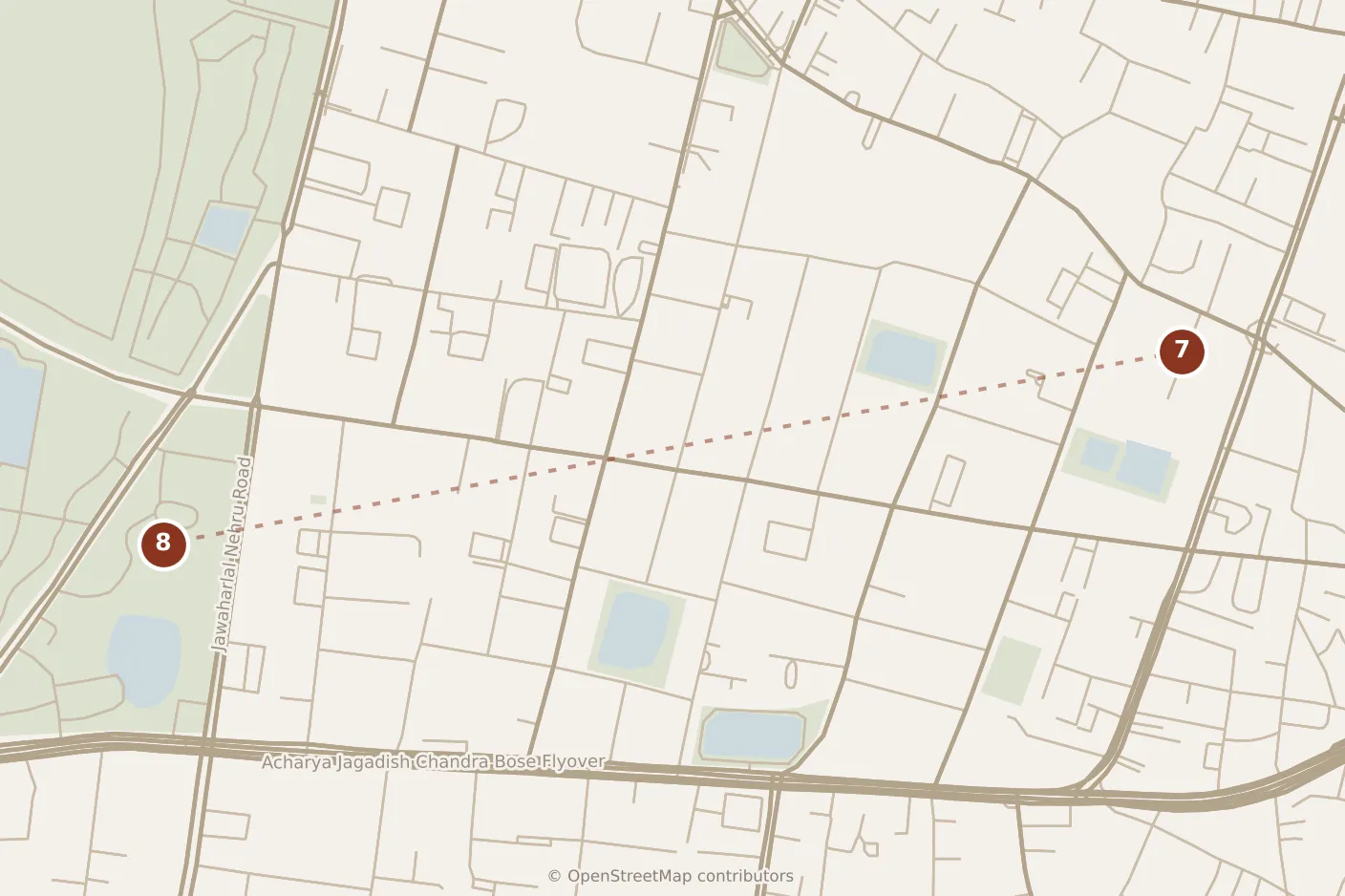
- Afternoon
- 7South Park Street Cemetery
- 8St Paul's Cathedral
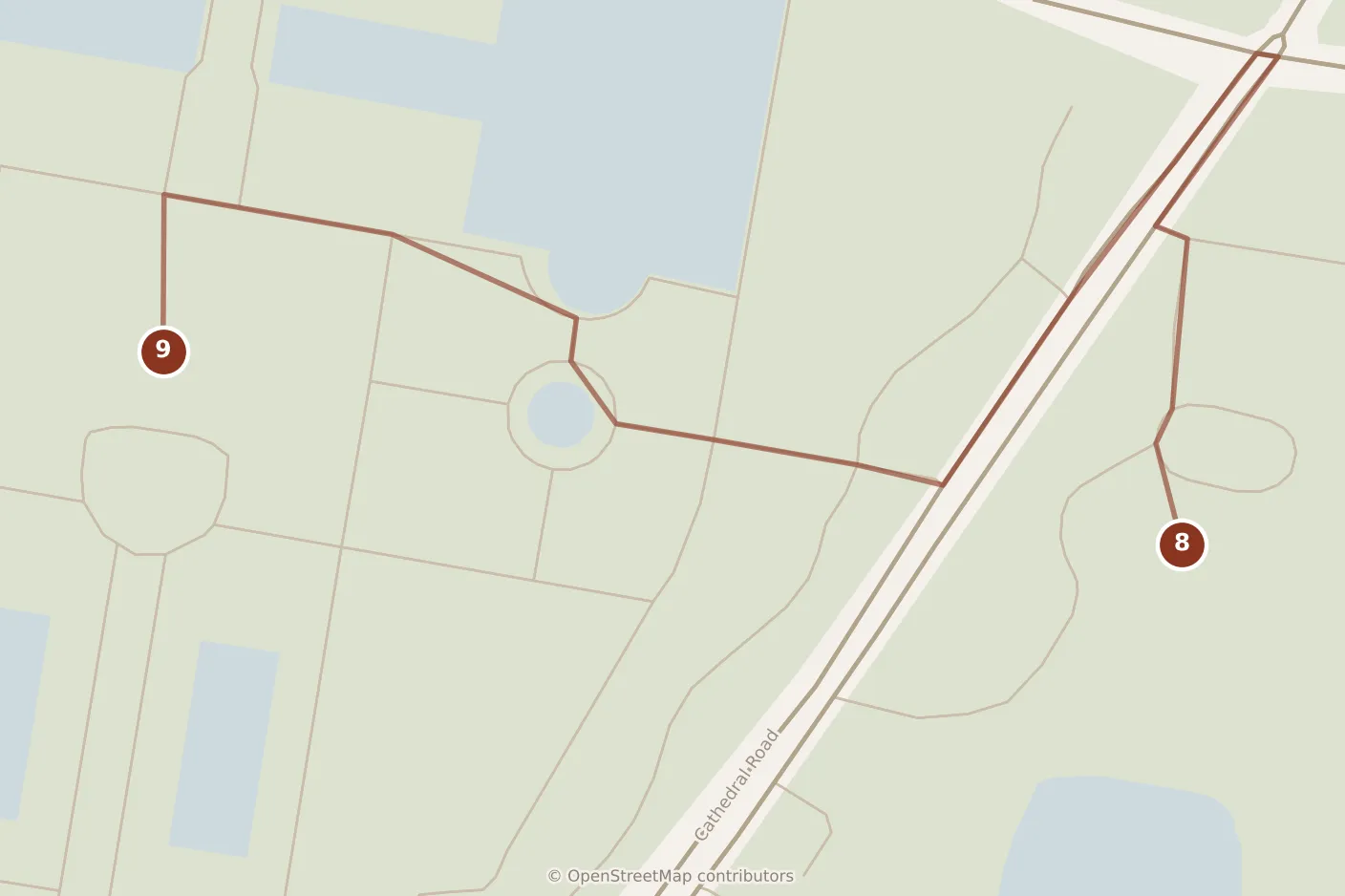
- Evening
- 9Victoria Memorial
Today is the river and the company city, and it runs in one line from the bridge in the north down to the marble at the bottom of the Maidan. The looking below comes to about seven and a half hours and the moving between it to an hour and three-quarters, so it is a nine-hour day, and the count runs forwards from first light rather than backwards from anything. That works in winter: the counted nine hours run out before the light does, and what fills the gap is the lines and the traffic no arithmetic here models, so the last hour in the gardens still lands on the sunset the evening is built around; in June it does not, because the light here arrives before five in the morning and is gone by half past six, so from April to September start later and let the end of the day set the clock instead. Nothing today shuts at an hour worth planning around, but the market at the start of it is a dawn market and is a different place by eleven.
Morning
Start on Mullick Ghat, under the eastern approach of the bridge, where the flower market has worked the Kolkata bank since the 1850s. Give it three-quarters of an hour and spend it down among the stalls: marigolds by the sack, tuberose, garlands measured out by the arm. What you are looking at is a wholesale trade, not a display — the men carrying head-loads are working and will move you out of the way, and the right way to be here is to keep to the edges of the lanes and let them past.
Then do the thing a shorter visit cannot afford: walk the bridge. Howrah Bridge carries a footway on each side and something over a hundred thousand people cross it on foot every day, and that river of walkers is as much the sight as the span. It went up between 1936 and 1943 as a balanced cantilever, riveted end to end, with no nuts or bolts in the structure at all. Ten minutes gets you across; take twenty, and stop halfway. Photographing the bridge itself is officially restricted, so keep the camera for the market and the water.
The far end is Howrah station, the largest railway complex in the country and a working cathedral of a building — twenty-four platforms, a hall that never empties, and the departure boards that decide half of eastern India’s week. Give it twenty minutes and no more; it is a place to feel rather than to see. Then walk down to the launch ghat beside it and take the ferry back. The crossing is about ten minutes, it costs less than anything else you will do today, and the Kolkata-bank jetties — Fairlie Place and Chandpal Ghat among them — all land you on Strand Road within a short walk of the square.
Local tip. If you only do one of the two crossings, make it the ferry. The bridge is the better object and the boat is the better view of it, and the boat also puts you exactly where the morning goes next, whereas the walk across has to be paid back. Doing both is a luxury of having two days rather than one.
Five minutes east of the jetties is the Currency Building, a Venetian-looking pile of 1833 that the Archaeological Survey of India spent from 2005 to 2019 restoring and reopened in January 2020 as a gallery. Three great arched bays, an iron-and-glass roof, and rooms of Bengal painting and photography inside. This is the interior a one-day visit walks straight past, and it is the best argument for a second day in the colonial core: from the outside this quarter is a hundred facades, and this is one of the very few you can go into. Three-quarters of an hour.
The building stands on BBD Bagh itself, the square the East India Company built its city around — a tank of green water with twenty buildings around it in every stage of grandeur and collapse. Walk one full circuit rather than looking for a single view; the point is the sheer accumulation. The long red-brick range on the north side is the Writers’ Building, put up in 1777 to house the company’s junior clerks, who were called writers, and the seat of this state’s government for most of two centuries afterwards. You see it from the sidewalk. Give the square and the circuit half an hour.
Then eleven minutes south-west to St John’s Church of 1787, for half an hour. It has the Zoffany altarpiece that everyone comes for, but the churchyard is the better half: the octagonal mausoleum of the man taught for generations as the founder of Calcutta, until a court ruled in 2003 that he was not its sole founder. It is a working parish church, so if a service is on, the churchyard is where to be anyway.
Afternoon
Walk fifteen minutes south-east to Esplanade and eat there — this is the edge of New Market and the roll shops and rice-and-fish counters around it are where the office city has lunch. An hour, sitting down. Kolkata biryani, with its whole potato, is the local thing to order if you want one plate that explains the city.
From Esplanade take the Blue Line one stop south to Park Street, and walk the length of Park Street eastwards — a little over twenty minutes, past the old restaurant frontages, to the gates of South Park Street Cemetery. This is the stop that most repays having a second day, because it is not a monument and it needs an hour of doing nothing in particular. It opened in 1767 and holds the generation that ran the early city and mostly died in their thirties: pyramids, obelisks and domed tombs jammed against each other under enormous trees, with William Jones of the Asiatic Society among them. It is several degrees cooler inside than out and almost silent, which in central Kolkata is a thing you should not pass up.
Take a taxi west from the cemetery gate rather than walking — it is not far, but it is thirty minutes of hot sidewalk — to St Paul’s Cathedral, consecrated in 1847 and the first Anglican cathedral built anywhere in the overseas empire. Twenty minutes inside: a single wide nave, almost no columns, a tower rebuilt after an earthquake, and windows by the Victorian workshops that did the same job all over the empire.
Evening
Nine minutes west across the grass is the Victoria Memorial, and this is where two days pays for itself, because a shorter visit takes the gardens and lets the rooms go. Give the whole thing two hours and buy both tickets. The building was begun in 1906 and finished in 1921, in white marble from the quarries that faced the Taj Mahal, as the centrepiece of the capital of British India — a capital that had moved away in 1911, five years into construction, which nobody planned and which remains the best joke in the city. Inside, the gallery about Calcutta itself is the one worth an hour: maps, plans and paintings of the town that turned into this. The imperial portrait galleries are the half to walk through briskly. Then come out and stay in the gardens for the last of the light, which is the whole reason this stop is the day’s last: the marble takes the low sun and the Maidan around it fills up with football and goats and families, and that hour is the best free thing in Kolkata.
Dinner is ten minutes east by taxi on Park Street, which after dark is a different street from the one it is by day.
Day two

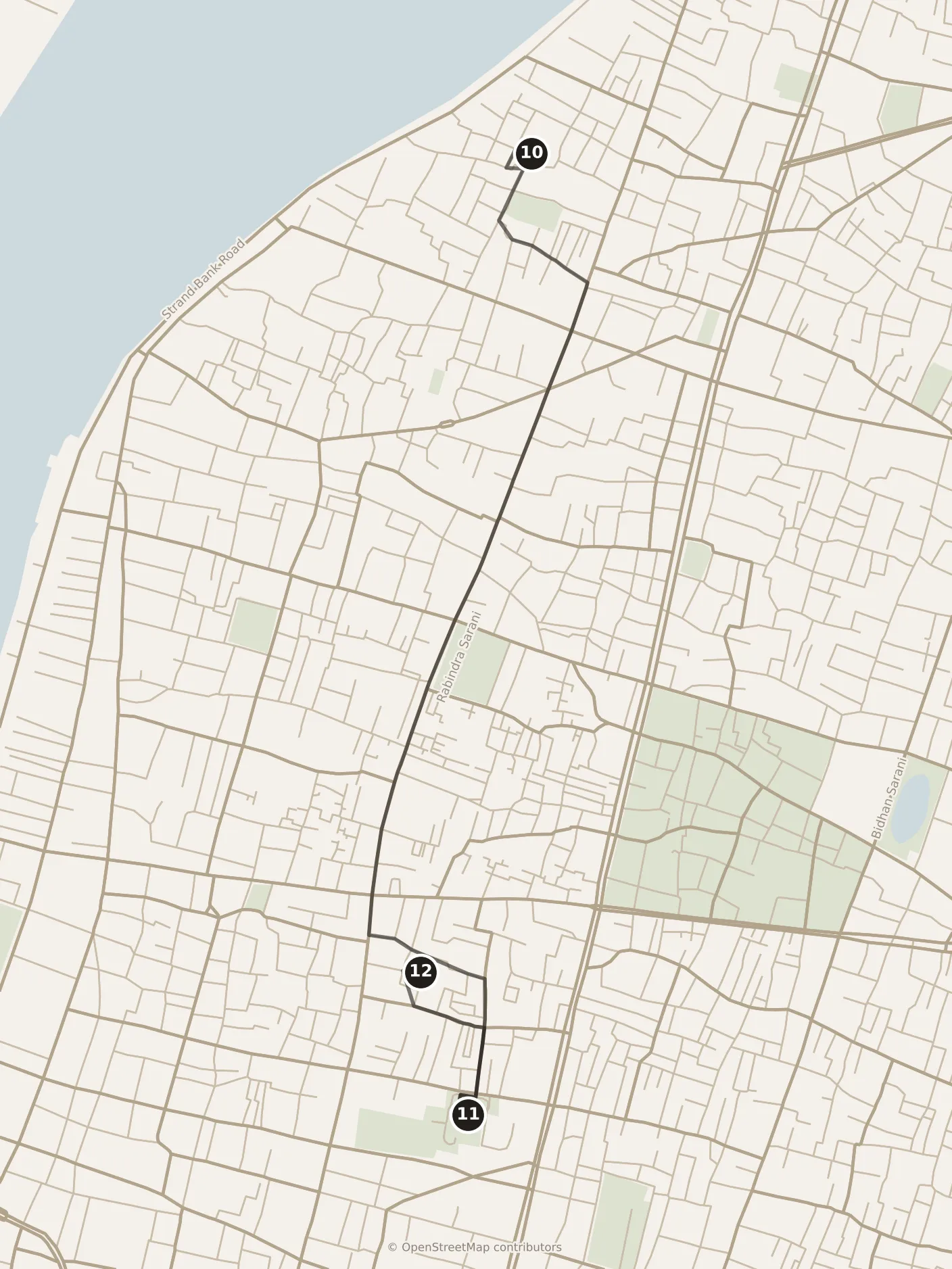
- Morning
- 10Kumartuli
- 11Marble Palace
- 12Jorasanko Thakur Bari
- Afternoon
- 13Nakhoda Masjid
- 14College Street
- 15Indian Museum
The leg out of the center: from stop 15 by taxi, not on foot.
- Evening
- 16Tangra
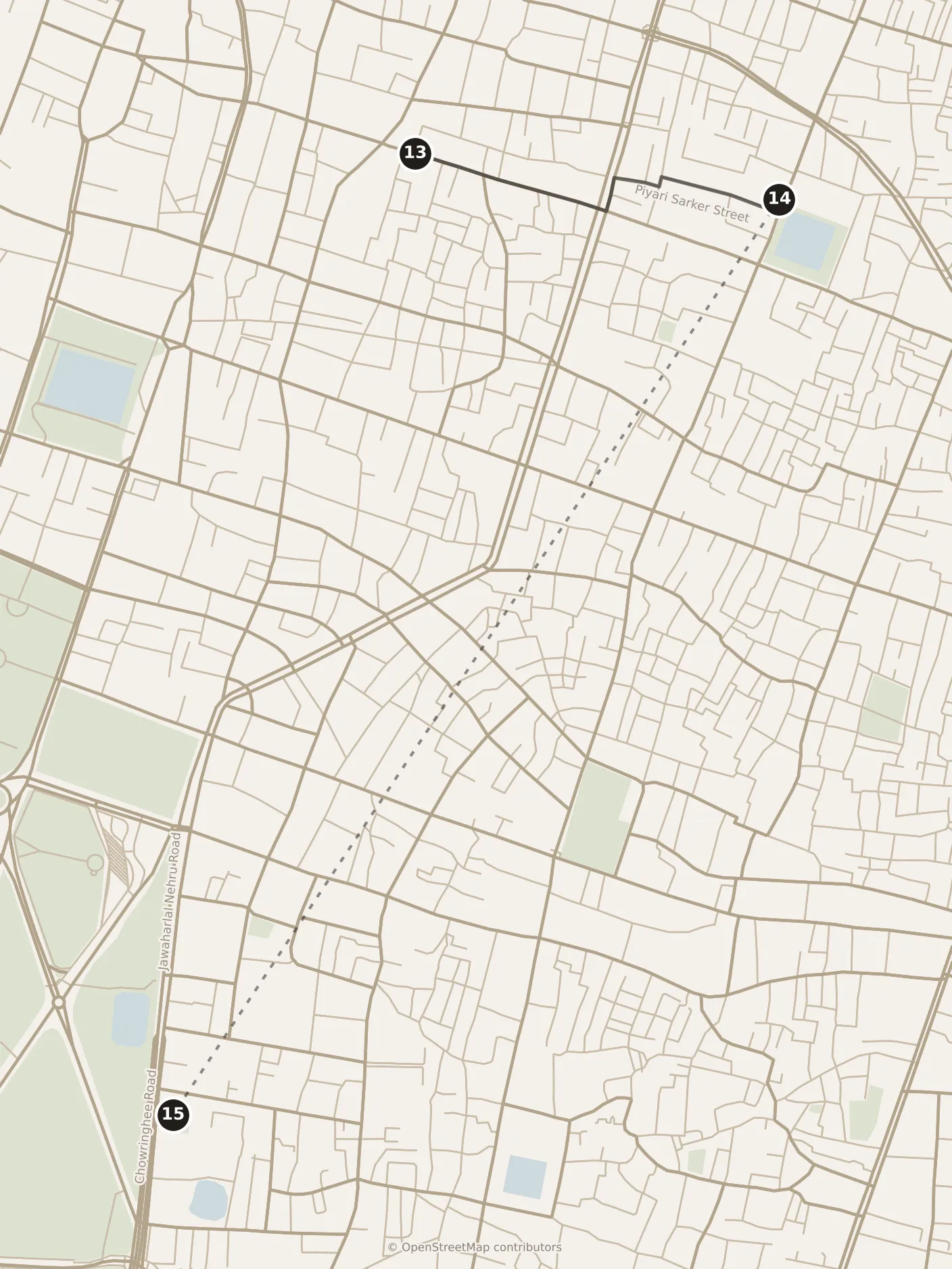
Today is the Bengali city, and it is a metro day: you start at the top of the Blue Line and work south, on foot between stations. The looking comes to about eight hours and the moving to getting on for two, which makes a ten-hour day. Of the two days this is the one with a fixed hinge in it, and the hinge is early: Marble Palace admitted nobody before ten in 2026 and shut at four, and it takes both Monday and Thursday off, which is an unusual pair and the thing on this day worth checking the week before. Everything above it in this section is built backwards from that ten o’clock, and if the hour has moved, build it back from the new one.
Morning
Take the Blue Line to Sovabazar Sutanuti and walk twelve minutes north-west to Kumartuli, the potters’ quarter, and be there by half past seven. This is where the idols come from: Durga, Kali and the rest, built up on straw-and-bamboo armatures with clay lifted out of the river a few streets away, hundreds of them at once in open-fronted workshops along lanes about two meters wide. Give it an hour and a half. The peak is the run-up to Durga Puja in the autumn, when the lanes are impassable and the effect is overwhelming; the rest of the year you get the same craftsmen with room to watch them. These are workplaces and not a display: step out of the lane when a frame is being carried, and ask before photographing anyone’s face or their unfinished work. Most will say yes. The asking is the point.
Now walk south down Rabindra Sarani — old Chitpur road — for about forty minutes. This is the walk, not the transport: printing shops, sweet shops, brass shops, shuttered mansions with trees growing out of the cornices, and a shift in the street’s religion every four blocks. Buy rosogolla somewhere along it; the north is where the syrup sweets were invented. If the legs or the heat say no, Sovabazar Sutanuti to Girish Park is one stop on the metro and leaves you four minutes from the same door — you lose the best half-hour of street in the city, and it is the correct thing to lose first.
The door is Marble Palace, a private mansion of 1835 still lived in by the family that built it, which is why it is like nothing else: a courtyard of marble in a hundred varieties, a menagerie in the garden, and rooms stacked floor to ceiling with Victorian statuary, mirrors, chandeliers and paintings attributed to Rubens and Reynolds, hung four deep and dusty. Entry is free, a household guide walks you round, and photography is not allowed anywhere inside, because people live here. An hour.
Six minutes away is Jorasanko Thakur Bari, the Tagore family house, where Rabindranath Tagore was born in 1861 and died in 1941. It is a red mansion around two courtyards, now the Rabindra Bharati museum, and the rooms that matter are the family’s own: the bedroom he died in, the verandas, the paintings by the several other members of the family who painted. An hour, and take the courtyards slowly — this is the house the Bengali nineteenth century was largely written in.
Local tip. These two are four hundred meters apart and neither wants more than an hour, so if you have come down from Kumartuli late, do the palace and let the poet’s house go. The palace is a private house you cannot see any other way; the Tagore house is a museum with museum hours, and it is the one of the two you can come back for on a longer trip.
Afternoon
Twenty minutes south-west through Burrabazar, the wholesale district, brings you to Nakhoda Masjid on Zakaria Street — completed in 1926, built in red sandstone as a deliberate copy of the Mughal emperor Akbar’s tomb at Sikandra, and with room for ten thousand at prayer, the largest mosque in eastern India. Eat before you go in. The clock above lands you on this corner at about half past twelve, which is the midday prayer, and this is a working mosque and not a monument: do not come at a prayer time at all, and do not come on a Friday, when the midday congregation fills the building and the street outside it.
Lunch, then, is on Zakaria Street itself, which is the kebab and paratha street of the city and at its best in exactly that hour, the one after the midday prayer. An hour. Then the mosque, half an hour, most of it in the courtyard: take your shoes off at the door, cover your shoulders and your legs, and do not walk in front of anyone praying. Women should expect access to be limited to part of the building.
Fifteen minutes east is College Street, and the correct instruction is to have no plan. It is a kilometer of second-hand book stalls stacked to head height on both sidewalks outside the university, the medical college and the older colleges around them, and it is a functioning trade rather than a heritage set — school textbooks, engineering manuals, Bengali novels and, if you ask, whatever you actually want, produced from somewhere behind. Give it an hour. The coffee house upstairs off the west side of the street, in a hall of ceiling fans and marble tables, is where three generations of the city’s politics were argued out, and it is worth going in even if you only have tea.
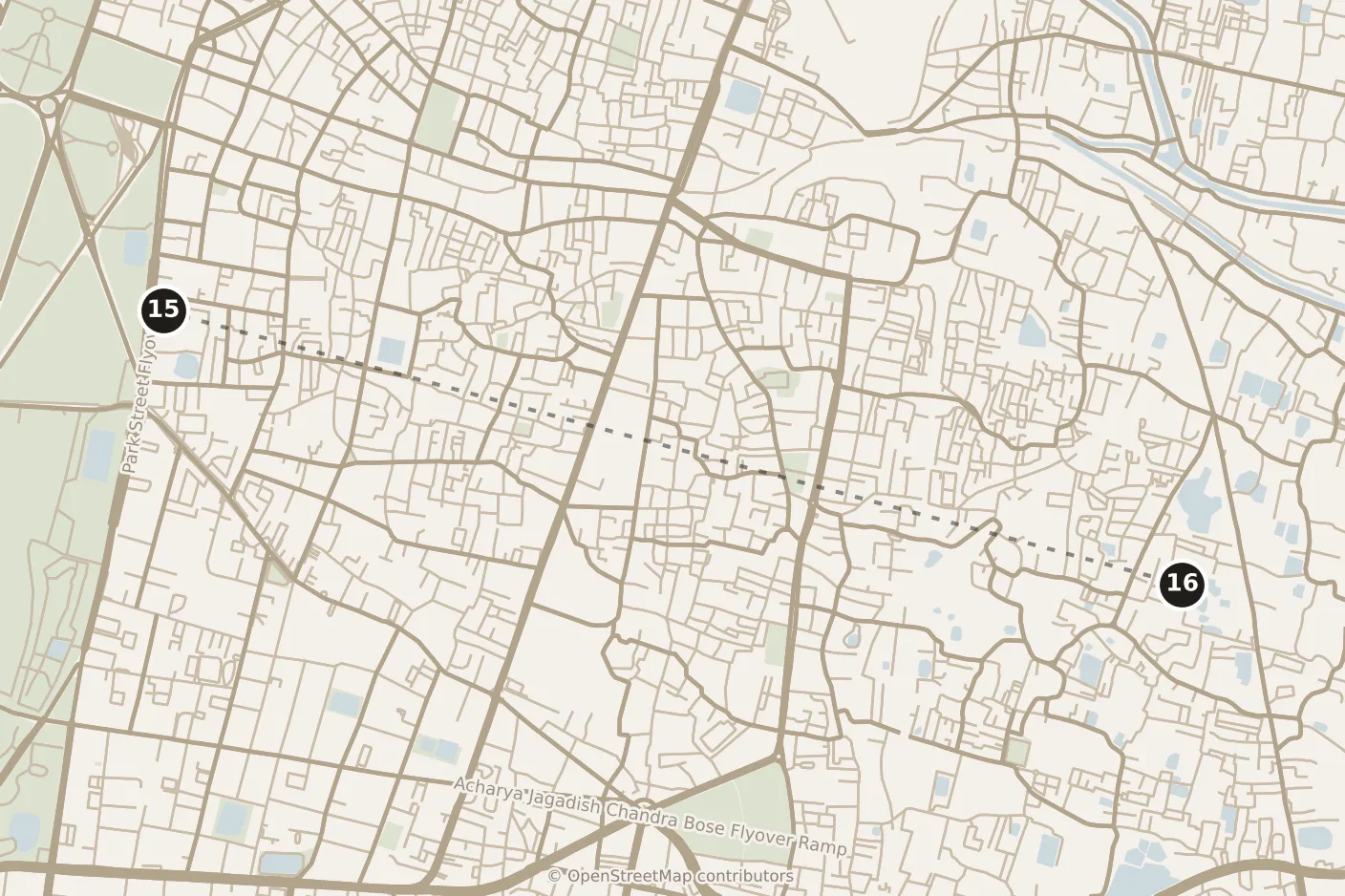
Then the metro from Central, two stops to Esplanade, and a quarter of an hour south down Chowringhee past New Market to the Indian Museum — which takes the last of the heat on purpose. Founded in 1814 and the oldest museum in the country, it is thirty-five galleries around a colonnaded courtyard and far too much to see. Two hours, and spend them narrowly. The Bharhut gallery is the reason to come: the railings and gateway of a stupa some twenty-one centuries old, taken down in central India and rebuilt indoors here, carved end to end with stories and close enough to read. Add the Gandhara room next to it, where the Buddhist sculpture has Greek drapery on it and you can see exactly where it came from. What to give up is the zoology and geology wings — room after room of cases, and they will take the rest of the day if you let them. The Egyptian mummy is five minutes and every school party in Bengal is in front of it.
Evening
Dinner is in Tangra, twenty minutes to three-quarters of an hour east by taxi depending on the road, and it is the thing a one-day visit gives up outright. This is the newer of the city’s two Chinese quarters, built around tanneries by a community that has been here since the eighteenth century, and the cooking it produced is neither Chinese nor Indian but a third thing that was invented in this city and has since colonized menus across the country. It is a slightly bleak district of low sheds and courtyards and the restaurants sit inside them, which is part of the effect. Go hungry and order the chili and garlic end of the menu.
With a third day

- With a third day
- 17Mother House of the Missionaries of Charity
- 18Kalighat Kali Temple
- 19Gariahat
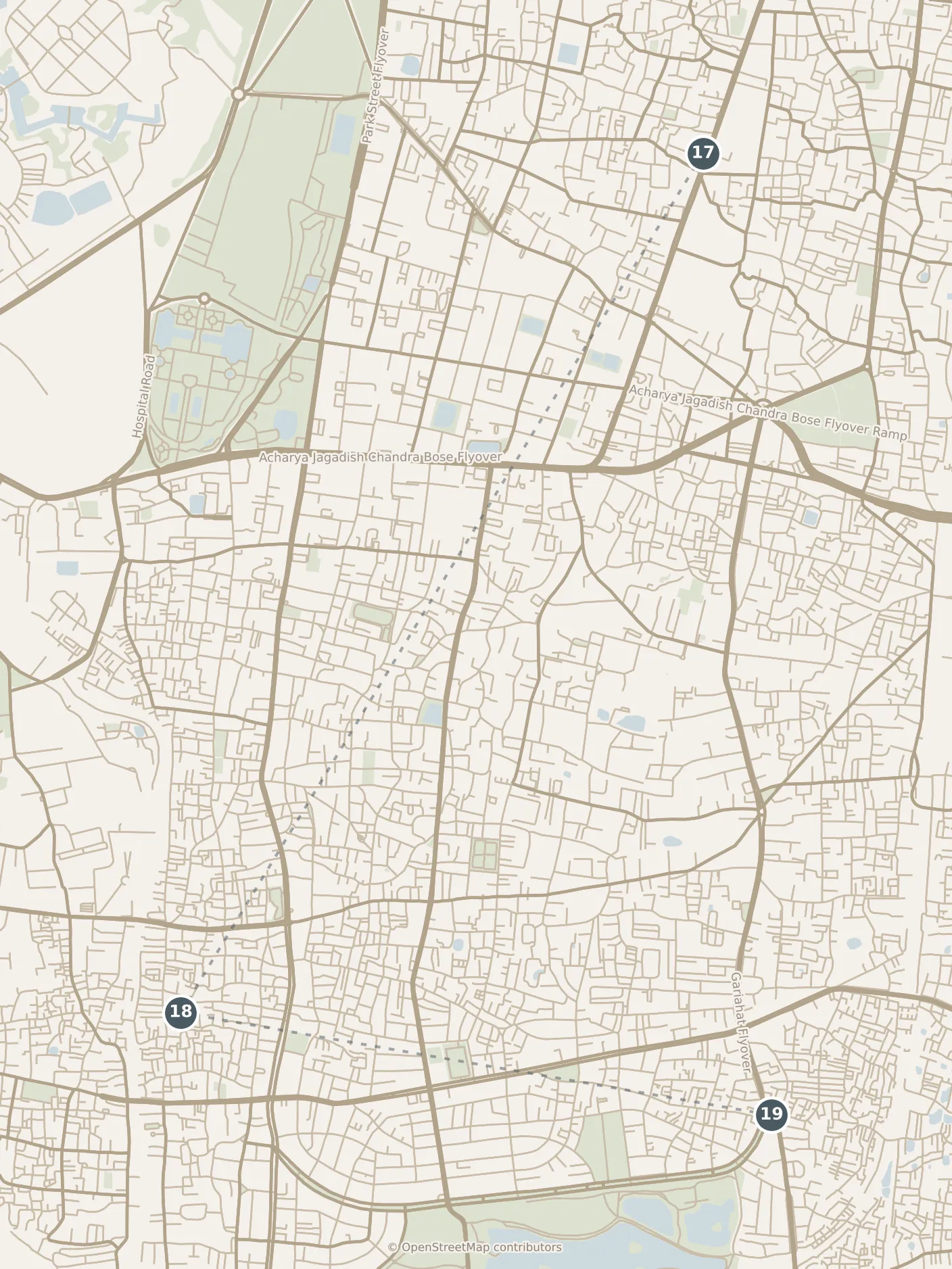
A third day is appended rather than inserted, and it goes south — which is where the city actually lives, as against the two days above, which are where it worked and where it made things. But it also lets you fix the one real strain in the two-day version, and that is worth doing first: with three days, take South Park Street Cemetery off day one and put it here, fifteen minutes’ walk from where today starts, and move the Indian Museum off day two and onto day one’s afternoon in its place. Day two is the fuller of the two days and the museum is the only stop on it that is indoors and indifferent to the hour, so it is the piece that travels. The counts at the head of each day move with it — day one gains an hour and day two loses two — and nothing else changes.
Start at the Mother House of the Missionaries of Charity, on the big north-south road that crosses the eastern end of Park Street, a few hundred meters up from the crossing. It is an ordinary building on an ordinary street with a tomb in a plain room: Mother Teresa’s, a slab with flowers arranged on it and a small museum of her sandals and her enamel bowl next door. Forty-five minutes, and it is free. The one thing to check first is the closed day — this is the stop on this itinerary most likely to catch you out, because it keeps a weekday closure of its own and it is not a Monday. If it falls on yours, the cemetery below carries the morning by itself. Cover your shoulders; people are praying in the next room and the line is mostly not tourists.
Walk fifteen minutes south to the cemetery, take the hour described on day one, then go back to Park Street station and take the Blue Line five stops south to Kalighat. Eleven minutes’ walk from the station is the Kalighat Kali Temple, which is where the city’s old English name is generally traced to and one of the busiest working temples in the country. It shuts its doors at two and opens them again at five, so the temple has to be reached before two — which the morning above does comfortably, and which is the reason the day runs in this order rather than any other. The building itself dates from 1809 and is unremarkable; the crowd is the sight, and so is the rest of the compound — the flower and vermilion stalls, the bathing tank, and the enclosure where goats are sacrificed in the mornings, which is a real thing that happens and which you should decide about before you walk in rather than after. Shoes come off well before the entrance and there is a stand for them. Visitors who are not Hindu are generally welcome in the compound but not in the inner sanctum. And the practical warning is the one everybody needs: men will attach themselves to you as guides at the gate and steer you towards a book of large “donations”. You are not obliged to take a guide and you are not obliged to sign anything; decline at the gate, where it is easy, rather than three rooms in, where it is not. Forty-five minutes.
Then a taxi fifteen to twenty-five minutes east to Gariahat for what is left of the afternoon: the crossing where south Kolkata shops, with sari shops on the corners, a sidewalk market that goes on down two roads, and a fish market that is worth walking through even if you are not buying. Give it an hour and eat in the streets behind it, which is where the home-style Bengali cooking of this city actually is — mustard fish, a dark slow mutton curry, and rice. If you would rather have the day end quietly, Ballygunge either side of it is some of the leafiest walking in the south of the city and costs nothing.
Practicalities
Nothing on these three days is booked, and almost nothing can be: every ticketed stop here sells at its own gate on the day, and the rest is street, market, church, mosque and river. The one thing this route asks of you that the city guide does not is the metro — both days lean on it, day two entirely — so sort out how the fares and the ticketing work before you need it on the first morning. It takes two minutes once.
The days of the week are the real planning problem, and there are four rules rather than one. Day two must miss Monday and Thursday, because Marble Palace closes on both and the Tagore house and the Indian Museum keep a weekly closed day too, which for museums in this country is usually the Monday. Day two must miss Friday as well, because the mosque and the lunch its afternoon is hung on both belong to the midday congregation on that day, and neither of them is yours. Day one must miss Monday, because the Victoria Memorial’s galleries close a day a week and the Currency Building, being a government gallery, is likely to keep the same one. The third day takes any date but one: the Mother House keeps a weekday closure of its own, it is not the Monday, and it is the thing to settle before you fix the order of anything else. So if one of your two days is a Monday, both days want to miss it and neither can: there is no order that avoids it, and the only question is which day loses less. It is day one. Run it on the Monday, buy only the garden ticket at the memorial, accept that the Currency Building shuts with the galleries, and give the time you save to the cemetery. On three days that advice inverts, because the swap above has already moved the pieces: day one now carries the Indian Museum, which shuts on a Monday too, and the cemetery is no longer on day one to take the saved hour. So on a three-day visit run the Monday as the third day. That is free when the Monday is the last of your three; when it is not, the third day has to be taken out of order, and the luggage advice at the end of this section then belongs to whichever day you finish on instead. If your two days are a Thursday and a Friday, day two is barred from both and cannot avoid one: take the Thursday and run day one on the Friday, and day two loses Marble Palace. What replaces it is not a gesture: the Armenian church on the edge of Burrabazar, a little under a kilometer west of the Rabindra Sarani walk, is the oldest church in the city — a stone building of 1724 with a graveyard around it whose oldest stone is dated 1630, sixty years before the British arrived at all. It costs nothing, it needs half an hour, and it puts you back on the same walk facing the same way.
Sunday is the other one to think about. The metro has run a reduced schedule on a Sunday for most of its life, at times starting only in the afternoon, and day two is built on a first train. Check the first departure at any station the evening before. If it is not there, the same trip is a taxi north up Rabindra Sarani, thirty to forty minutes instead of fifteen, and it is worth taking rather than reshuffling the day — Kumartuli in the morning is the whole point of day two. Sunday also thins the shopping: most of the shops at Gariahat close, so the last hour of the third day is a quieter thing than the one described above.
If you are short of time rather than short of a day, cut in this order. The Indian Museum goes first: it is two hours, it is indoors, and it is the one stop here that works equally well bolted onto some other trip. Then the Howrah Bridge walk, which is twenty minutes of the morning and whose view you also get from the boat. Then St Paul’s Cathedral, which is twenty minutes and nine minutes of walking, and is the least surprising thing on day one. Do not cut Kumartuli, do not cut the cemetery, and do not cut the last hour in the memorial’s gardens: those three are why the days are shaped the way they are.
Weather is the other plan. There is no version of these two days between April and September that is not shortened, and the honest adjustment is not to walk better but to walk less: on a hot day the Rabindra Sarani stretch, the Park Street walk to the cemetery and the Chowringhee walk to the museum all go into taxis, and the museum takes three hours instead of two. In the rains those same streets are the ones that flood and the metro is the leg least affected by any of it. A taxi here now mostly means an app cab; the yellow ones are a remnant and do not cruise, so have the app working before the day needs it.
Finally, the bag. You are here two or three nights, so unlike a day visitor you have a room and the question is only the last morning. The answer is the railway cloakroom at whichever terminus your train leaves from — a staffed counter inside the station rather than a bank of lockers, and the airport has its own left-luggage counter. What it changes is the shape of the last day: Howrah is across the river from everything on day three, so if you are leaving from there, do not plan to come back for the bag from Kalighat — that is the width of the city and a bridge, at the hour the bridge is worst. Take it to the station in the morning and start the day from the terminus. Sealdah, on the other hand, is fifteen minutes from Park Street, and from there the third day works exactly as written.


.jpg)