Hangzhou in a day: a walk around West Lake

Last updated 15 August 2026
Overview
One day here does not feel like a compromise the way it does in a spread-out capital: almost everything worth an hour sits within a couple of kilometers of the lake, and the lake itself does the connecting. What you give up is everything set back from the water — the carved cliff beside Lingyin Temple, and the terraced tea hills of Longjing further south-west — both of which want a half day of their own and neither of which is close enough to the shore to fold into a day built around walking the causeways.
There is no single hour this day hinges on: no sunset to count back from, no market that shuts at noon. What decides the start is the heat rather than the light. Hangzhou’s summers run hot and close, and the two causeways this day is built on have almost no shade, so the honest move is to start early, while the water side is still cool, and let the afternoon’s pagoda climb and the covered lanes of the old town absorb the worst of the midday sun.
Most visitors now arrive at the high-speed hub well out on the city’s eastern side rather than at the older, more central station many trains no longer use. That changes the shape of the morning: the first thing this route asks of you is a metro ride in, not a walk from the platform to the water.
If you’re carrying a bag between trains, both stations have left-luggage — self-service lockers and a staffed counter off the main concourse. Arriving and leaving from the same one means the whole day below is walked empty-handed; arriving at one and leaving from the other means the bag travels with you, which matters most on the causeway’s bridges and the pagoda’s stairs, both narrower than they look with a case.
The day

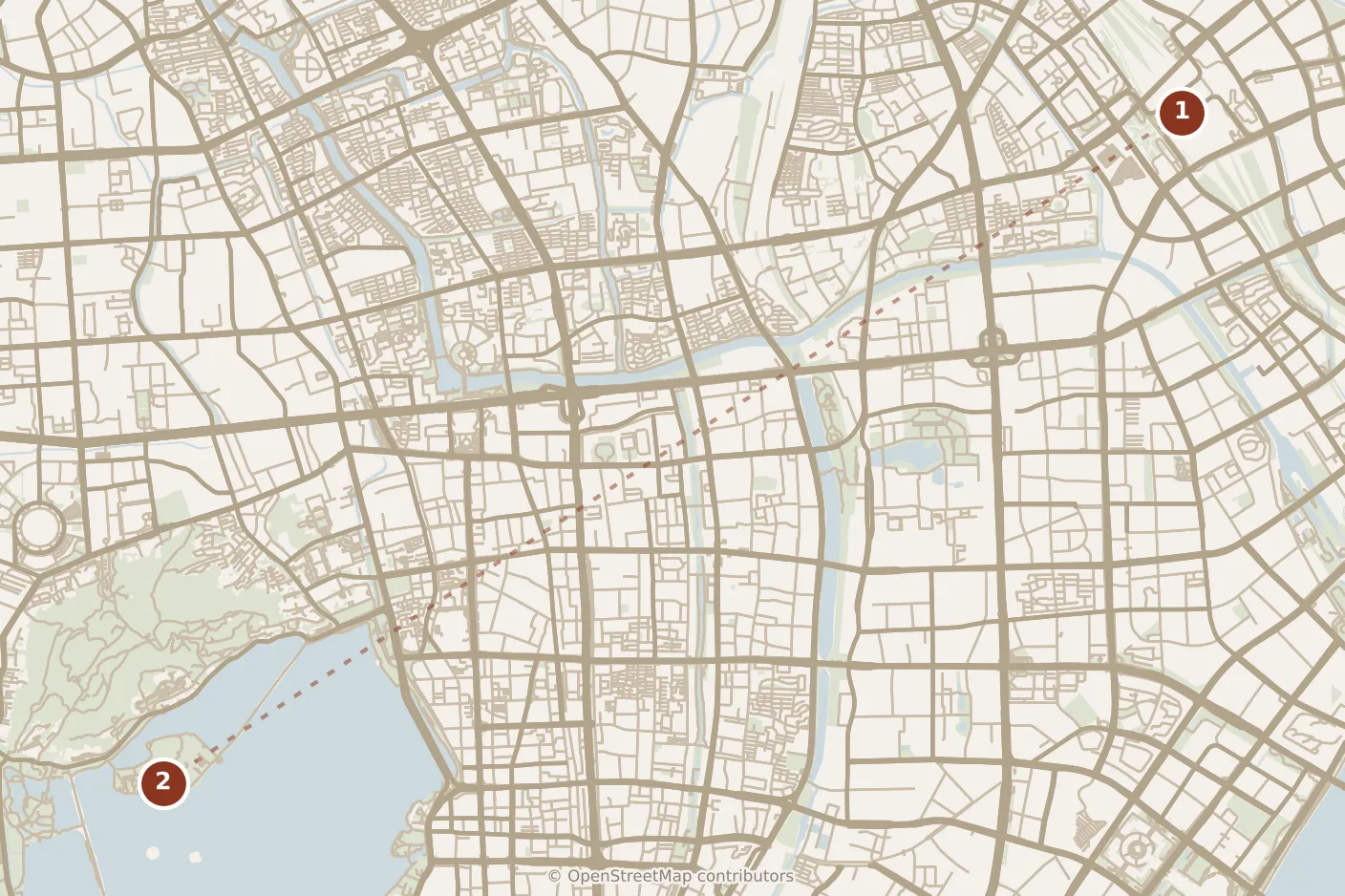
The ride on to stop 2, by metro, not on foot.
- Morning
- 1Hangzhou East Railway Station
- Broken Bridge — in the prose, not on the map
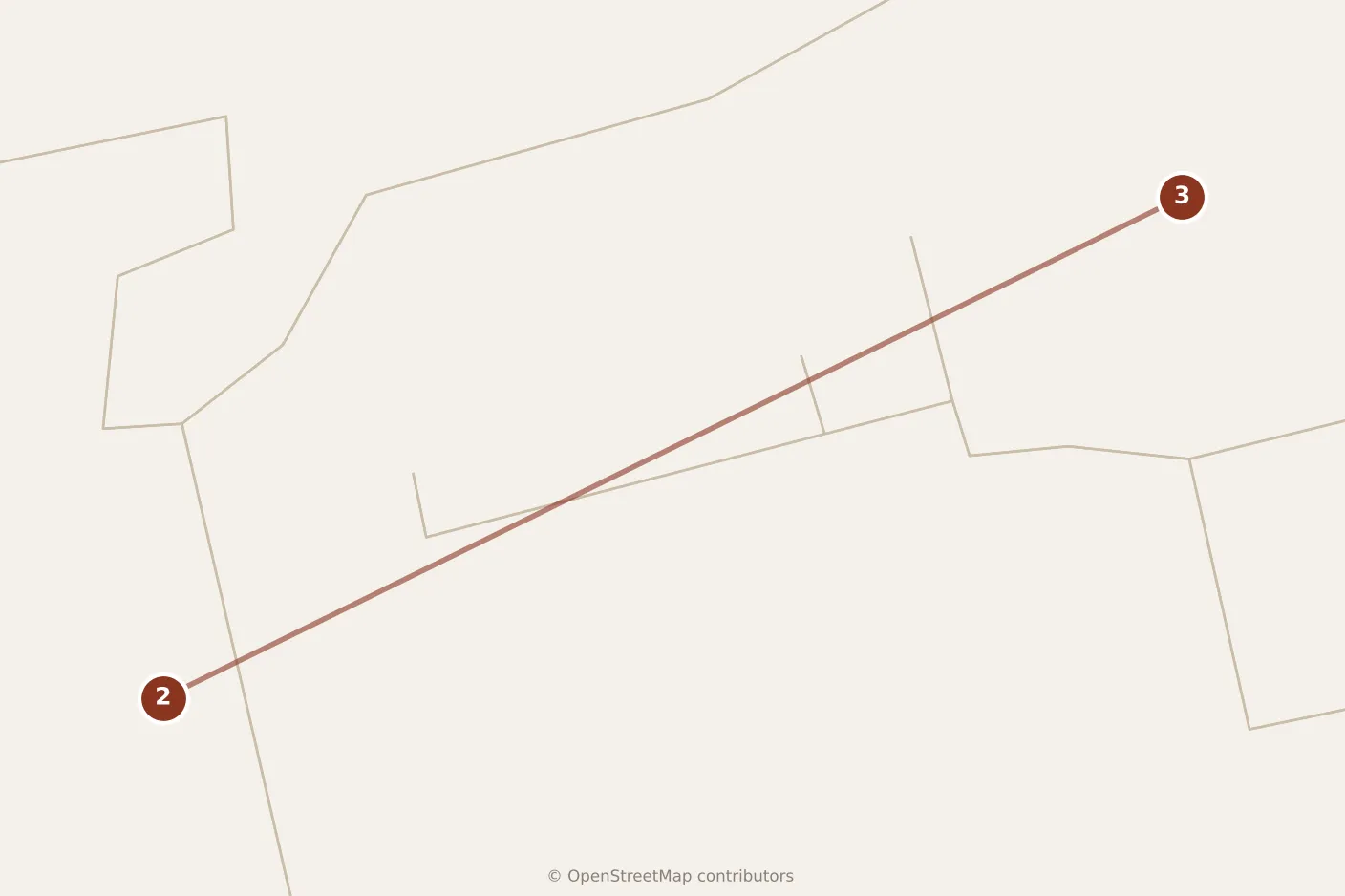
- Morning
- 2Solitary Hill
- 3Zhejiang Provincial Museum
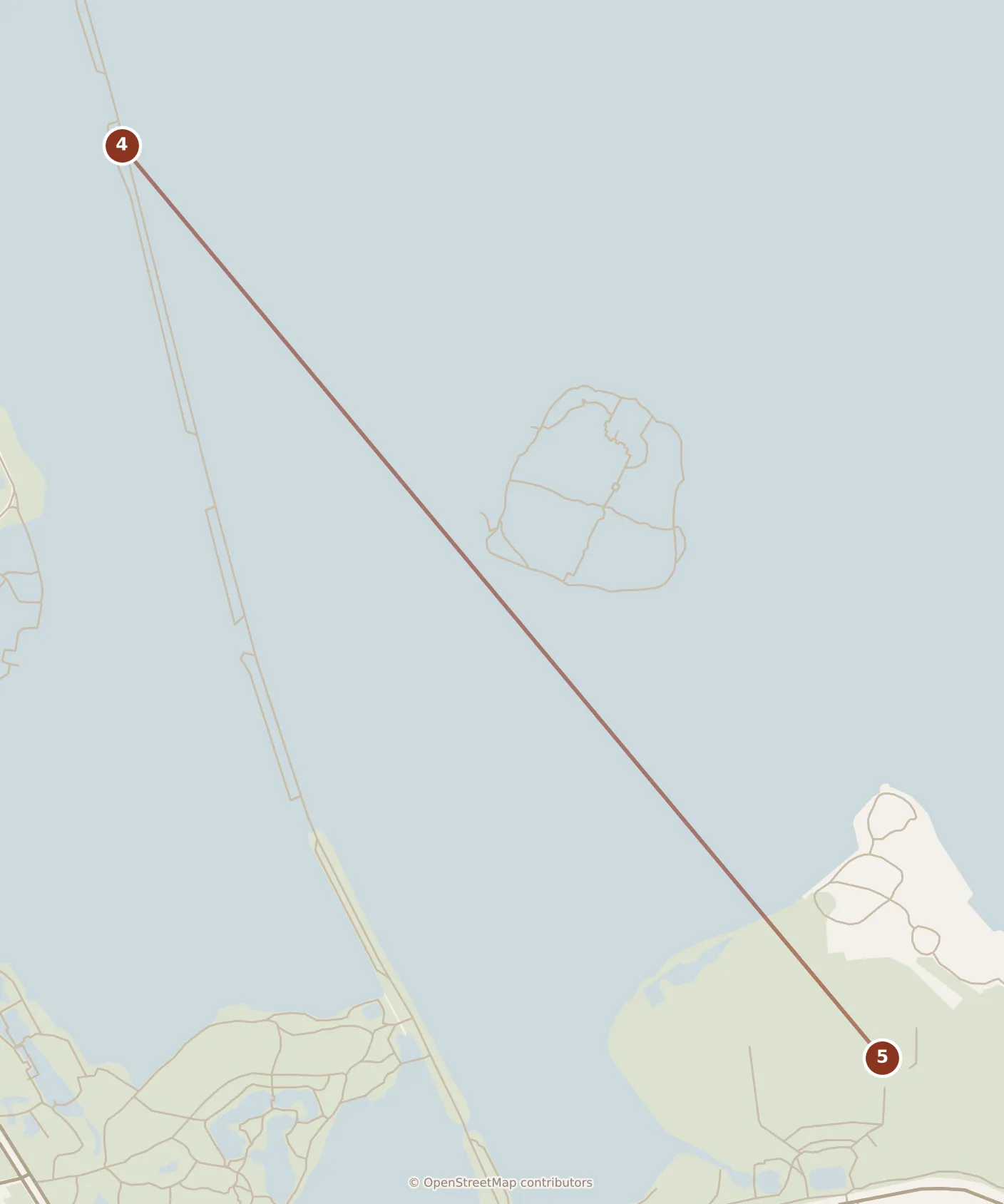
- Afternoon
- 4Su Causeway
- 5Leifeng Pagoda
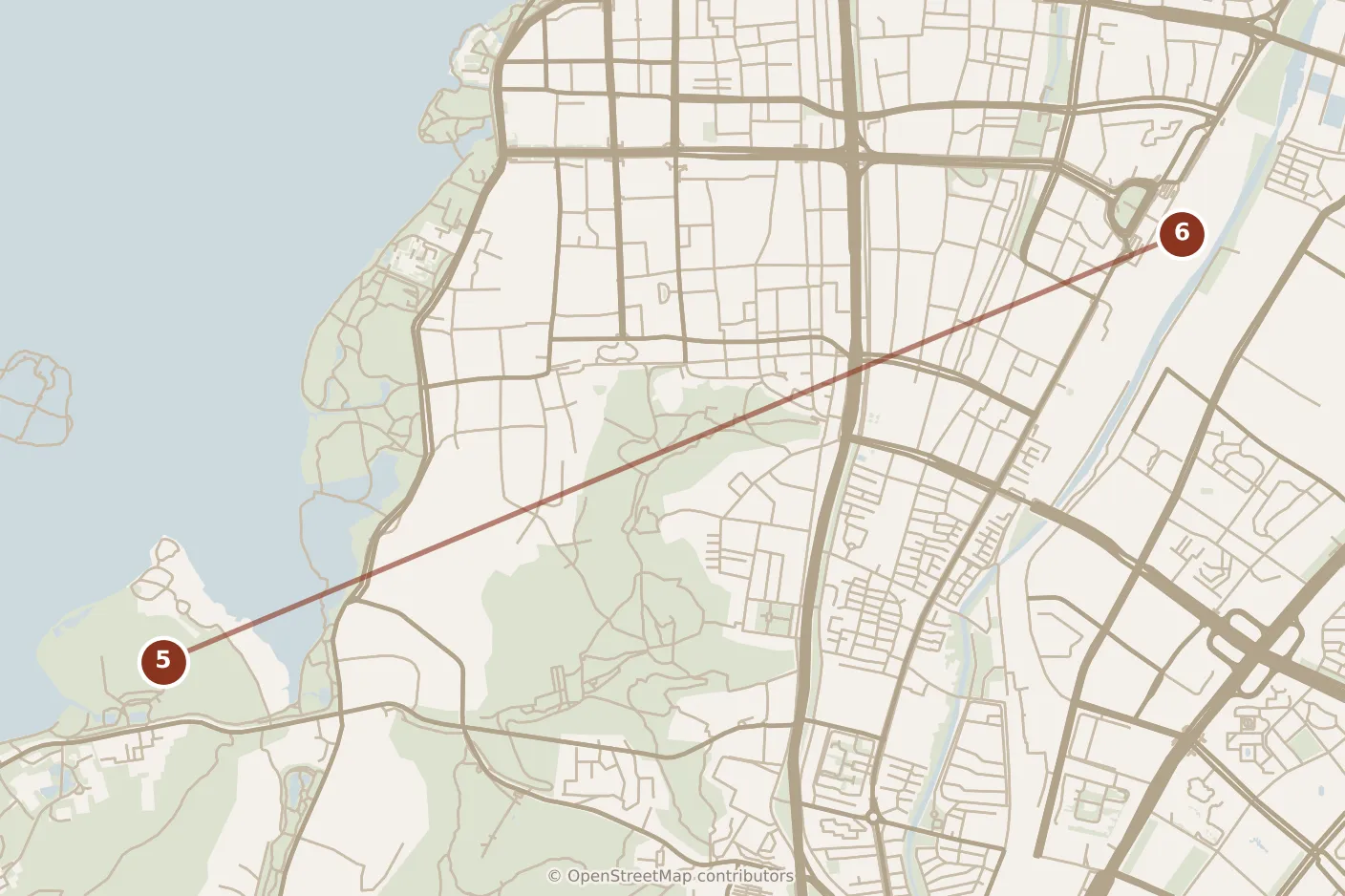
- Evening
- Hefang Street — in the prose, not on the map
- 6Hangzhou Railway Station
Morning
From Hangzhou East Railway Station, take Line 1 into the center — reckon on the best part of an hour with the walk at each end included — and get off at Longxiangqiao, the interchange nearest the lake. There’s a ticket machine if you’d rather, but the easier way through the gate is the one most people around you are using: the Alipay app’s own metro QR code, nothing to buy or top up. From the station it’s about a quarter of an hour on foot down to the water.
Come out at Broken Bridge, where the Bai Causeway leaves the shore. The bridge itself has never been broken — the name preserves one of the lake’s classical views, the snow that melts unevenly enough in winter to make the span look interrupted from a distance — and it’s the spot the Legend of the White Snake is set at, the meeting that starts the story. It’s also, on a fine weekend, one of the busiest stretches of shoreline on the lake: give the first twenty minutes of the morning to moving slowly rather than fighting it.
Walk the Bai Causeway west, a little over a kilometer of willow and peach trees on a narrow bar of land with open water on both sides — allow twenty minutes if you keep stopping, which you will. It ends at Solitary Hill, the lake’s one natural island and once an imperial retreat, now a quiet tangle of paths, old stone and pavilions. The lakeside branch of the Zhejiang Provincial Museum sits on it, general admission and free to walk into, and you’ll also pass the courtyard of the Xiling Seal Art Society, a society of seal-carvers founded in 1904 whose work is still shown there — worth a look through the gate rather than a special stop unless carving or ceramics is genuinely your subject. Give the hill and the museum’s main gallery three quarters of an hour between them and move on.
Afternoon
From Solitary Hill, follow the shore path round the lake’s north-west corner to the top of the Su Causeway — the best part of half an hour, mostly flat, water on your left the whole way. The causeway is Su Shi’s: a Song-dynasty poet who governed the city, dredged the lake’s silt, and piled it into this 2.8-kilometer bar of land with six arched bridges along it, rather than simply carting the mud away. Walk it end to end. Give it the best part of an hour if you stop at each bridge, which is the point of walking it rather than cycling it.
Lunch belongs off the causeway’s southern end, in the streets back of Nanshan Road: sit down for it rather than carrying something. West Lake vinegar fish is the dish the lake gives its own name to — sweet-sour, served whole, and worth the twenty minutes it takes a kitchen to bring it to the table properly rather than fast.
Local tip. Skip the causeway’s middle bridges if you’re short on time and keep only the first and the last — the six are a set, but two of the six is most of what a single day actually needs from them.
From lunch it’s a short walk to Leifeng Pagoda on the south shore. The tower standing today is a 2002 rebuild in steel and stone over the base of the original, which collapsed in 1924, and the glass floor at ground level shows you the old foundation stones through it rather than hiding them. Climb it — there’s an elevator as well as stairs — for the one view of the whole lake this day gives you, causeways, hill and all, from above rather than from the water’s edge. Give it three quarters of an hour, most of it at the top.
Evening
Walk east from the pagoda into the old town, the better part of half an hour, for Hefang Street: stone paving, Qing-dynasty shopfronts, and the city’s own stretch of snack stalls and tea houses rather than restaurants with menus. This is where the day is meant to end loosely rather than on a schedule — eat standing up if lunch was the sit-down meal, or the other way round.
If a train is waiting, the older Hangzhou Railway Station is the closer of the two: twenty to twenty-five minutes on foot from Hefang Street. If it’s Hangzhou East Railway Station you need instead, the same Line 1 that brought you in will just as easily carry you back out, boarding wherever in the old town is nearest when you’re ready to leave.
Practicalities
Nothing on this route has to be booked ahead. The pagoda and the museum are both walk-up, and the causeways are open ground with no gate and no ticket.
Every stop on this route is outdoors or open-air, so there’s no weekly closure to plan around the way there would be with a museum day. The one indoor stop, the Zhejiang Provincial Museum, you’re only asked to glance into rather than commit an hour to, and its general galleries are free either way.
The walking above adds up to a little over three hours across the day, and that covers only the distance between one stop and the next. It doesn’t cover the line for the pagoda’s elevator on a warm weekend, or the crowd at Broken Bridge already flagged above, which on a fine Saturday can eat twenty minutes before the day has properly started.
If you’re short on time, the hill is what goes first: Solitary Hill is the one stop on this route that is a genuine detour rather than a thing directly on the way, and cutting it buys back the best part of an hour without touching the causeway, the pagoda or the old town.
If it rains, the day still mostly works. The causeways are exposed and worth doing anyway if the rain is light, but the Zhejiang Provincial Museum’s galleries are the one indoor stretch on the route, and a free one to spend a wet hour in rather than pressing on regardless.


_20250505.jpg)