Dakar in two or three days: Gorée, the Plateau and the northern coast

Last updated 28 October 2026
Overview
Dakar does not walk the way most capitals do. Its sights sit at the two ends of a long peninsula, the old downtown of the Plateau at the southern tip and the cliffs, beaches and fishing villages of Almadies and Ngor at the north-western one, with ten to fifteen kilometers of residential city and slow traffic between them. So this itinerary is built the only way that works: one day for each end, and nothing that sends you back across the middle in the same afternoon. Inside each half-day you are on foot or in a boat; between them, a taxi.
Day one is the south: the island of Gorée in the morning, the Plateau’s market, square and museum of African art in the afternoon, and the fishing beach of Soumbédioune at the end of the light. Day two is the north: the African Renaissance Monument on its hill, the shore at Ouakam, the westernmost point of the mainland, and an afternoon on Ngor Island. A third day goes out of the city to Lac Rose, the pink lake north-east of it, and comes back for the Médina.
Both days end facing the open Atlantic, and both end on the light. The sun sets here between about twenty to seven in mid-November and about a quarter to eight at the beginning of July, the two ends of the year in local time; take your month’s hour and count back from it with the durations below. It is a short swing for a whole year, because the city sits well inside the tropics, and it means darkness comes quickly once the sun is down.
Two things decide the shape of the trip before you read the days. The Plateau is busy and crowded in the working day and empties after office hours, which is why it is visited in the afternoon and left before dark rather than saved for the evening. And the route enters two mosques’ surroundings and two markets in a mostly Muslim city: cover shoulders and knees on both days, not only at the doors.
Soumbédioune — not on the walking map; you get there by taxi.
- Day one · Evening
- Soumbédioune — in the prose, not on the map
Ngor village — not on the walking map; you get there by boat.
- Day two · Evening
- Ngor village — in the prose, not on the map
Day one

- Morning
- Gorée ferry terminal — in the prose, not on the map
- 1House of Slaves
- Castel — in the prose, not on the map
- 2Fort d'Estrées
- Afternoon
- Kermel market — in the prose, not on the map
- 3Place de l'Indépendance
- 4IFAN Museum of African Arts
Today is the southern tip, and it goes first because the ferry is the one fixed thing in the whole trip: the island runs on the boat’s timetable, and everything after it bends to fit.
Morning
Start at the Gorée ferry terminal, on the edge of the port at the eastern side of the Plateau. If you come in on the TER, the regional train, its Dakar terminus is close to the port, and the terminal is a short walk from it; since late September 2026 the train also runs from Blaise Diagne airport, so an airport arrival can come in the same way. By taxi, agree the fare before you get in and ask for the Gorée ferry. Buy the crossing at the terminal itself, at the counter inside; non-residents pay the highest fare, the fare covers the return, a small communal tax for visitors is added, and it is cash. The boat takes about twenty minutes.
Local tip. The men who meet you on the quay and on the boat offering to guide you round the island are not employees of anything. The island is small enough to walk without one; a firm, polite no at the terminal saves you repeating it for the next four hours.
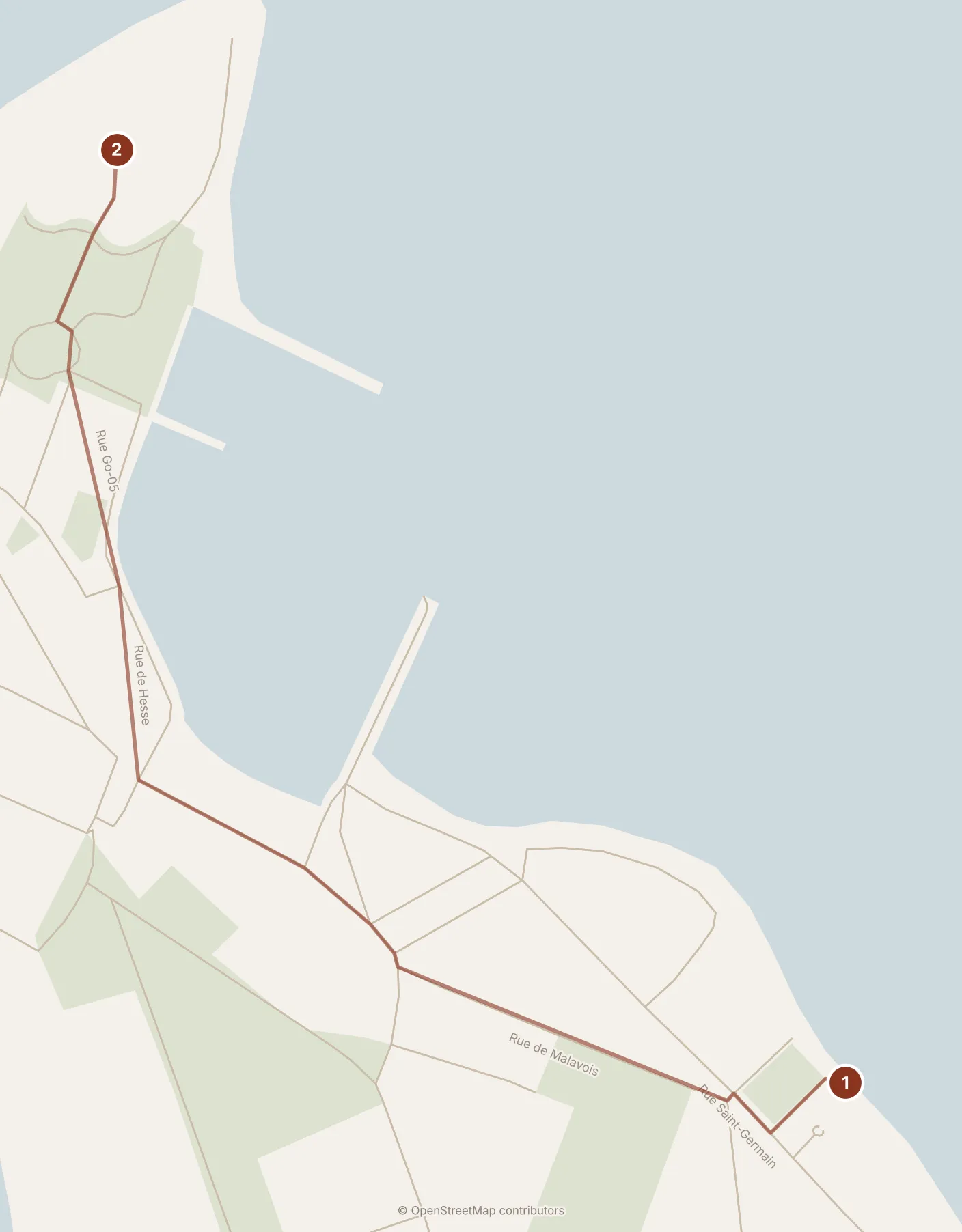
Gorée is a small, car-free island of sand lanes and ochre and pink houses, and a UNESCO World Heritage site because of what it was: a station of the Atlantic slave trade. The House of Slaves is the reason most people come, a few minutes’ walk from the jetty. Its cells on the ground floor and the narrow doorway opening straight onto the sea, the door of no return, are what the visit is built around. How many captives passed through this particular house is disputed by historians; that the island was part of the trade is not, and the house stands as its memorial. Give it forty minutes and let the rooms be quiet.
Then walk up to the Castel, the high, rocky southern end of the island, through lanes of artists’ studios and souvenir stalls. At the top are the concrete emplacements of the big guns installed in the 1930s to cover the harbor, which fired on the Allied fleet in 1940, and the best view on the island: back across the water to the whole Plateau. Give it half an hour. Come down to the other end for Fort d’Estrées, the round fort at the north tip of the island, which holds a historical museum of Senegal; it is the stop to drop if the morning is running long.
Keep four hours for Gorée, crossings included, and take the boat back for lunch.
Afternoon
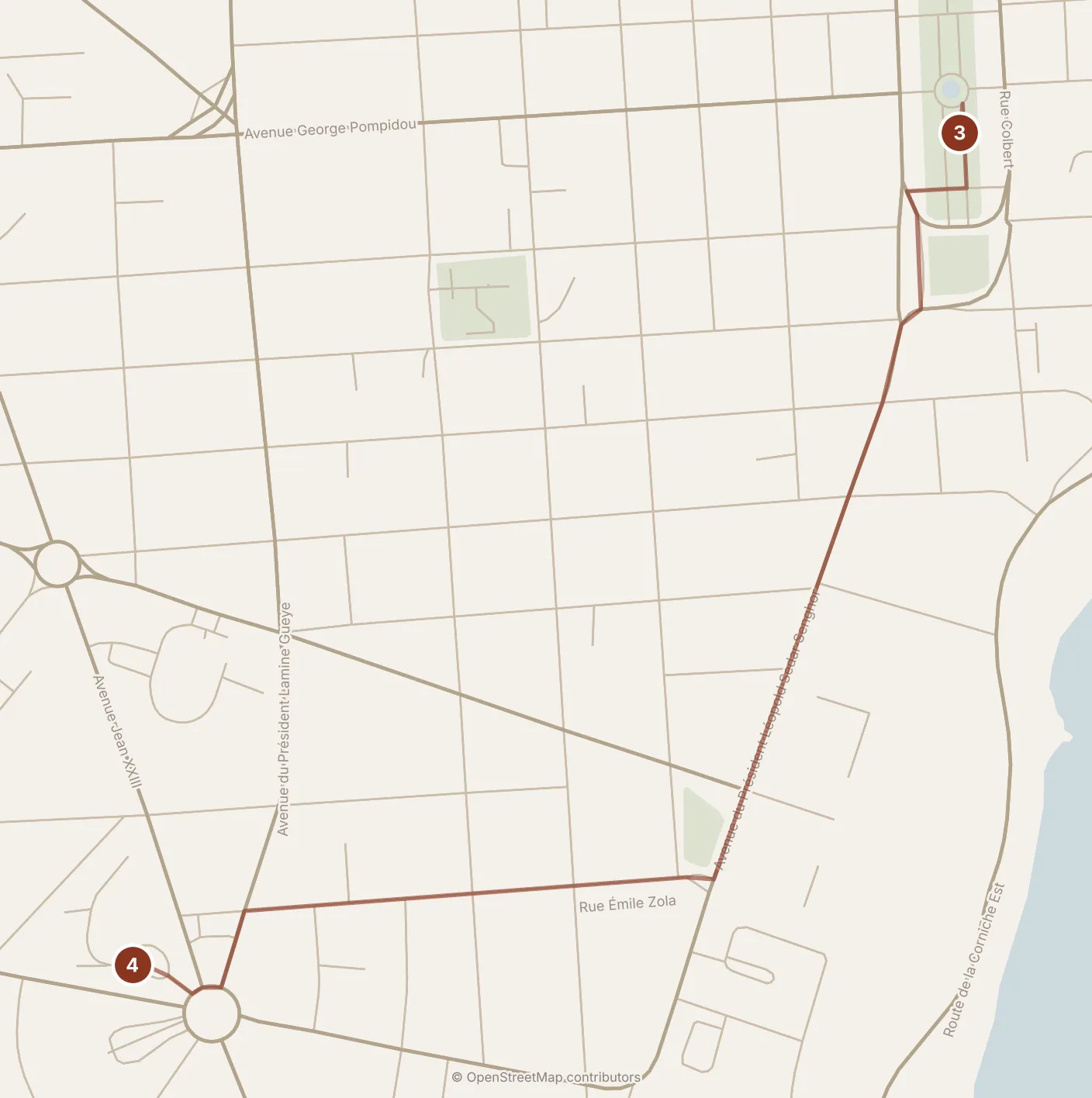
From the ferry terminal, Kermel market is a few minutes’ walk into the Plateau: a covered market in a colonial-style hall, with fish, fruit and vegetables inside and flower-sellers and craft stalls around its edges. Give it half an hour. This is where to eat lunch, at one of the simple places around the market rather than in a hotel. Thiéboudienne, the fish-and-broken-rice dish that is lunch here, is cooked once at midday and can be gone by mid-afternoon; if you land late, yassa or grilled fish is the fallback.
Walk on to Place de l’Indépendance, the large square at the center of the Plateau, ringed by banks, offices and the ministries; the Presidential Palace is a short way south of it. Keep the camera down near the palace and the government buildings: photographing official sites and their guards is the kind of thing that gets a visitor stopped.
From the square, the IFAN Museum of African Arts (the Musée Théodore Monod) is about a quarter of an hour on foot to the south-west, on its own square opposite the National Assembly. It is the old museum of the research institute of the same name, and its collection is masks, statues, textiles and everyday objects from across West Africa. It is not large: give it an hour. Like most museums it keeps a weekly closing day, so check which before you set out; if it falls on yours, give the hour to the craft village beside the beach at Soumbédioune and leave the Plateau earlier.
Evening
This is the stop the day is built around. Take a taxi north-west along the Corniche Ouest to Soumbédioune, the cove below the coast road where the fishing pirogues land their catch, painted boats run up the sand and, toward evening, fish grilled at tables set out on the beach. It wants the last hour of daylight. Counting back: four hours on Gorée, about two and a half in the Plateau with lunch, and a short taxi ride to the cove make about seven, so reach the ferry terminal roughly eight hours before your month’s sunset to leave a margin. The count covers the time you spend in the places and not the wait for a boat, which is the largest thing it leaves out; if the next crossing is a while off when you arrive, the afternoon is what shrinks. Ask before photographing anyone on the beach. Take a taxi from the coast road when you leave, rather than walking the Corniche after dark.
Day two

- Morning
- 5African Renaissance Monument
- 6Mosque of the Divinity
- 7Pointe des Almadies
- Afternoon
- 8Ngor beach
- 9Ngor Island
Today is the north, all of it facing the ocean, and it moves in one direction: from the hill at Ouakam north to the point, and on to Ngor, without coming back.
Morning
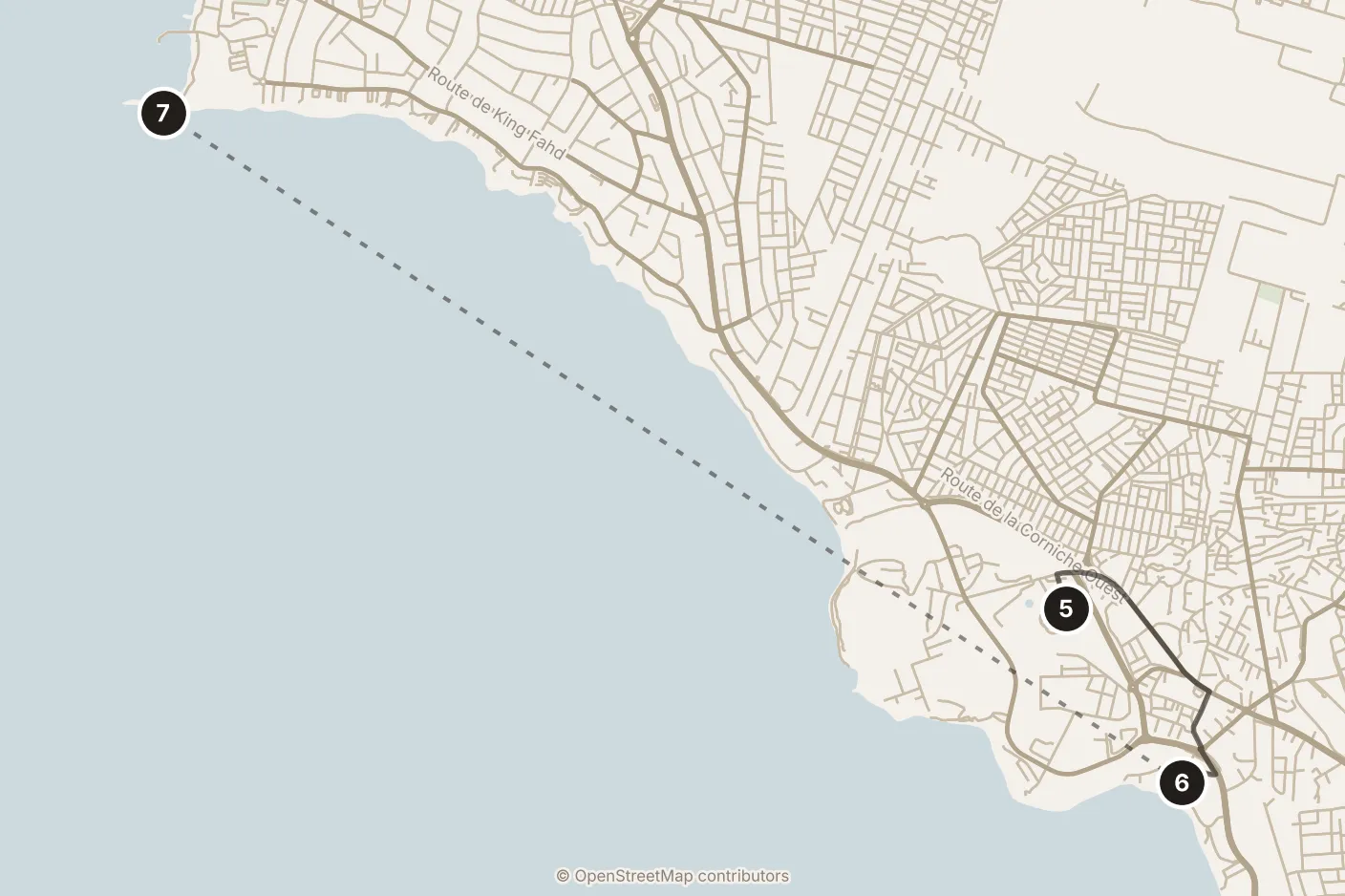
Take a taxi to the African Renaissance Monument, on one of the two hills of the Mamelles above Ouakam: a bronze figure of a man, a woman and a child, built on a scale that makes it visible from much of the city, inaugurated in 2010 and controversial ever since for its cost and its style. The climb up the long flight of steps to its base is the point even if you go no further, because from the top the whole western coast is laid out beneath you. A lift inside takes visitors to a viewing level high in the statue, on a separate ticket. Give it an hour, and go early, before the heat on the steps.
Go down to the shore at Ouakam for the Mosque of the Divinity, its white walls and minarets standing on the rocks at the edge of the water. It is a working mosque: see it from outside unless someone invites you in, and if they do, shoulders and legs covered, heads covered for women, and shoes off at the door. Do not come at the hour of Friday’s midday prayer.
Then take a taxi a few kilometers north to Pointe des Almadies, the rocky point that is the westernmost tip of mainland Africa. There is little to do but stand on it, which is reason enough; give it twenty minutes. Lunch is fish at one of the places along this stretch of coast, or thiéboudienne again in Ngor.
Afternoon
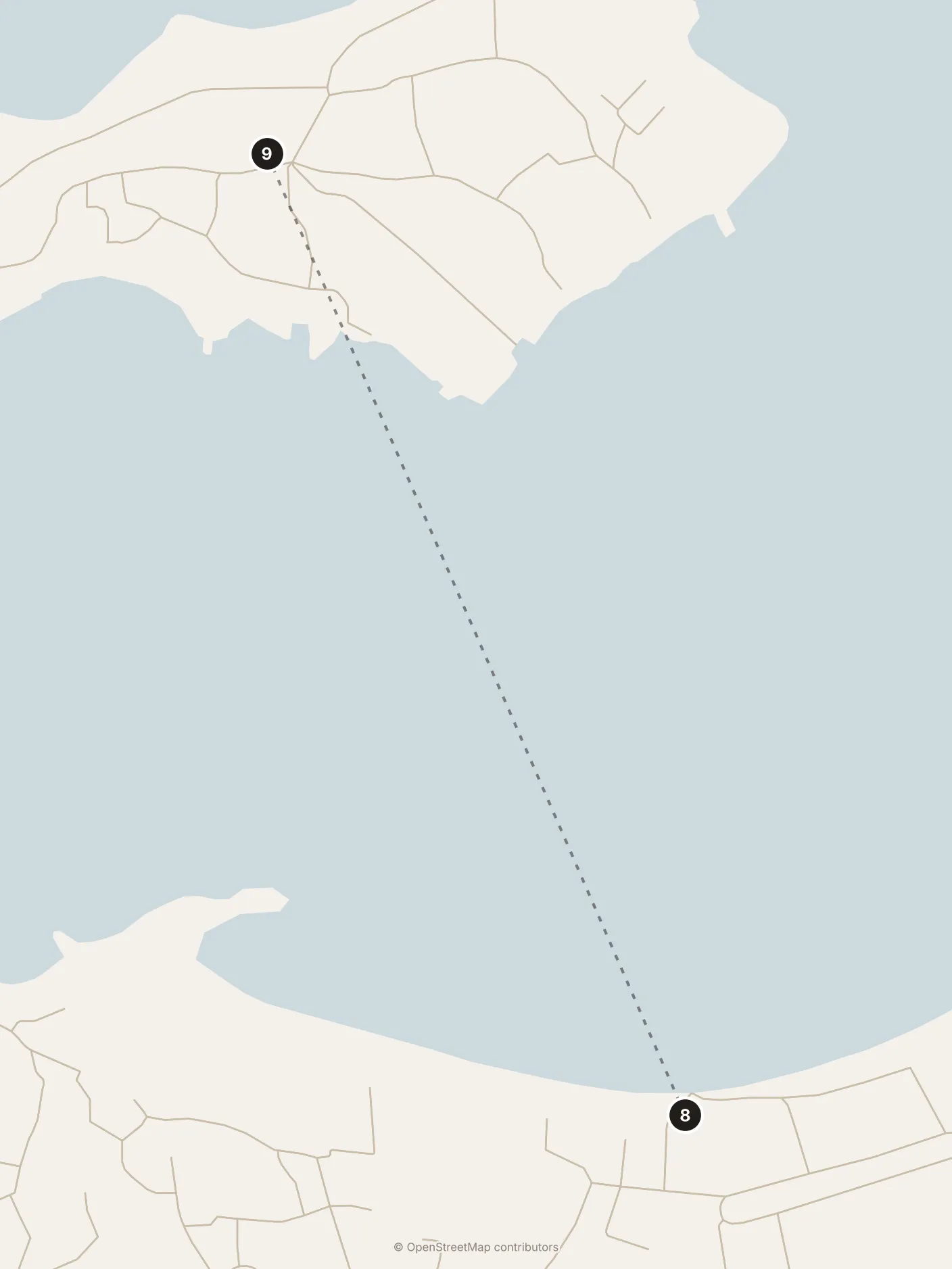
A short taxi ride brings you to Ngor beach, below the fishing village. From the beach, pirogues make the crossing to Ngor Island in a few minutes; you pay the boatmen on the sand, and the fare covers the return. The island is small and has no cars: a few lanes of houses and studios, rocks on its ocean side and sheltered water on the side facing the mainland. That sheltered side is the place on this route to swim, and Ngor and its island are on Senegal’s list of beaches where bathing is allowed, between 9 a.m. and 7 p.m. only; the open beaches of the coast have strong currents and drownings every year, so do not swim off the mainland’s ocean-facing shore. Give the island the afternoon: walk round it in under an hour, then sit by the water.
Evening
The boats back are the deadline, not the sunset. The boats generally stop around seven in the evening; when you buy the crossing, ask the boatmen when the last one leaves the island, and be on the jetty in good time for it. Counted forward, the day fits: be at the monument by about nine, which gives about two hours on the hill and the shore, twenty minutes at the point and an unhurried lunch, and the island then fills the afternoon with you back on the beach before the boats stop. Watch the sun go down over the water from Ngor beach, and stay in the village for dinner: Ngor and Almadies are where the city eats in the evening by the sea. Agree a taxi fare before you leave for the night.
With a third day

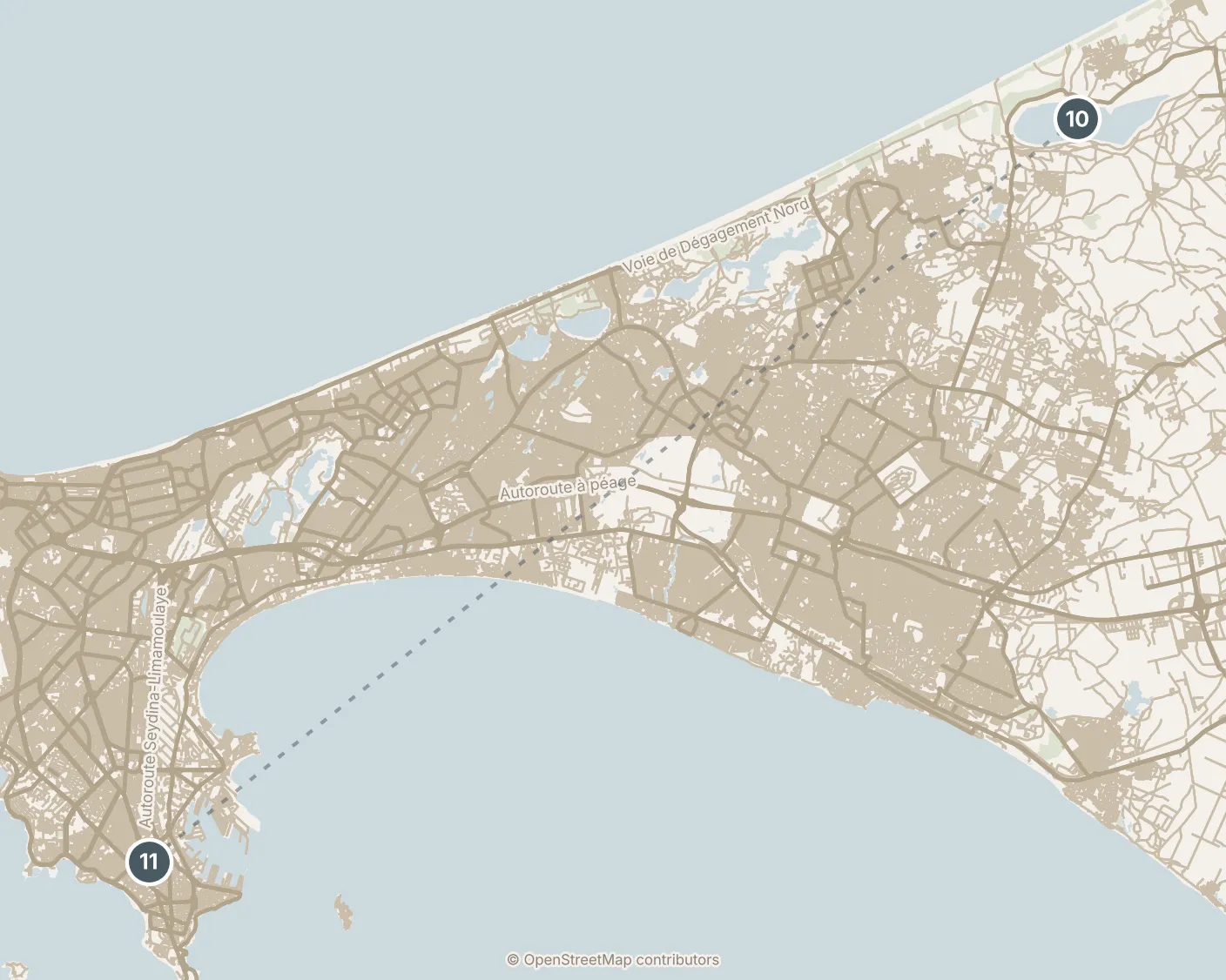
- With a third day
- 10Lac Rose
- 11Grande Mosquée
Give the third day to Lac Rose, and give it the morning; then come back for the Médina.
Lac Rose, the lake the maps call Retba, lies about thirty-five kilometers north-east of the city, behind the dunes near the coast. Its water turns pink because of a salt-loving alga, Dunaliella, and the color is strongest in the dry season and in strong sun, weakest under cloud and after rain. The lake is saltier than the sea, and the scene that makes it worth the drive is the salt harvesters: men standing chest-deep in the water breaking salt from the bottom and loading it into pirogues, and women carrying it ashore to the white heaps along the bank. Ask before you photograph them, as everywhere.
There is no train or bus that makes this simple, so hire a taxi for the half day, from wherever you are staying, and agree a price that includes the waiting time before you leave. Leave early: the road out of Dakar is slow at rush hour, and an hour each way is the honest figure to plan on. Give the lake an hour and a half, more if you take a pirogue out on it.
Back in the city by early afternoon, take the afternoon into the Médina, the dense, older residential district just north of the Plateau. Its Grande Mosquée, with its tall minaret, is a working mosque, so see it from the street outside unless invited in, and not at Friday’s midday prayer. The streets around it are a working neighborhood rather than a sight, and that is the reason to walk them.
If the third day is wanted for rest instead, the trade is easy: Lac Rose is the one thing in this article that requires a hired car and half a day, and the island afternoon of day two already gave you the sea.
Practicalities
Nothing on this route needs booking in advance. The Gorée crossing is bought at the ferry terminal on the day, the Ngor pirogue on the beach, and the monument’s lift at the monument. What the route does require is cash in small notes, every day: for taxis, which have no meters and need the fare agreed before you get in, for both boats, and for the markets. The parent guide covers the currency and how the city’s transport works.
The day that can break is day one, because the House of Slaves, Fort d’Estrées and the IFAN museum each keep a weekly closing day. Check all three before you set out. If they fall on your first day, swap it with the second: the monument, the shore, the point and Ngor Island are open air and do not mind which day it is. Day two should not land on a Friday if you want to see the mosque at Ouakam at midday; the rest of that day will take any date.
Between the stops, this article uses three ways of moving: on foot inside Gorée, inside the Plateau and on Ngor Island; boats to the two islands; and taxis for every leg between the two ends of the city and to the lake. Do not try to walk between the Plateau and the northern coast: it is a long way along busy roads, and the taxi is cheap.


