Curitiba in one day: the old center on foot, then north to the museum and the quarries

Last updated 4 August 2026
Overview
Curitiba does not hand you a single crowded core to walk around, and one day here only works if you plan around that. The old center is genuinely small — the whole of the morning below sits within four hundred meters — and almost everything else the city is known for lies north of it, strung along nearly seven kilometers in more or less a straight line. So the day has one direction and never reverses: walk the center, then go north, and keep going north until you are standing above a flooded quarry with the last of the light on it.
What a single day costs you is the other bearings. The glasshouse at the Jardim Botânico is the city’s postcard and it sits south-east of everything below; Santa Felicidade and its Italian dining halls are out on the north-west edge; the railway that drops off the plateau through the Serra do Mar to the coast is not a stop on a day, it is the whole day. Each of those is a defensible way to spend the time and none of them combines with the route here. Pick a shape and keep to it.
The stop this day is built around is the lookout at Parque Tanguá, above two quarry lakes, and what it wants is the end of the afternoon. The sun goes down here between about half past five at the start of June and a little after seven in early January — this is the southern hemisphere, so it is the winter evening that vanishes rather than the summer one. Take your own month’s hour and count backwards. From the museum door to the lookout, the stops below come to about three and a quarter hours; add the ride up out of the center and leave Rua XV de Novembro roughly four hours before your sunset. That figure is the time you spend inside the places and nothing else — not lunch, and not the wait for whatever carries you north, which on a slack hour is the largest thing it leaves out.
One thing to settle before you start. The Rodoferroviária, the combined coach and rail terminal east of the center, lists both a staffed left-luggage desk and automatic lockers among its services, and the terminal itself runs every day of the year — what is published is the terminal’s day and not the desk’s, so the day is settled and the hour is the thing to check. Leave the bag there. Nothing after lunch on this route can be done holding one — it is a museum, two quarries and a slope — and this day does not come back for it, so the ride out to collect it belongs in the plan rather than arriving as a surprise.
The day

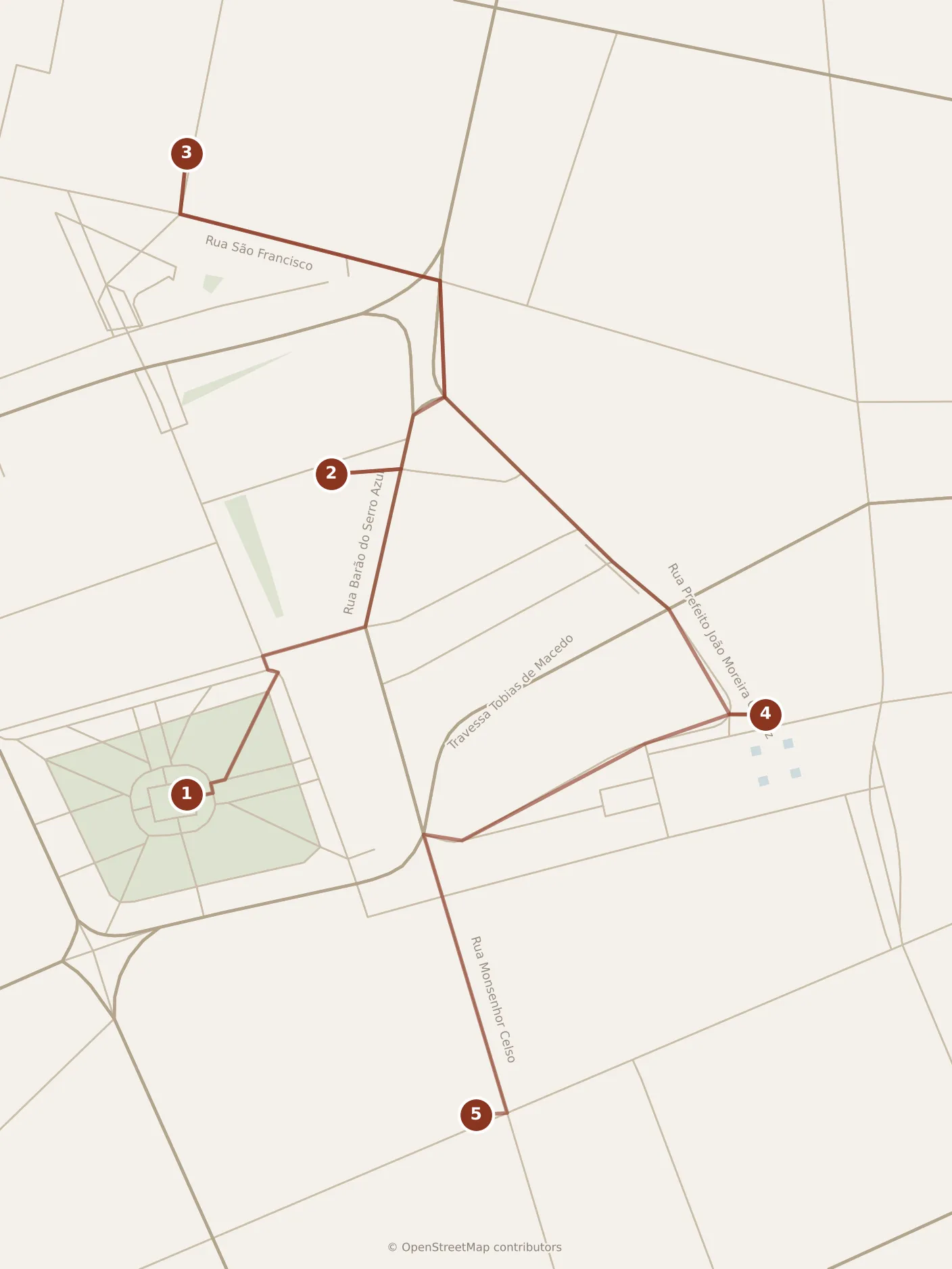
- Morning
- 1Praça Tiradentes
- 2Curitiba Cathedral
- Largo da Ordem — in the prose, not on the map
- 3Igreja da Ordem Terceira de São Francisco das Chagas
- 4Paço da Liberdade
- 5Rua XV de Novembro
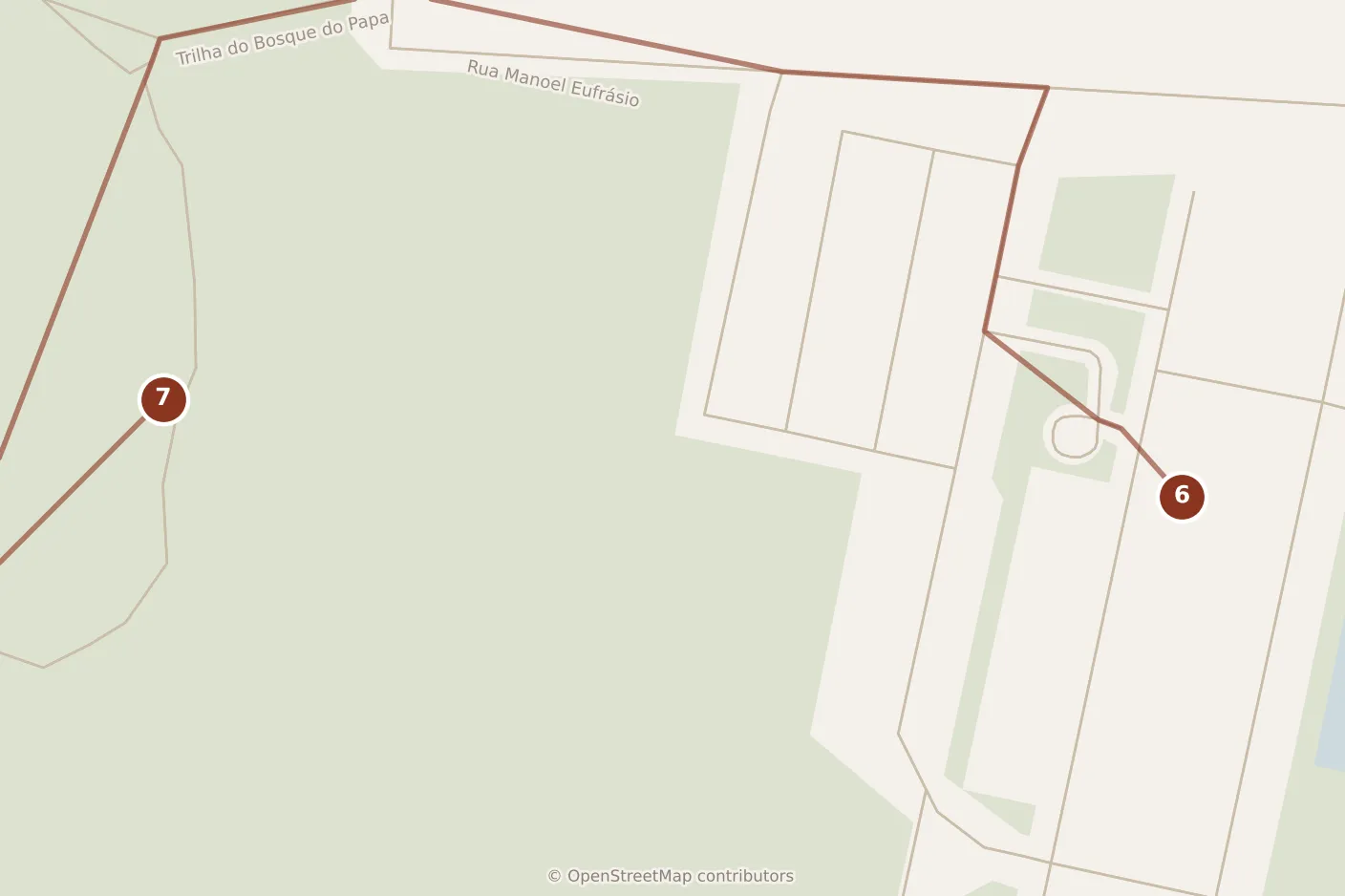
- Afternoon
- 6Oscar Niemeyer Museum
- 7Bosque do Papa
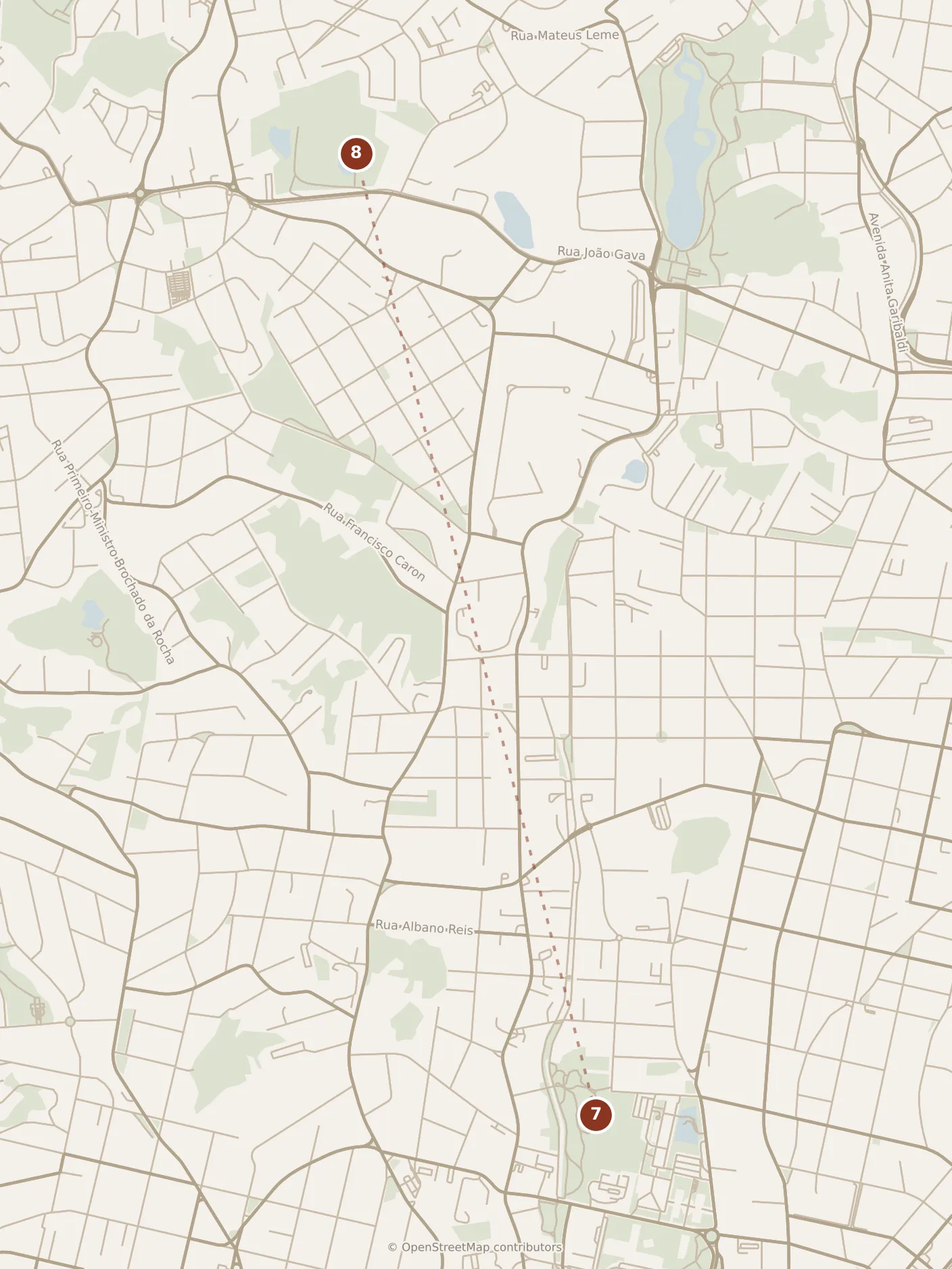
The leg out of the center: from stop 7 by bus, not on foot.
- Afternoon
- 8Ópera de Arame
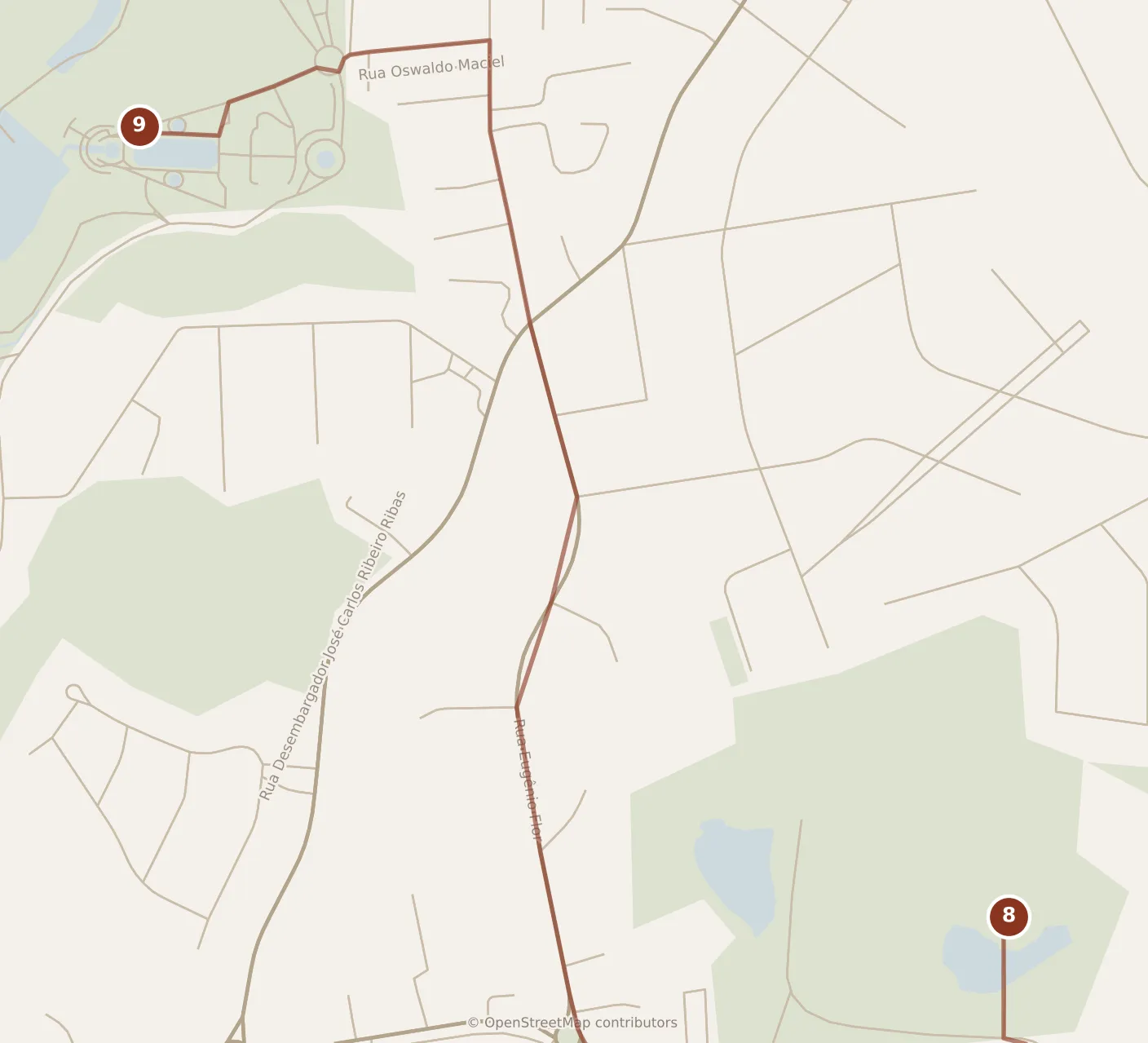
- Evening
- 9Parque Tanguá
- Batel — in the prose, not on the map
Morning
Start on Praça Tiradentes, which is where the city started and is stop twenty-five of the Linha Turismo’s twenty-six — the loop itself begins across the center at Rua 24 Horas. It is a square rather than a sight: benches, buses on three sides, an underpass full of small shops. Give it ten minutes and spend them working out where the streets run, because everything else in this half of the day is within four hundred meters of it.
The cathedral stands on the square — neo-Gothic, late nineteenth century, and the standard against which the rest of the center reads as either much older or much newer. Inside it is high, dim and plainer than the front promises; fifteen minutes is enough unless a service is on.
Then walk down to Largo da Ordem, the one quarter of the old town that has survived whole: cobbles, low colonial houses, and the ground dropping away from the modern center in a way that makes the change of century physical. On a Sunday the whole slope is an antiques and crafts fair, which is either the best morning of the week here or the worst, depending on whether you came to look at buildings or at stalls.
The building to go inside is the Igreja da Ordem Terceira de São Francisco das Chagas — the Igreja da Ordem to everyone — the oldest church in the city, and as far from the cathedral in spirit as it is close in meters: white, low, thick-walled, Portuguese colonial, with a plain wooden interior and almost no decoration. Twenty minutes, and it is the one room in the center that could not have been built anywhere else.
From there cut back up and south-east three hundred meters to the Paço da Liberdade, the old city hall of 1916, restored and reopened in 2009 as a cultural center with a café inside. It is worth going in for the building itself even if whatever is on the walls is not for you — half an hour, coffee included. On a Sunday it did not open until eleven in 2026, which is later than a morning of ten minutes here and twenty there arrives; the city’s Linha Turismo pages carry the hours attraction by attraction, and if the door is shut when you reach it, walk Rua XV first and come back to it after lunch. That order costs the afternoon half an hour it does not have — the north still has to begin four hours before your sunset — so either start the morning thirty minutes earlier or let it go.
Finish on Rua XV de Novembro, the pedestrianized stretch everyone calls the Rua das Flores. It matters less as a shopping street than as evidence: this was taken from the cars in the early 1970s, among the first in the country to go, and the whole reputation Curitiba has for planning starts on these blocks. Walk it end to end, and eat here. The center empties in the evening but at midday it feeds thousands of office workers, and this is where the eating on this route is. Pierogi, and pinhão in winter, are what Curitiba eats; north of here the city lists nothing but the snack counter at Parque Tanguá.
Afternoon
Now go north. The Oscar Niemeyer Museum is two and a half kilometers up in the Centro Cívico: a ride-hail takes about ten minutes, and on foot it is three quarters of an hour up long, straight, unshaded avenues, which is a march rather than a stroll. The Linha Turismo does stop at the museum door, but from the center stops that is most of a three-hour circuit the long way round: it is the sightseeing option, not the transport one.
The museum is universally called the Eye, and the annexe is why: an enormous eye-shaped hall raised on a single yellow stalk, standing clear of the older block behind it. That block is a Niemeyer building in its own right, converted rather than replaced, and the pair of them are the visit — the collections change, the architecture does not. Give it an hour and a half, and if you have only an hour, spend it on the annexe and walk past whatever is hanging in the older block.
Four minutes from the museum’s rear lawn, and connected to it across the grass, is the Bosque do Papa: more than three hundred araucaria pines standing in the middle of the city, and among them the memorial to Polish immigration, a group of log houses moved here from the settler colonies around the city. Curitiba’s pierogi come out of those colonies, and half an hour in this wood is what turns that from a menu item into a fact about the place.
Local tip. If the afternoon has slipped, drop the Bosque do Papa rather than the opera house. The wood is four minutes from the museum door and costs almost nothing to give up, whereas the quarries are the reason this day goes north at all — and the lookout above them is the one stop here that cannot simply be moved later, because it is the one waiting on the light.
Three kilometers further north, in the worked-out quarry the city calls the Pedreira, stands the Ópera de Arame: a theater of tubular steel under a transparent roof, put up in seventy-five days and opened in 1992, sitting in water at the foot of a rock face. It is about ten minutes by car and there is no sensible walk. Forty minutes covers the causeway over the water, the auditorium if it is open, and the arena cut into the rock beside it, which is the larger piece of landscape of the two and the one most people underrate.
Evening
From the opera house it is twenty minutes on foot to Parque Tanguá, or a short ride-hail, or — while the loop is still running — one stop on the Linha Turismo, which links the two directly: two more disused quarries, flooded, with a fall of water between them and a tunnel cut through the rock. The lookout is on the upper terrace, sixty-five meters above the lower lake, and it is the reason for the whole northward line of this day. Arrive with half an hour of light in hand — the drop, the lakes and the pines on the far rim need the sun low to be worth anything, and after dark this is simply a dark park.
Then go. There is a snack counter in the park and nothing else, and this is not a district to linger in once the light has gone. A car takes about a quarter of an hour to Batel, where the restaurants and late cafés are concentrated and walking between them in the evening is pleasant. It is not the only choice: the bars of the Setor Histórico, in the streets this morning walked, are where the city’s own tourism board says Curitibans meet at night. If your day ends with a coach rather than dinner, go straight from the park to the Rodoferroviária instead — about twenty minutes by car, and the left-luggage office is inside the building you are leaving from.
Practicalities
Two things on this route cost money and are not transport. The museum ticket is bought at the door; the full price was in the thirty-to-forty-real range in 2026, with a reduced rate beside it. The Ópera de Arame is the other — the city lists it as a ticketed visit without naming the price. Nothing here needs booking ahead. How the city’s buses are paid for — the flat fare, the tube stations, the tourist loop’s separate ticket — belongs to the Curitiba guide, and this day asks nothing beyond what that page already sets out.
Two hours decide the order of this day. The museum shut at six in 2026; the lookout at the far end stayed open until eight. That gap is the whole reason the interior sits in the middle of the day and the open air at the end, and it is why running this route backwards does not work — you would reach a locked museum. If either hour has moved, the method has not: put the stop with a door before the stops without one, and count the northern leg back from the light rather than from the museum. In practice the light is the earlier of the two constraints all year round. In June it pushes you out of the galleries in mid-afternoon, hours before closing; even in January, when the evening runs past seven, you leave the museum before its doors do.
A Monday takes the interiors, and there is more than one of them. In 2026 the museum was shut on Mondays, and so were the Paço da Liberdade, the Ópera de Arame and the Polish memorial inside the Bosque do Papa — the city’s Linha Turismo pages carry the closed day attraction by attraction. What is left is the streets, the two churches, the araucarias and the two quarries, and that is still a day: Praça Tiradentes, the cathedral, Largo da Ordem and the Igreja da Ordem inside their four hundred meters, lunch on Rua XV de Novembro, then north to the wood at the Bosque do Papa and on to the lookout at Parque Tanguá. Call it two hours in the center and the rest of the afternoon outdoors. Nothing in that version keeps a door, so the light is the only clock left: a Monday is the day to go north late rather than early, and the forty minutes the opera house would have taken go to the lookout, which is the better half of the northern leg in any case.
The Linha Turismo is the only part of this day that runs to a schedule rather than to a door, and the schedule is the constraint. In 2026 it ran every day, with the last departure from Rua 24 Horas at five in the afternoon — so it can carry you out to the museum, on to the opera house and one stop further to Parque Tanguá, and it will not be there when you come down off the lookout. The hours are published on the city’s own Linha Turismo site; check the day’s, and plan the way back by car regardless. Without the loop the same journey is a ten-minute ride-hail from the center to the museum and another ten from the museum to the quarries. The walk from the center up to the museum is three quarters of an hour and is always available; the leg from the museum to the opera house is three kilometers of ordinary avenue and is not worth walking.
The bag decides the order rather than decorating it, which is why it comes up twice. The terminal is east of the center and this day ends the better part of seven kilometers away from it, so the case goes into left luggage in the morning, the route is done without it, and the ride back is the last item on the list rather than an afterthought. If you cannot leave it anywhere, the day does not shrink to a gesture, it shortens to the center: Praça Tiradentes, the cathedral, Largo da Ordem, the Igreja da Ordem and — if the hour suits — the Paço da Liberdade, in that order and all of it inside four hundred meters, then Rua XV de Novembro to eat and to walk end to end. The stated stops come to about an hour and a quarter between them; with the cobbles, the walking and lunch that is a morning and the first of an afternoon, and the case can sit beside you through every one of them. Then east to the terminal. What you give up is the museum and the two quarries, and a suitcase is misery in all three.


.jpg)