Cairo in 2–3 Days: The Pyramids, Islamic Cairo and Old Cairo

Last updated 15 August 2026
Overview
Two days is enough to see why Cairo is essential, and not enough to see all of it; three lets you add Old Cairo without cutting anything else. The three days here don’t compete for the same ground: day one stays inside the walled lanes of Islamic Cairo, day two is a full day out at the Giza plateau, and the third pairs the older Egyptian Museum with the churches and synagogue of Old Cairo, reached by a single ride on the metro.
Distances rule out walking between clusters the way a smaller old town would allow. Assume a taxi or a ride-hailing app for the longer hops between neighborhoods, and your own feet for whatever sits inside one of them.
One clash is worth knowing before you fix which day is which. Friday is the Muslim holy day, and the working mosques on day one pause non-Muslim visits for roughly an hour around midday prayers. It doesn’t close the day, only narrows it, so the fix isn’t to swap days but to start day one a little earlier if it lands on a Friday, or simply expect the pause over lunch.
The felucca sail that ends day one is the one stop on this route that depends on the sky rather than a schedule. At Cairo’s latitude the sun sets from a little before five in December to around half past seven at the height of summer, so aim to be on the water an hour before whichever end of that range your dates fall closer to.
Day one

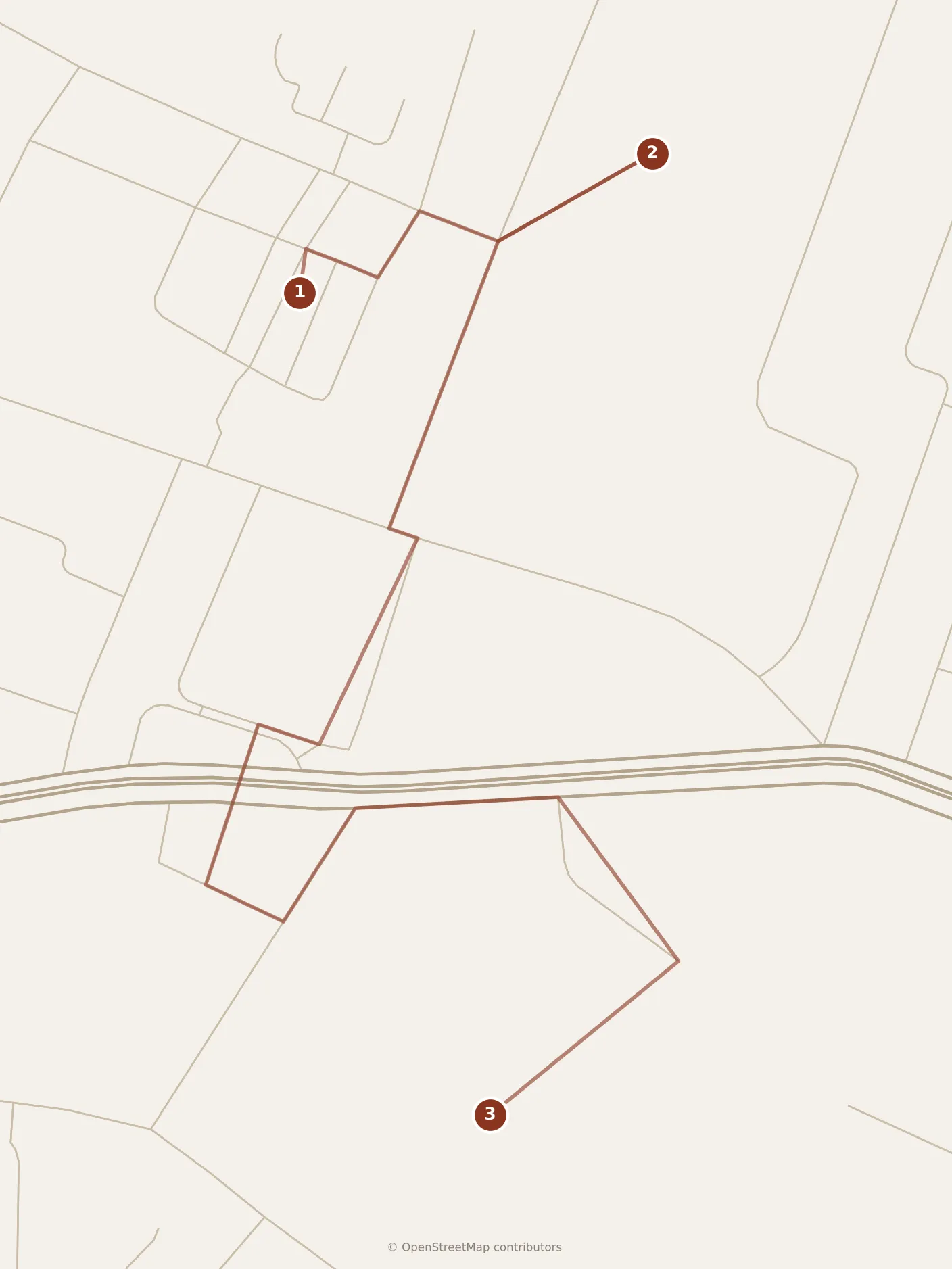
- Morning
- 1Khan el-Khalili
- 2Al-Hussein Mosque
- 3Al-Azhar Mosque
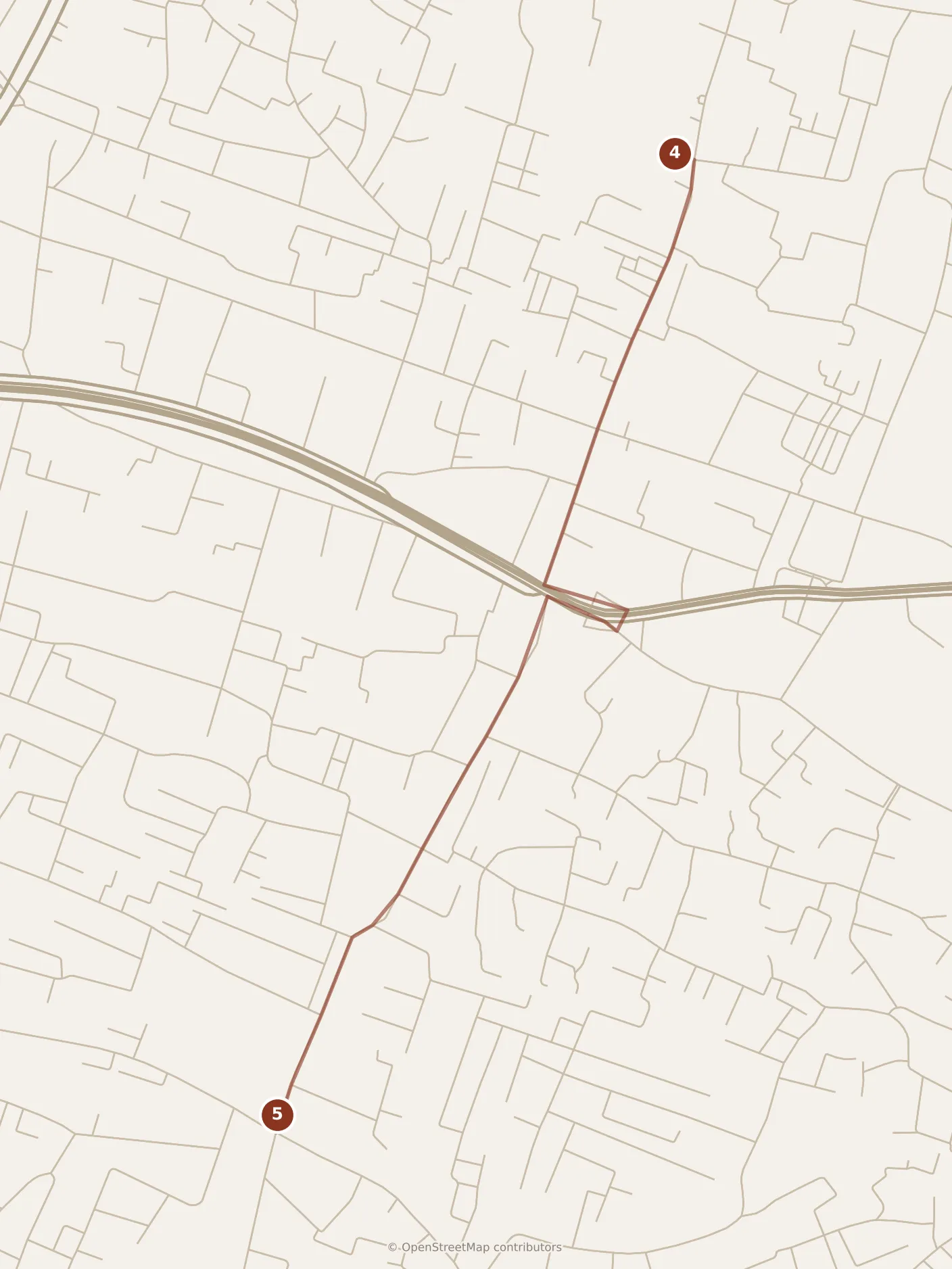
- Afternoon
- 4Complex of Sultan Qalawun
- 5Bab Zuweila
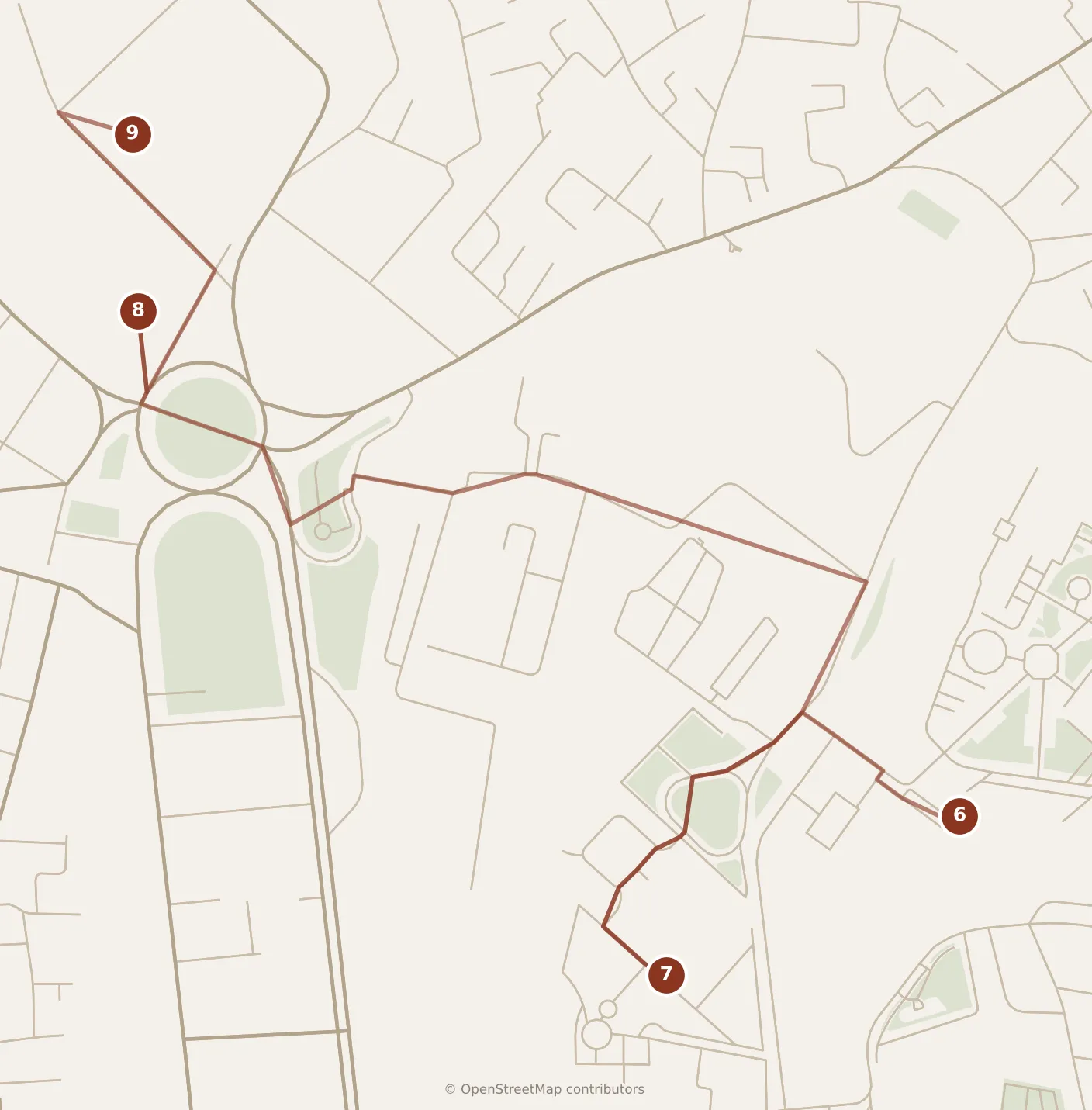
- Afternoon
- 6Citadel of Saladin
- 7Muhammad Ali Mosque
- 8Sultan Hassan Mosque
- 9Al-Rifa'i Mosque
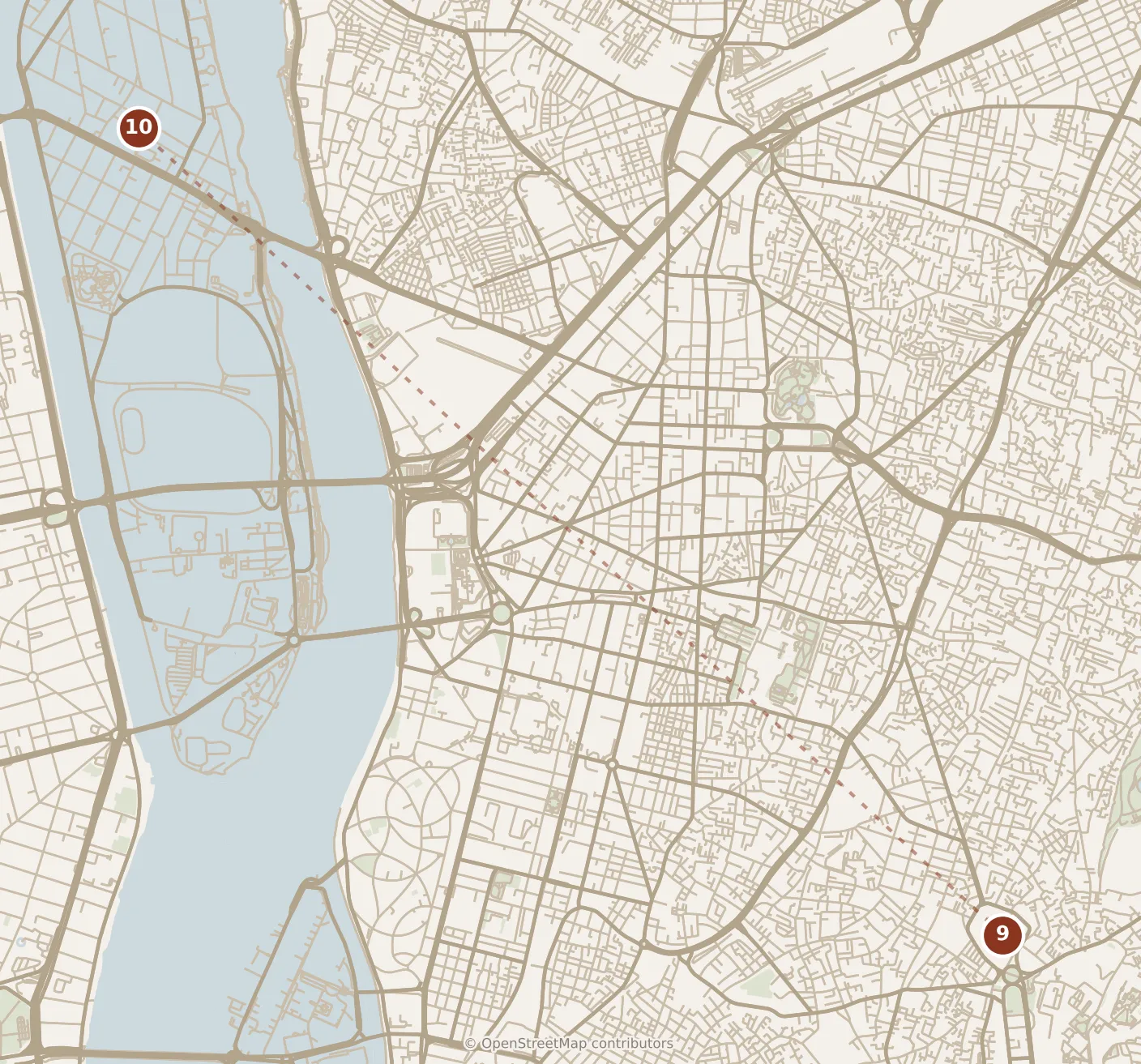
The leg out of the center: from stop 9 by taxi, not on foot.
- Evening
- 10Zamalek
Everything until the evening sits within walking distance of Khan el-Khalili; the day only leaves that ground once, for the Citadel, and a taxi covers it.
Morning
Start in Khan el-Khalili, the covered market founded in the fourteenth century and still selling roughly the categories of thing it always has: gold in one lane, spices and perfume in the next, brass and lanterns in a third. It rewards slow walking rather than a shopping list, and the coffeehouses tucked into its lanes are older than most of what a visitor comes to Cairo to see; give one ten minutes before you buy anything.
The market opens straight onto Al-Hussein Mosque, one of the most revered in the city and still a focus of daily devotion rather than a monument to look at. Non-Muslims aren’t admitted to the mosque itself, but the square in front of it is where the life of the quarter actually happens, and it’s worth standing in for a few minutes regardless.
A short walk on, Al-Azhar Mosque was founded in the tenth century and is still a working mosque and university. Modest dress is expected here, as at every mosque on this route — shoulders and knees covered — and a wrap is usually offered at the door if you arrive without one; shoes come off at the threshold. The courtyard is vast, and the minarets were added in different centuries by different rulers, so no two of them match; that mismatch is the building’s history rather than a flaw in it.
Afternoon
From Al-Azhar, Sharia al-Muizz runs south through the densest run of medieval buildings anywhere in the city. Don’t try to see all of it; stop properly at the Complex of Sultan Qalawun, a combined mausoleum, hospital and school from the thirteenth century whose mausoleum chamber, lit through carved stone screens, is worth giving ten minutes to on its own.
Local tip. If the afternoon has turned hot, skip the rest of the Muizz street walk and take a taxi straight to the Citadel instead — its mosque interiors are shaded and cool, and the street itself is better saved for a cooler morning, this trip or another one.
The street ends at Bab Zuweila, one of the last three surviving gates of the old Fatimid city wall. Its twin minarets are open to climb, and the stair earns the effort for the view back over the domes and minarets you’ve just walked past.
From here, a taxi covers the distance to the Citadel of Saladin, the fortress built on its hill in the twelfth century, inside whose walls everything for the rest of the afternoon sits. Its centrepiece, the Muhammad Ali Mosque, has an Ottoman silhouette — one huge central dome ringed by half-domes — that Cairo’s older, Mamluk-era mosques deliberately don’t share, and a courtyard clock tower given by Louis-Philippe of France in the nineteenth century that is said never once to have worked. Its terrace gives the widest, clearest view over the old city that this itinerary reaches.
Down from the Citadel, across the square, Sultan Hassan Mosque and Al-Rifa’i Mosque face each other and are worth pairing: Sultan Hassan is fourteenth-century Mamluk architecture at its most confident, four soaring vaulted halls around an open court; Al-Rifa’i, finished in matching stone in the early twentieth century, is younger than it looks and was built deliberately to answer it across the square.
Evening
End the day on the Nile rather than in it: a felucca, the wooden sailboat that has worked this river without an engine for centuries, from the docks along the corniche — Garden City and Zamalek both work. There’s no engine noise and no set route — you go where the wind takes you and give it the best part of an hour — and the city looks calmer from the water than it does from any of its streets.
Day two

- Morning
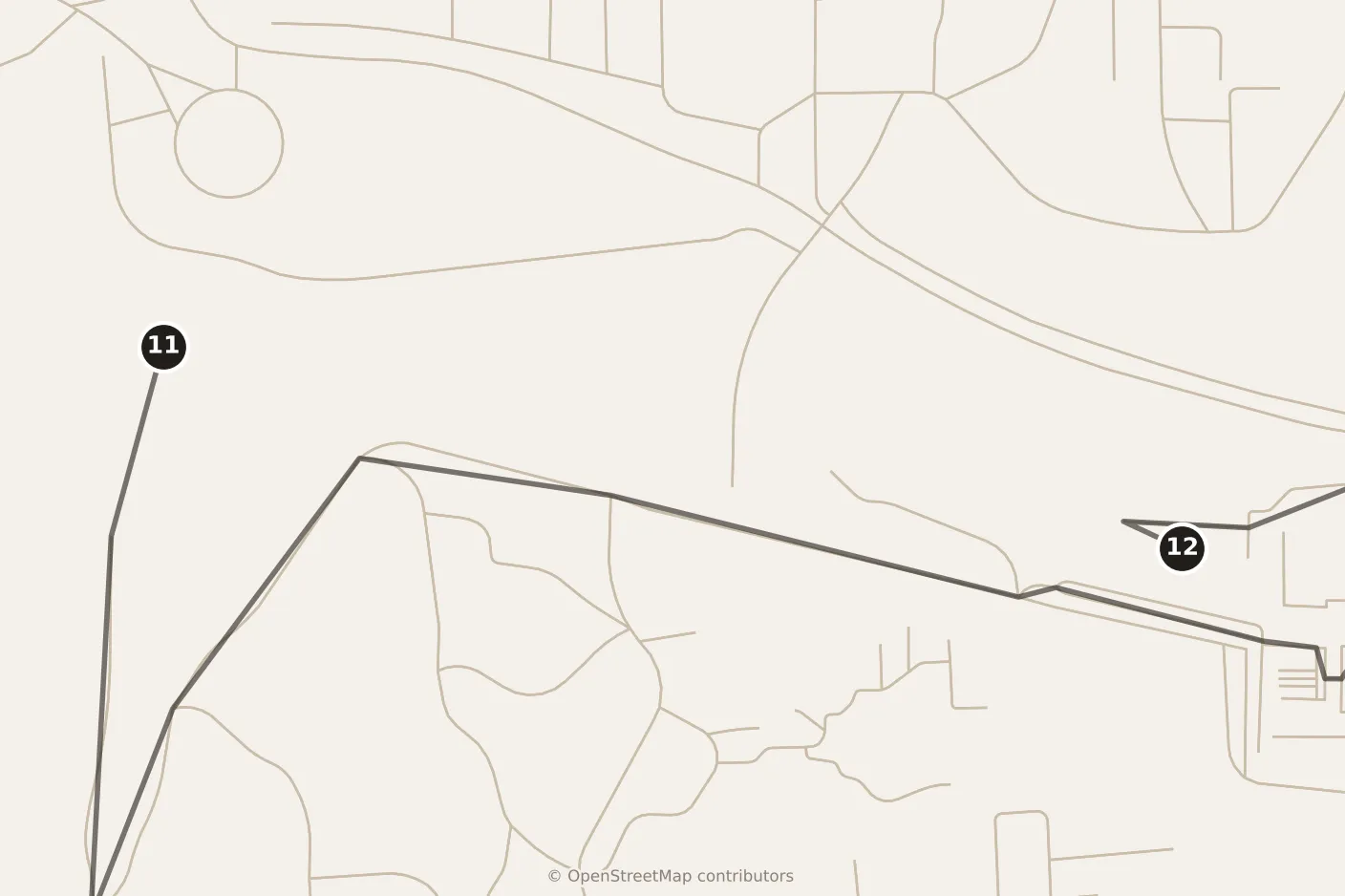
- 11Pyramids of Giza
- 12Great Sphinx
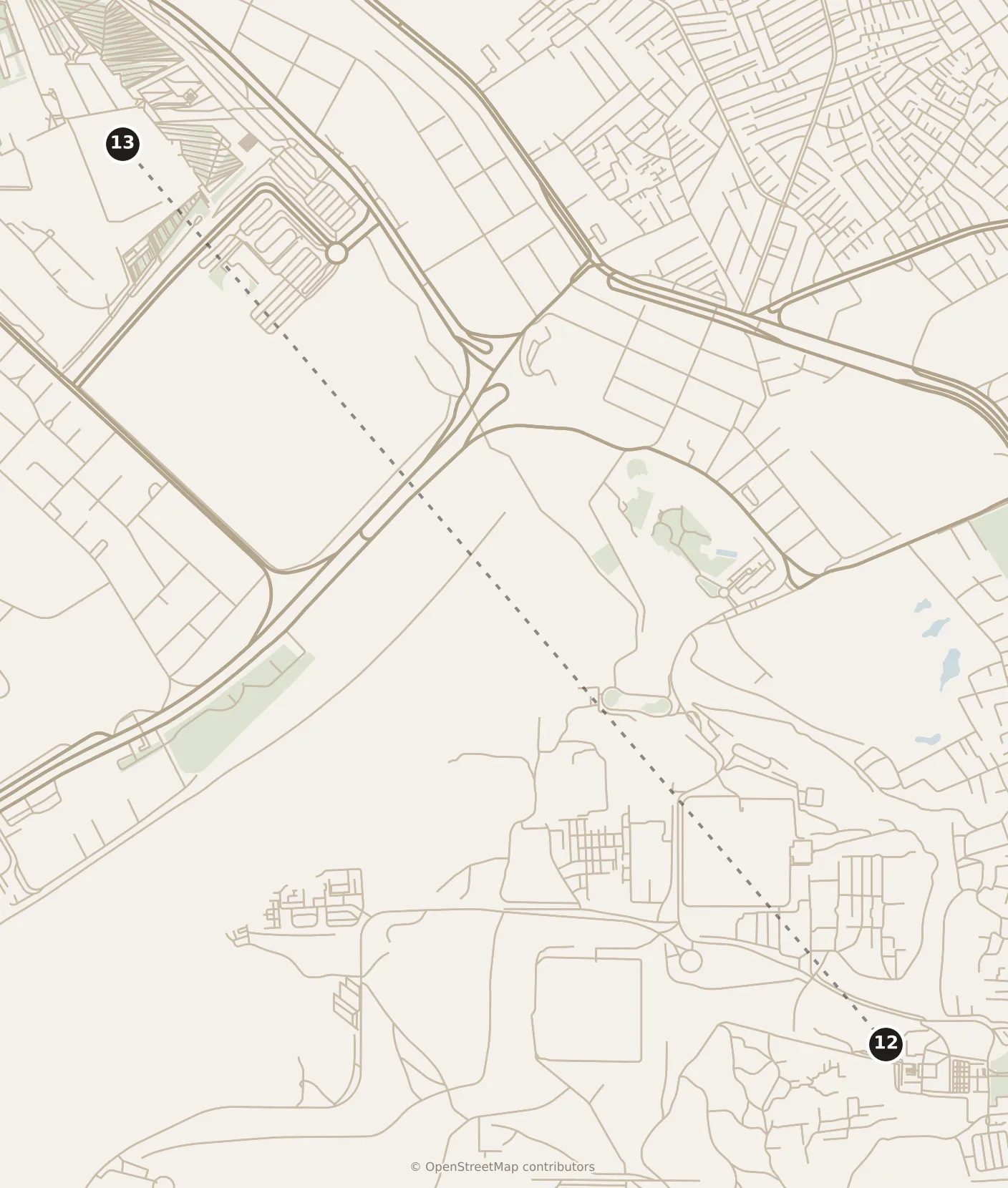
The leg out of the center: from stop 12 by taxi, not on foot.
- Afternoon
- 13Grand Egyptian Museum
Give the whole day to the Giza plateau; nothing else this itinerary reaches is close enough to add to it, and nothing here is worth less than a full day.
Morning
See the pyramids and the Sphinx before the Grand Egyptian Museum, and treat that order as the day’s one fixed decision rather than a suggestion: the desert haze that sits over the plateau thickens through the morning, and the pyramids you came for are noticeably harder to see, let alone photograph, by early afternoon than they are near opening. There’s no bad hour before midday; there is a worse one after it.
Local tip. See the pyramids and the Sphinx before the Grand Egyptian Museum, not after — the light is better for it in the morning, and the museum has all the shade, the line and the spare time you’ll want by early afternoon.
The Pyramids of Giza are three, not one. Khufu’s is the Great Pyramid proper, the largest of the three, with a separate ticket sold for the narrow, stooped climb into its inner chambers — not for anyone uneasy in tight, hot spaces. Khafre’s, beside it, still keeps a cap of its original smooth limestone casing near the summit, which Khufu’s has lost entirely; that cap is the easiest way to tell the two apart from a distance. Menkaure’s, smallest of the three, is worth walking to rather than only photographing from afar, if only to feel the actual scale of the other two by comparison. A short walk south brings all three into one frame from the plateau’s rise, which is worth the detour over the closer views.
The Great Sphinx sits below the pyramids on the plateau’s eastern edge, carved from the bedrock itself rather than built up, its body a lion’s and its face generally read as Khafre’s own. It is smaller in person than every photograph of it suggests, and that surprise is itself worth arriving prepared for.
Afternoon
Book the Grand Egyptian Museum’s timed entry on its own ticket site before you travel; it runs slots rather than open walk-up entry, and the general foreign-visitor ticket was in the range of twelve hundred to seventeen hundred Egyptian pounds in 2026.
Inside, the grand stair climbs past a wall of colossal statues to a full-height window framing the pyramids themselves, and it’s worth pausing on rather than walking straight past. The galleries built around Tutankhamun’s tomb are, for the first time, showing the find together rather than the fraction of it that used to travel abroad. Don’t try to walk every gallery: the building is enormous, and an afternoon that tries to cover ancient Egypt in full leaves nothing for the one collection that exists only here.
With a third day

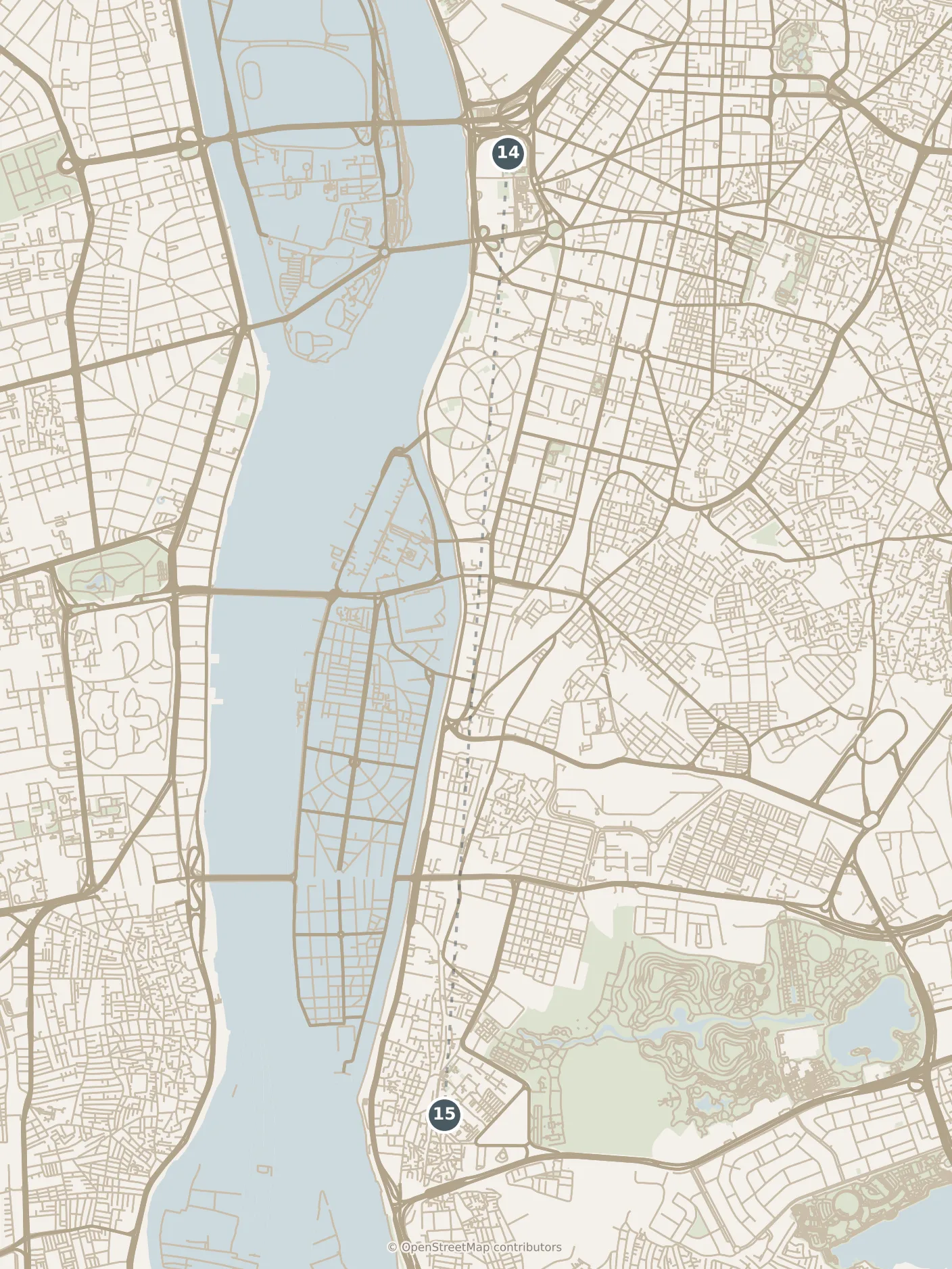
The ride on to stop 15, by metro, not on foot.
- With a third day · stop 14
- 14Egyptian Museum
- Sadat — in the prose, not on the map
- Mar Girgis — in the prose, not on the map
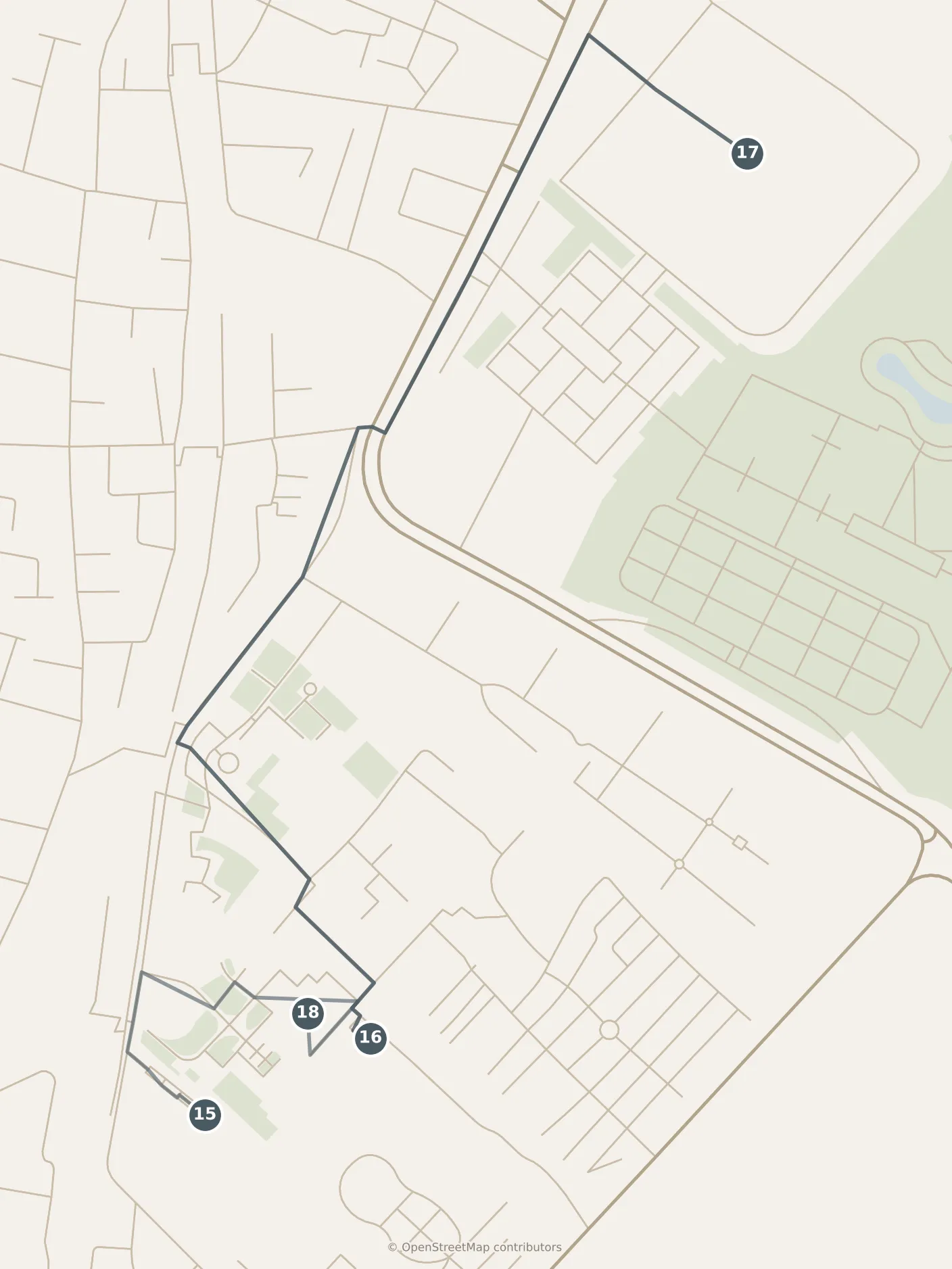
- With a third day · stops 15–18
- 15Hanging Church
- 16Ben Ezra Synagogue
- 17Amr ibn al-As Mosque
- 18Coptic Museum
Give the third day to two things a taxi across town would waste: the Egyptian Museum, and Coptic Cairo, and let the metro do the joining between them.
Start at the Egyptian Museum on Tahrir Square, the pink, purpose-built museum that opened in 1902 and is still standing despite the newer museum out at Giza taking much of its single most famous collection. What’s left fills more than a hundred rooms: Old and Middle Kingdom sculpture and objects from royal burials that predate Tutankhamun by well over a thousand years. Don’t try to see it all; pick the ground-floor sculpture galleries and one upper floor, and give it two hours rather than ten minutes in every room, and let the rest go.
From the museum it’s a short walk to Sadat station, and one ride on the metro’s oldest line to Mar Girgis, the stop built at the entrance to Coptic Cairo and named for it. It’s the simplest transit move in this whole itinerary: one line, no change.
Coptic Cairo is a walled pocket built into and over a Roman fortress, and everything in it sits close enough to see on foot in an afternoon. The Hanging Church takes its name literally — its nave is suspended over the gatehouse of the old Roman fortress beneath it, a fact you can see for yourself through a glass panel set into the floor. Its wooden pulpit and the marble columns beneath it are worth giving ten minutes to even if the crowd inside is not to your taste. Modest dress applies here as it did at the mosques.
A few minutes on, the Ben Ezra Synagogue is Cairo’s oldest, and the one place on this route with a genuinely unexpected story attached: its storeroom, the Cairo Geniza, held nearly a thousand years of discarded Jewish documents that turned out to be one of the richest archives of medieval daily life ever found — not because anyone planned it that way, but because Jewish custom forbids destroying anything bearing the name of God.
A short walk further, Amr ibn al-As Mosque is, by most accounts, the first mosque built in Africa, founded in the seventh century by the general who conquered Egypt for Islam. Almost nothing of the original building survives above ground, but the site itself is the point, not the current stonework.
If there’s still time and legs left, the Coptic Museum, just inside the fortress walls, holds the textiles, woodwork and manuscripts the churches around it have no room to display. It’s the one stop on this route that’s genuinely skippable if the afternoon is running short, since most of what it explains you’ve already seen explained in stone.
Practicalities
Book the Grand Egyptian Museum’s timed entry before you travel; it’s the one thing on this route you can’t simply turn up for. The pyramid interior ticket is a separate matter — it sells online like the museum’s, and in the October-to-April season it genuinely sells out, so buy the two together before you travel rather than counting on the gate.
Neither the Egyptian Museum nor the Grand Egyptian Museum has a fixed weekly closure as a rule, but both are large public institutions and occasionally close for a single day without much notice. Check each museum’s own website the week before rather than assume on the day, since the third day’s order depends on the Egyptian Museum being open that morning; if it isn’t, Coptic Cairo alone still fills an honest afternoon and the museum can simply move to whichever day has spare time.
For the longer hops between clusters — Al-Azhar to the Citadel, the Citadel to Zamalek, the city to Giza — a ride-hailing app (Uber and Careem both operate across Cairo) is the reliable way to get a fair, metered fare without negotiating one at the roadside. The metro needs nothing installed: buy a paper ticket at the station window for wherever you’re going, and keep it until you’re through the barrier at the other end.


.jpg)
