Cairo in a day: the pyramids at opening, the new museum, and dusk on the plateau

Last updated 15 August 2026
Overview
Cairo is usually sold as a week’s worth of city on top of the pyramids, and if you only have one day the sensible answer is to give up on the city outright and spend the whole day at the edge of it. Central Cairo — the old Egyptian Museum on Tahrir Square, the mosques and covered market of Islamic Cairo — is a real place with real things in it, but it sits far enough from Giza that trying to see both in a single day means an hour or more of Cairo traffic in each direction, twice, and the pyramids you get afterwards are the tired version at the end of a long drive. One day here is a day at the plateau: the pyramids in the cool of the morning, the new museum that has taken most of the country’s best objects out of that old downtown building and put them a few minutes from the pyramids themselves, and the pyramids again after dark, lit up, from the same ground you stood on that morning.
Cairo sits at about thirty degrees north, so the sun does not swing through the year as wildly as it would further from the equator, but it still moves: sunset falls a little before five in December and around half past seven at the end of June. Whatever month you are reading this in, count back from your own end of that range, not the other one — the evening below is built around it.
The day

- Morning
- 1Great Pyramid of Khufu
- 2Pyramid of Khafre
- 3Pyramid of Menkaure
- 4Great Sphinx of Giza
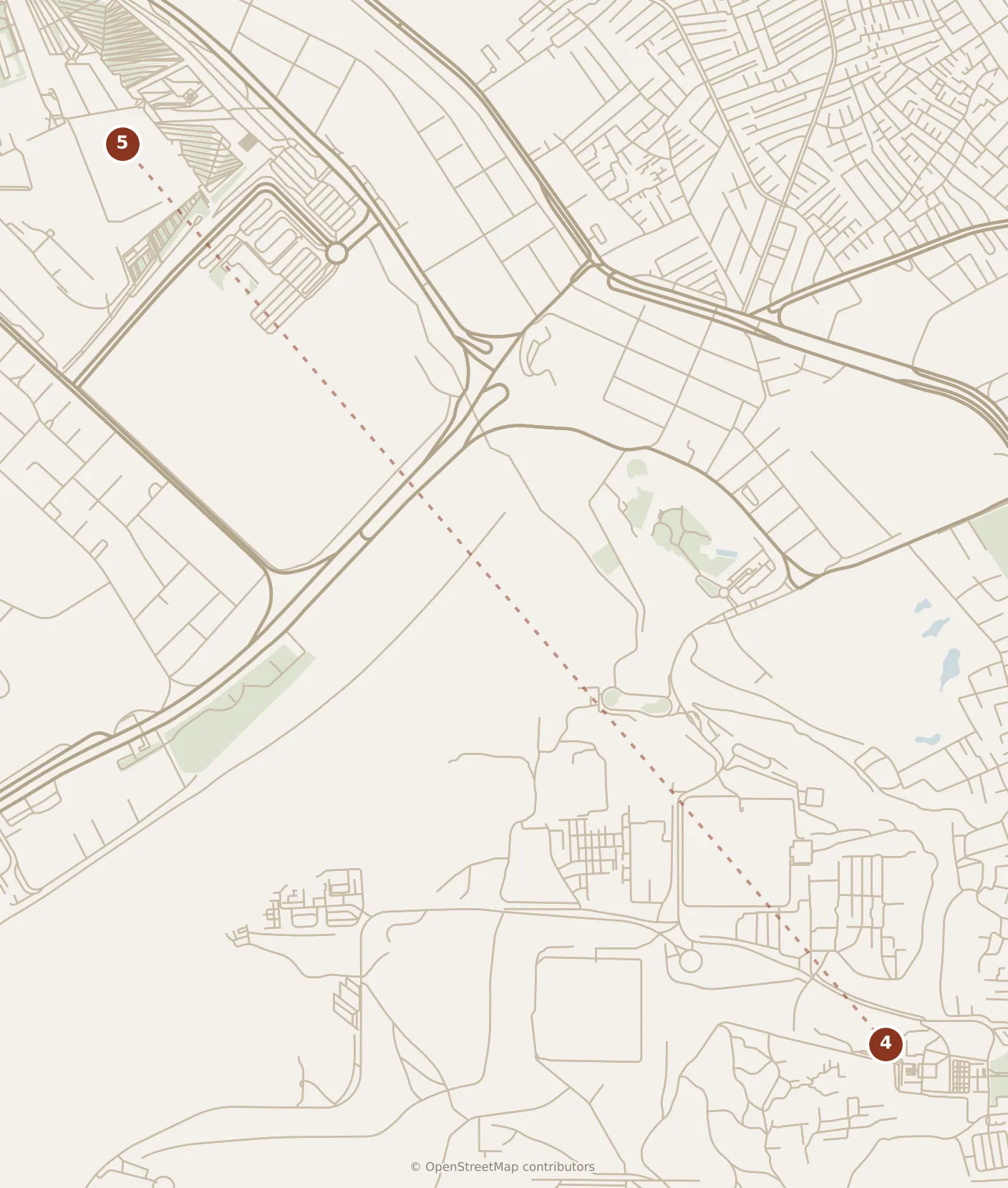
The leg out of the center: from stop 4 by taxi, not on foot.
- Afternoon
- 5Grand Egyptian Museum
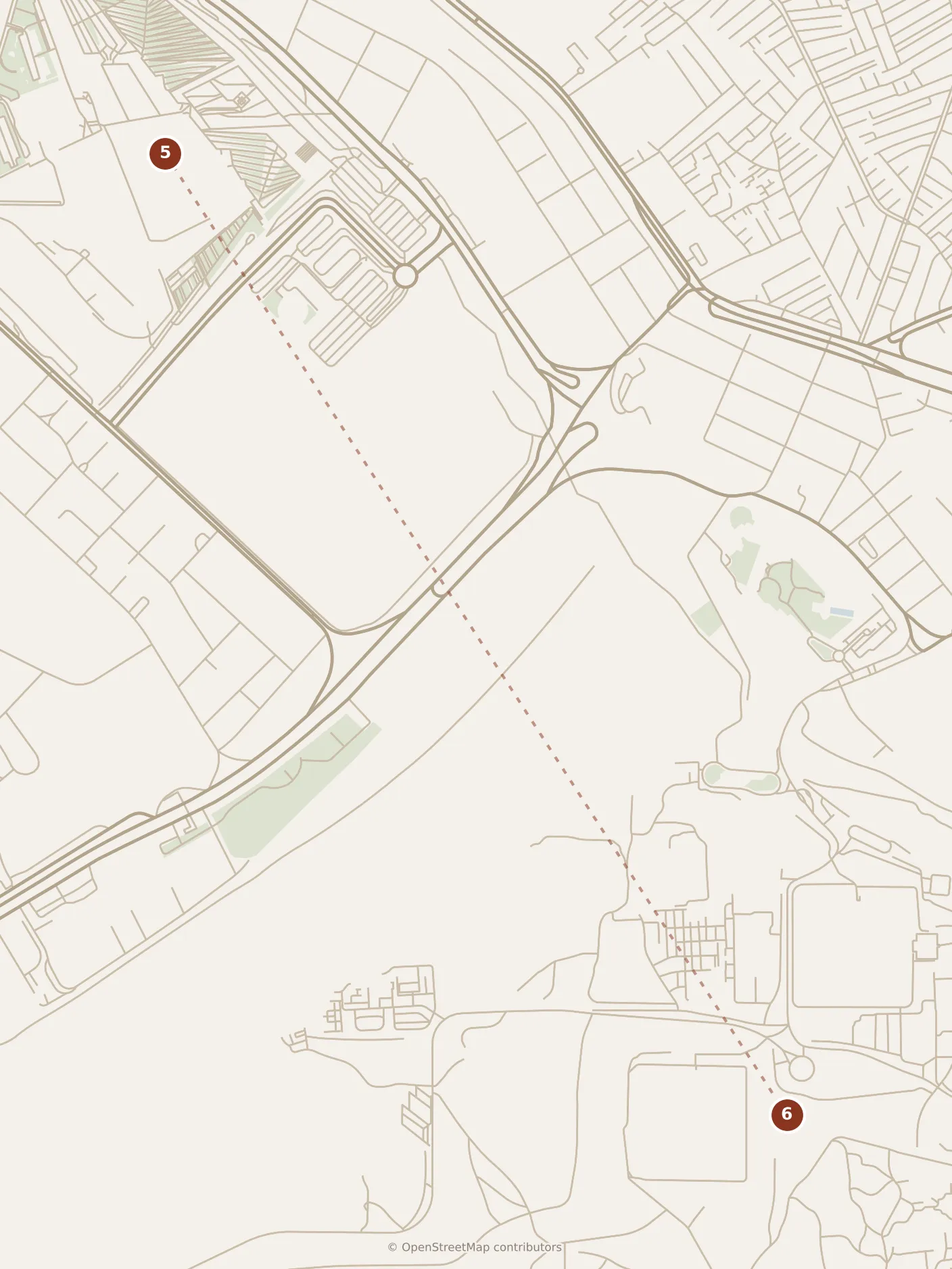
The leg out of the center: from stop 5 by taxi, not on foot.
- Evening
- 6Giza Plateau
Morning
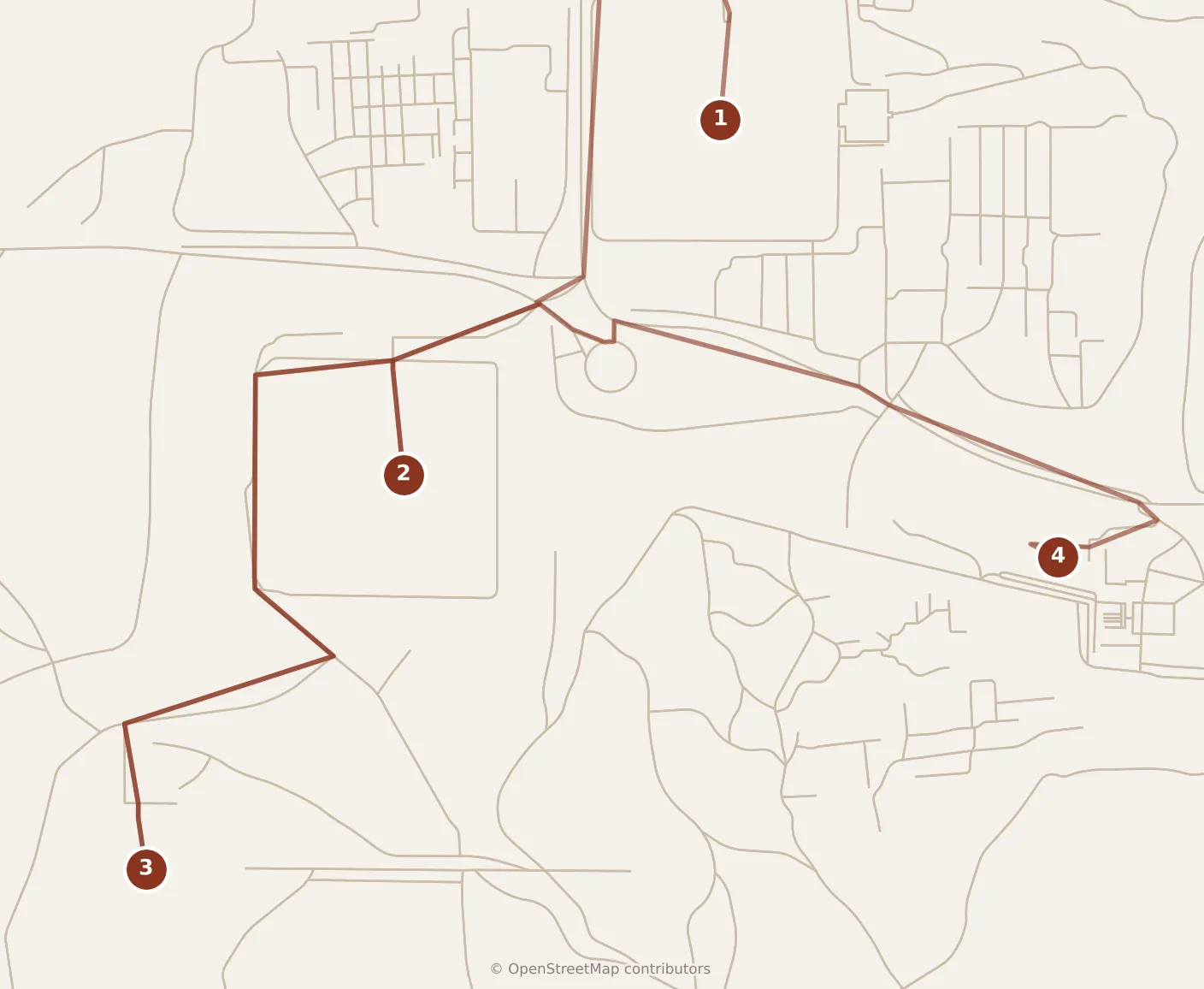
Go straight to the plateau and start before the heat and the coach parties build; both get worse through the morning and neither improves anything you are about to see. The three pyramids sit close together on open sand, largest to smallest, in an order that is also the order to walk them. The Great Pyramid of Khufu is nearest the modern edge of the city and its interior is the one always open: down a steep, low passage into small bare chambers that hold nothing but the fact of standing inside a four-thousand-year-old mountain of stone. One of the other two opens alongside it on rotation. The interior is a separate, limited ticket sold online, and in the October-to-April season it genuinely sells out — buy it when you buy the museum’s. Walk on to the Pyramid of Khafre, his son’s, which from most angles looks taller than his father’s even though it is not — it sits on slightly higher ground, and it still carries a cap of the original smooth casing stone at its very top, the one place on the plateau where you can see what all three looked like before the casing was stripped for building stone centuries ago. The Pyramid of Menkaure, smallest of the three and the last of this walk, reads as human-scaled after the other two and asks nothing more of you than a few minutes standing in front of it.
Finish the group at the Great Sphinx of Giza, down at the lower end of the plateau, where a causeway once ran from Khafre’s valley temple up to his pyramid. The face is weathered past reading and the nose has been gone for centuries; nobody watching you look at it can tell you why with any real certainty, and no guide’s confident answer should stop you thinking your own. Give the plateau as a whole two to three hours — enough for the walk between the three pyramids, the Sphinx, and the photograph from the classic angle where all three line up — without also waiting in line for the interior of the Great Pyramid unless you are prepared to give that a further half hour on its own.
Cairo’s desert edge is not a metaphor here: the last apartment blocks of the city stop within a few hundred meters of the enclosure wall, and the row of terraces and rooftop cafés built right against it, all facing the pyramids, is where lunch goes. Eat sitting down and facing the view — you will not get this angle again today.
Afternoon
A short taxi ride — a matter of minutes rather than a real journey — takes you from the plateau to the Grand Egyptian Museum, opened a few kilometers away specifically so the country’s biggest collection and its most famous monument would finally sit within sight of each other. Buy the ticket online in advance rather than at the door: the general foreign-visitor entry was around one and a half thousand Egyptian pounds in 2026, sold online only, though the pound has moved a great deal in recent years, so treat that as an order of magnitude rather than a fixed number.
Local tip. Prebook two things, not one: the museum’s timed ticket and, in the October-to-April season, the Great Pyramid’s interior — both sell online and both genuinely sell out. The sound-and-light show is the one still safely bought on the day.
The building is worth the first twenty minutes on its own: a grand staircase climbs past a run of colossal statues, pharaoh after pharaoh in stone, to a terrace at the top that looks straight out at the plateau you have just left. From there the galleries run roughly chronologically, from prehistoric Egypt through the Greco-Roman period, and the whole sweep is genuinely too much to see in an afternoon. The point of a first visit is not the chronology but Tutankhamun’s own galleries, where the museum finally has room to show the full contents of the tomb together rather than a fraction of it, gold mask included. Give those rooms the bulk of your time and treat the chronological wings as something to dip into rather than complete; walking every gallery end to end is how an afternoon here becomes an ordeal instead of a highlight. Two to three hours is a reasonable minimum, and anyone with a real interest in the objects rather than the building could spend the rest of the day here and not see it all.
Evening
There is no clock time worth giving for going back to the plateau, because it depends on the month rather than the day: the sound-and-light show is worth building the rest of the evening around, and it runs after dark rather than at a fixed hour, so count back from whichever end of the sunset range in the Overview applies to you. A short taxi returns you to the plateau — the same ground as the morning, seen from outside the enclosure this time, with the pyramids lit and the show running against them. Buy the ticket online in advance or at the gate; showings run in more than one language across the evening, so it is worth checking which slot is in yours before you commit to a time.
This is the one piece of ground the day covers twice, and it is deliberate: nothing else on this route asks you to backtrack, and it is worth the exception because the two visits are not the same thing — stone in full sun and the same stone lit after dark are different enough that neither stands in for the other.
The show runs to a fixed length rather than trailing off, and from the plateau back to central Cairo or the airport is again a taxi rather than anything on rails. Arrange it before the show starts: finding a car at the gate among everyone else leaving at once is the one bad way to end the day.
Practicalities
Book the Grand Egyptian Museum’s timed ticket before you travel — busy enough since opening that turning up without one is a real risk of losing the afternoon — and, in season, the Great Pyramid’s interior ticket with it, since both sell online. The sound-and-light show is bought on the day and needs no advance planning.
None of this closes on a fixed day of the week, which is not something you can say about most of Cairo’s big sights — a rare piece of good news for a route with only one day to give it.
Getting between the two halves of this route is a taxi or a ride-hailing app — Uber and Careem both operate in Cairo — rather than anything on rails; the plateau and the museum sit close enough to each other that neither leg should take more than a few minutes, traffic allowing.
If you are landing the same morning, the transfer from the airport to Giza is a real drive, not a short hop, and is worth arranging in advance — through your hotel or a driver booked ahead — rather than negotiated cold at arrivals. Most readers doing Cairo in a single day, though, are already based somewhere as part of a longer trip, and simply start from there.
There is nothing on this route like a station locker, and that matters more here than it would elsewhere: the ground around the pyramids is loose sand, uneven and hot, and a wheeled case makes the morning stop genuinely harder than it needs to be. If you already have a hotel as part of a longer trip, or a ship if this is a cruise stop, the simplest fix is to leave the bag there before you set out — ask your ship rather than assume, since not every excursion lets you back on board mid-day. If you are on a long layover with nowhere based in the city at all, the usual answer is paid storage at the airport itself, arranged through your airline or the terminal before you fly, rather than carrying a case onto sand.


.jpg)