Buenos Aires in two or three days: the center and San Telmo, then Recoleta and Palermo

Last updated 4 August 2026
Overview
One day in Buenos Aires is spent outdoors, because the outdoors is what a single day can join up. Two days buys the opposite: doors. The opera house, the room where the colonial council sat, a house in San Telmo with four centuries stacked underneath it, the national picture collection, a museum of the continent’s own painting — none of those can be walked past and understood, and all of them are the reason the second day exists.
So the shape here is not one long line across the city but two days that each stay inside one half of it. Day one is the center and the south: a morning of interiors, then a single straight walk down one street, Defensa, into San Telmo. Day two is the north: Recoleta at opening, its museums, and then the Palermo parks with the last of the light. Neither day crosses the other’s ground, and neither walks the same ground twice — the one retrace, north to the obelisk on the first evening, is done in a taxi.
That division is not tidiness. It is what makes the closing days survivable. Day one is almost entirely rain-proof and the least gated of the three — the theater and the house on Defensa admitted visitors seven days a week in 2026, and the only thing on it that shuts is the museum inside the town hall, on Mondays and Tuesdays — while day two carries the two museums and the rose garden, and those do not all shut on the same day. So if one of your days looks wet, or lands awkwardly on the calendar, day one is the one to move it to. The full rules are in Practicalities, and they are rules rather than an answer, because a reader’s days are decided by their flight and not by this page.
One calculation runs through both days, and it is not the one you would expect. Day two ends in a rose garden, and that garden is fenced: in 2026 it admitted until five and shut at six, Tuesday to Sunday. That gate, not the sunset, is what the afternoon has to be counted back from, and it does not move with the season. The sun does — down here just before six at midwinter in June and not until a little after eight in the first days of January, the seasons being the other way up, so the short evenings are the cold ones — but in June it goes at about the hour the gate does, which means the answer is the same in both. The count at the end of day two says what to cut to be inside.
Getting to the first morning. Almost everyone arriving from another continent lands at Ezeiza, roughly forty-five minutes to an hour and a quarter from the center depending on the traffic, by pre-booked transfer or by the official airport coach, which sets down beside Retiro station. Regional and domestic flights come into Aeroparque, twenty minutes out on the river and close to Palermo. Either way the first day begins at the opera house, and the opera house has its own Subte station: line D, Tribunales – Teatro Colón, which surfaces under Plaza Lavalle a few steps from the door. From the historic center that is two stops from Catedral; from Retiro it is a change or a twenty-minute walk. The visitor entrance and the box office are on Tucumán, on the far side of the building from the avenue.
One thing to sort before you set out, and it is not a ticket for anything on this list. Days one and two both use the Subte. A SUBE card is the usual way through the turnstile and is sold and topped up at station ticket windows and at street kiosks, but since the end of 2024 the turnstiles have also taken contactless credit and debit cards, phones and QR, so a card you already own will get you in. Everything else about paying for and moving around this city belongs to the parent city guide, which is where to read it.
Day one

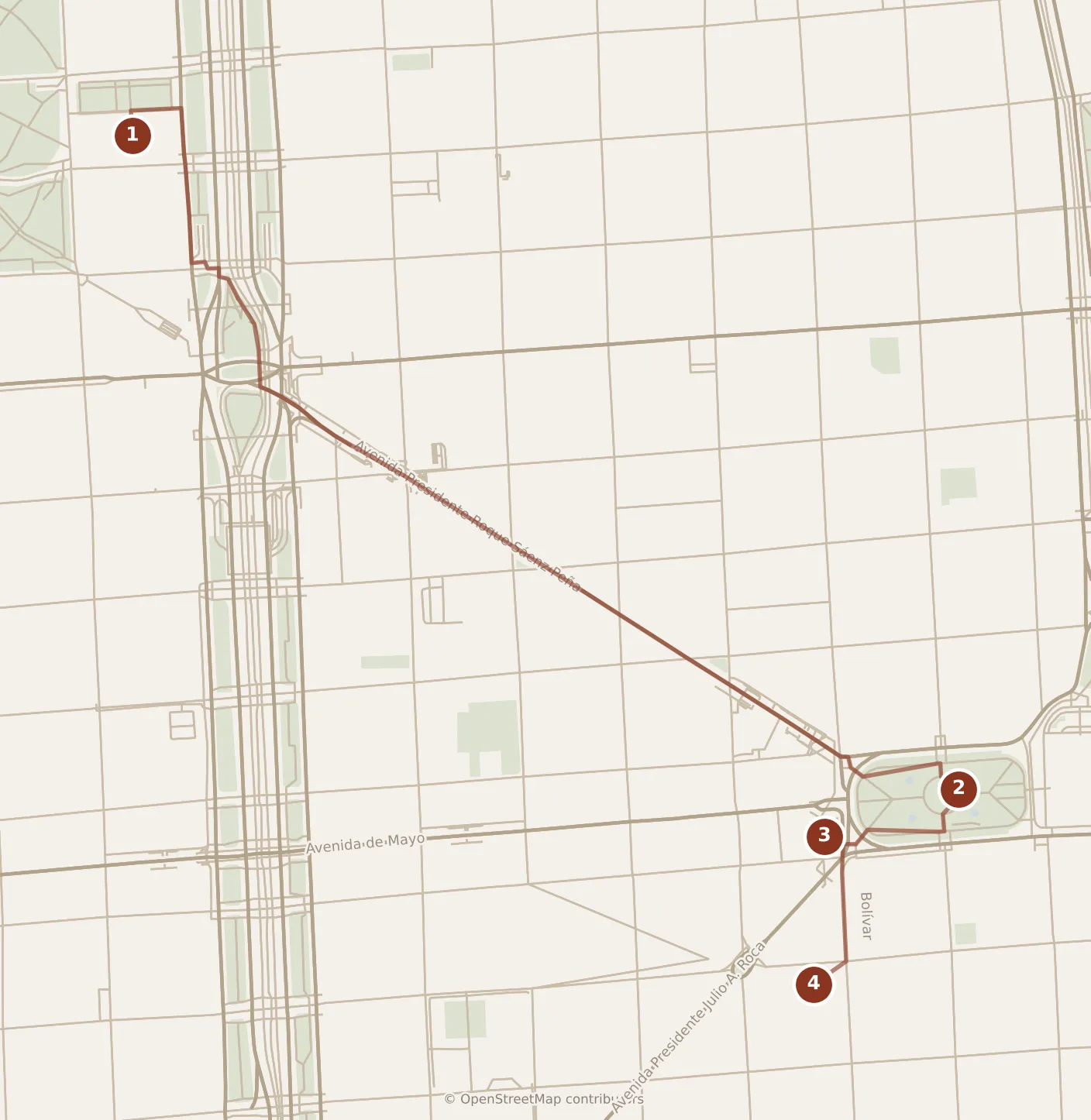
- Morning
- 1Teatro Colón
- 2Plaza de Mayo
- 3Cabildo de Buenos Aires
- 4Iglesia de San Ignacio
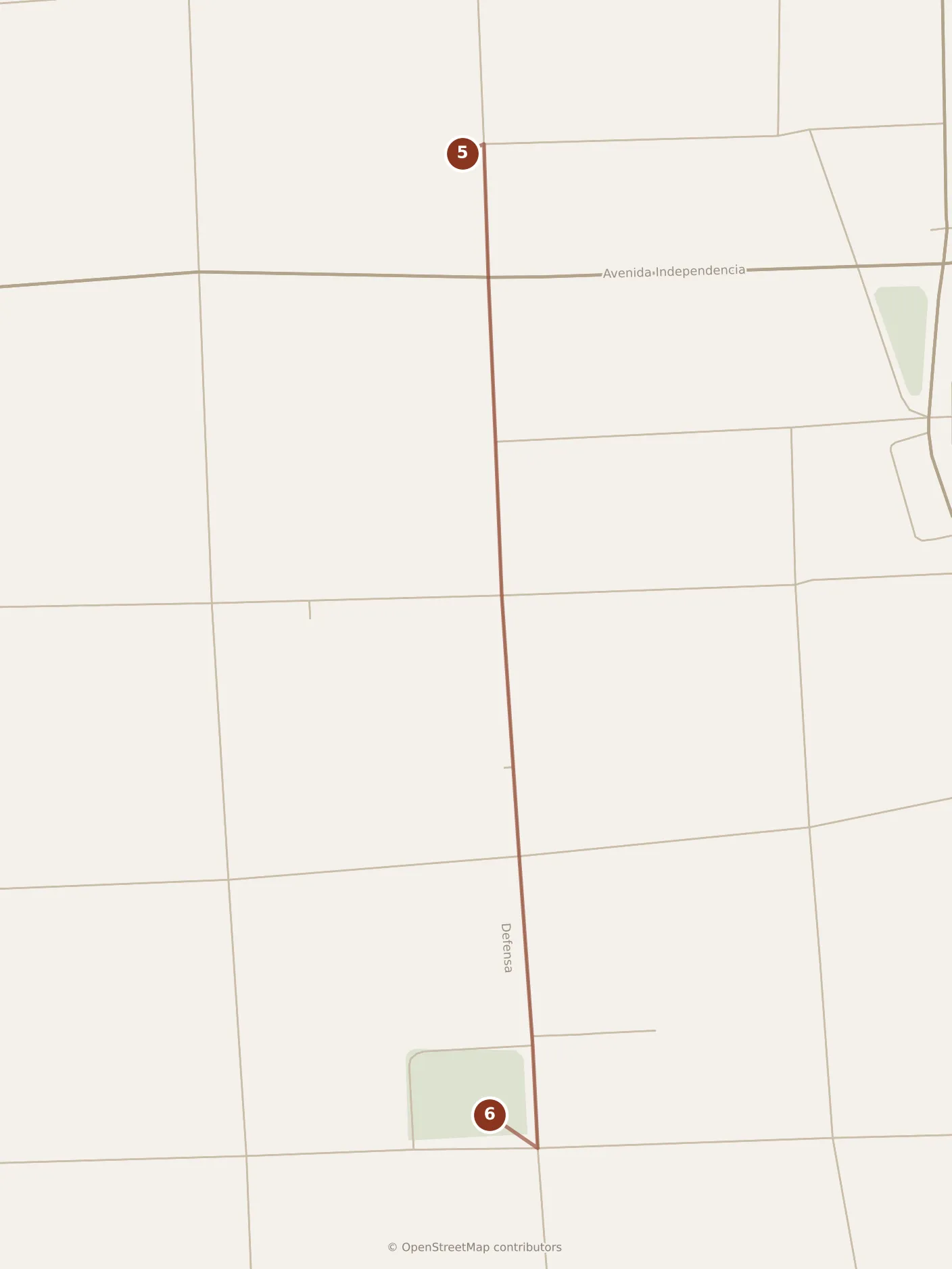
- Afternoon
- 5El Zanjón de Granados
- 6Plaza Dorrego
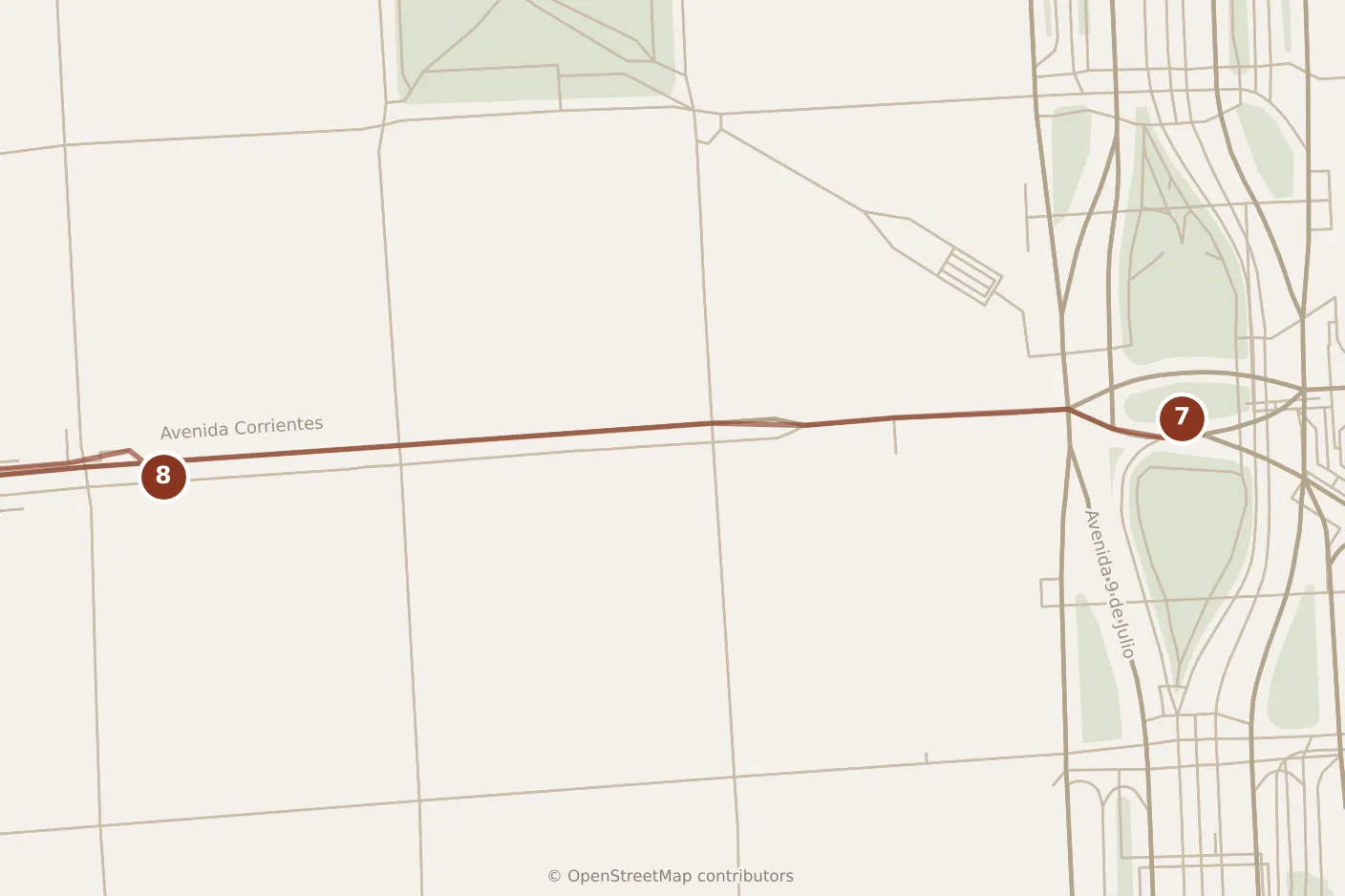
- Evening
- 7Obelisco
- 8Avenida Corrientes
Four doors and one long street. The morning is three interiors within two and a half kilometers of each other; the afternoon is a single walk south down Defensa with one more interior on it; the evening is the noisiest street in the city, at the hour it is meant to be seen.
Morning
Start at the Teatro Colón, and start there because its guided visits are the fixed point the whole day counts from. In 2026 they ran daily from ten in the morning until a quarter to five, leaving every fifteen minutes, and each visit lasted fifty minutes. Take the ten o’clock. If the hour has moved by the time you read this, take the first departure of the day instead and count forward from that — the day works from any early start and does not work from a late one.
What you are walking into took twenty years to build and opened in 1908 with a performance of Verdi’s Aida. The hall is a horseshoe seating a little under two and a half thousand, three thousand with the standing gallery, under a bronze chandelier weighing more than a tonne; in the standard survey of opera-house acoustics, in which conductors rank the rooms they have actually worked in, this one comes out first in the world for opera. The dome above it is not original — Raúl Soldi repainted it over the summer of 1965 and 1966, sixteen canvases and three hundred and twenty square meters, fifty-one figures turning in a spiral. The visit also takes in the marble vestibule, the foyer of composers’ busts and the Salón Dorado, a mirrored and gilded room used for chamber concerts. It is not a substitute for a night here: if there is a performance on while you are in the city, that is the better use of an evening than anything below.
From the theater, cut down to Diagonal Norte and follow it south-east to Plaza de Mayo: twenty-five minutes, and one of the two long walks of the trip. You will pass the foot of the obelisk on the way. Do not stop — it is tonight’s, and it is a different object after dark.
Plaza de Mayo is where the country’s politics still physically happen, and twenty minutes standing in it is enough before you go inside. The thing to go inside is the Cabildo, the low white colonial town hall closing the western end, which now holds the national museum of the building and of the revolution of 1810: eighteenth-century portraits and plate, a colonial printing press, and trophies taken from the British invasions of 1806 and 1807. Give it forty minutes. Look at the arcade before you go in and count the arches: there are five, and there were eleven. Three were demolished in 1889 to drive an avenue through, and three more in 1931 for a diagonal, over public protest both times, which is why the building looks as though it has been pushed in from either side. It has.
Two hundred meters south, on the block bounded by Bolívar, Alsina, Perú and Moreno, is the Iglesia de San Ignacio — the oldest building of any kind still standing in the city, begun in 1712, opened in 1722 and consecrated in 1734. It is a single baroque nave with five side chapels and a dome on a square drum, and it belongs to the Jesuit block the city calls its enlightened square, which also carried the first university buildings and a system of brick tunnels cut into the clay three or four meters down. Twenty minutes inside, if it is open: this is a working parish and it keeps a parish’s hours rather than a museum’s, so take it as a door to try rather than a stop to count on. Treat it as a church and not a monument: if you arrive during a Mass, stay at the back, keep quiet and do not cross in front of the altar, which is the one piece of conduct nobody tells visitors here and everybody notices.
Local tip. The Cabildo museum is the stop to drop if the morning slips, and on a Monday or a Tuesday it is dropped for you: in 2026 it opened Wednesday to Sunday and shut on the other two. The square outside carries most of the story anyway, and the forty minutes it costs buy an unhurried lunch and the whole of the Plaza Dorrego half-hour at the other end of the day. Nothing else on this day can be cut without taking a whole door with it.
Afternoon
Walk south down Defensa. It is fifteen minutes from the church to number 755, and the street changes underneath you as you go: government blocks, then the tall shuttered fronts of houses that were grand until the yellow fever of 1871 sent their owners north.
At Defensa 755 is El Zanjón de Granados, and it is the strangest hour of the trip. A nineteenth-century house stands on a lot that has been continuously occupied since the sixteenth century, and beneath it a private excavation opened out cisterns, foundations and a brick tunnel vaulted over the stream — the zanjón — that the block was built across and then buried. You walk through the underneath of the city. It is a timed guided visit with a capped group rather than a building you wander, so arrange it before you travel; it kept doors from eleven in the morning to five in the afternoon in 2026, which is precisely why it sits here and not first thing: build the afternoon around that window, and if the window has moved, move the afternoon with it. Give it an hour.
Lunch after it rather than before, which suits the local clock anyway — nobody eats before one. The covered market hall five minutes further down fills a whole block and has counters you eat at standing; the streets around it have grill houses where you sit, and with two days in the city the sitting version is the right one. An hour.
Three minutes on is Plaza Dorrego, a small square of plane trees under which the antique trade of this barrio does its business at sidewalk tables. Half an hour covers the square and the shops on the streets running off it. On a Sunday it is a different proposition entirely: the street market runs the length of Defensa and the square becomes a crowd, the walk down from the church takes twice as long, and the half hour becomes as much of the afternoon as you want to give it.
Count the day forward from the theater door and it comes to about five and a half hours: the fifty-minute visit, twenty-five minutes to the square, twenty in it, forty in the Cabildo, twenty in the church, a quarter of an hour of walking down Defensa, an hour underground, an hour over lunch and half an hour on Plaza Dorrego. A ten o’clock start puts you on that square by half past three, which is hours before the evening below is worth beginning — the street it is built around is a different place after dark, and so is the obelisk on the way to it. Those hours are the day’s slack: spend them here, or back at the room, and set out again as the light goes.
That total is time inside places plus time walking between them, and it is not the length of the day. The one thing it leaves out is the theater: the visits go in fixed departures with a capped group, so if you have not bought the slot in advance you are waiting for the next free one at the same door, and that wait is the only line on this day.
Evening
Take a taxi or a ride-hailing car back north to the obelisk — ten minutes, and worth the money, because the alternative is forty minutes on foot back up a street you have already walked down. There is a Subte answer too, and it is better than it looks from the map: ten minutes west of Plaza Dorrego is Independencia, on line C, three stops from Diagonal Norte at the foot of the obelisk.
The obelisk stands in the middle of Plaza de la República where two enormous avenues cross, and it is worth the two minutes of context: sixty-seven meters, put up in 1936 for the four hundredth anniversary of the first founding of the city by Pedro de Mendoza, and built in thirty-one days.
Then walk west along Avenida Corrientes, which is what you came back for. It is the theater street, widened in the 1930s at the same time the obelisk went up, and it stays open when the rest of the center has gone home: playhouses with their own lines, pizzerias where the onion-heaped slices are eaten standing at a marble counter, and bookshops that are still selling at midnight. Ten minutes’ walk covers the busiest stretch and you should take an hour over it. The rule about eating here is the rule for the whole city — a table at nine is an early one, and a day that finishes at seven has finished before Buenos Aires has started.
Day two

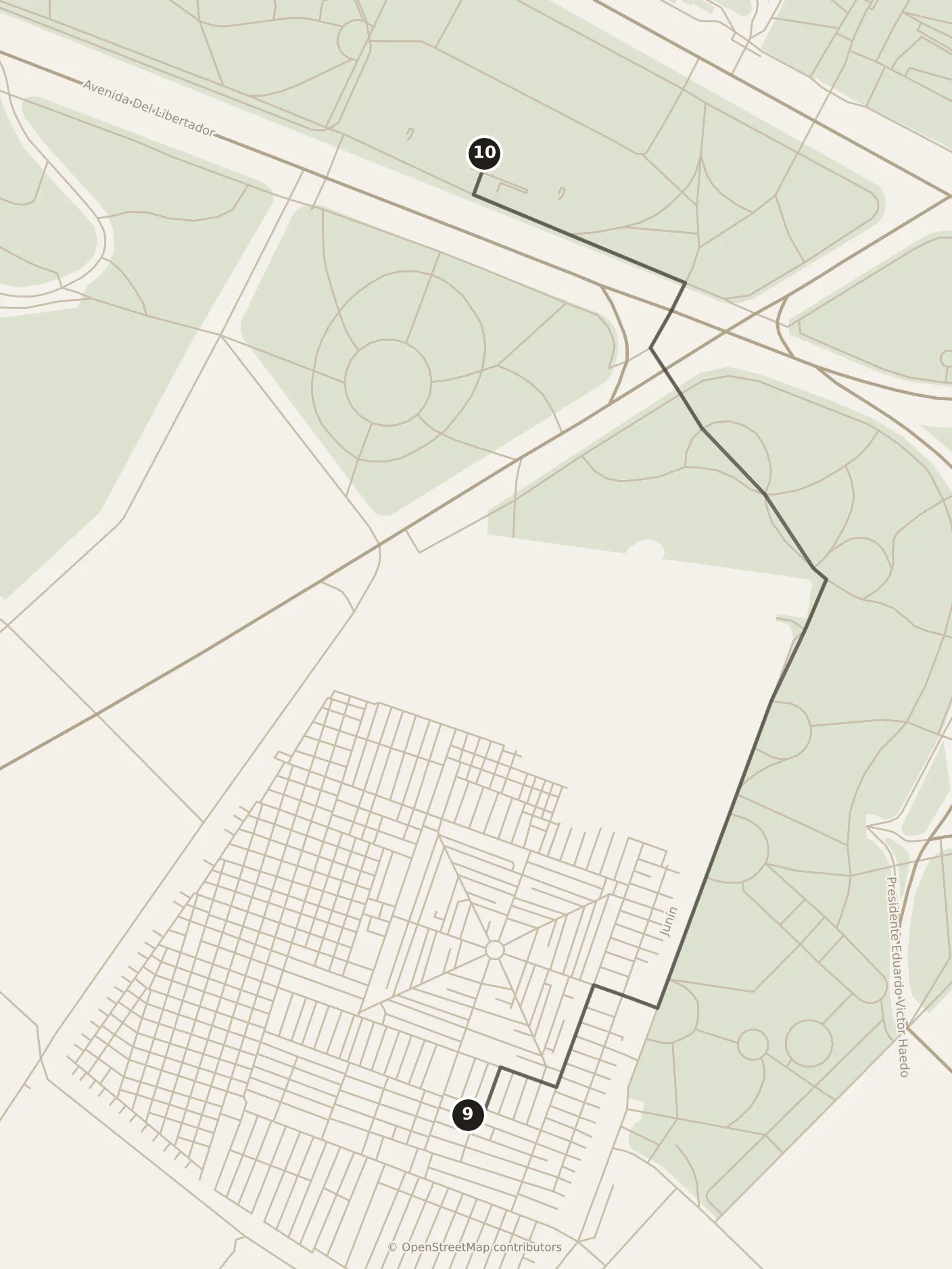
- Morning
- 9Cementerio de la Recoleta
- 10Museo Nacional de Bellas Artes
- Afternoon
- 11Floralis Genérica
- 12Museo de Arte Latinoamericano de Buenos Aires
- 13Jardín Japonés
- 14El Rosedal
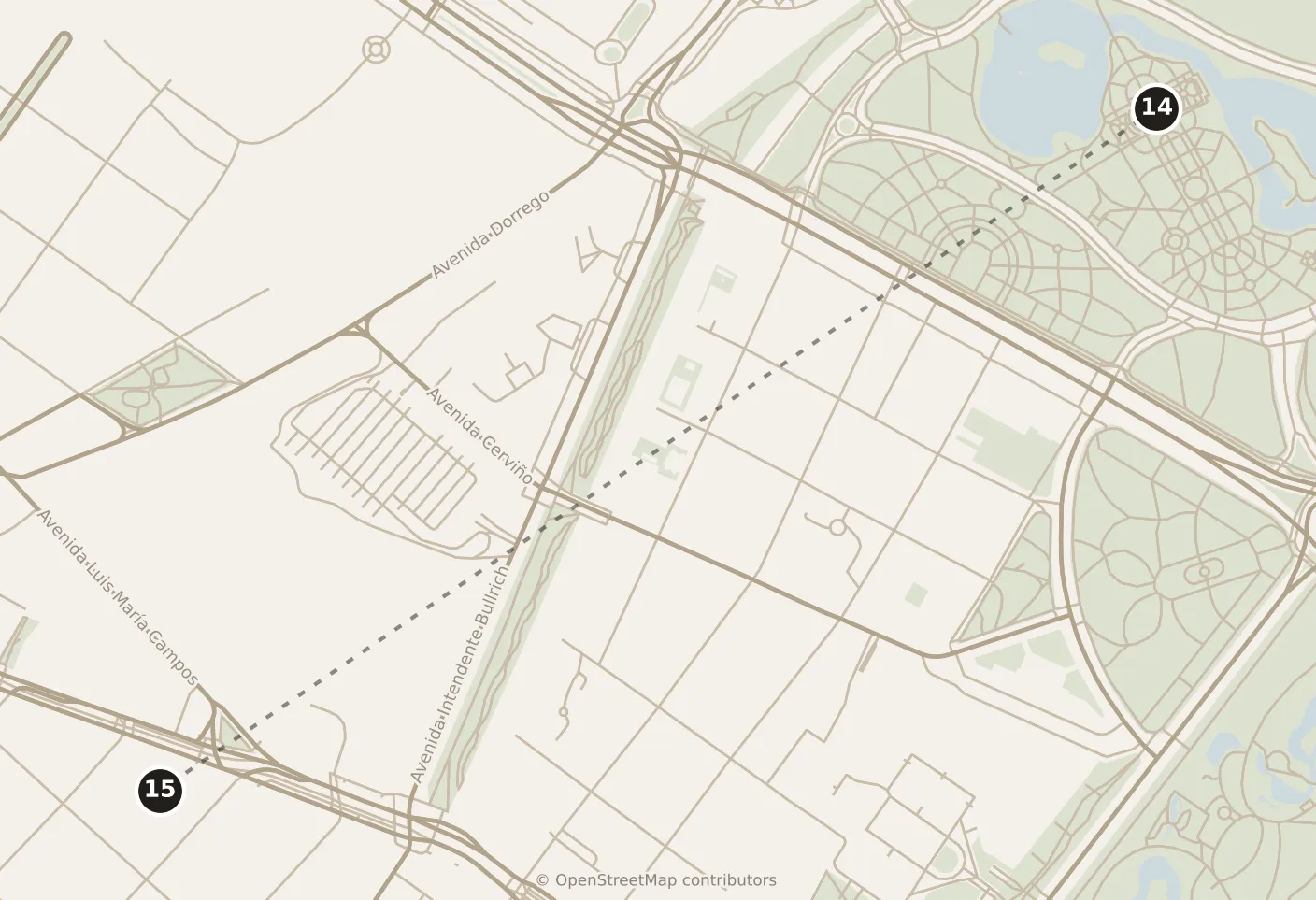
The leg out of the center: from stop 14 by taxi, not on foot.
- Evening
- 15Palermo Hollywood
Today is the north, and it is the day with gates on it. Three of its stops keep a closing day, and they are not all the same day, so read the Practicalities before you decide which of your dates this is. The whole day runs one way, north-west, from a walled town of marble to a rose garden, and the gate at the far end — not the light — is what decides when you start.
Morning
Be at the gate of the Cementerio de la Recoleta at nine, which is when it opened, seven days a week, in 2026. If that hour has moved, be there when it opens instead — the argument is not the number, it is that this is the one stop in the trip that is transformed by being first. The gate is on Junín; the ticket is bought at the window there or in advance on the city’s own ticketing site, and foreign visitors pay while residents do not. The Subte reaches it: line H to Las Heras, then a walk of about ten minutes.
Inside is a walled town of 4,691 vaults on a grid of lanes, and the scale is the shock rather than any single tomb. Ninety-four of the vaults are declared national monuments in their own right, and what they amount to is a catalog of everything the city imported between 1880 and 1930 — neo-Gothic spires, Art Nouveau ironwork, Art Deco slabs, small Greek temples, staircases visibly descending behind glass doors, and here and there a roof gone and a tree coming through. Give it an hour and a half and do not be systematic; the grid means you cannot get lost. Evita’s vault is here, plain and black on a side lane, and the reason to come at nine is that at nine there is nobody in front of it and there will be by eleven. This is also a working cemetery with funerals in it and families visiting: if you meet one, step into the next lane and put the camera down.
Nine minutes’ walk north is the Museo Nacional de Bellas Artes, which in 2026 opened at eleven on weekdays and ten on weekends and closed on Mondays — so the cemetery goes first not by preference but by arithmetic, and if you find different hours the order still holds as long as the museum’s opening is later than the cemetery’s. There is no ticket window and nothing to book: a contribution machine in the entrance hall and that is the whole transaction. Twelve thousand works are held and some seven hundred and fifty are on show at a time, which is a manageable museum rather than an exhausting one. There is a Rodin — the two lovers on the rock — and Manet’s surprised nymph, in a European collection that is a decent cross-section of things done better elsewhere. The Argentine rooms are not available elsewhere at all, and if you only have an hour that is where the hour goes. An hour and three quarters sees the whole of it. Then eat. The blocks immediately around the cemetery are priced for the visitors they get; walk two or three streets back from it before you sit down. An hour is right.
Afternoon
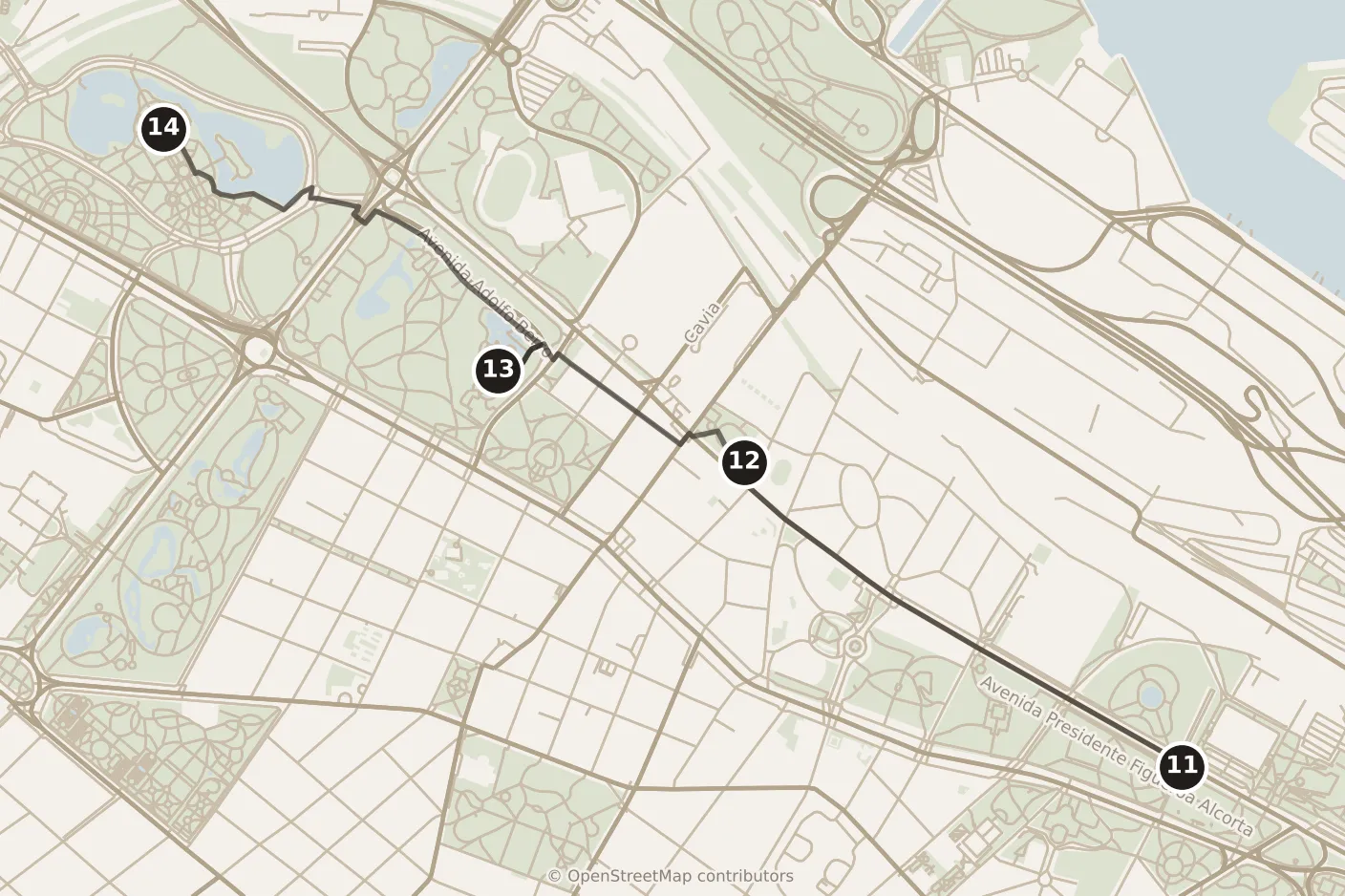
Three minutes on, where the avenues meet, stands the Floralis Genérica: an enormous steel and aluminum flower standing in a pool of water, hinged so that its six petals were built to open in the morning and fold at dusk. The mechanism has spent long stretches out of action over the years, so go and look at the object and treat the movement as a bonus rather than a schedule. Ten minutes. If you arrived at the museum before it opened, this is where to spend the gap — it is two minutes past the door, not a detour.
From there it is twenty-two minutes north-west along the parkway to the Museo de Arte Latinoamericano de Buenos Aires, which in 2026 opened at midday every day except Tuesday, when it closed. It is one continent’s own twentieth century in one building, and it holds three things worth crossing a city for: Frida Kahlo’s self-portrait with a monkey and a parrot, Antonio Berni’s enormous canvas of a demonstration with its rows of faces, and the long-limbed figure of Tarsila do Amaral’s Abaporu, which is the founding painting of Brazilian modernism. Xul Solar and Emilio Pettoruti fill in the Argentine line between them. An hour and a half, and it is small enough that you will not have to choose.
Eleven minutes further north-west is the Jardín Japonés, a walled garden of koi ponds, clipped pines and a red arched bridge, ticketed and modest and about forty minutes.
Then the last stretch, seventeen minutes north-west into the Bosques de Palermo, which is three hundred and seventy hectares laid out on land confiscated from Juan Manuel de Rosas after 1852, opened by Domingo Faustino Sarmiento in 1875 and given its lakes and avenues of trees by the French landscape gardener Charles Thays between 1891 and 1914. Inside it is El Rosedal, the rose garden: beds, a pergola, a white bridge over the lake and an avenue of poets’ busts. It is not open parkland but a fenced enclosure with a gate, and in 2026 that gate admitted from ten until five and closed at six, Tuesday to Sunday. Give it an hour, and be through it before five — which is the hour the count below is built backwards from.
Now the count, and this is where the rose garden’s gate earns its place. From the cemetery gate the day comes to about nine hours — ninety minutes among the vaults, nine walking, twenty waiting on a weekday for the museum to open, an hour and three quarters inside it, an hour over lunch, ten at the steel flower, roughly an hour of walking in the four stretches after that, ninety minutes at the museum of the continent, forty in the Japanese garden and an hour among the roses. A nine o’clock start therefore has you at the rose garden at about five, which is last admission on the nose and no margin at all for a slow lunch. So take the fix in the box below and cut the Japanese garden: forty minutes off the count puts you through the gate at around twenty past four with the hour you came for. That holds in January as much as in June — the gate keeps the same hour all year, and all the midwinter sunset adds is that the light goes at about the moment the gate does. The count leaves out the ticket window at the cemetery gate, which is the only line of the day, and it leaves out the fact that both museums are buildings you walk around inside as well as look at.
Local tip. This afternoon does not fit as written in any season, and the stop to cut is the Japanese garden, not the rose garden. They are eleven minutes apart on the same walk, so you lose no ground by skipping the first; the forty minutes it costs are the forty minutes that put you inside the rose garden’s gate rather than arriving at it as it stops admitting; and only one of the two is what the whole afternoon was built to reach.
Evening
Palermo Hollywood is under half an hour’s walk south-west of the rose garden in daylight; once the light has gone it is five minutes in a taxi, and that is the answer, because the walk crosses the park and the railway. It is the looser, later half of Palermo — low houses, a grid of restaurants and bars around what used to be film and television studios, and less of the boutique traffic of the streets to the south. Subte line D runs back into town from Ministro Carranza, but the last train is around eleven on a weekday and an hour earlier on a Sunday, which is before a table taken at nine has finished: plan on a car. Do not arrive hungry before nine.
With a third day

- With a third day · stops 16–18
- 16Caminito
- 17La Bombonera
- 18Fundación Proa
- With a third day · stops 19–20
- 19Puente de la Mujer
- 20Reserva Ecológica Costanera Sur
The third day goes on the end, not in the middle, and it goes to the river: La Boca in the morning and the docks in the afternoon. It is appended rather than inserted for three reasons. It is the only part of the trip that is a there-and-back rather than a walk, so it does not join onto anything. It wants a whole clean morning of its own. And it is the day most easily broken by a closing day, so it should be the day you are free to move — which is the one case in which it moves at all, and it moves to the front rather than into the middle; the arrangement is at the end of this section.
Take a taxi south to La Boca, fifteen minutes from the center, and go in the morning. This is the one part of these three days with a conduct rule a visitor cannot guess: the area that is comfortable to walk is a few blocks around Caminito and the riverside, it is patrolled and the surrounding blocks are not, and the honest local advice is to stay inside it, go in daylight and leave by taxi rather than on foot. That is not a reason to skip the barrio. It is a reason to do it as a morning and not as an evening.
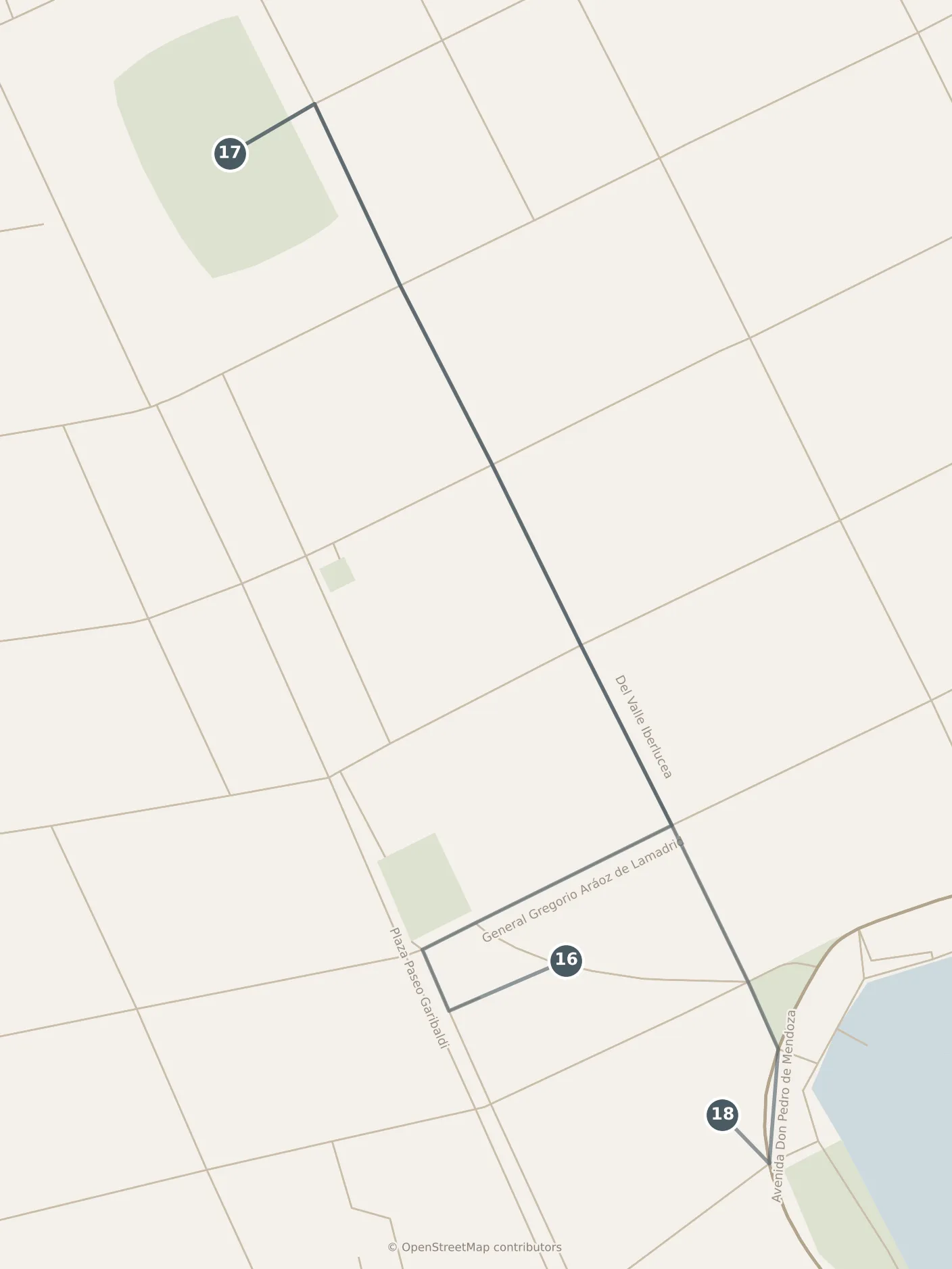
Caminito is a hundred and thirty meters of painted pedestrian street on the line of an abandoned railway branch, itself following an old stream down to the Riachuelo. It was rubble and a dumping ground until the painter Benito Quinquela Martín got his neighbors behind reclaiming it from 1950, and the city made it a street museum in 1959. The tango it is named after was written by Juan de Dios Filiberto in 1926 and the composer did have this lane in mind — but his lyricist was writing about a path in Olta, in La Rioja, eight hundred kilometers away, which is a good thing to know while standing on a street that has been selling itself as the song’s birthplace for seventy years. An hour is plenty. The bend of the water at the end of it is the Vuelta de Rocha.
Eight minutes’ walk north-west is La Bombonera, the football ground the barrio is better known for, a stand of steel and a flat wall where the fourth side should be. Fifteen minutes outside it is worth having whether or not football is your subject. If it is, the ground runs its own museum and pitch-side tour, sold at the ground, and it will take an hour and a half — in which case skip the art center below, which is the only thing on this day it displaces.
Otherwise walk the ten minutes back down to the water and the Fundación Proa, a contemporary art center in a converted Italianate house facing the Riachuelo, with a roof terrace over the whole rusted-industrial bend of it. It opened at midday and ran Wednesday to Sunday in 2026, so it sets the shape of the morning: Caminito first, the ground second, this last, and lunch after it at one of the places along the waterfront. An hour inside.
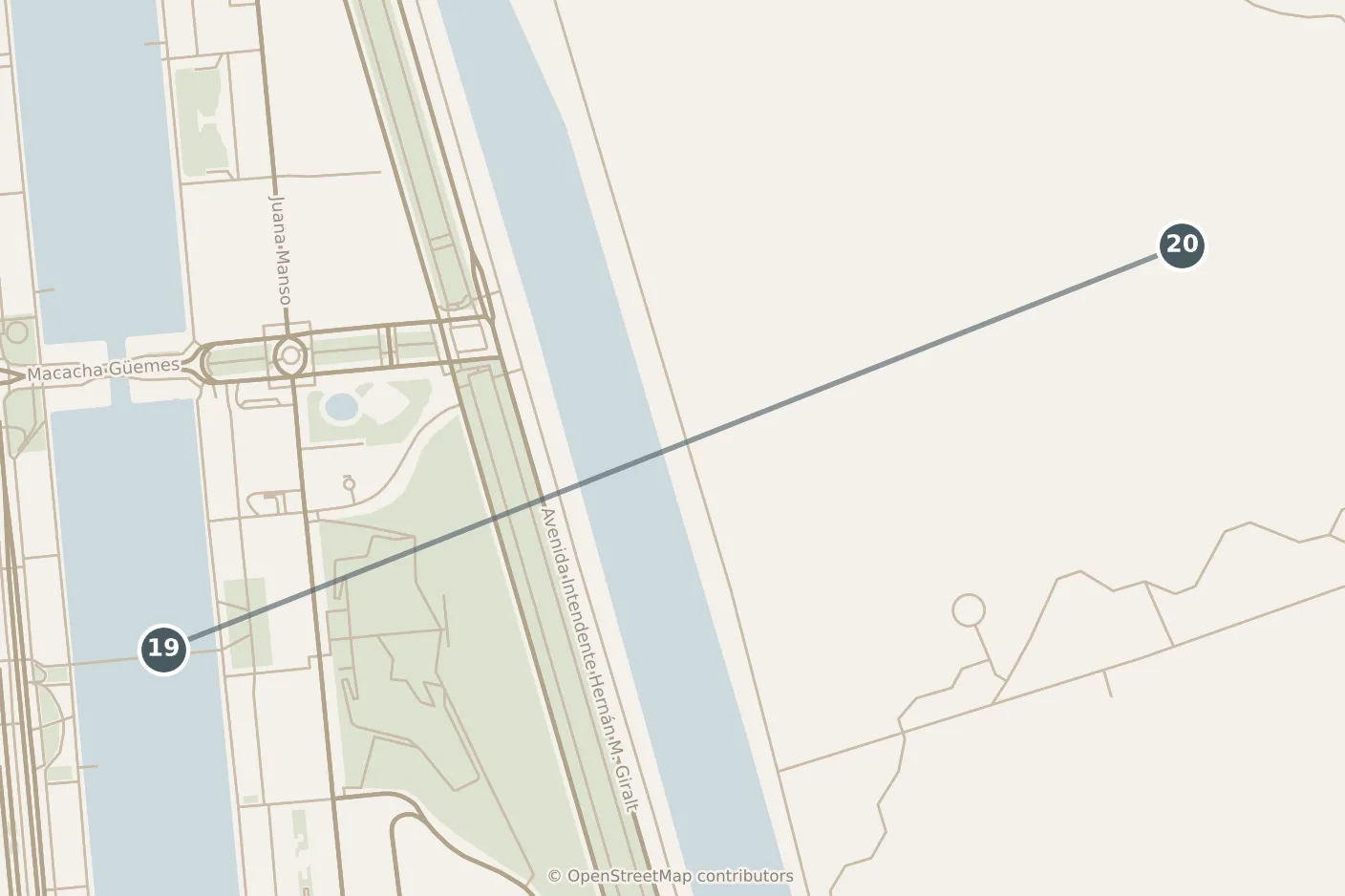
In the afternoon take a car fifteen minutes north along the water into Puerto Madero, where the old brick grain warehouses face a line of glass towers across the docks. Cross the Puente de la Mujer, the white rotating footbridge whose single mast leans out over the water like a dancer, and then walk about twenty-five minutes east, across the docks and over the coast road, to the Reserva Ecológica Costanera Sur. It has two gates, one towards either end of the waterfront; the main one is on Avenida Tristán Achával Rodríguez, at the southern end, and it is the one to aim for.
That reserve is the best thing on this third day and the least expected. Three hundred and fifty hectares of wetland, lagoon, grassland and willow wood sit on rubble that was tipped into the Río de la Plata for a highway scheme in the 1970s and then left; the river seeded it, and by 1986 it was being protected rather than built on. It is a Ramsar wetland of international importance, more than two hundred and fifty bird species use it, and the paths are flat gravel with the towers of the city standing over the trees behind you. Two hours, and take water — there is no shade for long stretches and nothing sold inside. It closed on Mondays in 2026 and it also closes when it rains, which is published policy and not a courtesy, so check the sky as well as the day.
Where it goes if the calendar forces it. The art center shuts Monday and Tuesday and the reserve shuts Monday, so this day cannot be a Monday and is halved on a Tuesday. Day one takes any day of the week and loses only the town-hall museum on a Monday or a Tuesday; day two survives both Monday and Tuesday, with two substitutions on a Monday and one on a Tuesday. So if your three days run Sunday to Tuesday, the river day has to be the Sunday, and it becomes day one — the center day slides to the Monday, which costs it the town-hall museum, so give those forty minutes to the square and to the walk down Defensa, and the north day to the Tuesday, which costs it the museum of the continent. Nothing else moves.
Practicalities
The bookings. The opera-house visit is the one most worth arranging before you travel: it is a fixed departure with a capped group, and the line at the box office on Tucumán is the only line of day one. The general ticket for a foreign visitor was in the thirty-thousand-peso range in 2026 — read that as an order of magnitude rather than a budget, because in this country a price ages faster than anything else in this article. It is sold online and at that same door, and only one of those two involves standing in a line. The cemetery ticket is compulsory but does not need booking, and neither do the two museums; the house on Defensa is a timed guided visit with a capped group, so arrange that one as well.
Which days break what. Six stops keep a closing day, and one of them is on day one. The museum inside the town hall closed on Mondays and Tuesdays in 2026; the national picture collection closed on Mondays; the museum of the continent’s art closed on Tuesdays; the rose garden closed on Mondays; the art center in La Boca ran Wednesday to Sunday and the ecological reserve closed on Mondays and on wet days. Each of those is a published fact that an institution can change, so check the two or three that fall on your dates rather than trusting this paragraph — but the shape it produces will hold. Day one takes any day of the week, at the cost of the town-hall museum on a Monday or a Tuesday; the square outside it is open whatever the day. Day two on a Monday loses the picture collection and the rose garden both: give the picture collection’s hour and three quarters to the cemetery and to the low white church three minutes from its gate, the Basílica Nuestra Señora del Pilar, which was there before the cemetery was, then go on to the museum of the continent, which opens at midday on a Monday, and end the afternoon in the Japanese garden, which opens every day, and in the park around it rather than at the roses. It is the one day of the week on which the afternoon does not end where the day was built to end. Day two on a Tuesday loses the museum of the continent instead: keep the picture collection, take lunch slowly, and walk the whole of the park from the Japanese garden through the lakes to the rose garden, which is a better hour than the one it replaces if the weather is any good. The third day cannot be a Monday at all.
A wet day. Day one is the wet-weather day: the theater, the town hall, the church and the house on Defensa are all indoors and the longest exposed stretch is the twenty-five-minute walk down Diagonal Norte, which is arcaded in stretches and short in the rest. The square, the walk down Defensa and Plaza Dorrego are outdoors too, but those are the parts that can be cut short in the wet; the doors are not. The swap is free on five days of the week and costs the town-hall museum on a Monday or a Tuesday, when it is shut. So if a forecast puts rain on one of your two days, make that day the first one and move the other, whatever order you had planned. If it rains on day two instead, cut both gardens after the museum of the continent and walk the twenty minutes west from its door to the Museo Evita, which is indoors, small, an hour, and about the one Argentine life a visitor already half knows. If it rains on the third day, the reserve is shut anyway: do La Boca as written, and give the afternoon to the dock warehouses, which are a covered promenade.
If you are short. On day one the stop that goes first is the museum inside the town hall, for the reason in the box there. On day two it is the Japanese garden, for the reason in the box there. On the third day it is the football ground, unless it is why you came. Cutting all three saves a little over an hour and a half and costs the trip nothing structural — none of the three is a door that the day was built to open.
The bag. This is the one place where a trip of two or three days is easier than a single one: you have a room, and the answer to the bag is your hotel, which will hold it after checkout as a matter of course. That is worth saying only because of what it implies for the last morning. Nothing on these routes has anywhere to leave a suitcase — not the cemetery, not the theater, not the parks — so plan the final day around where you are sleeping, and if you are flying out of the close-in airport on two days, make the northern day your last: it ends in Palermo, which is a few minutes from that terminal, whereas the south is forty minutes the wrong way. On three days the river day stays last, for the reasons in that section, and there is no order that gives you both it and the short run to the terminal.
Getting between the stops. The walking within each half-day is modest for a city this size. Day one’s longest single stretch is the twenty-five minutes from the theater to Plaza de Mayo and everything after it is under a quarter of an hour at a time; day two’s afternoon is three and a half kilometers in four pieces, the longest of them twenty-two minutes, and in January take water and start it on the shaded side — the parkway stretches are open. Between the pockets, use the Subte where it goes and a car where it does not: line D reaches the theater at Tribunales and Palermo at Plaza Italia and Ministro Carranza, line H reaches Recoleta at Las Heras and Facultad de Derecho, and no Subte line runs under San Telmo’s spine or into La Boca — line C passes ten minutes west of Plaza Dorrego, which is day one’s alternative to the taxi, and nothing at all goes to the barrio on the third day. The buses do: the 29 runs La Boca, San Telmo and the center on the same SUBE card. It is handed to a car in the text above not because the option is missing but because working out a colectivo is not the simplest thing to do on a first visit.


.jpg)
