Bangkok in one day: the old royal city, the river crossing, and Chinatown after dark

Last updated 27 July 2026
Overview
Bangkok does not have a center. It has several, a long way apart, and one day is not enough to have two of them. The old royal city sits on a bend of the Chao Phraya; the city of towers, malls and elevated rail sits several kilometers east and has almost nothing to do with it on foot. The road between them is what will eat your day if you let it.
So a single day here is not a compression, it is a choice, and the honest answer for one day is the old city. It is the only part of Bangkok where the things worth crossing the world for stand within a kilometer of each other, and it is what the modern half was built out of.
What that costs you is real rather than rhetorical. The great weekend market in the north is half a day on its own. The canals of the west bank are another. The rooftops and the air-conditioned malls are two things this city does at a scale nowhere else manages, and they are both in the half you are giving up. Give them up cleanly: a day that tries to hold the old town and a tower spends most of itself in traffic between them.
The thing that makes this day work is newer than a lot of the advice written about the city. The metro reached the old town in 2019, so the historic quarter that used to mean a boat or a taxi now has a station underneath it. This route starts there, walks about three kilometers in total, takes one short ferry across the river, and rides two stops at the end. It never gets into a car.
Two things fix the shape of the day before you plan anything else. Everything before the evening is a working temple, so dress in the morning for all of them at once — there is no convenient point on this route to go back and change. And the Grand Palace stops selling tickets in mid-afternoon, hours before anything else here shuts, which is why it comes first and why the rest of the day is arranged behind it.
The day

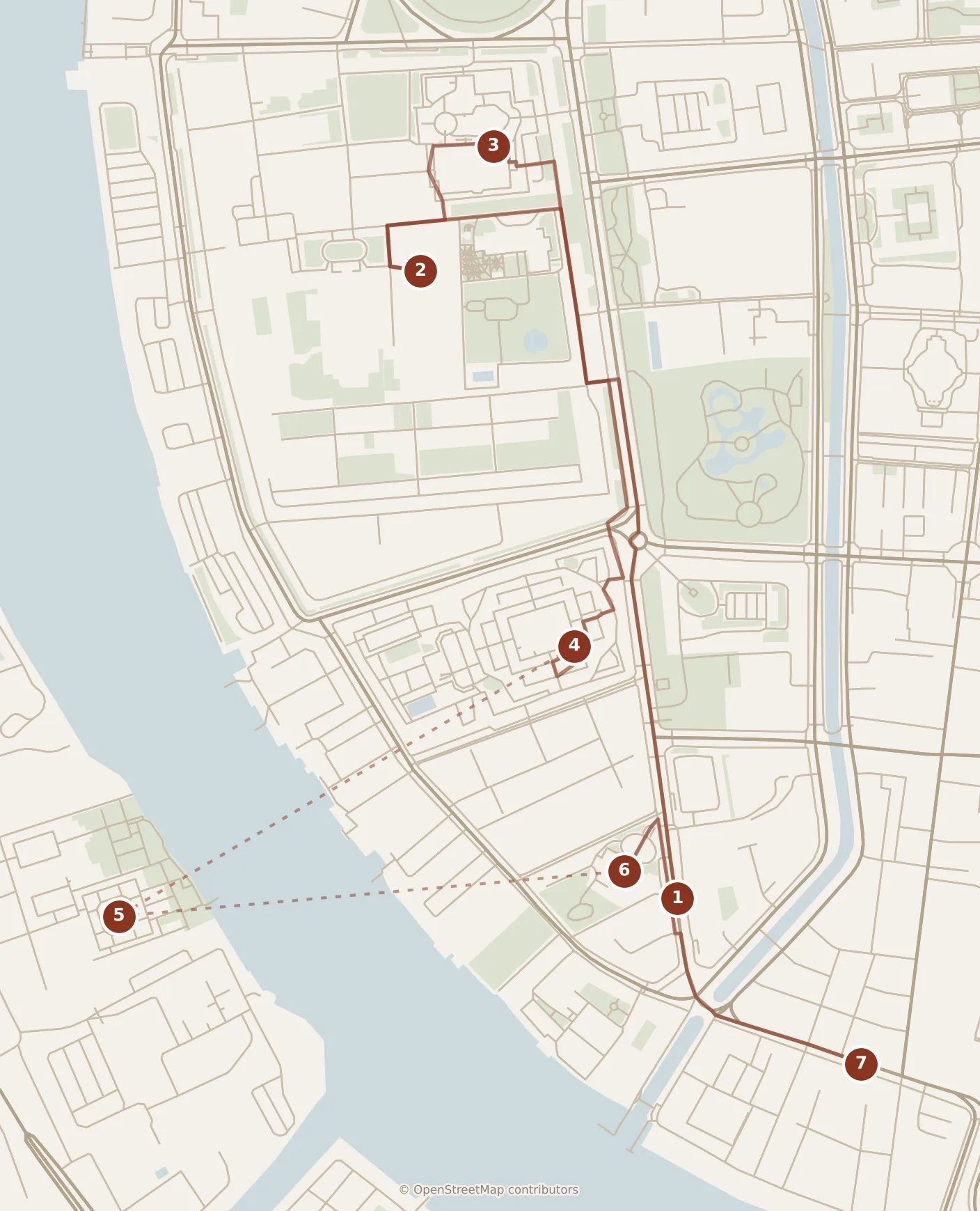
- Morning and afternoon
- 1Sanam Chai Station
- 2Grand Palace
- 3Wat Phra Kaew
- 4Wat Pho
- Tha Tien pier — in the prose, not on the map
- 5Wat Arun
- 6Museum of Siam
- 7Pak Khlong Talat
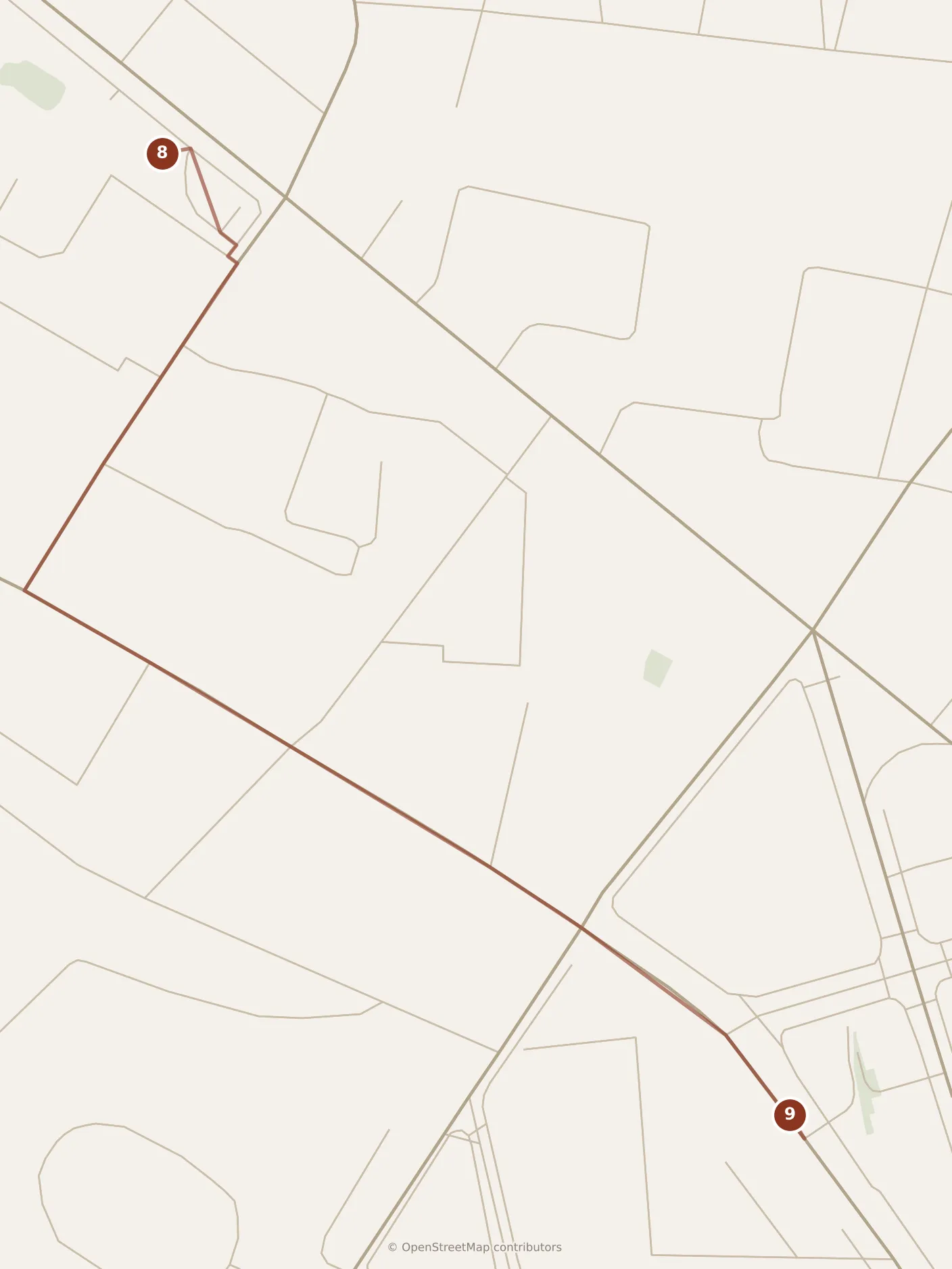
- Evening
- 8Wat Mangkon MRT station
- 9Yaowarat Road
Morning
Start underground. Sanam Chai Station opened in 2019 and was built as an answer to what stands above it: an early Rattanakosin throne hall done as a railway station, with heavy gold-leafed columns, lotus forms and a dark ceiling stencilled with stars. It costs two minutes and almost nobody spends them, because everybody is already making for exit 1.
From there it is about fifteen minutes north on foot to the Grand Palace, and the aim is to be at the gate as it opens at half past eight. This is the most visited enclosure in Thailand and it is almost entirely unshaded; an hour later the line is long and the courtyards are hot in a way that cuts the visit short whether you meant it to or not.
Kings stopped living here in the reign of Rama V, and what a visitor is given is the outer court and the royal chapel. Take the chapel, Wat Phra Kaew, first. The Emerald Buddha inside it is neither emerald nor big: sixty-six centimeters of green stone — jade or jasper, the sources disagree — set so high on its gilded pedestal that most people spend the visit looking up at an object the size of a child. Its costume is changed three times a year, by the monarch, at the turn of each of the country’s three seasons, so whichever version you see is a third of the thing. A painted gallery runs the whole way round the courtyard wall. Outside the chapel, the Chakri Maha Prasat is a marble palace in a European manner, finished in 1882 and then roofed with three Thai spires instead of the dome it had been drawn with; the joke made of it locally is a foreigner in a Thai crown, and the roof was the point. Two hours here, and not more — the compound rewards a walk rather than a study.
Then ten minutes south to Wat Pho, which the signs call Wat Phra Chetuphon. The reclining Buddha is forty-six meters long and fifteen high, and the hall is built so tightly around it that you never see the whole figure at once, only lengths of gold between columns. Walk to the soles: mother-of-pearl inlay in one hundred and eight panels of the marks by which the Buddha is identified. Down the far side of the hall stand one hundred and eight bronze bowls, and dropping a coin in each is the ordinary thing to do and takes about ten minutes. The temple also runs a school of traditional massage, founded in 1955 and the source of most of what is sold as Thai massage anywhere in the world. There is nothing to book: you pay at the pavilion, take a token and wait, which around the middle of the day means a short line on top of the hour itself. An hour of it, here, is the best-spent hour on this itinerary.
Afternoon
Five minutes west of Wat Pho the streets end at the river at Tha Tien pier, and this is where lunch goes. The lanes behind the pier are old shophouse blocks with rice and noodle counters at street level, and eating before you cross is better than eating after, because the far bank has far less.
The crossing is the cheapest ride in the city. A cross-river ferry shuttles continuously between this pier and the opposite bank, takes about three minutes, and is a different service from the express boats that run up and down the river: you want the line going straight across, not the one going along.
Wat Arun is on the other side — the Temple of Dawn, and a building that has to be looked at from two distances. From the water it is a silhouette, a prang of about seventy meters. From arm’s length it is a mosaic of somebody’s crockery: broken Chinese porcelain that arrived in Bangkok as ballast in trading ships, pressed into the plaster in flower patterns. It was restored between 2013 and 2017 and came out paler than people remembered, which is the argument you will hear about it. Climbing the prang is the other half of the visit; the stairs are near-ladder steep with shallow treads, and how far up visitors may go has been tightened for conservation, so take whichever level is open and treat going down as the harder direction. An hour, including the two crossings.
Back on the near bank, eight minutes inland, the Museum of Siam is the right place to be in the worst heat of the day, and not only because it is air-conditioned. It fills a former government ministry behind Wat Pho and takes a single question — what it actually is to be Thai — through rooms that argue with the answer instead of illustrating it. An hour. It is the one stop on this day that shuts on a Monday — though Monday costs this route its evening too, for reasons the last section explains.
Five minutes south-east, Pak Khlong Talat trades round the clock, and the part that gets photographed — lorries unloading mountains of marigold — happens at about three in the morning. What is there in the late afternoon is the making of things: people sitting behind trays of jasmine buds threading phuang malai, the garlands that end up on shrines, taxi mirrors and dashboards across the whole city. Twenty minutes, and it is the only stop here that you notice with your nose first.
Local tip. If the morning has overrun — and it usually does — cut the museum rather than the river. The crossing and the temple on the far bank are the part of this day you cannot get anywhere else in the world, and the museum is an hour indoors that the rest of the day still makes sense without.
Evening
Walk back to Sanam Chai Station and ride two stops to Wat Mangkon MRT station. It is a short hop that would be a long crawl on the surface, and it puts you out in the middle of Chinatown rather than at the edge of it.
Yaowarat Road is the reason to end here. From about five in the afternoon the carts come out along it and the street turns into the largest open-air kitchen in the city: charcoal grills on the sidewalk, seafood tanks, noodle stalls with four stools apiece, and a wall of gold and neon shop signs above all of it that photographs better after dark than any temple did in daylight. The way to eat this street is not one meal sitting down but four standing up — a plate, two hundred meters, another plate. Finish with mango sticky rice, sold along here by places that sell nothing else.
Leave the way you came in. The metro back from Wat Mangkon MRT station is the difference between ending the day and sitting in a taxi at the end of it, and after a day that started at half past eight that is worth more than it sounds.
Practicalities
Monday is the day to check before you commit to this route. The Museum of Siam closes, and every temple above is open daily — but Monday is also the city’s street-cleaning day, and a large share of the carts on Yaowarat do not come out. Chinatown does not shut and its shophouse restaurants keep their hours, so the evening still works sitting down; what thins is the open-air kitchen that is the actual reason to end the day there. If your one day falls on a Monday and the street food is the part you came for, move the day rather than the plan. Otherwise spend the museum’s hour on the massage at Wat Pho instead, which is the better swap anyway if the heat has won.
The Grand Palace stops selling tickets at half past three and closes an hour after that. That is the single hard deadline on the day, and it is the reason the palace goes first rather than being fitted in later like an ordinary ticketed sight. There is no official way to buy that ticket in advance — the counters at the gate are the only ones, whatever the resale sites imply — so nothing on this route needs booking, and nothing here is worth booking ahead.
From June to October the rain shapes the afternoon as much as the heat does. The usual pattern is a clear morning and one hard downpour later in the day, spent within an hour rather than settling in for it, and it falls on the open half of this route. In those months the museum stops being the hour to cut and becomes the hour to hold in reserve: it is the only indoor stop on the day, and Wat Arun’s stairs are steep enough dry.
If you reach the old town by river instead of by metro — which is the pleasanter arrival from the hotels at the modern end — two things are worth knowing before you stand on a pier. The express boats are told apart by the colored flag flown at the stern, the flag on the daytime service changed in March 2026, and the faster lines call at fewer piers. So read the board and ask for the pier by name rather than trusting a color you read somewhere. The cross-river ferry at Tha Tien pier is not one of these boats at all: it is a separate, constant shuttle straight across the water, and it is the only boat this itinerary actually needs.
The walking comes to about three kilometers. The longest single stretch is the fifteen minutes from the station up to the palace, which is taken first for that reason, in the coolest part of the day and with the day’s one deadline at the end of it. Everything afterwards is under ten minutes from the last thing.


.jpg)