Where to stay in Bologna: a local's guide
Last updated 15 July 2026 · How we choose and write these
Overview
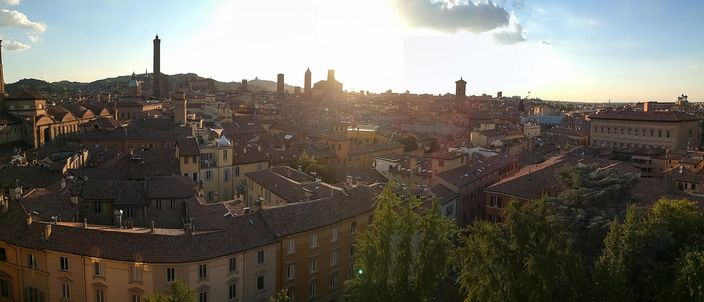
Bologna is a working city that happens to be beautiful, not a museum town — and it rewards visitors who come to eat, walk and settle into its rhythm rather than tick off sights. It’s the food capital of Italy’s richest food region, wrapped in porticoes, with a huge student population keeping it young and busy year-round. For where to stay, the good news is that it’s compact: there’s essentially one walkable centre, so you choose your base by the atmosphere you want — lively, calm, or practical — not by logistics, because everywhere inside the ring is a short walk from everywhere else.
Where to stay
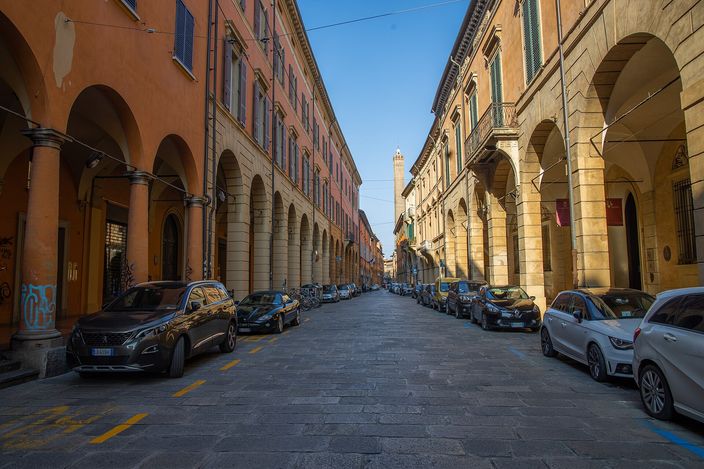

Bologna is small and almost entirely walkable. Nearly everything a visitor wants sits inside the viali, the ring road that traces the old city walls, and the famous porticoes mean you can cross town in the rain without an umbrella. So basing yourself “in the centre” isn’t really the decision — anywhere inside the ring is 15–20 minutes on foot from Piazza Maggiore. The real choice is vibe: lively or calm, polished or scruffy, in the thick of it or a short walk out. The train station sits just north of the ring, and the airport is only 6 km away. It’s worth comparing places across the centre before you fix on an area.
Piazza Maggiore & the Quadrilatero
The historic core, around the main square, the Two Towers and the tangle of market streets known as the Quadrilatero. Stay here if it’s your first time and you want to step out of the door into the middle of everything — food stalls, porticoes, the main sights, all on foot. The trade-off is the obvious one: it’s the priciest area, it can be busy, and the market lanes carry some evening noise. Good for a first visit and short stays where walking distance matters most; rooms right on the centre go quickly on weekends.
University quarter — Via Zamboni & Piazza Verdi
Just northeast of the core, this is the home of the oldest university in the Western world, and it feels it: cheap eats, bars, record shops, and a young crowd that spills into Piazza Verdi at night. Stay here if you’re on a budget or you want to be near the nightlife. The trade-off is noise — it’s loud after dark, scruffier in patches, and busiest exactly when you might want to sleep.
Santo Stefano & Strada Maggiore
Southeast of the square, this is the centre’s elegant, quieter side: the beautiful Santo Stefano church complex, the porticoed sweep of Strada Maggiore, antique shops and calmer streets. Stay here if you want to be central but wake up somewhere refined rather than rowdy — it suits couples and anyone after a slower pace. The trade-off is price and quiet: less on your doorstep at night. A good pick for a calmer central stay.
Via del Pratello
A short walk west of the core, Pratello is the city’s bohemian, osteria-lined strip — aperitivo, wine, live music, a local and slightly leftist character. Stay here if you want to eat and drink where Bolognesi do, not where tour groups go. The trade-off, again, is evening noise: this is a street that stays up late.
Bologna Centrale & Bolognina
Right by the main station, just north of the ring. Bologna Centrale is a major high-speed hub, so this is the practical base if you’re doing day trips (Florence, Modena, Parma, Ravenna are all quick) or arriving late. Cross the tracks into Bolognina and you get a working-class, multicultural district that’s gentrifying fast — street art, cheap and genuinely good food, lower room rates. The trade-off is charm and distance: it’s 10–15 minutes on foot to Piazza Maggiore, and a few blocks feel rougher than the postcard centre.
Saragozza & toward San Luca
The southwest edge, running out toward Porta Saragozza and up the hill to the Sanctuary of San Luca along the world’s longest portico. This is a residential, well-kept, genteel part of town. Stay here for quiet, greenery and longer stays, or if the walk up to San Luca is your idea of a morning. The trade-off is that you’re outside the buzz — lovely, but you’ll walk or hop a bus to reach the nightlife and the sights.
When to go
Spring (April–June) and early autumn (September–October) are the sweet spots: mild, walkable, with the food calendar in full swing. Summer is hot and humid — Bologna sits in the muggy Po valley — and around Ferragosto (mid-August) many trattorias close for a couple of weeks and the city noticeably empties; it’s the one stretch to plan around. Winter is cold and often foggy, but atmospheric and quiet, and it’s peak season for the rich, brothy food the city is built on. Term time (roughly October–May) means the university quarter is at its liveliest — a plus or a minus depending on where you sleep.
Getting there & around
.jpg)
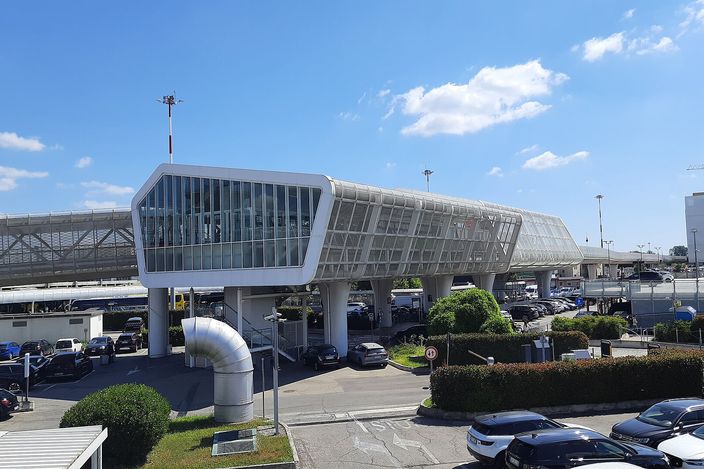
The airport (BLQ) is only 6 km out, and the easiest way in is the Marconi Express, a monorail that runs to Bologna Centrale in about seven minutes; a taxi takes fifteen to twenty. From the station, the centre is a short walk or a quick bus. Once you’re here, don’t rent a car — the historic centre is a limited-traffic zone (ZTL) and everything central is on foot, under the porticoes. City buses (TPER) cover the hills and the walk up to San Luca. Bologna Centrale is also one of Italy’s best rail hubs, which makes it a superb base for day trips: Florence is about 35 minutes by high-speed train, with Modena, Parma, Ferrara and Ravenna all close; it’s worth booking fast trains ahead for the best fares.
Practicalities
Bologna is a safe, easy city; the usual big-city care around the station and Piazza Verdi late at night is all that’s really needed. Cards are accepted almost everywhere and ATMs are plentiful. For transit, single TPER bus tickets and day passes are cheap and buyable on board or by app; the Marconi Express has its own flat fare. A few local notes that save confusion: restaurants add a small per-person coperto (cover charge), meal times are late by some standards (dinner from 8pm), and — the one that matters here — the local pasta is tagliatelle al ragù, not “spaghetti bolognese,” which isn’t a Bolognese dish at all. The other two to know are lasagne verdi alla bolognese — spinach pasta layered with ragù and béchamel, a world away from the tomato-heavy trays sold as lasagne abroad — and tortellini in brodo, which is what you order in winter. Any of the three and you’ll be eating like a local.
Every StayByCity guide pairs open-data shortlisting with human editing. More on how we work →